
Kirjailija
Anton Pavlovich Chekhov
Kirjat ja teokset yhdessä paikassa: 422 kirjaa, julkaisuja vuosilta 1984–2026, suosituimpiin kuuluu August. Vertaile teosten hintoja ja tarkista saatavuus suomalaisista kirjakaupoista.
422 kirjaa
Kirjojen julkaisuvuodet: 1984–2026.
Konstantin writes an avant-garde play for his beloved Nina to perform. His mother, Arkadina, a successful actress of the traditional school, and her novelist lover Trigorin, attend the first performance - and the meeting of Trigorin and Nina sets in train a series of tragi-comic events which leave no-one unaffected. Mike Poulton's adaptation of the Chekhov classic is fast-moving and funny; his ear for the rhythms, non sequiturs and tangential nature of real speech make it accessible, actable and indisputably modern.-6 women, 7 men
The Notebooks of Anton Chekhov
Anton Pavlovich Chekhov; Maxim Gorky
University Press of the Pacific
2002
pokkari
The Personal Papers of Anton Chekhov
Anton Pavlovich Chekhov
University Press of the Pacific
2002
pokkari
A loosely structured family are facing breakdown under mounting pressures of the world around them, none more than the eponymous Uncle Vanya. A middle-aged man in a crisis of values, he is further threatened by dispossession at the hands of his brother-in-law, the caustic Professor Serebryakov.
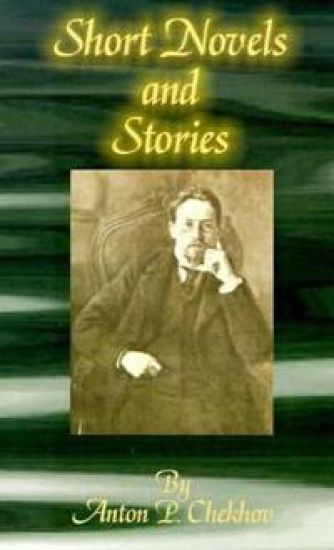
Anton Chekhov was born on January 29, 1860, in Taganrog, Russia, on the Sea of Azov. Anton Pavlovich Chekhov would eventually become one of Russia's most cherished storytellers. Especially fond of vaudevilles and French farces, he produced some hilarious one-act plays, but it is his full-length tragedies that have secured him a place among the greatest dramatists of all time. Chekhov began writing short stories during his days as a medical student at the University of Moscow. After graduating in 1884 with a degree in medicine, he began to freelance as a journalist and writer of comic sketches. Early in his career, he mastered the form of the one-act and produced several masterpieces of this genre including The Bear (1888) in which a creditor hounds a young widow, but becomes so impressed when she agrees to fight a duel with him, that he proposes marriage, and The Wedding (1889) in which a bridegroom's plans to have a general attend his wedding ceremony backfire when the general turns out to be a retired naval captain "of the second rank".
Glasgow, 1890. Andrew Baird calls upon Flora McNeil to settle a debt owed by her late husband. It is a bank holiday, however: no money! Baird is determined and refuses to leave; Flora has to resort to violence. Pistols are brought out for a duel; but first, Baird must teach her to shoot...1 woman, 2 men
The Prozorov sisters, Olga, Masha and Irina, dream of freedom, sex, romance and Moscow. Two figures appear in their lives. Vershinin, the new battery commander, has hopes of a better future for mankind. Natasha, a local woman, has hopes of a better future for herself. Each will transform the Prozorov family. A complex lattice of stories works itself out, bringing reward to some, despair to others.
All the farces of Russia's greatest dramatist are rendered here in the classic lively translations which audiences and scholars alike applaud on the stage and in the classroom. The blustering, stuttering eloquence of Chekhov's unlikely heroes has endured to shape the voice of contemporary theatre. This voume presents seven minor masterpieces: Harmfulness of Tobacco * Swan Song * The Brute * Marriage Proposal * Summer in the Country * A Wedding * The Celebration.
The first substantial volume in English devoted solely to the full range of Chekhov's comic mastery-forty stories in all, employing a variety of techniques and twists, and all with a sense of fun and infectious good humor. Tolstoy, who disliked Chekhov's plays, was reduced to helpless fits of laughter by his comic stories. Translated from the Russian and with an Introduction by Harvey Pitcher. Penetrating social satire and trenchant character analysis.... In story after story, Chekhov displays techniques-especially the use of a few telling details to suggest a whole-that he would later employ to stunning effect. -Philip Gambone, New York Times Book Review
Anton Chekhov has long been regarded as the master of the Russian short story and one of the leading exponents of the genre in world literature. This volume comprises the classic selection edited by Birkett and Struve, in Russian, here furnished with a new bibliography, and complements the stories and plays by Chekhov already available in the BCP Russian Texts series. The twelve stories, which date from 1883 to 1896, range from miniatures of comic levity such as Tolsttyi i tonkii to stories of sophisticated maturity such as Dom s mezoninom. The stories included are as follows (titles given in English translation): Fat Man and Thin Man; The Boys; A Test for Rank; A Failure; A Little Joke; The Blank Catch; The Beauties; The Student; At Yuletide; An Incident in Practice; Anna Round the Neck; The House with the Mezzanine.
This translation of Checkov's tragi-comic play - perhaps his mostpopular - is being published to coincide with a production at theNational Theatre, starring Vanessa Regrave
This book contains the Russian text of Chekhov's Three Stories and is accompanied with an introduction and notes.
Chekhov's penultimate play has inspired a bewildering variety ofinterpretations - both in criticism and in performance - since itspremiere at the Moscow Arts Theatre in 1901. Tri sestry hasbeen viewed both as tragedy and comedy, as a testimony for the eternalyearnings for love, happiness and meaning, and as a devastatingindictment of the folly of inert gentility. Its characters have beenseen as worthy embodiments of the universal 'human condition', or aspassive products of pre-revolutionary Russian privilege. Either way, the sisters are poignant reminders of human disappointment, frustration, loneliness and the passage of time. The play remains afirm favourite with audiences, both in Russia and in theEnglish-speaking world, and must be considered a fundamental work oftwentieth-century European drama.
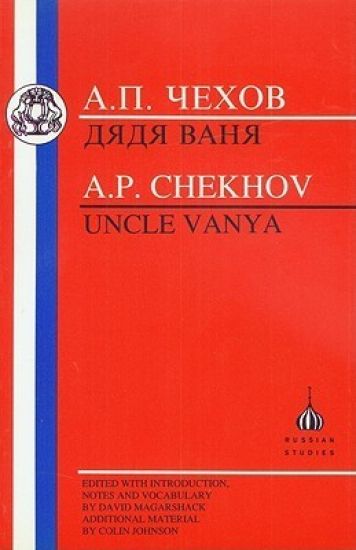
Uncle Vanya has been described as the least pleasant and most bitter ofChekhov's plays - yet the difficulty in communication is one of itsoutstanding features.
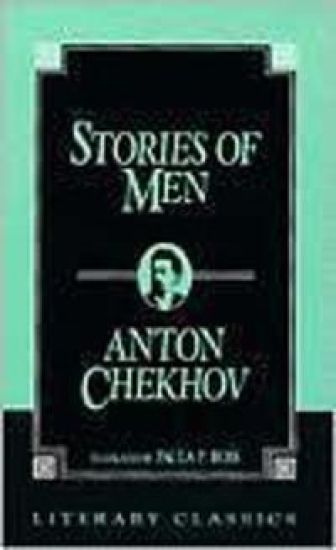
Many of Chekhov's short stories, translated into English during the early years of the 20th century, do not retain the slavic flavor of the originals. Ross' translations reverse this trend. The stories focus on the development and unique existence of the male the trials and tribulations of adolescence, maturity, and old age. Chekhov masterfully takes complicated emotional experiences and presents them with his characteristic intensity and clarity, allowing readers to vicariously share the experience. His prose is truly poetic. Stories of Men begins with "Volodya," a boy on the brink of independence, caught in an undercurrent of social displacement, who makes an irreversible mistake. Chekhov's stories of youth including "A Confession," "The Proud Man," and "The Guardian," a tale of artistic game-playing are full of comedy, inordinate vanity, and self-realization. Many of these very early stories were published in comic magazines under pseudonyms. Later his stories mature as do the characters in "Fear," "Promotion Preliminary Examination," and "The Wager," a political comparison of capital punishment and life imprisonment. Though only in his forties, Chekhov was ready to contemplate death in "A Tedious Tale." Ross has made these works more accurate and accessible to the contemporary reader, while maintaining Chekhov's original intent of illustrating how time and circumstances can change men. With thirteen stories only now being presented to the English-speaking world, Stories of Men will excite all who love this classic writer's work.
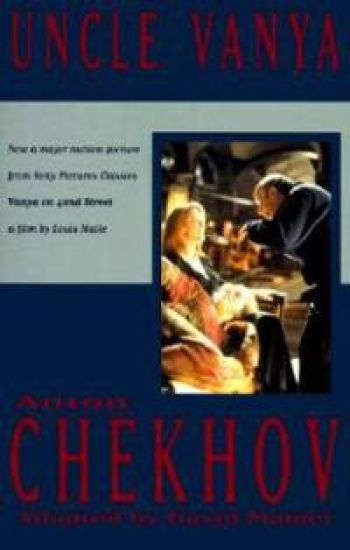
A contemporary adaptation of the classic play which follows a retired professor and his young wife as they return to the country estate left by the professor's deceased first wife
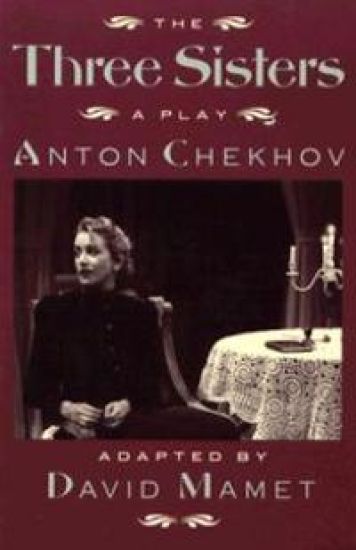
In this, his third adaptation of a Chekhov play, Pulitzer Prize-winning author David Mamet offers a contemporary, highly accessible version of Chekhov's The Three Sisters. Working from a literal translation by Vlada Chernomordik, Mamet has rediscovered the characteristically modern chords in this powerful play and breathes new life into a timeless classic. This is Chekhov rendered in direct, colloquial language marked by Mamet's finely tuned ear for dialogue. The play focuses on the lives of three sisters, Olga, Masha, and Irina, young women of the Russian gentry who try to fill their days in order to construct a life that feels meaningful while surrounded by an array of military men, servants, husbands, suitors, and lovers, all of whom constitute a distraction from the passage of time and from the sisters' desire to return to their beloved Moscow. Mamet's ear is famously impeccable, the dialogue is always authentic and convincing....[This adaptation] will help to undermine our silly critical notions of 'definitive' Chekhov. Mamet has made me rethink the play, said Robert Brustein in The New Republic of Mamet's adaptation of The Cherry Orchard. And the Chicago-Sun Times called it audacious, consistently arresting.