Kirjojen hintavertailu – 12 903 725 kirjaa ja 27 kauppaa

Kirjailija

Anton Weiss-Wendt

Kirjat ja teokset yhdessä paikassa: 9 kirjaa, julkaisuja vuosilta 2008–2022, suosituimpiin kuuluu The Historiography of Genocide. Vertaile teosten hintoja ja tarkista saatavuus suomalaisista kirjakaupoista.

9 kirjaa

Kirjojen julkaisuvuodet: 2008–2022.

The Historiography of Genocide

The Historiography of Genocide

Anton Weiss-Wendt; Robert Krieken; Alfred A. Cave; Ben Kiernan; Doris Bergen; David Moshman; Victoria Sanford; John Docker; Robert Hitchcock

Palgrave Macmillan
2008
nidottu
The Historiography of Genocide is an indispensable guide to the development of the emerging discipline of genocide studies and the only available assessment of the historical literature pertaining to genocides.
The Historiography of Genocide

The Historiography of Genocide

Anton Weiss-Wendt; Robert Krieken; Alfred A. Cave; Ben Kiernan; Doris Bergen; David Moshman; Victoria Sanford; John Docker; Robert Hitchcock

Palgrave Macmillan
2008
sidottu
The Historiography of Genocide is an indispensable guide to the development of the emerging discipline of genocide studies and the only available assessment of the historical literature pertaining to genocides.

Putin’s Russia and the Falsification of History

Putin’s Russia and the Falsification of History

Anton Weiss-Wendt

BLOOMSBURY PUBLISHING PLC
2022
nidottu
This book provides a bold examination of the political use of history in contemporary Russia. Anton Weiss-Wendt argues that history is yet another discipline misappropriated by the Kremlin for the purpose of rallying the population. He explains how, since the pro-democracy protests in 2011–12, the Russian government has hamstrung independent research and aligned state institutions in the promotion of militant patriotism. The entire state machinery has been mobilized to construe a single, glorious historical narrative with the focus on Soviet victory over Nazi Germany. Putin’s Russia and the Falsification of History examines the intricate networks in Russia that engage in “historymaking.” Whether it is the Holocaust or Soviet mass terror, Tsars or Stalin, the regime promotes a syncretic interpretation of Russian history that supports the notion of a strong state and authoritarian rule. That interpretation finds its way into new monuments, exhibitions, and quasi-professional associations. In addition to administrative measures of control, the Russian state has been using the penal code to censor critical perspectives on history, typically advanced by individuals who also happen to call for a political change in Russia. This powerful book shows how history is increasingly becoming an element of political technology in Russia, with the systematic destruction of independent institutions setting the very future of History as an academic discipline in Russia in doubt.
Putin’s Russia and the Falsification of History

Putin’s Russia and the Falsification of History

Anton Weiss-Wendt

Bloomsbury Academic
2020
sidottu
This book provides a bold examination of the political use of history in contemporary Russia. Anton Weiss-Wendt argues that history is yet another discipline misappropriated by the Kremlin for the purpose of rallying the population. He explains how, since the pro-democracy protests in 2011–12, the Russian government has hamstrung independent research and aligned state institutions in the promotion of militant patriotism. The entire state machinery has been mobilized to construe a single, glorious historical narrative with the focus on Soviet victory over Nazi Germany. Putin’s Russia and the Falsification of History examines the intricate networks in Russia that engage in “historymaking.” Whether it is the Holocaust or Soviet mass terror, Tsars or Stalin, the regime promotes a syncretic interpretation of Russian history that supports the notion of a strong state and authoritarian rule. That interpretation finds its way into new monuments, exhibitions, and quasi-professional associations. In addition to administrative measures of control, the Russian state has been using the penal code to censor critical perspectives on history, typically advanced by individuals who also happen to call for a political change in Russia. This powerful book shows how history is increasingly becoming an element of political technology in Russia, with the systematic destruction of independent institutions setting the very future of History as an academic discipline in Russia in doubt.
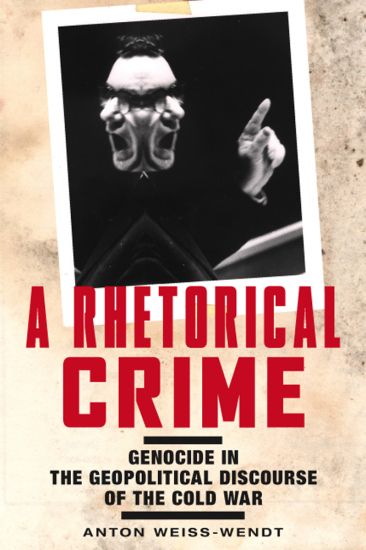
A Rhetorical Crime

A Rhetorical Crime

Anton Weiss-Wendt; Douglas Irvin-Erickson

Rutgers University Press
2018
sidottu
The Genocide Convention was drafted by the United Nations in the late 1940s, as a response to the horrors of the Second World War. But was the Genocide Convention truly effective at achieving its humanitarian aims, or did it merely exacerbate the divisive rhetoric of Cold War geopolitics? A Rhetorical Crime shows how genocide morphed from a legal concept into a political discourse used in propaganda battles between the United States and the Soviet Union. Over the course of the Cold War era, nearly eighty countries were accused of genocide, and yet there were few real-time interventions to stop the atrocities committed by genocidal regimes like the Cambodian Khmer Rouge. Renowned genocide scholar Anton Weiss-Wendt employs a unique comparative approach, analyzing the statements of Soviet and American politicians, historians, and legal scholars in order to deduce why their moral posturing far exceeded their humanitarian action.
A Rhetorical Crime

A Rhetorical Crime

Anton Weiss-Wendt; Douglas Irvin-Erickson

Rutgers University Press
2018
nidottu
The Genocide Convention was drafted by the United Nations in the late 1940s, as a response to the horrors of the Second World War. But was the Genocide Convention truly effective at achieving its humanitarian aims, or did it merely exacerbate the divisive rhetoric of Cold War geopolitics? A Rhetorical Crime shows how genocide morphed from a legal concept into a political discourse used in propaganda battles between the United States and the Soviet Union. Over the course of the Cold War era, nearly eighty countries were accused of genocide, and yet there were few real-time interventions to stop the atrocities committed by genocidal regimes like the Cambodian Khmer Rouge. Renowned genocide scholar Anton Weiss-Wendt employs a unique comparative approach, analyzing the statements of Soviet and American politicians, historians, and legal scholars in order to deduce why their moral posturing far exceeded their humanitarian action.
The Soviet Union and the Gutting of the UN Genocide Convention

The Soviet Union and the Gutting of the UN Genocide Convention

Anton Weiss-Wendt

University of Wisconsin Press
2017
sidottu
After the staggering horrors of World War II and the Holocaust, the United Nations resolved to prevent and punish the crime of genocide throughout the world. The resulting UN Genocide Convention treaty, however, was drafted, contested, and weakened in the midst of Cold War tensions and ideological struggles between the Soviet Union and the West. Based on extensive archival research, Anton Weiss-Wendt reveals in detail how the political aims of the superpowers rendered the convention a weak instrument for addressing abuses against human rights. The Kremlin viewed the genocide treaty as a political document and feared repercussions. What the Soviets wanted most was to keep the subjugation of Eastern Europe and the vast system of forced labor camps out of the genocide discourse. The American Bar Association and Senate Committee on Foreign Relations, in turn, worried that the Convention contained vague formulations that could be used against the United States, especially in relation to the plight of African Americans. Sidelined in the heated discussions, Weiss-Wendt shows, were humanitarian concerns for preventing future genocides.
On the Margins

On the Margins

Anton Weiss-Wendt

Central European University Press
2017
sidottu
Estonia is perhaps the only country in Europe that lacks a comprehensive history of its Jewish minority. Spanning over 150 years of Estonian Jewish history, On the Margins is a truly unique book. Rebuilding a life beyond so-called Pale of Jewish Settlement in the Russian Empire, the Jewish cultural autonomy in interwar Estonia, and the trauma of Soviet occupation of 1940–41 are among the issues addressed in the book but most profoundly, the book wrestles with the subject of the Holocaust and its legacy in Estonia. Specifically, it examines the quasi-legal system of murder instituted in Nazi-occupied Estonia, confiscation of Jewish property, and Jewish forced labor camps and develops an analysis of the causes of collaboration during the Holocaust. The book also explores the dynamics of war crimes trials in the Soviet Union since the 1960s and so-called denaturalization trials in the United States in the 1980s. The haunting memory of Soviet and Nazi rule, the book concludes, prevents a larger segment of today’s Estonian population from facing up to the Holocaust and the universal message that it carries. E
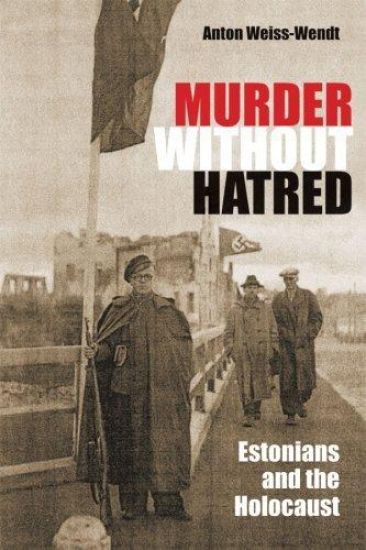
Murder Without Hatred

Murder Without Hatred

Anton Weiss-Wendt

Syracuse University Press
2009
sidottu
In this detailed study of Estonians' role in the Holocaust, Anton Weiss-Wendt casts light on a largely unexplored subject. A country known for its benevolent treatment of ethnic minorities, Estonia had a small number of indigenous Jews, and anti-Semitism existed on a relatively limited scale. However, many ethnic Estonians, acting as auxiliary security forces under the guidance of the German security police, participated in the murder of thousands of Estonian, Czech, and German Jews. Weiss-Wendt investigates these acts of genocide by posing the simple question: what prompted the Estonians to cooperate with the Nazis? He argues that the actions were voluntary but that the reasons varied. Narrating the history of Estonia's involvement, Weiss-Wendt presents lucid explanations regarding the relationships between nation-building, mass violence, and the brutal effects of authoritarian oppression on occupied states. The first book-length exploration of this aspect of the Holocaust, ""Murder Without Hatred: Estonians and the Holocaust"" enriches our knowledge of ethnic violence and reinvigorates the current debates over the roots and operation of the Holocaust.