
Kirjojen hintavertailu – 12 903 725 kirjaa ja 27 kauppaa

Kirjailija

Antonio Borghesi

Kirjat ja teokset yhdessä paikassa: 2 kirjaa, julkaisuja vuosilta 2012–2014, suosituimpiin kuuluu Risk Management. Vertaile teosten hintoja ja tarkista saatavuus suomalaisista kirjakaupoista.

2 kirjaa

Kirjojen julkaisuvuodet: 2012–2014.

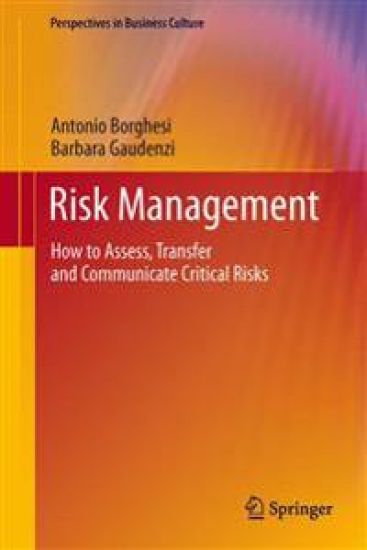
Risk Management

Risk Management

Antonio Borghesi; Barbara Gaudenzi

Springer Verlag
2014
nidottu
The increasingly risky environment in which companies operate is characterized by a rising number of risk components, factors, sources, and drivers. The identification, evaluation, and management of these risks require the capability to coordinate various skills within a company and in upstream and downstream relationships. This handbook provides an integrated approach to the assessment, transfer, and communication of critical risks and highlights emerging methodologies that can help to protect businesses from adverse events and their effects. It explains how different risk management perspectives should be combined, and in particular how the corporate governance vision should be integrated with the perspectives of operations management, financial management, and business continuity management. In this sense the handbook provides concrete directions on how to develop a risk management team and culture, taking into account business challenges and employing appropriate managerial tools.
Risk Management

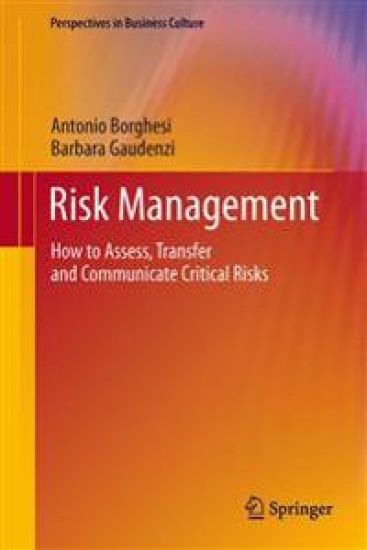
Risk Management

Antonio Borghesi; Barbara Gaudenzi

Springer Verlag
2012
sidottu
The increasingly risky environment in which companies operate is characterized by a rising number of risk components, factors, sources, and drivers. The identification, evaluation, and management of these risks require the capability to coordinate various skills within a company and in upstream and downstream relationships. This handbook provides an integrated approach to the assessment, transfer, and communication of critical risks and highlights emerging methodologies that can help to protect businesses from adverse events and their effects. It explains how different risk management perspectives should be combined, and in particular how the corporate governance vision should be integrated with the perspectives of operations management, financial management, and business continuity management. In this sense the handbook provides concrete directions on how to develop a risk management team and culture, taking into account business challenges and employing appropriate managerial tools.