

Kirjailija
António Lobo Antunes
Kirjat ja teokset yhdessä paikassa: 35 kirjaa, julkaisuja vuosilta 1995–2026, suosituimpiin kuuluu An Explanation of the Birds. Vertaile teosten hintoja ja tarkista saatavuus suomalaisista kirjakaupoista.
Nimi esiintyy myös muodoissa: Antonio Lobo Antunes
35 kirjaa
Kirjojen julkaisuvuodet: 1995–2026.
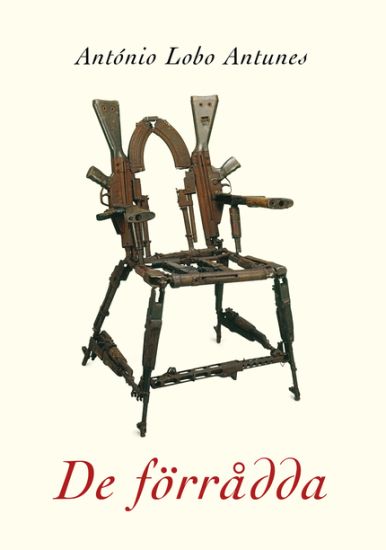
»En mästerlig roman, och Marianne Eyres översättning gör texten full rättvisa.« | MATS GELLERFELT, SVENSKA DAGBLADET»Få krigsromaner kan mäta sig med De förrådda. António Lobo Antunes är den oöverträffade skildraren av desperationen och äcklet, den nakna råa skräcken och krigets totala och förnedrande vulgaritet.« | CRISTER ENANDER, HELSINGBORGS DAGBLADDe förrådda [1979] var António Lobo Antunes första rapport om sina upplevelser av Portugals absurda kolonialkrig i Angola. En febrig, rasande ordström som kom att tala för hela den generation portugiser som bedrogs av fascismen. Hyllad världen över som ett mästerverk och som en av vår tids bästa krigsromaner. Översatt till svenska av Marianne Eyre och med ett nyskrivet förord av kritikern och poeten Erik Bergqvist. ANTÓNIO LOBO ANTUNES [f. 1942] deltog som militärläkare i Portugals krig i Angola. Efter hemkomsten till Lissabon började han skriva romaner. Med sin särpräglade stil, en sällsynt explosiv variant av »medvetandeström«, räknas han till Europas mest betydande romanförfattare.» Såsom obduktionen av ett ruttnande lik undersöker António Lobo Antunes romaner brotten i Portugals moderna historia.« | GUARDIAN»António Lobo Antunes förmedlar på ett unikt sätt hur de känslomässiga ärren efter ett krig aldrig helt försvinner. En fantastisk roman.« | THE INDEPENDENT»Briljant, hemsk. Med den koncentrerade kraften hos en exploderande granat.« | LOS ANGELES TIMES

The Land at the End of the World
António Lobo Antunes
WW NORTON CO
2012
nidottu
Halvin toimitettuna 24,20 €
In the tradition of William Faulkner and Gabriel García Márquez, one of the twentieth century’s most original literary voices offers "kaleidoscopic visions of a modern Portugal scarred by its Fascist past and its bloody colonial wars in Africa" (Paris Review). Hailed as a masterpiece of world literature, The Land at the End of the World—in an acclaimed translation by Margaret Jull Costa—recounts the anguished tale of a Portuguese medic haunted by memories of war. Like the Ancient Mariner who will tell his tale to anyone who listens, the narrator’s evening unfolds like a fever dream that is both tragic and haunting. The result is one of the great war novels of the modern age.
"The Splendor of Portugal"'s four narrators are members of a once well-to-do family whose plantation was lost in the Angolan War of Independence; the matriarch of this unhappiest of clans and her three adult children speak in a nightmarish, remorseless gush to give us the details of their grotesque family life. Like a character out of Faulkner's decayed south, the mother clings to the hope that her children will come back, save her from destitution, and restore the family's imagined former glory. The children, for their part, haven't seen each other in years, and in their isolation are tormented by feverish memories of Angola. The vitriol and self-hatred of the characters know no bounds, for they are at once victims and culprits, guilty of atrocities committed in the name of colonialism as well as the cruel humiliations and betrayals of their own kin. Antunes again proves that he is the foremost stylist of his generation, a fearless investigator into the worst excesses of the human animal.
António Lobo Antunes's sole ambition from the age of seven was to be a writer. Here, in The Fat Man and Infinity, "the heir to Conrad and Faulkner" (George Steiner) reflects on the fractured paradise of his childhood—the world of prim, hypocritical, class-riven Lisbon in midcentury. His Proust-like memoirs, written over thirty years in chronicle form, pass through the filter of an adult who has known war and pain, and bear witness to the people whom he loved and who have gone into the dark. Stunningly translated by Margaret Jull Costa, in prose that glides like poetry, this is a modern-day chronicle of Portugal's imperfect past and arresting present, seen through the eyes of a master fiction writer, one on a short list to win a Nobel Prize. Readers particularly touched by Frank McCourt's Angela's Ashes will be drawn to this journey into the heart of one of our greatest living writers.
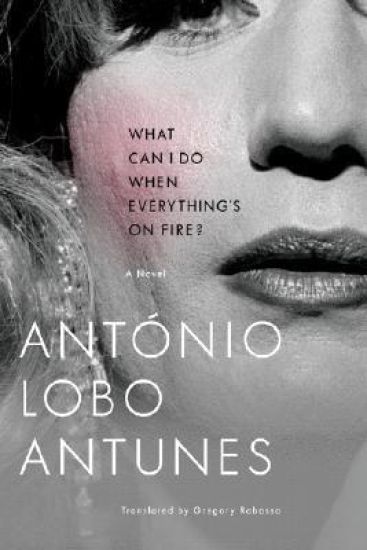
What Can I Do When Everything's on Fire?
Antonio Lobo Antunes; Gregory (TRN) Rabassa
WW Norton Co
2008
pokkari
A soaring, symphonic epic by the Portuguese master novelist, considered to be the heir to Conrad and Faulkner (George Steiner). The razor-thin line between reality and madness is transgressed in this Faulknerian masterpiece, Antonio Lobo Antunes's first novel to appear in English in five years. What Can I Do When Everything's On Fire?, set in the steamy world of Lisbon's demimonde--a nightclub milieu of scorching intensity and kaleidoscopic beauty, a baleful planet populated by drag queens, clowns, and drug addicts--is narrated by Paolo, the son of Lisbon's most legendary transvestite, who searches for his own identity as he recalls the harrowing death of his father, Carlos; the life of Carlos's lover, Rui, a heroin addict and suicide; as well as the other denizens of this hallucinatory world. Psychologically penetrating, pregnant with literary symbolism, and deeply sympathetic in its depiction of society's dregs, Lobo Antunes's novel ventriloquizes the voices of the damned in a poetic masterwork that recalls Joyce's Ulysses with a dizzying farrago of urban images few readers will forget.
Like his creator, the narrator of this novel is a psychiatrist who loathes psychiatry, a veteran of the despised 1970s colonial war waged by Portugal against Angola, a survivor of a failed marriage, and a man seeking meaning in an uncaring and venal society. The reader joins that narrator on a journey, both real and phantasmagorical, from his Algarve vacation back to Lisbon and the mental-hospital job he hates. In the course of one long day and evening, he carries on an imaginary conversation with his daughter Joanna, observes with surreal vision the bleak countryside of his nation, recalls the horrors of his involuntary role in the suppression of Angolan independence, and curses the charlatanism of contemporary psychiatric “advances” that destroy rather than heal.

In einer Bar in Lissabon erzählt ein Betrunkener einer Schönen der Nacht von seinen Erfahrungen im Angolakrieg. Unaufhaltsam redet dieser Mann, wütend, ausfallend, obszön, zärtlich und verzweifelt, er durchschreitet noch einmal die Hölle der Vergangenheit, nur um in der Gegenwart dieser Nacht nicht allein zu bleiben. "Lobo Antunes hat als einer der ersten portugiesischen Autoren das Schweigen über den Kolonialkrieg gebrochen." Die Zeit "Dieses Erzählen ... springt, assoziativ die Ereignisse verknüpfend, zwischen Vergangenheit, Vorvergangenheit und der Gegenwart hin und her. Die Schrecknisse kommen in einer eindringlichen Bildhaftigkeit zur Sprache, von der eine zwiespältige Faszination ausgeht." Der Spiegel
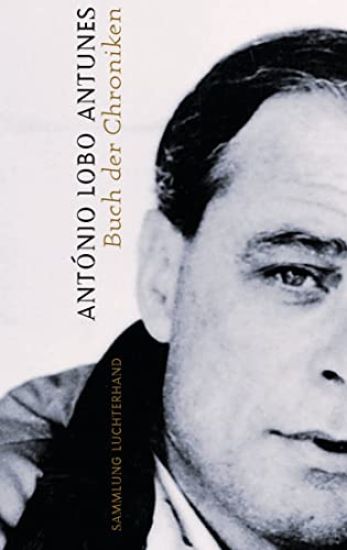
Sehr zugänglich, sehr vergnüglich, sehr persönlich. In diesen kurzen, ursprünglich für eine portugiesische Tageszeitung geschriebenen Geschichten zeigt sich Lobo Antunes, der in seinen Romanen die Abgründe der menschlichen Seele erforscht, von seiner sonnigen Seite. Heitere Episoden aus der Kindheit, Spaziergänge durch Lissabon, Anekdoten aus seiner Zeit als Psychiater, Geschichten über Fußball, Tarzan, Gott, die Buchmesse, die Ehe, Erziehung, Strandleben, Karneval, alte und junge Frauen - Lichtblicke des Lebens, festgehalten mit einem Augenzwinkern. "Das ist ein Buch wie ein tiefes Luftholen vor dem nächsten Höllenkreis ... wie das Licht, bevor man in den Schatten tritt, und das man nicht vergisst, auf der Haut, in den Augen. Es zeigt das Lächeln vor den Zornesfalten, das Augenzwinkern vor dem sich verdüsternden Blick, das Glauben an den Menschen vor der Ungläubigkeit und der späteren Gewissheit, wozu er fähig ist." Albert Ostermaier im KulturSPIEGEL über Sonnette an Christus "Das ideale Buch für Einsteiger, die Lobo Antunes kennen lernen möchten, und für Fans, die Persönliches daraus saugen können." dpa "Man möchte aus dem Buch, das noch dazu hervorragend übersetzt ist, unentwegt jemandem vorlesen, das Leseglück teilen." Hamburger Abendblatt
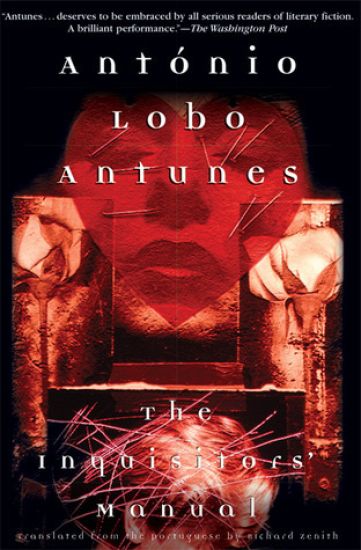
Like a Portuguese version of As I Lay Dying, but more ambitious, Antonio Lobo Antunes's eleventh novel chronicles the decadence not just of a family but of an entire society - a society morally and spiritually vitiated by four decades of totalitarian rule. In this his masterful novel, Antonio Lobo Antunes, "one of the most skillful psychological portraitists writing anywhere, renders the turpitude of an entire society through an impasto of intensely individual voices." (The New Yorker) The protagonist and anti-hero Senhor Francisco, a powerful state minister and personal friend of Salazar, expects to be named prime minister when Salazar is incapacitated by a stroke in 1968. Outraged that the President (Admiral Americo Tomas) appoints not him but Marcelo Caetano to the post, Senhor Francisco retreats to his farm in Setubal, where he vaguely plots a coup with other ex-ministers and aged army officers who feel they've been snubbed or forgotten. But it's younger army officers who in 1974 pull off a coup, the Revolution of the Flowers (so called since no shots were fired, carnations sticking out of the butts of the insurgents' rifles), ending 42 years of dictatorship. Senhor Francisco, more paranoid than ever, accuses all the workers at his farm of being communists and sends them away with a brandished shotgun, remaining all alone - a large but empty shadow of his once seeming omnipotence - to defend a decrepit farm from the figments of his imagination. When the novel opens, Senhor Francisco is no longer at the farm but in a nursing home in Lisbon with a bedpan between his legs, having suffered a stroke that left him largely paralyzed. No longer able to speak, he mentally reviews his life and loves. His loves? In fact the only woman he really loved was his wife Isabel, who left him early on, when their son Joao was just a tiny boy. Francisco takes up with assorted women and takes sexual advantage of the young maids on the farm, the steward's teenage daughter, and his secretaries at the Ministry, but he can never get over the humiliation of Isabel having jilted him for another man. Many years later he spots a commonplace shop girl, named Mila, who resembles his ex-wife. He sets the girl and her mother up in a fancy apartment, makes her wear Isabel's old clothes, and introduces her to Salazar and other government officials as his wife, and everyone goes along with the ludicrous sham, because everything about Salazar's Estado Novo ("New State") was sham - from the rickety colonial "empire" in Africa to the emasculate political leaders in the home country, themselves monitored and controlled by the secret police. Once the system of shams tumbles like a castle of cards, Francisco's cuckoldry glares at him with even greater scorn than before, and all around him lie casualties. Mila and her mother return to their grubby notions shop more hopeless than ever, because the mother is dying and Mila is suddenly a spinster without prospects. The steward, with no more farm to manage, moves his family into a squalid apartment and gets a job at a squalid factory. The minister's son, raised by the housekeeper, grows up to be good-hearted but totally inept, so that his ruthless in-laws easily defraud him of his father's farm, which they turn into a tourist resort. The minister's daughter, Paula, whom he had by the cook and who was raised by a childless widow in another town, is ostracized after the Revolution because of who her father was, even though she hardly ever knew him. Isabel, the ex-wife, also ends up all alone, in a crummy kitchenette in Lisbon, but she isn't a casualty of Senhor Francisco or of society or of a political regime but of love, of its near impossibility. Disillusioned by all the relationships she had with men, she stoutly resists Francisco's ardent attempts to win her back, preferring solitude instead. We have to go to the housekeeper, Titina, this novel's most compelling character, to find hope of salvation, however unlikely a source she seems. Unattractive and uneducated, Titina never had a romantic love relationship, though she secretly loved her boss, who never suspected. She ends up, like him, in an old folks' home, and like him she spends her days looking back and dreaming of returning to the farm in its heyday. Old age is a great equalizer. And yet the two characters are not equal. Titina retains her innocence. But it's not the innocence of helpless inability - the case of Joao, Francisco's son - nor is it the pathetic innocence of Romeu, the emotionally and mentally undeveloped co-worker by whom Paula has a son. Titina isn't helpless or ingenuous, and she isn't immune to the less than flattering human feelings of jealousy, impatience and anger. But she never succumbs to baser instincts. She knows her worth and cultivates it. She is a proud woman, but proud only of what she really is and what she has really accomplished in life. At one level (and it operates at many), The Inquisitorssssss' Manual is an inquiry into the difficult coexistence of self-affirmation and tenderness toward others. Their correct balance, which equals human dignity, occurs in the housekeeper.
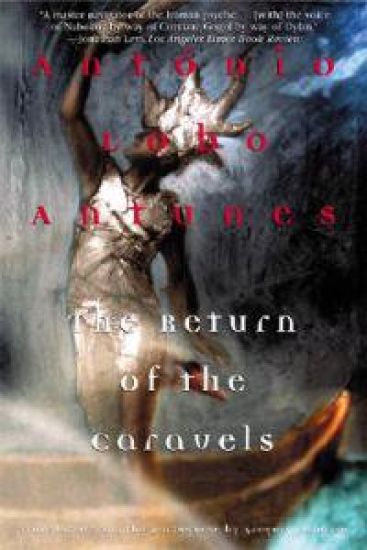
Set in Lisbon in the 1970s during the dissolution of Portugal's African colonies, a stunning novel combines Portuguese history with the unforgettable tale of Vasco da Gama who, along with his band of fellow heroes, starts to reclaim Lisbon by winning it, piece by piece, in fixed card games. Reprint.
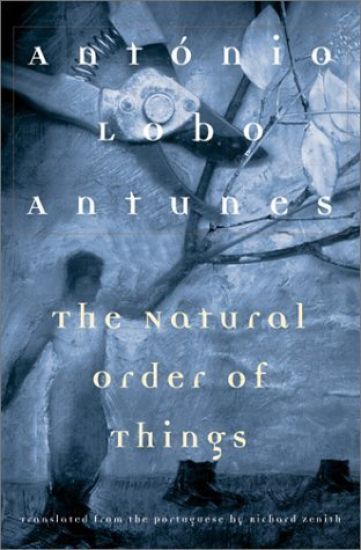
The Natural Order of Things is a tale of two families and the secrets that bind them. The voices of Antunes' characters -- an army officer being tortured in prison on charges of conspiracy; an elderly man, once a miner in Mozambique, now reduced to dreams of "flying underground"; a diabetic teenage girl and the middle-aged husband she despises; the officer's illegitimate sister, locked away to haunt the house like Bertha Rochester in Jane Eyre -- create a portrait of a disintegrating Portugal, a personal political history that attains the brilliance and surreality of Elias Canetti and Nikolai Gogol.
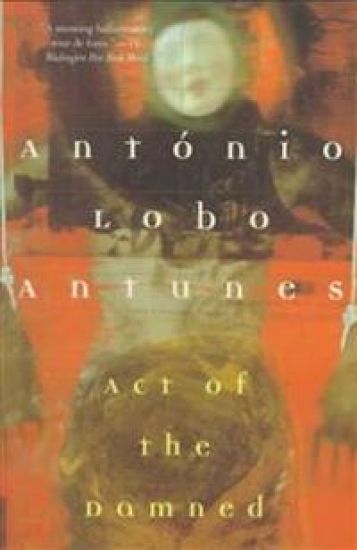
Presents the story of the greedy son-in-law of an ailing Portuguese tycoon and his efforts to steal the family fortune
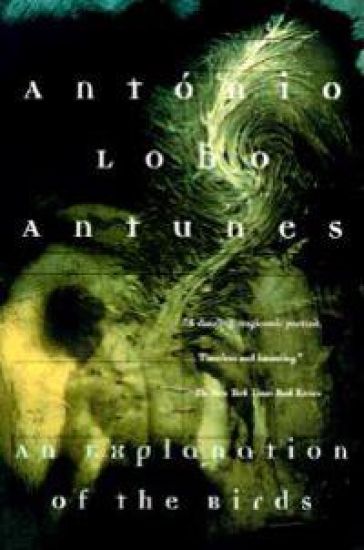
Rui S., a political historian, is unable to accept the circumstances of his life: his mother's death from cancer, his estrangement from his family, his rejection by his first wife and children, his political vacillations and his ambigious feelings for his second wife.