Kirjojen hintavertailu – 12 903 735 kirjaa ja 27 kauppaa

Kirjailija

Antonio Spadaro

Kirjat ja teokset yhdessä paikassa: 10 kirjaa, julkaisuja vuosilta 2014–2027, suosituimpiin kuuluu God's Field Hospital. Vertaile teosten hintoja ja tarkista saatavuus suomalaisista kirjakaupoista.

10 kirjaa

Kirjojen julkaisuvuodet: 2014–2027.

God's Field Hospital

God's Field Hospital

Michael Hansen; Antonio Spadaro

PAULIST PRESS INTERNATIONAL,U.S.
2024
nidottu
God's Field Hospital offers treatment by the greatest physician of all, God the healer, for those hurt, wounded or ill, and all those who find themselves in the dark, nursing a cold heart, or holding on to a failing life. And, as with any field hospital, the church should be open on all sides, to all who feel excluded. Endorsements "A creative, comprehensive, practical expression of Pope Francis's metaphor of the "church as a field hospital." Michael Hansen's new book makes this powerful metaphor real. The church does not describe or interpret a field hospital—it is a field hospital." —James Martin, SJ, author of Learning to Pray "God's Field Hospital makes Pope Francis's metaphor of the "church as a field hospital" real. The sixty Ignatian spiritual exercises offer retreatants and directors an effective relationship with God, the healer." —Sr. Anne Arabome, SSS, Faber Center for Ignatian Spirituality, Marquette University, and author of Why Do You Trouble This Woman? "I personally witness to the practicality and power of the spiritual exercises in God's Field Hospital. These exercises invite us to access the riches of Ignatian spiritualty so that we can listen more carefully and experience God's healing, and so be renewed for Christ's mission in the world. Warning! This book could change your life." —Richard Leonard, SJ, author of Where the Hell Is God? and Why God? Michael Hansen, SJ, is a Jesuit of the Australian Province. He is the national director of the First Spiritual Exercises ministry (FSE), a retreat director, speaker, and spiritual formator. With his extensive pastoral experience and degrees in the arts, theology, and Ignatian spirituality, he has developed creative uses of the Ignatian spiritual exercises, seeking to make them more accessible. He lives in Sydney, Australia. †

Conversations on Faith

Conversations on Faith

Martin Scorsese; Antonio Spadaro

Grand Central Publishing
2027
nidottu
A new and original work from the legendary Martin Scorsese, in which he and Father Antonio Spadaro discuss the visionary director's relationship to faith throughout his life. When Jesuit father Antonio Spadaro and Martin Scorsese first sat down together in Scorsese's home, neither could have predicted the depth of the conversation, intellectual exchange, or friendship that would result. While discussing the acclaimed director's film Silence, about the persecution of Jesuits in Japan, they began a dialogue about cinema, life and faith that continues to this day. From his Italian-American upbringing as a Catholic in New York to the meditations on religion, belief, and the divine found in his filmography, Scorsese's relationship to his faith has touched every aspect of his life and work. In their often-profound conversations, he and Father Spadaro have left no stone unturned, discussing this relationship along with everything from Scorsese's childhood to the concept of the soul. And as a result of their long friendship and communication, Scorsese met with Pope Francis. Readers will gain new insight into one of the most famous directors of the twentieth and twenty-first centuries in these honest, moving, and ultimately inspiring CONVERSATIONS ON FAITH.
The Diplomacy of Pope Francis

The Diplomacy of Pope Francis

Antonio Spadaro

GEORGETOWN UNIVERSITY PRESS
2026
pokkari
A portrait of the Catholic Church's role in today's geopolitical framework through the eyes of the first Latin American pope In an interconnected world marked by a "piecemeal world war" and dominated by apocalyptic perspectives, how did Pope Francis see the role of the Church? What are the roots of his "diplomacy of mercy"? How does a desire for mediation align with his vigorous denunciation of today's evils? And what specifically characterized the gestures and words of this pope who "came from the ends of the Earth"? In The Diplomacy of Pope Francis, Antonio Spadaro, SJ, highlights Pope Francis's geopolitical approach. Spadaro draws from personal interviews, official documents, and the pope's numerous cultural and intellectual references to reconstruct a map of Francis's actions through apostolic journeys, synodal events, and the Holy See's international policies. The result is an analysis of the achievements, orientations, and ongoing challenges that shaped Francis's legacy: the commitment to a new humanism in Europe, efforts to end conflicts and the tragedy of migrants, interreligious and international dialogues, the experience of the first global pandemic in the digital age, and attention to regions marked by sharp political contradictions. From this book, readers will gain a deeper understanding of the Church, of the global challenges it faces, and of the pope who sought Christ at the center of the relations between the two.
The Diplomacy of Pope Francis

The Diplomacy of Pope Francis

Antonio Spadaro

GEORGETOWN UNIVERSITY PRESS
2026
sidottu
A portrait of the Catholic Church's role in today's geopolitical framework through the eyes of the first Latin American pope In an interconnected world marked by a "piecemeal world war" and dominated by apocalyptic perspectives, how did Pope Francis see the role of the Church? What are the roots of his "diplomacy of mercy"? How does a desire for mediation align with his vigorous denunciation of today's evils? And what specifically characterized the gestures and words of this pope who "came from the ends of the Earth"? In The Diplomacy of Pope Francis, Antonio Spadaro, SJ, highlights Pope Francis's geopolitical approach. Spadaro draws from personal interviews, official documents, and the pope's numerous cultural and intellectual references to reconstruct a map of Francis's actions through apostolic journeys, synodal events, and the Holy See's international policies. The result is an analysis of the achievements, orientations, and ongoing challenges that shaped Francis's legacy: the commitment to a new humanism in Europe, efforts to end conflicts and the tragedy of migrants, interreligious and international dialogues, the experience of the first global pandemic in the digital age, and attention to regions marked by sharp political contradictions. From this book, readers will gain a deeper understanding of the Church, of the global challenges it faces, and of the pope who sought Christ at the center of the relations between the two.
Conversations on Faith

Conversations on Faith

Martin Scorsese; Antonio Spadaro

Grand Central Publishing
2025
sidottu
A new and original work from the legendary Martin Scorsese, in which he and Father Antonio Spadaro discuss the visionary director's relationship to faith throughout his life. When Jesuit father Antonio Spadaro and Martin Scorsese first sat down together in Scorsese's home, neither could have predicted the depth of the conversation, intellectual exchange, or friendship that would result. While discussing the acclaimed director's film Silence, about the persecution of Jesuits in Japan, they began a dialogue about cinema, life and faith that continues to this day. From his Italian-American upbringing as a Catholic in New York to the meditations on religion, belief, and the divine found in his filmography, Scorsese's relationship to his faith has touched every aspect of his life and work. In their often-profound conversations, he and Father Spadaro have left no stone unturned, discussing this relationship along with everything from Scorsese's childhood to the concept of the soul. And as a result of their long friendship and communication, Scorsese met with Pope Francis. Readers will gain new insight into one of the most famous directors of the twentieth and twenty-first centuries in these honest, moving, and ultimately inspiring CONVERSATIONS ON FAITH.
Open to God: Open to the World

Open to God: Open to the World

Pope Francis; Antonio Spadaro

Bloomsbury Continuum
2018
pokkari
Pope Francis’s impact on the modern world has already proved extraordinary. It is no surprise that he was voted Time magazine’s Person of the Year (in 2013), joining the likes of Martin Luther King (1964) and President John F. Kennedy (1961). Francis has turned the Catholic Church upside-down, flung open the windows of the Vatican and started to purge the church of corruption, nepotism and financial skulduggery. But above all he is engaged with the poor, the starving and the marginalised. He has made important visits to troubled spots in the world and invariably people say his appearances change everything. Pope Francis is in constant dialogue with the outside world and with the universal Catholic Church. He likes being asked questions, finding it easy to respond, and maintains a good relationship with the press. In this new book are some of his most valuable engagements in dialogue form with people of all sorts and kinds. On the one hand, there is his recent engagement with priests in Colombia who are locked in a struggle for human rights. In another lengthy piece, he talks about the importance of scripture, in a way which shows how this is a living source of inspiration. Also included are the texts of the Pope’s most recent addresses in Myanmar, Peru and Chile. Open to God: Open to the World offers a fascinating glimpse into the mind and workings of this entirely different Pope. As we see in these conversations the Franciscan revolution is under way and, in spite of Francis’s critics, the revolution will roll on and new horizons will be opened for the one and a half billion Catholics in the world today.
Friending God

Friending God

Antonio Spadaro

Crossroad Publishing Co ,U.S.
2016
nidottu
Winner: 2017 Eric Hoffer Award, Honorable Mention, Spiritual Understanding the new coordinates of cyberspace, community and faith. Who am I online? Are cyber-friendships real? The internet has become an existentially new reality of our lives. It stirs questions about who we are as people, and what we long for in the depths of our souls. Jesuit Antonio Spadaro is one of Pope Francis' close advisors on social media and cybertheology. He offers here clear, and simple principles to understand the spirituality of the internet, its promise and peril. We the people of the 21st century are creatures of the World Wide Web, always online, always connected, always communicating. And we--like all others throughout history--have created this technology in our own image, which gives this creation of ours a spiritual dimension as well. The Church knows the truth of this well, and it has known for a long time. This book offers an accessible introduction to a profound understanding of how we can use social media in ways that make us more whole, and fulfill our deeper desires of social connection. Everyone who wants to give a spiritual dimension to their life, and uses the internet must read this book. (This is the English language edition of the Crossroad Publishing title Compartir a Dios en la red , ISBN 9780824501426)
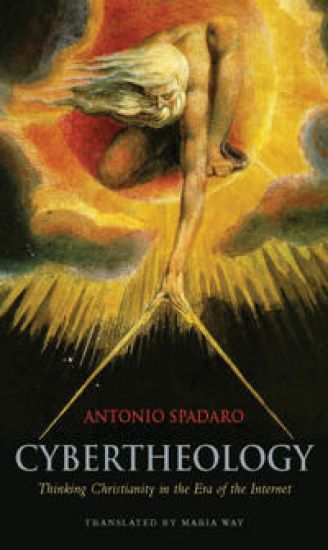
Cybertheology

Cybertheology

Antonio Spadaro

Fordham University Press
2014
pokkari
Because the Internet has changed and is changing the ways in which we think and act, it must also be changing the ways in which we think Christianity and its theology. Cybertheology is the first book to explore this process from a Catholic point of view. Drawing on the theoretical work of authors such as Marshall McLuhan, Peter Levy, and Teilhard de Chardin, it questions how technologies redefine not only the ways in which we do things but also our being and therefore the way we perceive reality, the world, others, and God. "Does the digital revolution affect faith in any sense?" Spadaro asks. His answer is an emphatic Yes. But how, then, are we to live well in the age of the Internet? Spadaro delves deeply into various dimensions of the impact of the Net on the Church and its organization, on our understanding of revelation, grace, liturgy, the sacraments, and other classical theological themes. He rightly points out that the digital environment is not merely an external instrument that facilitates human communication or a purely virtual world, but part of the daily experience of many people, a new "anthropological space" that is reshaping the way we think, know, and express ourselves. Naturally, this calls for a new understanding of faith so that it makes sense to people who live and work in the digital media environment. In developing the notion of cybertheology, Spadaro seeks to propose an intelligence of faith (intellectus fidei) in the era of the Internet. The book's chapters include reflections on man the decoder and the search engines of God, networked existence and the mystical body, hacker ethics and Christian vision, sacraments and "virtual presence," and the theological challenges of collective intelligence.
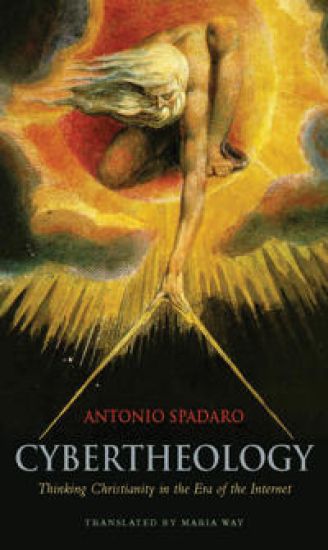
Cybertheology

Cybertheology

Antonio Spadaro

Fordham University Press
2014
sidottu
Because the Internet has changed and is changing the ways in which we think and act, it must also be changing the ways in which we think Christianity and its theology. Cybertheology is the first book to explore this process from a Catholic point of view. Drawing on the theoretical work of authors such as Marshall McLuhan, Peter Levy, and Teilhard de Chardin, it questions how technologies redefine not only the ways in which we do things but also our being and therefore the way we perceive reality, the world, others, and God. "Does the digital revolution affect faith in any sense?" Spadaro asks. His answer is an emphatic Yes. But how, then, are we to live well in the age of the Internet? Spadaro delves deeply into various dimensions of the impact of the Net on the Church and its organization, on our understanding of revelation, grace, liturgy, the sacraments, and other classical theological themes. He rightly points out that the digital environment is not merely an external instrument that facilitates human communication or a purely virtual world, but part of the daily experience of many people, a new "anthropological space" that is reshaping the way we think, know, and express ourselves. Naturally, this calls for a new understanding of faith so that it makes sense to people who live and work in the digital media environment. In developing the notion of cybertheology, Spadaro seeks to propose an intelligence of faith (intellectus fidei) in the era of the Internet. The book's chapters include reflections on man the decoder and the search engines of God, networked existence and the mystical body, hacker ethics and Christian vision, sacraments and "virtual presence," and the theological challenges of collective intelligence.