

Kirjailija
Antonio Vivaldi
Kirjat ja teokset yhdessä paikassa: 32 kirjaa, julkaisuja vuosilta 2004–2025, suosituimpiin kuuluu Lauda Jerusalem (Klavierauszug). Vertaile teosten hintoja ja tarkista saatavuus suomalaisista kirjakaupoista.
32 kirjaa
Kirjojen julkaisuvuodet: 2004–2025.
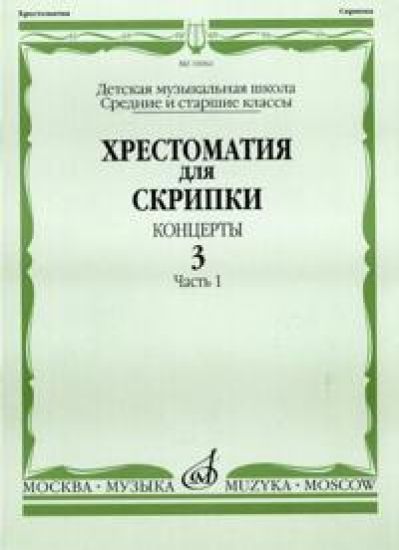
Opetusmateriaalikokoelma viululle musiikkikoulun keskimmäiset ja vanhemmat luokat. Konserttoja. Vihko 3. Osa 1
Antonio Vivaldi; Friedrich Seitz; Wolfgang Mozart; Johann Bach
Muzyka
2019
muu
Music reader for violin. Music school middle and senior classes. Concertos. Issue 3ContentsVivaldi. Concerto in G minor (1st part) Zeitz. Concerto No. 2. op. 22 Mozart. The Small Concerto ( 2. & 3. parts from Serenade in D major K. 185)Bach. Concerto in E major (1st part)
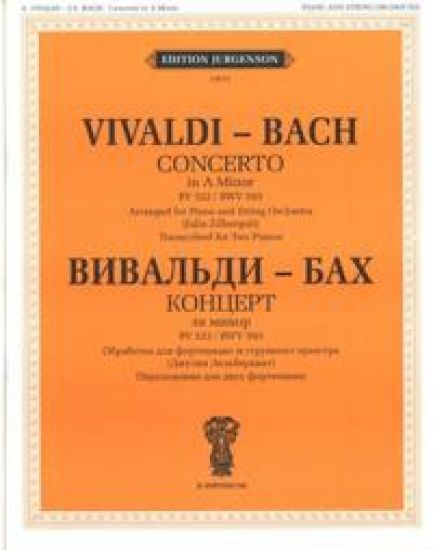
Vivaldi - Bach. Concerto in A Minor. RV 522.BWV 593. Arranged for Piano and String Orchestra.Transcribed for Two Pianos
Antonio Vivaldi; Johann Bach
P. Jurgenson
2019
muu
This is the first publication of a piano version of Vivaldi's string concerto known also in Bach's arrangement for organ. The transcription for piano and string orchestra, realized by the American pianist Julia Zilberquit, is an important contribution to the piano repertoire. In this publication, the transcription is presented in two-piano version. The edition is provided by comments. For use in educational practice in music colleges and conservatoires, as well as for concert performance.
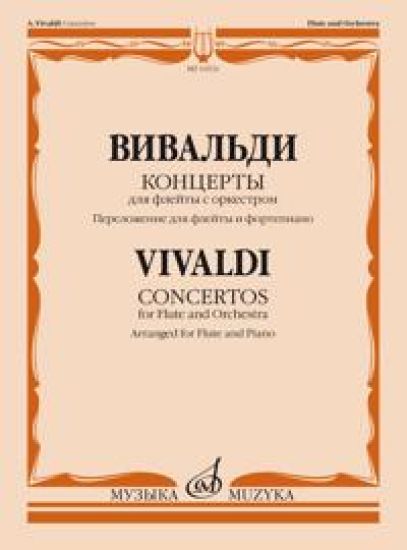
Izdanie soderzhit dva kontserta dlja flejty s orkestrom Op. 10 - re major ("Scheglenok") i sol major - v redaktsii V. Zvereva. Dlja studentov muzykalnykh uchilisch i konservatorij, a takzhe dlja kontsertirujuschikh ispolnitelej
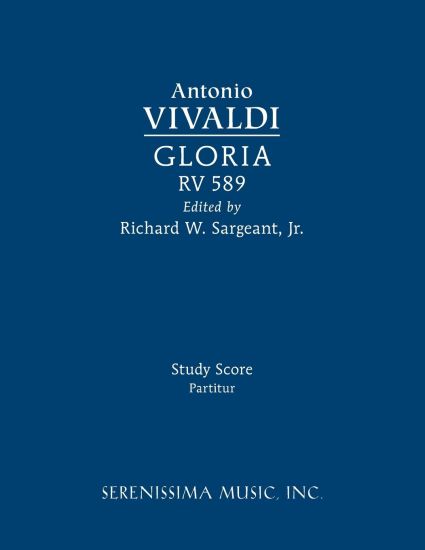
By far the most famous of three known settings of the Gloria text by Vivaldi, this one most likely dates from early in the composer's tenure at the Ospedale della Piet in Venice (ca.1715). It's also notable for the borrowing of the "Cum Sancto Spiritu" chorus in the setting by Vivaldi's fellow Venetian - Giovanni Maria Ruggieri. This newly engraved Full score from Richard W. Sargeant, Jr. is a vast improvement over many previous editions. Based on the most authoritative sources this corrected score is a must for choral enthusiasts. IMSLP page Wikipedia article
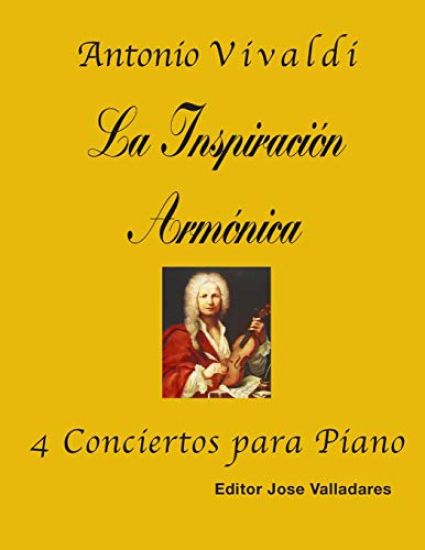
Antonio Vivaldi: La Inspiración Armónica; 4 Conciertos para Piano
Antonio Vivaldi; Jose Valladares
Createspace Independent Publishing Platform
2018
nidottu
Antonio Vivaldi public L'estro arm nico (La inspiraci n arm nica) Op. 3 en Amsterdam en 1711. Public 12 conciertos para instrumentos de cuerda. Hemos incluido cuatro mejores conciertos m s populares para Piano. Concierto No. 3, RV 310 Concierto No. 4, RV 550 Concierto No. 6, RV 356 Concierto No. 8, RV 522
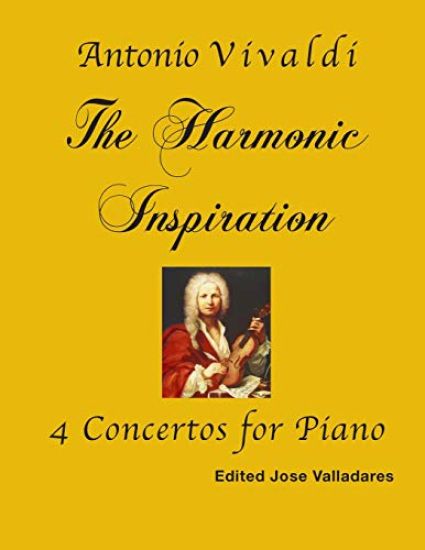
Antonio Vivaldi: The Harmonic Inspiration; 4 Concertos for Piano
Antonio Vivaldi; Jose Valladares
Createspace Independent Publishing Platform
2018
nidottu
Antonio Vivaldi published L'estro arm nico(The harmonic inspiration) Op. 3 in Amsterdam in 1711. He published 12 Concertos for stringed instruments. We have included top four most popular concertos arranged for solo Piano. Concerto No. 3, RV 310 Concerto No. 4, RV 550 Concerto No. 6, RV 356 Concerto No. 8, RV 522
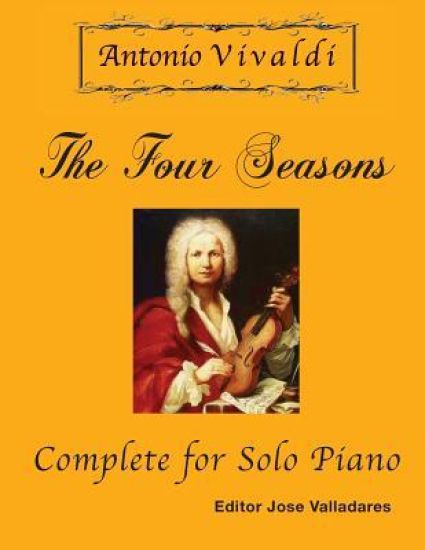
Antonio Vivaldi - The Four Seasons, Complete
Antonio Vivaldi
Createspace Independent Publishing Platform
2017
pokkari
Halvin toimitettuna 23,80 €
The four seasons were composed by Antonio Vivaldi, an Italian composer. These are four violin concertos that give musical expression to the seasons of the year. It was published as 'Il cimento dell'armonia e dell'inventione' ("The contest between Harmony and Invention"). The compositions were a revolution in musical concepts, each concerti included sonnets(poems possibly written by Vivaldi), and in his work he demonstrated musical representation of singing birds, buzzing flies, barking dogs, storms, landscapes, and warm winter fires. The Four Seasons: Violin Concerto No. 1 in E major, RV 269 'La primavera' ("Spring")I. AllegroII. LargoIII. Danza pastoraleViolin Concerto No. 2 in G minor, RV 315 'L'estate' ("Summer")I. Allegro non moltoII. Adagio e piano - Presto e forteIII. PrestoViolin Concerto No. 3 in F major, RV 293 'L'autunno' ("Autumn")I. AllegroII. Adagio moltoIII. AllegroViolin Concerto No. 4 in F minor, RV 297 'L'inverno' ("Winter")I. Allegro non moltoII. LargoIII. AllegroThese four violin concertos have been arranged for the piano. The sonnets are included before each concerto, and I hope you enjoy getting to know the perfect harmony between music and poetry
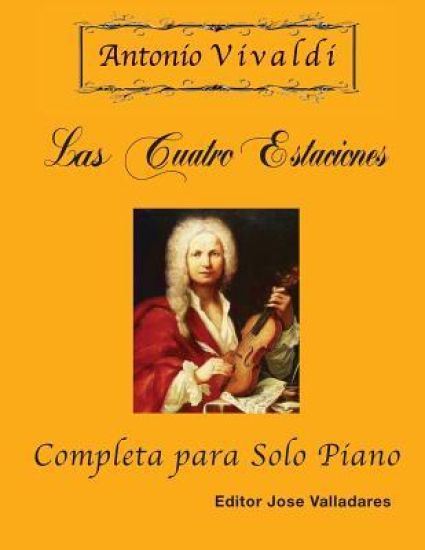
Antonio Vivaldi - Las Cuatro Estaciones, Completa: para Solo Piano
Antonio Vivaldi
Createspace Independent Publishing Platform
2017
nidottu
Las cuatro estaciones fueron compuestas por Antonio Vivaldi, un compositor italiano. Estos son cuatro conciertos para viol n que dan expresi n musical a las estaciones del a o. Fue publicado como 'Il cimento dell'armonia e dell'inventione' ("El concurso entre Harmony and Invention"). Las composiciones fueron una revoluci n en los conceptos musicales, cada concierto incluy sonetos (poemas posiblemente escritos por Vivaldi), y en su trabajo demostr la representaci n musical de p jaros cantando, moscas zumbando, perros ladrando, tormentas, paisajes y c lidos incendios de invierno. Las Cuatro Estaciones: Violin Concerto No. 1 en Mi mayor, RV 269 'La primavera' I. Allegro II. Largo III. Danza pastorale Violin Concerto No. 2 en Sol menor, RV 315 'El verano' I. Allegro non molto II. Adagio e piano - Presto e forte III. Presto Violin Concerto No. 3 en Fa mayor, RV 293 'El oto o' I. Allegro II. Adagio molto III. Allegro Violin Concerto No. 4 en Fa menor, RV 297 'El inverno' I. Allegro non molto II. Largo III. Allegro Estos cuatro conciertos para viol n han sido arreglados para el piano. Los sonetos est n incluidos antes de cada concierto, y espero que disfrutes de conocer la armon a perfecta entre la m sica y la poes a.
Masterpieces of Solo Piano
Johann Sebastian Bach; George Frideric Handel; Jean-Philippe Rameau; Domenico Scarlatti; Antonio Vivaldi; Henry Purcell; Georg Philipp Telemann
Dover Publications Inc.
2017
nidottu
This inexpensive compilation draws upon authoritative sources to present favorite piano works of the Baroque era. Unlike many other anthologies of music from the era, which vary widely in the quality of their content, this collection comprises only the greatest works of the period. Intermediate and advanced pianists will find these carefully chosen pieces a rewarding and satisfying reflection of the glories of the Baroque. Selections include Johann Sebastian Bach's Chromatic Fantasia and Fugue as well as the French Suite No. 5; Fantasia in C Minor, BWV 906; and preludes and fugues from The Well-Tempered Clavier. Other works by Bach include the great composer's transcriptions for keyboard of five violin concertos by Vivaldi, reprinted from the definitive Bach-Gesellschaft edition. Other selections include several pieces by Handel, among them the popular Air and Variations known as The Harmonious Blacksmith; four sonatas by Scarlatti; and works by Telemann, Rameau, and Purcell.

Concerto for Violin, Strings and Basso Continuo - Rv239, Op. 6 No. 6: Critical Edition Score
Antonio Vivaldi
Ricordi
2017
nidottu
(String Ensemble). Casa Ricordi Milano in partnership with Fondazione Giorgio Cini, Venezia (Istituto Antonio Vivaldi). Critical edition by Alessandro Borin. The six Concerts op. VI for violin, strings and continuo by Antonio Vivaldi were published in Amsterdam by Roger in 1719. Although the contribution of Vivaldi was probably modest even to assume that the collection was published without the composer's assistance and perhaps even his agreement these six compositions mark a decisive step towards the definition of the classic Vivaldi Concerto, a change evident both from the systematic adoption of the three-movement plan and from the absence of any supplementary solo parts beyond the principal violin. This critical edition is based on the first edition of Opus VI and its reprints, but takes also into consideration all the sources of single concertos printed into anthologies or transmitted in manuscript form (Wiesentheid and Dresden). The information gathered through the comparative analysis of the manuscript and the printed traditions of Vivaldi's Opus 6 has permitted us to reconstruct the links among the sources, to clarify some problematic editorial decisions and formulate new hypotheses on the genesis and the intrinsic nature of the collection as a whole.
Concerto for Violin, Strings and Basso Continuo - Rv280, Op. 6 No. 5: Critical Edition Score
Antonio Vivaldi
Ricordi
2017
nidottu
(String Ensemble). Casa Ricordi Milano in partnership with Fondazione Giorgio Cini, Venezia (Istituto Antonio Vivaldi). Critical edition by Alessandro Borin. The six Concerts op. VI for violin, strings and continuo by Antonio Vivaldi were published in Amsterdam by Roger in 1719. Although the contribution of Vivaldi was probably modest even to assume that the collection was published without the composer's assistance and perhaps even his agreement these six compositions mark a decisive step towards the definition of the classic Vivaldi Concerto, a change evident both from the systematic adoption of the three-movement plan and from the absence of any supplementary solo parts beyond the principal violin. This critical edition is based on the first edition of Opus VI and its reprints, but takes also into consideration all the sources of single concertos printed into anthologies or transmitted in manuscript form (Wiesentheid and Dresden). The information gathered through the comparative analysis of the manuscript and the printed traditions of Vivaldi's Opus 6 has permitted us to reconstruct the links among the sources, to clarify some problematic editorial decisions and formulate new hypotheses on the genesis and the intrinsic nature of the collection as a whole.
Concerto for Violin, Strings and Basso Continuo - Rv216, Op. 6 No. 4: Critical Edition Score
Antonio Vivaldi
Ricordi
2017
nidottu
(String Ensemble). Casa Ricordi Milano in partnership with Fondazione Giorgio Cini, Venezia (Istituto Antonio Vivaldi). Critical edition by Alessandro Borin. The six Concerts op. VI for violin, strings and continuo by Antonio Vivaldi were published in Amsterdam by Roger in 1719. Although the contribution of Vivaldi was probably modest even to assume that the collection was published without the composer's assistance and perhaps even his agreement these six compositions mark a decisive step towards the definition of the classic Vivaldi Concerto, a change evident both from the systematic adoption of the three-movement plan and from the absence of any supplementary solo parts beyond the principal violin. This critical edition is based on the first edition of Opus VI and its reprints, but takes also into consideration all the sources of single concertos printed into anthologies or transmitted in manuscript form (Wiesentheid and Dresden). The information gathered through the comparative analysis of the manuscript and the printed traditions of Vivaldi's Opus 6 has permitted us to reconstruct the links among the sources, to clarify some problematic editorial decisions and formulate new hypotheses on the genesis and the intrinsic nature of the collection as a whole.
Concerto for Violin, Strings and Basso Continuo - RV 259 Op. 6 No. 2: Critical Edition Score
Antonio Vivaldi
Ricordi
2017
nidottu
(String Ensemble). Casa Ricordi Milano in partnership with Fondazione Giorgio Cini, Venezia (Istituto Antonio Vivaldi). Critical edition by Alessandro Borin. The six Concerts op. VI for violin, strings and continuo by Antonio Vivaldi were published in Amsterdam by Roger in 1719. Although the contribution of Vivaldi was probably modest even to assume that the collection was published without the composer's assistance and perhaps even his agreement these six compositions mark a decisive step towards the definition of the classic Vivaldi Concerto, a change evident both from the systematic adoption of the three-movement plan and from the absence of any supplementary solo parts beyond the principal violin. This critical edition is based on the first edition of Opus VI and its reprints, but takes also into consideration all the sources of single concertos printed into anthologies or transmitted in manuscript form (Wiesentheid and Dresden). The information gathered through the comparative analysis of the manuscript and the printed traditions of Vivaldi's Opus 6 has permitted us to reconstruct the links among the sources, to clarify some problematic editorial decisions and formulate new hypotheses on the genesis and the intrinsic nature of the collection as a whole.
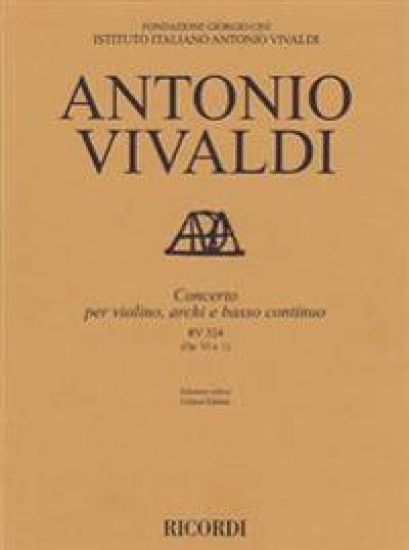
Concerto for Violin, Strings and Basso Continuo - Rv324, Op. 6 No. 1: Critical Edition Score
Antonio Vivaldi
Ricordi
2017
nidottu
(String Ensemble). Casa Ricordi Milano in partnership with Fondazione Giorgio Cini, Venezia (Istituto Antonio Vivaldi). Critical edition by Alessandro Borin. The six Concerts op. VI for violin, strings and continuo by Antonio Vivaldi were published in Amsterdam by Roger in 1719. Although the contribution of Vivaldi was probably modest even to assume that the collection was published without the composer's assistance and perhaps even his agreement these six compositions mark a decisive step towards the definition of the classic Vivaldi Concerto, a change evident both from the systematic adoption of the three-movement plan and from the absence of any supplementary solo parts beyond the principal violin. This critical edition is based on the first edition of Opus VI and its reprints, but takes also into consideration all the sources of single concertos printed into anthologies or transmitted in manuscript form (Wiesentheid and Dresden). The information gathered through the comparative analysis of the manuscript and the printed traditions of Vivaldi's Opus 6 has permitted us to reconstruct the links among the sources, to clarify some problematic editorial decisions and formulate new hypotheses on the genesis and the intrinsic nature of the collection as a whole.
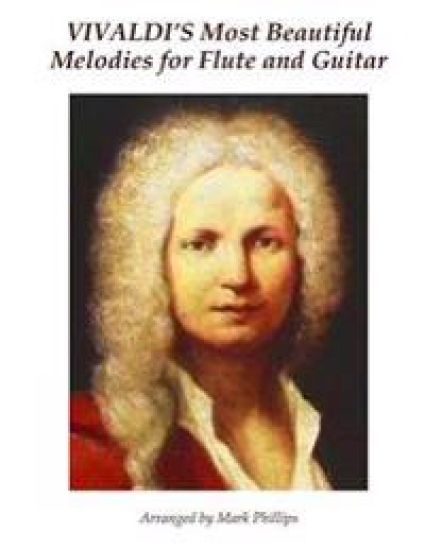
Vivaldi's Most Beautiful Melodies for Flute and Guitar
Mark Phillips; Antonio Vivaldi
Createspace Independent Publishing Platform
2016
pokkari
Tuba Carnival Solo Collection
Oystein Baadsvik; Antonio Vivaldi; Edvard Grieg
Createspace Independent Publishing Platform
2015
nidottu
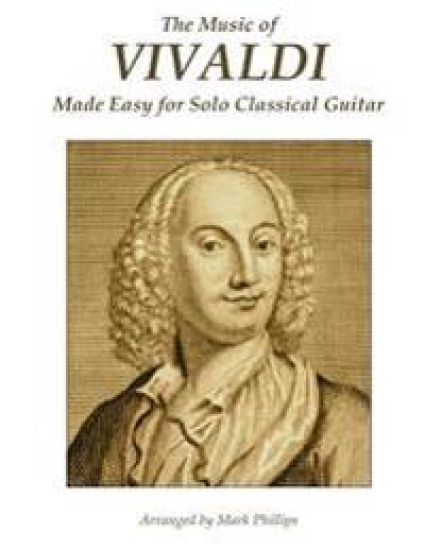
The Music of Vivaldi Made Easy for Solo Classical Guitar
Mark Phillips; Antonio Vivaldi
Createspace Independent Publishing Platform
2015
pokkari
Trio Sonata in D Minor RV 63 - For 2 Violins and Basso Continuo (1705)
Antonio Vivaldi
Read Books
2013
pokkari