Kirjojen hintavertailu – 12 875 323 kirjaa ja 26 kauppaa

Kirjailija

Antti Hautamäki

Kirjat ja teokset yhdessä paikassa: 3 kirjaa, julkaisuja vuosilta 2020–2025, suosituimpiin kuuluu Näe asiat uudessa valossa. Vertaile teosten hintoja ja tarkista saatavuus suomalaisista kirjakaupoista.

3 kirjaa

Kirjojen julkaisuvuodet: 2020–2025.

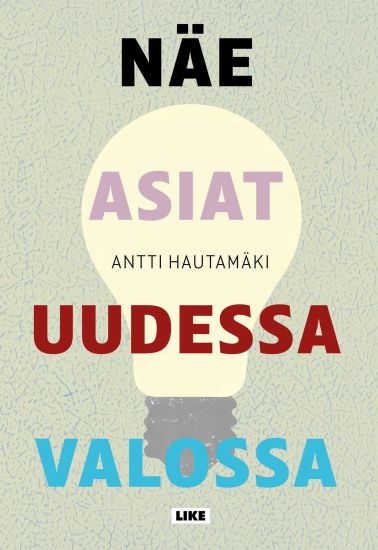
Näe asiat uudessa valossa

Näe asiat uudessa valossa

Antti Hautamäki

Otava
2025
sidottu

Halvin toimitettuna 33,90 €

Innostava opas avarampaan ajatteluun ja luovaan ongelmanratkaisuun. Miten näkökulmat vaikuttavat ajattelussamme ja toiminnassamme? Miten voimme oppia näkemään asiat uudessa valossa? Filosofi ja innovaatiotutkija Antti Hautamäen teos antaa välineet purkaa lukkiutuneita ajatusmalleja. Se opastaa uusien näkökulmien löytämiseen konkreettisten esimerkkien ja harjoitusten avulla. Empatia on taito, joka vahvistaa näkökulmaherkkyyttä. Oivaltava kirja auttaa tunnistamaan ja ymmärtämään erilaisia näkökulmia. Tätä taitoa tarvitaan moninäkökulmaisessa maailmassa. Kaikkia näkökulmia ei tarvitse hyväksyä, mutta niiden kriittinen tarkastelu herättää uusia ideoita ja on tie muutokseen.
Viewpoint Relativism

Viewpoint Relativism

Antti Hautamäki

Springer Nature Switzerland AG
2021
nidottu
This book offers new insights into truth, knowledge, and reality. It details a unique approach to epistemological relativism based on the concept of points of view. In a point of view, an aspect represents an object for a subject. By applying this concept of points of view, the author develops a consistent and adequate form of relativism, called viewpoint relativism, according to which epistemic questions like “Is X true (or justified or existing)” are viewpoint-dependent. The monograph examines central issues related to epistemological relativism. It analyzes major arguments pro and con from different opinions. The author presents the arguments of well-known philosophers. These include such thinkers as Paul Boghossian, John Dewey, Nelson Goodman, Martin Kusch, C. I. Lewis, John MacFarlane, Hilary Putnam, W. V. O. Quine, Richard Rorty, John Searle, and Ludwig Wittgenstein. In the process, the author deconstructs the standard account of correspondence theoryof truth. Viewpoint relativism is a moderate relativism, which is not subjected to standard criticism of extreme relativism. This book argues that knowledge creation presupposes openness to different points of view and their comparison. It also explores the broader implications of viewpoint relativism into current debate about truth in society. The author defends a critical relativism, which accepts pluralism but is critical against all points of view. In the conclusion, he explores the relevance of viewpoint relativism to democracy by showing that the main threat of modern democratic society is not pluralism but absolutism and fundamentalism.

Viewpoint Relativism

Viewpoint Relativism

Antti Hautamäki

Springer Nature Switzerland AG
2020
sidottu
This book offers new insights into truth, knowledge, and reality. It details a unique approach to epistemological relativism based on the concept of points of view. In a point of view, an aspect represents an object for a subject. By applying this concept of points of view, the author develops a consistent and adequate form of relativism, called viewpoint relativism, according to which epistemic questions like “Is X true (or justified or existing)” are viewpoint-dependent. The monograph examines central issues related to epistemological relativism. It analyzes major arguments pro and con from different opinions. The author presents the arguments of well-known philosophers. These include such thinkers as Paul Boghossian, John Dewey, Nelson Goodman, Martin Kusch, C. I. Lewis, John MacFarlane, Hilary Putnam, W. V. O. Quine, Richard Rorty, John Searle, and Ludwig Wittgenstein. In the process, the author deconstructs the standard account of correspondence theoryof truth. Viewpoint relativism is a moderate relativism, which is not subjected to standard criticism of extreme relativism. This book argues that knowledge creation presupposes openness to different points of view and their comparison. It also explores the broader implications of viewpoint relativism into current debate about truth in society. The author defends a critical relativism, which accepts pluralism but is critical against all points of view. In the conclusion, he explores the relevance of viewpoint relativism to democracy by showing that the main threat of modern democratic society is not pluralism but absolutism and fundamentalism.