Kirjojen hintavertailu – 12 859 824 kirjaa ja 27 kauppaa

Kirjailija

Antulio J. Echevarria II

Kirjat ja teokset yhdessä paikassa: 16 kirjaa, julkaisuja vuosilta 2007–2024, suosituimpiin kuuluu Clausewitz and Contemporary War. Vertaile teosten hintoja ja tarkista saatavuus suomalaisista kirjakaupoista.

16 kirjaa

Kirjojen julkaisuvuodet: 2007–2024.

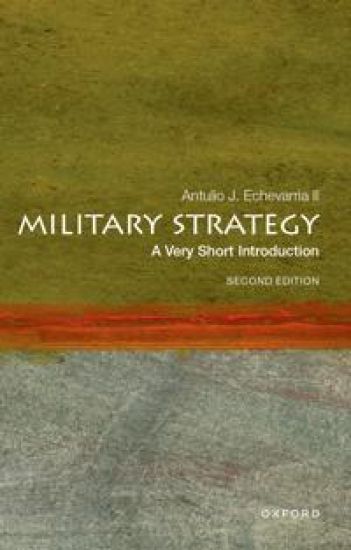
Military Strategy

Military Strategy

Antulio J. Echevarria II

OXFORD UNIVERSITY PRESS INC
2024
nidottu

Halvin toimitettuna 18,90 €

Distilling the ideas of the greatest military theoreticians of history, including Sun Tzu, Niccolò Machiavelli, and Carl von Clausewitz, this clear and engaging Very Short Introduction presents a fascinating account of the "art of the general." Antulio J. Echevarria II highlights the dynamic relationship between the main elements of strategy: purpose, method, and means. Drawing on historical examples, he discusses the major types of military strategy and how emerging technologies are affecting them. This second edition has been updated throughout, and now includes an extended chapter on cyberwarfare which shows how the use of social media platforms to influence opinions on political views and manipulate populations to act in certain ways has evolved from an art to a science.
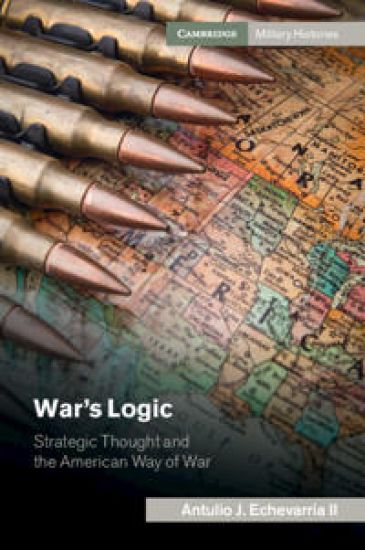
War's Logic

War's Logic

Antulio J. Echevarria II

Cambridge University Press
2021
pokkari
Antulio J. Echevarria II reveals how successive generations of American strategic theorists have thought about war. Analyzing the work of Alfred Thayer Mahan, Billy Mitchell, Bernard Brodie, Robert Osgood, Thomas Schelling, Herman Kahn, Henry Eccles, Joseph Wiley, Harry Summers, John Boyd, William Lind, and John Warden, he uncovers the logic that underpinned each theorist's critical concepts, core principles, and basic assumptions about the nature and character of war. In so doing, he identifies four paradigms of war's nature - traditional, modern, political, and materialist - that have shaped American strategic thought. If war's logic is political, as Carl von Clausewitz said, then so too is thinking about war.
War's Logic

War's Logic

Antulio J. Echevarria II

Cambridge University Press
2021
sidottu

Halvin toimitettuna 99,00 €

Antulio J. Echevarria II reveals how successive generations of American strategic theorists have thought about war. Analyzing the work of Alfred Thayer Mahan, Billy Mitchell, Bernard Brodie, Robert Osgood, Thomas Schelling, Herman Kahn, Henry Eccles, Joseph Wiley, Harry Summers, John Boyd, William Lind, and John Warden, he uncovers the logic that underpinned each theorist's critical concepts, core principles, and basic assumptions about the nature and character of war. In so doing, he identifies four paradigms of war's nature - traditional, modern, political, and materialist - that have shaped American strategic thought. If war's logic is political, as Carl von Clausewitz said, then so too is thinking about war.
The Army and Homeland Security: A Strategic Perspective

The Army and Homeland Security: A Strategic Perspective

Antulio J. Echevarria II; Strategic Studies Institute

Lulu.com
2014
nidottu
The topic of homeland security includes a broad array of missions and mission areas ranging from national missile defense to military assistance to civil authorities. Recently the topic has attracted a great deal of attention due to the public's heightened awareness of the variety and nature of emerging threats and of the United States' vulnerabilities to them. This monograph, written by Lieutenant Colonel Antulio J. Echevarria II, grew out of a tasking by the Army Staff to investigate the Army's role in homeland security from a strategic, rather than a legal or procedural perspective. The author achieves this perspective by placing homeland security missions within the larger spectrum of operations. In so doing, he exposes potential problem areas-missions requiring more or different force structure than that already available-for further action by the Army.
Rapid Decisive Operations: an Assumptions-Based Critique

Rapid Decisive Operations: an Assumptions-Based Critique

Antulio J. Echevarria II; Strategic Studies Institute

Lulu.com
2014
nidottu
Most experts agree that no genuine military transformation or revolution will occur without a corresponding change in operational concepts. Merely replacing old equipment with new is not enough. Militaries must also develop new ways to link tactical actions to strategic ends. For this reason Rapid Decisive Operations (RDO), an emerging concept currently under development by the Joint Futures Lab (J9) of Joint Forces Command, is particularly important for the transformation of U. S. military forces today. An innovative and viable concept will not only stimulate the development of new technologies; it will also help balance the advantages and disadvantages that the introduction of such technologies always entails. On the other hand, a flawed concept will only lead to frustration in training and disappointment in combat as results fail to match expectations.
Toward A Strategy of Positive Ends

Toward A Strategy of Positive Ends

Antulio J. Echevarria II; Huba Wass de Czege

Lulu.com
2014
nidottu
Defense planners and strategists have recently proposed a variety of alternatives for America's role in what many see as a dramatically different international situation. Most of those proposals, though, continue with a Cold War paradigm of trying to foresee what the next threat might be and how the United States might best prepare itself to respond to it. Consequently, the possibility of taking advantage of the intrinsic dynamism of the new security environment in order to create conditions that might promote positive ends-long-term peace, stability, and prosperity-has remained largely overlooked. In this monograph, the authors, Brigadier General (Retired) Huba Wass de Czege and Lieutenant Colonel Antulio J. Echevarria II, make a case for a strategy aimed at achieving positive, rather than neutral or negative, ends. They first discuss the dynamic conditions of the new strategic environment, then explore the options the United States has available for dealing with those conditions.
Clausewitz's Center of Gravity: Changing Our Warfighting Doctrine - Again!

Clausewitz's Center of Gravity: Changing Our Warfighting Doctrine - Again!

Antulio J. Echevarria II; Strategic Studies Institute

Lulu.com
2014
nidottu
Over the last 25 years, the center of gravity concept has grown increasingly central to the U. S. military's warfighting doctrine. It has been hailed by each of the Services and the Joint community as the cornerstone of the operational art; and it has come to occupy a common place in the vocabulary of professional soldiers. It is somewhat surprising, therefore, that, over the last quarter-century especially, the term has come to have so many different meanings. In this monograph, the author, Lieutenant Colonel Antulio Echevarria II, cuts through the myriad interpretations surrounding the concept and gets back to the original idea as conceived by its author, the Prussian military theorist, Carl von Clausewitz. In going back to the original concept, Lieutenant Colonel Echevarria reveals that Clausewitz intended the center of gravity to function much as its counterpart in the mechanical sciences does, that is, as a focal point.
From "Defending Forward" to A "Global Defense-in-Depth": Globalization and Homeland Security
Much of today's defense literature calls for new ways of thinking, ways that appreciate the challenges of a new millennium. Yet, we find surprisingly little that is new in our nation's current strategy documents, particularly those regarding homeland security. Ideas that helped us achieve victory in the 20th century-an age marked by the Cold War and industrial-age thinking-may only hinder us as we strive for strategic success in an era shaped more and more by the forces of globalization. With this concern in mind, Lieutenant Colonel Antulio J. Echevarria II and Professor Bert Tussing have examined the scope and substance of our National Strategy for Homeland Security (NSHS). Disturbingly, they find that the NSHS fails to address the challenges that globalization poses for the security of the American homeland.
Toward an American Way of War

Toward an American Way of War

Antulio J. Echevarria II; Strategic Studies Institute

Lulu.com
2014
nidottu
The American way of war has been much written about over the years. That literature is remarkable for its explicit and implicit consensus regarding the overriding characteristics of the American approach to warfare--aggressive, direct, and focused on achieving decisive victory. A way of war implies thinking about conflict holistically, from prewar condition-setting to the final accomplishment of one's strategic objectives. Unfortunately, American thinking about war tends to put more emphasis on coercive operations--the destruction of an opponent's regular forces on the field of battle--than on what is loosely known as war's "aftermath." Yet, it is in the aftermath where wars are typically won. In this monograph, Lieutenant Colonel Echevarria examines the principal characteristics and ideas associated with the American way of war, past and present. He argues that Americans do not yet have a way of war. What they have is a way of battle.
Fourth-Generation War and Other Myths

Fourth-Generation War and Other Myths

Strategic Studies Institute; Antulio J. Echevarria II

Lulu.com
2014
nidottu
In an era of broad and perhaps profound change, new theories and concepts are to be welcomed rather than shunned. However, before they are fully embraced, they need to be tested rigorously, for the cost of implementing a false theory and developing operational and strategic concepts around it can be greater than remaining wedded to an older, but sounder one. The theory of Fourth Generation War (4GW) is a perfect example. Were we to embrace this theory, a loose collection of ideas that does not hold up to close scrutiny, the price we might pay in a future conflict could be high indeed. In this monograph, Dr. Antulio J. Echevarria II provides a critique of the theory of 4GW, examining its faulty assumptions and the problems in its logic. by subscribing to this bankrupt theory. If their aim is truly to create positive change, then they- and we-would be better off jettisoning the theory and retaining the traditional concept of insurgency, while modifying it to include the greater mobility and access afforded...
Challenging Transformation's Cliches

Challenging Transformation's Cliches

Strategic Studies Institute; Antulio J. Echevarria II

Lulu.com
2014
nidottu
Most of the ideas underpinning the foundation of American defense policy and military strategy today were once new and untested concepts at the edge of strategic thought. Critical thinkers had to analyze and refine those ideas so the defense community could apply them in strategy and force development. This is an ongoing process: new ideas emerge, are tested, and adopted, revised, or discarded. To aid the process of identifying and examining new ideas and concepts, the Strategic Studies Institute publishes a special series called "Advancing Strategic Thought." This series offers a forum for putting forth original and innovative concepts and perspectives concerning national security policy and military strategy. Yet, it also challenges accepted notions which might have become part of the foundation of American defense policy a bit too quickly. All of this is done, again, in the interest of advancing strategic thought.
Wars of Ideas and the War of Ideas

Wars of Ideas and the War of Ideas

Strategic Studies Institute; Antulio J. Echevarria II

Lulu.com
2014
nidottu
Many references to "the war of ideas" have appeared in defense literature recently. However, few of them actually shed any light on what wars of ideas are. This monograph, by Dr. Antulio J. Echevarria II, begins by classifying several types of wars of ideas. It is important to note, as the author points out, that physical events, whether intended or incidental, can play determining roles in the ways these kinds of conflicts unfold, and how (or whether) they are resolved. In other words, because ideas are interpreted subjectively, it is not likely that opposing parties will "win" each other over by means of an ideational campaign alone. Moreover, third parties may consider the actions of the belligerents as much more important than the collective merits of their ideas.
Clausewitz and Contemporary War

Clausewitz and Contemporary War

Antulio J. Echevarria II

Oxford University Press
2013
nidottu
While many scholars agree that Clausewitz's On War is frequently misunderstood, almost none have explored his methodology to see whether it might enhance our understanding of his concepts. This book lays out Clausewitz's methodology in a brisk and straightforward style. It then uses that as a basis for understanding his contributions to the ever growing body of knowledge of war. The specific contributions this study addresses are Clausewitz's theories concerning the nature of war, the relationship between war and politics, and several of the major principles of strategy he examined. These theories and principles lie at the heart of the current debates over the nature of contemporary conflict. They also underpin much of the instruction that prepares military and civilian leaders for their roles in the development and execution of military strategy. Thus, they are important even in circles where Clausewitz is only briefly studied. While understanding On War is no more a prerequisite for winning wars than knowledge is a requirement for exercising power, Clausewitz's opus has become something of an authoritative reference for those desiring to expand their knowledge of war. By linking method and concept, this book contributes significantly to that end.
Clausewitz and Contemporary War

Clausewitz and Contemporary War

Antulio J. Echevarria II

Oxford University Press
2007
sidottu

Halvin toimitettuna 104,80 €

While many scholars agree that Clausewitz's On War is frequently misunderstood, almost none have explored his methodology to see whether it might enhance our understanding of his concepts. This book lays out Clausewitz's methodology in a brisk and straightforward style. It then uses that as a basis for understanding his contributions to the ever growing body of knowledge of war. The specific contributions this study addresses are Clausewitz's theories concerning the nature of war, the relationship between war and politics, and several of the major principles of strategy he examined. These theories and principles lie at the heart of the current debates over the nature of contemporary conflict. They also underpin much of the instruction that prepares military and civilian leaders for their roles in the development and execution of military strategy. Thus, they are important even in circles where Clausewitz is only briefly studied. While understanding On War is no more a prerequisite for winning wars than knowledge is a requirement for exercising power, Clausewitz's opus has become something of an authoritative reference for those desiring to expand their knowledge of war. By linking method and concept, this book contributes significantly to that end.
Imagining Future War

Imagining Future War

Antulio J. Echevarria II

Praeger Publishers Inc
2007
sidottu
Rapid and momentous technological changes at the turn of the 20th century forced military professionals and educated civilians to envision the future of war and warfare, especially during an age where nations found themselves aggressively competing for dominance on the world stage. Antulio J. Echevarria II offers a comparative study of these predictions to assess who got it right and why. He concludes that professionals were particularly adept at predicting the warfare of the immediate future by framing their discussions in terms of solving tactical problems, but they were much less successful at thinking of the long-term. Unburdened by the necessity of strategic problem-solving, educated amateurs were allowed more flexibility to imagine the long-term future of warfare, and, at times, proved to be remarkably accurate. Echevarria organizes his study by comparing visions of future wars on land, at sea, undersea, and in air. In each instance professionals and amateurs had their own distinctive imaginings. Among the notable speculators included in this book are science fiction author H. G. Wells and military theorist Ivan Bloch. This approach to the study of warfare is one of those rare examples of a book that can appeal to and inform a wide cross-section of readers.