
Kirjojen hintavertailu – 12 903 725 kirjaa ja 27 kauppaa

Kirjailija

Ao Wang

Kirjat ja teokset yhdessä paikassa: 2 kirjaa, julkaisuja vuosilta 2018–2026, suosituimpiin kuuluu Optoelectronic Tweezers for Manipulation at the Micro and Nano Scale. Vertaile teosten hintoja ja tarkista saatavuus suomalaisista kirjakaupoista.

2 kirjaa

Kirjojen julkaisuvuodet: 2018–2026.

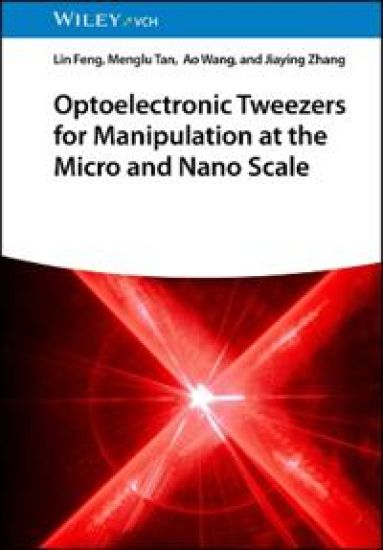
Optoelectronic Tweezers for Manipulation at the Micro and Nano Scale

Optoelectronic Tweezers for Manipulation at the Micro and Nano Scale

Lin Feng; Menglu Tan; Ao Wang; Jiaying Zhang

Wiley-VCH Verlag GmbH
2026
sidottu
Overview of a technique for trapping and manipulation of micro and nanoparticles with light, sound, temperature gradients, and electric fields Optoelectronic Tweezers for Manipulation at the Micro and Nano Scale takes readers on a journey to explore the fascinating world of Optoelectronic Tweezers (OET) and their applications in micro- and nano-scale manipulation. Starting from the evolution of nanotechnology, this book delves into the development of optical micromanipulation technologies such as Optical Tweezers (OT) and the emergence of OET as a cutting-edge technology with superior performance in various aspects. The fundamental principles of OET, its significance, and diverse applications across different fields are meticulously examined. This book covers the working mechanisms, operational principles, optical foundations, photovoltaic effects, and material selection processes in OET technology. Detailed insights into the components of OET devices, including standard OET and photovoltaic OET, are provided, along with a comprehensive analysis of manipulation forces and dielectrophoretic effects within OET chips. Written by a highly qualified researcher and author in the field, Optoelectronic Tweezers for Manipulation at the Micro and Nano Scale includes information on: Practical applications of OET in biomedical fields, showcasing its efficacy in cell sorting, trapping, lysis, patterning, immunoreaction analysis, DNA transfection, and other crucial biological processes Versatility of OET in manipulating a myriad of micro and nano objects, ranging from living organisms like cells and bacteria to non-living entities such as nanoparticles and microspheres Integration of OET with complementary technologies like microfluidics, photocuring, electrowetting, and image recognition Interplay of optical principles, light sources, and photovoltaic mechanisms in OET setups Providing deep knowledge into the boundless opportunities offered by OET technology, Optoelectronic Tweezers for Manipulation at the Micro and Nano Scale is an excellent reference on the subject for materials scientists, thermodynamics physicists, and laser specialists, along with all professionals in the optical industry.
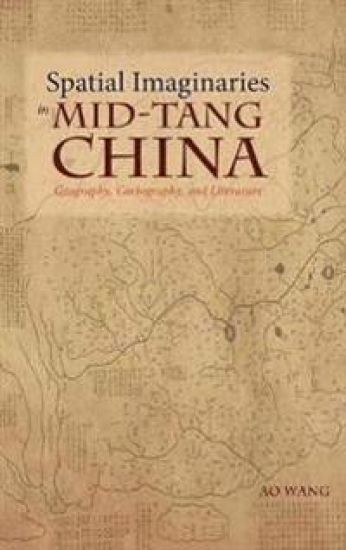
Spatial Imaginaries in Mid-Tang China
This book is in the Cambria Sinophone World Series, headed by Victor Mair (University of Pennsylvania). This book explores a new and innovative topic--the relationship between geographical advancements in the Mid-Tang period (790s to 820s) and spatial imaginaries in contemporaneous literature. Historically and politically, the Mid-Tang period is generally considered to be a period of imperial reconstruction following the chaos of the An Lushan Rebellion (755-763), a rebellion that had a profound impact not only on the Tang empire but also on all of Chinese history. On the one hand, this era witnessed a heightened geographical awareness and a rapid development and accumulation of geographical knowledge, as was manifested in the governmental production of local map-guides and the invention of some monumental world maps. On the other hand, Mid-Tang literature represents one of the peaks of traditional Chinese literature and is known for its diversity of genres and innovative and imaginative engagement with space. For the first time in Tang scholarship, this study identifies the epistemological and aesthetic interplay between geography and literature in medieval China and investigates how this thus-far neglected interplay shaped the Mid-Tang literary imagination. This interdisciplinary investigation uncovers a rich cultural history of human exploration of the world on both fronts and provides a fresh reading of some of the most famous works of Tang literature, for example Li He's poetry and Liu Zongyuan's landscape essays. This study reveals some unique phenomena in genre development and individual creation in Mid-Tang literature and deepens our understanding of the inner workings and internal drive of traditional Chinese literature in general. This book expands and deepens the exploration of the interactions between literature and geography. Literary geography has been an active interdisciplinary field ever since the 1970s. In the early years as the field was taking shape, it was widely criticized for its instrumentalization of literary texts as unproblematic sources for empirical geographical study. In recent years, however, literary scholars have become increasingly interested in treating literary texts as another form of geography, or spatial organization, as many key literary elements, such as setting and milieu in fiction and imagery arrangement in poetry, involve spatial understanding on a fundamental level. This study takes two important approaches regarding the ongoing debates in the field of literary geography. Inasmuch as traditional Chinese intellectual culture prioritized broad learning over specialization, disciplinary boundaries were unclear and literati were often multitalented. Accordingly, in the cases examined in this book, these literary masters were also cartographers, geographical writers, or at least experienced readers of geographical works. Therefore, the study's approach does not treat either literature or geography as instrumental to the other, but rather examines how these two interrelated fields formed a shared intellectual horizon among the literati and found entrance to each other to create new knowledge, perspectives, and metaphors. This study also does not regard literature as a metaphorical geography in a generalized sense, but is specifically focused on how the geographic proficiency of literary authors informed their literature. Together, these two approaches suggest new possibilities of interdisciplinary exchange and offer a new perspective on the results of such exchanges as embodied in literary creation. Spatial Imaginaries in Mid-Tang China will be a welcome resource for scholars and students in Chinese literature, historical geography, cultural history, and art history.