Kirjojen hintavertailu – 12 903 725 kirjaa ja 27 kauppaa

Kirjailija

Aparecida Vilaça

Kirjat ja teokset yhdessä paikassa: 11 kirjaa, julkaisuja vuosilta 2009–2026, suosituimpiin kuuluu Science in the Forest, Science in the Past. Vertaile teosten hintoja ja tarkista saatavuus suomalaisista kirjakaupoista.

Nimi esiintyy myös muodoissa: Aparecida Vilaca

11 kirjaa

Kirjojen julkaisuvuodet: 2009–2026.

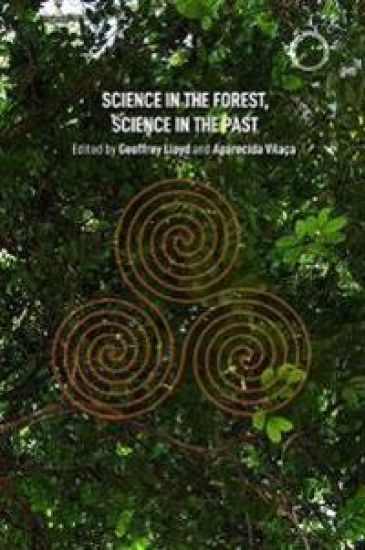
Science in the Forest, Science in the Past

Science in the Forest, Science in the Past

Geoffrey E. R. Lloyd; Aparecida Vilaça

HAU Books
2021
nidottu

Halvin toimitettuna 35,80 €

This collection brings together leading anthropologists, historians, philosophers, and artificial-intelligence researchers to discuss the sciences and mathematics used in various Eastern, Western, and Indigenous societies, both ancient and contemporary. The authors analyze prevailing assumptions about these societies and propose more faithful, sensitive analyses of their ontological views about reality—a step toward mutual understanding and translatability across cultures and research fields. Science in the Forest, Science in the Past is a pioneering interdisciplinary exploration that will challenge the way readers interested in sciences, mathematics, humanities, social research, computer sciences, and education think about deeply held notions of what constitutes reality, how it is apprehended, and how to investigate it.
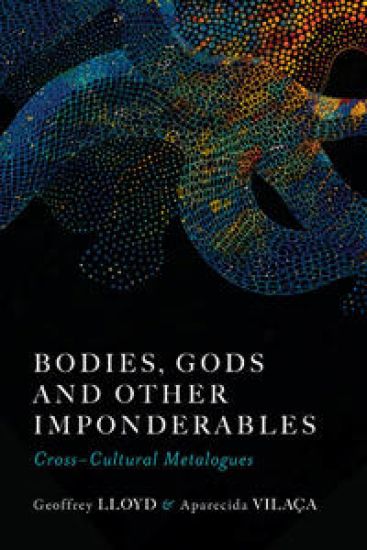
Bodies, Gods and Other Imponderables

Bodies, Gods and Other Imponderables

Geoffrey Lloyd; Aparecida Vilaça

BERGHAHN BOOKS
2026
sidottu
Through a dialogue between a philosopher and an anthropologist, one a specialist in ancient Greek and Chinese thought, the other in Amazonian Indigenous peoples, Geoffrey Lloyd and Aparecida Vilaça revise our understanding of beliefs and behaviours considered counter-intuitive in the Western world. These include ideas about the body and its antitheses, dreams, sickness, gods and the narratives and myths which are used to untangle these concepts. What is distinctive about the approach adopted here is that it poses radical questions about the nature of the problems themselves. This turns the study into a resource for the revision of many of our own current presuppositions.
Of Jaguars and Butterflies

Of Jaguars and Butterflies

Geoffrey Lloyd; Aparecida Vilaça

BERGHAHN BOOKS
2025
nidottu
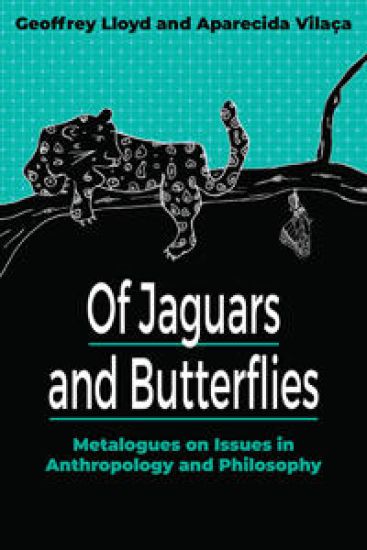
What are we to make of statements that jaguars see themselves as humans, or of doubts about the boundary between dreams and waking? Jointly authored by an anthropologist and a philosopher, this book investigates some of the most puzzling ideas and practices reported in modern ethnography and ancient philosophy, concerning humans, animals, persons, spirits, agency, selfhood, consciousness, nature, life, death, disease and health. The study’s twin aims are first to explore the possibility of achieving a better understanding of the materials we discuss and then to see what lessons we can draw from them to challenge and revise our own fundamental assumptions.
Of Jaguars and Butterflies

Of Jaguars and Butterflies

Geoffrey Lloyd; Aparecida Vilaça

BERGHAHN BOOKS
2023
sidottu
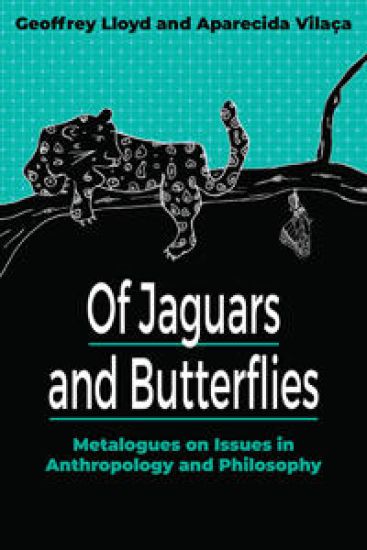
What are we to make of statements that jaguars see themselves as humans, or of doubts about the boundary between dreams and waking? Jointly authored by an anthropologist and a philosopher, this book investigates some of the most puzzling ideas and practices reported in modern ethnography and ancient philosophy, concerning humans, animals, persons, spirits, agency, selfhood, consciousness, nature, life, death, disease and health. The study’s twin aims are first to explore the possibility of achieving a better understanding of the materials we discuss and then to see what lessons we can draw from them to challenge and revise our own fundamental assumptions.
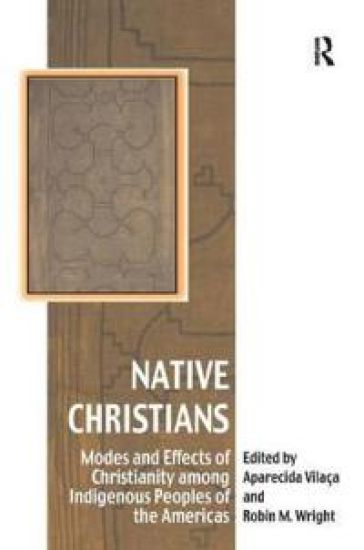
Native Christians

Native Christians

Aparecida Vilaça

TAYLOR FRANCIS LTD
2021
nidottu
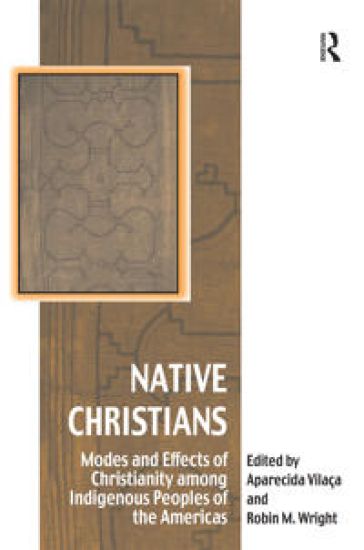
Native Christians reflects on the modes and effects of Christianity among indigenous peoples of the Americas drawing on comparative analysis of ethnographic and historical cases. Christianity in this region has been part of the process of conquest and domination, through the association usually made between civilizing and converting. While Catholic missions have emphasized the 'civilizing' process, teaching the Indians the skills which they were expected to exercise within the context of a new societal model, the Protestants have centered their work on promoting a deep internal change, or 'conversion', based on the recognition of God's existence. Various ethnologists and scholars of indigenous societies have focused their interest on understanding the nature of the transformations produced by the adoption of Christianity. The contributors in this volume take native thought as the starting point, looking at the need to relativize these transformations. Each author examines different ethnographic cases throughout the Americas, both historical and contemporary, enabling the reader to understand the indigenous points of view in the processes of adoption and transformation of new practices, objects, ideas and values.
Paletó and Me

Paletó and Me

Aparecida Vilaça

Stanford University Press
2021
pokkari
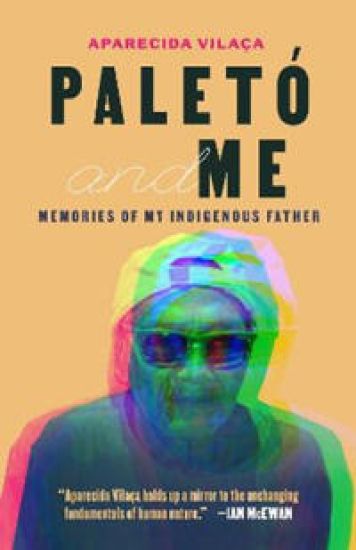
Winner of the prestigious Casa de las Américas Prize, this work spins a heartfelt story of an improbable relationship between an anthropologist and her charismatic Indigenous father. When Aparecida Vilaça first traveled down the remote Negro River in Amazonia, she expected to come back with notebooks and tapes full of observations about the Indigenous Wari' people—but not with a new father. In Paletó and Me, Vilaça shares her life with her adoptive Wari' family, and the profound personal transformations involved in becoming kin. Paletó—unfailingly charming, always prepared with a joke—shines with life in Vilaça's account of their unusual father-daughter relationship. Paletó was many things: he was a survivor, who lived through the arrival of violent invaders and diseases. He was a leader, who taught through laughter and care, spoke softly, yet was always ready to jump into the unknown. He could shift seamlessly between the roles of the observer and the observed, and in his visits to Rio de Janeiro, deconstructs urban social conventions with ease and wit. Begun the day after Paletó's death at the age of 85, Paletó and Me is a celebration of life, weaving together the author's own memories of learning the lifeways of Indigenous Amazonia with her father's testimony to Wari' persistence in the face of colonization. Speaking from the heart as both anthropologist and daughter, Vilaça offers an intimate look at Indigenous lives in Brazil over nearly a century.
Praying and Preying

Praying and Preying

Aparecida Vilaca

University of California Press
2016
pokkari
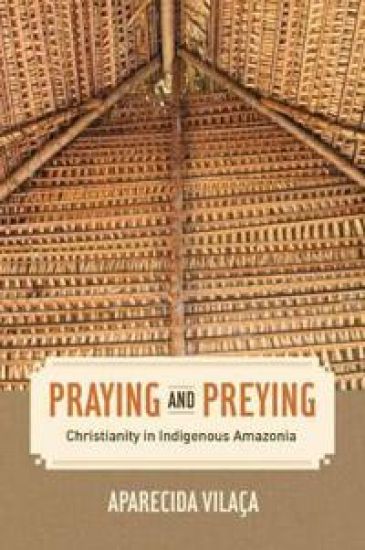
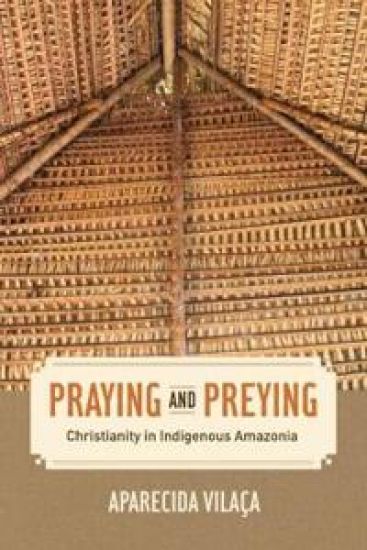
Praying and Preying offers one of the rare anthropological monographs on the Christian experience of contemporary Amazonian indigenous peoples, based on an ethnographic study of the relationship between the Wari', inhabitants of Brazilian Amazonia, and the Evangelical missionaries of the New Tribes Mission. Vilaca turns to a vast range of historical, ethnographic and mythological material related to both the Wari' and missionaries perspectives and the author's own ethnographic field notes from her more than 30-year involvement with the Wari' community. Developing a close dialogue between the Melanesian literature, which informs much of the recent work in the Anthropology of Christianity, and the concepts and theories deriving from Amazonian ethnology, in particular the notions of openness to the other, unstable dualism and perspectivism, the author provides a fine-grained analysis of the equivocations and paradoxes that underlie the translation processes performed by the different agents involved and their implications for the transformation of the native notion of personhood.
Praying and Preying

Praying and Preying

Aparecida Vilaca

University of California Press
2016
sidottu
Praying and Preying offers one of the rare anthropological monographs on the Christian experience of contemporary Amazonian indigenous peoples, based on an ethnographic study of the relationship between the Wari', inhabitants of Brazilian Amazonia, and the Evangelical missionaries of the New Tribes Mission. Vilaca turns to a vast range of historical, ethnographic and mythological material related to both the Wari' and missionaries perspectives and the author's own ethnographic field notes from her more than 30-year involvement with the Wari' community. Developing a close dialogue between the Melanesian literature, which informs much of the recent work in the Anthropology of Christianity, and the concepts and theories deriving from Amazonian ethnology, in particular the notions of openness to the other, unstable dualism and perspectivism, the author provides a fine-grained analysis of the equivocations and paradoxes that underlie the translation processes performed by the different agents involved and their implications for the transformation of the native notion of personhood.
Strange Enemies

Strange Enemies

Aparecida Vilaça

Duke University Press
2010
sidottu
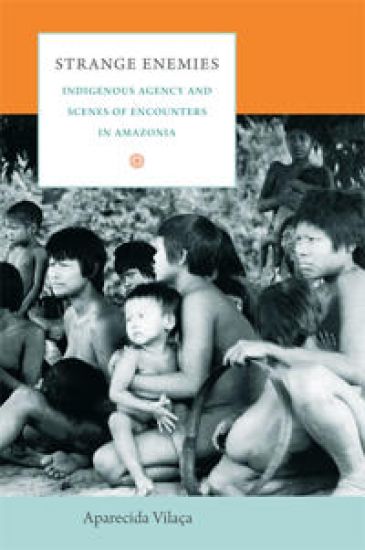
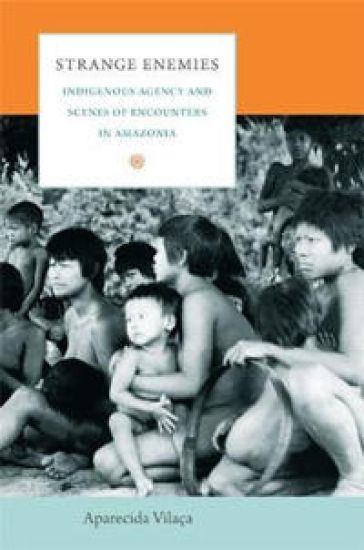
In 1956, in the Brazilian state of Rondônia, a group of Wari’ Indians had their first peaceful contact with whites: Protestant missionaries and officers from the national Indian Protection Service. On returning to their villages, the Wari’ announced, “We touched their bodies!” Meanwhile the whites reported to their own people that “the region’s most warlike tribe has entered the pacification phase!” Initially published in Brazil, Strange Enemies is an ethnographic narrative of the first encounters between these peoples with radically different worldviews. During the 1940s and 1950s, white rubber tappers invading the Wari’ lands raided the native villages, shooting and killing their victims as they slept. These massacres prompted the Wari’ to initiate a period of intense retaliatory warfare. The national government and religious organizations subsequently intervened, seeking to “pacify” the Indians. Aparecida Vilaça was able to interview both Wari’ and non-Wari’ participants in these encounters, and here she shares their firsthand narratives of the dramatic events. Taking the Wari’ perspective as its starting point, Strange Enemies combines a detailed examination of these cross-cultural encounters with analyses of classic ethnological themes such as kinship, shamanism, cannibalism, warfare, and mythology.
Strange Enemies

Strange Enemies

Aparecida Vilaça

Duke University Press
2010
pokkari
In 1956, in the Brazilian state of Rondônia, a group of Wari’ Indians had their first peaceful contact with whites: Protestant missionaries and officers from the national Indian Protection Service. On returning to their villages, the Wari’ announced, “We touched their bodies!” Meanwhile the whites reported to their own people that “the region’s most warlike tribe has entered the pacification phase!” Initially published in Brazil, Strange Enemies is an ethnographic narrative of the first encounters between these peoples with radically different worldviews. During the 1940s and 1950s, white rubber tappers invading the Wari’ lands raided the native villages, shooting and killing their victims as they slept. These massacres prompted the Wari’ to initiate a period of intense retaliatory warfare. The national government and religious organizations subsequently intervened, seeking to “pacify” the Indians. Aparecida Vilaça was able to interview both Wari’ and non-Wari’ participants in these encounters, and here she shares their firsthand narratives of the dramatic events. Taking the Wari’ perspective as its starting point, Strange Enemies combines a detailed examination of these cross-cultural encounters with analyses of classic ethnological themes such as kinship, shamanism, cannibalism, warfare, and mythology.
Native Christians

Native Christians

Aparecida Vilaça

Ashgate Publishing Limited
2009
sidottu
Native Christians reflects on the modes and effects of Christianity among indigenous peoples of the Americas drawing on comparative analysis of ethnographic and historical cases. Christianity in this region has been part of the process of conquest and domination, through the association usually made between civilizing and converting. While Catholic missions have emphasized the 'civilizing' process, teaching the Indians the skills which they were expected to exercise within the context of a new societal model, the Protestants have centered their work on promoting a deep internal change, or 'conversion', based on the recognition of God's existence. Various ethnologists and scholars of indigenous societies have focused their interest on understanding the nature of the transformations produced by the adoption of Christianity. The contributors in this volume take native thought as the starting point, looking at the need to relativize these transformations. Each author examines different ethnographic cases throughout the Americas, both historical and contemporary, enabling the reader to understand the indigenous points of view in the processes of adoption and transformation of new practices, objects, ideas and values.