Kirjojen hintavertailu – 12 859 818 kirjaa ja 27 kauppaa
Kirjailija
Aphra Behn
Kirjat ja teokset yhdessä paikassa: 202 kirjaa, julkaisuja vuosilta 1967–2026, suosituimpiin kuuluu Rover. Vertaile teosten hintoja ja tarkista saatavuus suomalaisista kirjakaupoista.
First published in 1688, Oroonoko follows the tragic love story of a charismatic African prince and his beloved Imoinda. The eponymous hero is tricked into slavery and sold to European colonists in Surinam. Behn's moving and deeply empathetic tale is structured as a first-person account of Oroonoko's life, love, rebellion, and execution. This Warbler Classics edition includes an historically illuminating article by George Jay Smith from 1925 and an essay that provides context for Oroonoko, Behn's most famous story, by Janet Todd, whose biography Aphra Behn: A Secret Life was published in 2017.
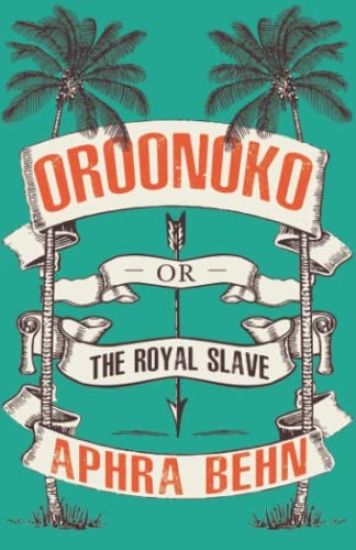
First published in 1688, Oroonoko, or, The Royal Slave is a short, politically charged novella by the Restoration playwright – and spy – Aphra Behn, and is arguably one of the founding texts of the novel form. Purporting to chart the life of an African prince, Oroonoko, who is tricked into slavery and taken to South America, the narrative follows the Prince through his trials of love, loss and rebellion. Vying for the title of the first English novel – and certainly the first to be read as an indictment of the treatment of Africans – Oroonoko has all the hallmarks of Behn's stage works, which are widely considered to be amongst the most important of the Restoration period.
Aphra Behn (1640-1689) is renowned as the first professional woman of literature and drama in English. Her career in the Restoration theatre extended over two decades, encompassing remarkable generic range and diversity. Her last five plays, written and performed between 1682 and 1696, include city comedies (The City-Heiress, The Luckey Chance), a farce (The Emperor of the Moon), a tragicomedy (The Widdow Ranter), and a comedy of family inheritance (The Younger Brother). These plays exemplify Behn's skills in writing for individual performers, and exhibit the topical political engagement for which she is renowned. They witness to Behn's popularity with theatre audiences during the politically and financially difficult years of the 1680s and even after her death. Informed by the most up-to-date research in computational attribution, this fully annotated edition draws on recent scholarship to provide a comprehensive guide to Behn's work, and the literary, theatrical and political history of the Restoration.
After learning how to fight at a young age, Oroonoko, an African prince, fights alongside his army against invading forces. When a celebrated general saves Oroonoko’s life, trading his own to take an arrow for Oroonoko, the young prince feels indebted to the man and decides to go pay his respects to the late general’s family. There, he meets Imoinda, the daughter of the general. Oroonoko and Imoinda quickly fall in love and become betrothed, but the King, Oroonoko’s father, hears of Imoinda’s beauty and decides to take her as one of his wives. When Oroonoko and Imoinda rebel against this, the King sells Imoinda into slavery. Heartbroken, Oroonoko goes back to war, only to be tricked and captured by a British general. After the British general sells Oroonoko into slavery, he is reunited with Imoinda, as they are sold to work on the same plantation. This joy is short lived, as the horrors of slavery take its toll. When Imoinda becomes pregnant, the couple decide to do whatever it takes to ensure the best life for their child. They beg to be emancipated, but the plantation owner hardly considers their request, forcing Oroonoko to take his freedom back by force. With a lifetime of training, the love of his life at his side, and a dedication to regain his freedom, Oroonoko must lead a slave rebellion, risking everything he has for what he and his family should have: freedom. Oroonoko: or, The Royal Slave has earned acclaim from both literary critics and historians. When it was originally published in 1688, less than a year before author Aphra Behn died, Oroonoko: or, The Royal Slave did not receive immediate attention. However, Behn’s work did gain popularity after a stage version of the novel was released in 1695. While the accuracy of the novel’s plot has been questioned and debated by historians, Oroonoko: or The Royal Slave has earned cultural and historical significance by being claimed as one of the first novels written in English. Along with its prolific and innovative writer, the novel has earned significance that is still admirable today. Now redesigned with an eye-catching cover and reprinted in a modern font, Oroonoko: or The Royal Slave by Aphra Behn is accessible for a modern audience.
Oroonoko - A Tragedy as It is Acted at the Theatre-Royal is an unchanged, high-quality reprint of the original edition of 1696. Hansebooks is editor of the literature on different topic areas such as research and science, travel and expeditions, cooking and nutrition, medicine, and other genres. As a publisher we focus on the preservation of historical literature. Many works of historical writers and scientists are available today as antiques only. Hansebooks newly publishes these books and contributes to the preservation of literature which has become rare and historical knowledge for the future.
The best-known work by Aphra Behn, widely considered the first professional woman writer in England, Oroonoko is an important contribution to the development of the novel in English. Though it predates the British abolition movement by more than a century, it is also an early depiction of the dehumanizing racial violence of slavery: Oroonoko tells of a noble African prince enslaved and taken to Surinam, where he leads a violent revolt of the enslaved. When the revolt fails, circumstances force him to kill his wife, the beautiful Imoinda, before he is himself executed, dying with honor. This edition is accompanied by an informative introduction and contextual materials situating Oroonoko in the context of seventeenth-century slavery and the colonization of Surinam. Contextual materials also address the early reception of Oroonoko, including Thomas Southerne's popular stage adaptation of the narrative.
First published in 1688, "Oroonoko" follows the tragic love story of Oroonoko, an African prince, and his beloved Imoinda. When the king hears of Imoinda's beauty he demands that she become one of his wives, giving her a sacred veil, thus forcing her to become a member of his harem. Oroonoko, believing that the king is too old to consummate their marriage, secretly plans a romantic rendezvous with Imoinda, an action which consequently results in the two being sold into slavery. After travelling to Surinam, an English colony at the time, Oroonoko is surprisingly reunited with Imoinda. The two live together as husband and wife under their slave names of Caesar and Clemene. Imoinda becomes pregnant and the two petition their master to be returned to their homeland. When their request is denied, Oroonoko plans a slave revolt, an action when ultimately leads to the novel's tragic conclusion. A compelling and sympathetic novel, "Oroonoko" is regarded as one of the earliest of English novels, which was immensely popular in its time and shone an important light on the brutality of slavery in the English colonies. This edition is printed on premium acid-free paper.
Aphra Behn was a prolific and well established writer but facts about her remain scant and difficult to confirm. What can safely be said though is that Aphra Behn is now regarded as a key English playwright and a major figure in Restoration theatre. Aphra was born into the rising tensions to the English Civil War. Obviously a time of much division and difficulty as the King and Parliament, and their respective forces, came ever closer to conflict. There are claims she was a spy, that she travelled abroad, possibly as far as Surinam. By 1664 her marriage was over (though by death or separation is not known but presumably the former as it occurred in the year of their marriage) and she now used Mrs Behn as her professional name. Aphra now moved towards pursuing a more sustainable and substantial career and began work for the King's Company and the Duke's Company players as a scribe. Previously her only writing had been poetry but now she would become a playwright. Her first, "The Forc'd Marriage", was staged in 1670, followed by "The Amorous Prince" (1671). After her third play, "The Dutch Lover", Aphra had a three year lull in her writing career. Again it is speculated that she went travelling again, possibly once again as a spy. After this sojourn her writing moves towards comic works, which prove commercially more successful. Her most popular works included "The Rover" and "Love-Letters Between a Nobleman and His Sister" (1684-87). With her growing reputation Aphra became friends with many of the most notable writers of the day. This is The Age of Dryden and his literary dominance. From the mid 1680's Aphra's health began to decline. This was exacerbated by her continual state of debt and descent into poverty. Aphra Behn died on April 16th 1689, and is buried in the East Cloister of Westminster Abbey. The inscription on her tombstone reads: "Here lies a Proof that Wit can never be Defence enough against Mortality." She was quoted as stating that she had led a "life dedicated to pleasure and poetry."
Aphra Behn was a prolific and well established writer but facts about her remain scant and difficult to confirm. What can safely be said though is that Aphra Behn is now regarded as a key English playwright and a major figure in Restoration theatre. Aphra was born into the rising tensions to the English Civil War. Obviously a time of much division and difficulty as the King and Parliament, and their respective forces, came ever closer to conflict. There are claims she was a spy, that she travelled abroad, possibly as far as Surinam. By 1664 her marriage was over (though by death or separation is not known but presumably the former as it occurred in the year of their marriage) and she now used Mrs Behn as her professional name. Aphra now moved towards pursuing a more sustainable and substantial career and began work for the King's Company and the Duke's Company players as a scribe. Previously her only writing had been poetry but now she would become a playwright. Her first, "The Forc'd Marriage", was staged in 1670, followed by "The Amorous Prince" (1671). After her third play, "The Dutch Lover", Aphra had a three year lull in her writing career. Again it is speculated that she went travelling again, possibly once again as a spy. After this sojourn her writing moves towards comic works, which prove commercially more successful. Her most popular works included "The Rover" and "Love-Letters Between a Nobleman and His Sister" (1684-87). With her growing reputation Aphra became friends with many of the most notable writers of the day. This is The Age of Dryden and his literary dominance. From the mid 1680's Aphra's health began to decline. This was exacerbated by her continual state of debt and descent into poverty. Aphra Behn died on April 16th 1689, and is buried in the East Cloister of Westminster Abbey. The inscription on her tombstone reads: "Here lies a Proof that Wit can never be Defence enough against Mortality." She was quoted as stating that she had led a "life dedicated to pleasure and poetry."