Kirjojen hintavertailu – 12 903 725 kirjaa ja 27 kauppaa
Kirjailija
April D. DeConick
Kirjat ja teokset yhdessä paikassa: 8 kirjaa, julkaisuja vuosilta 2004–2017, suosituimpiin kuuluu The Thirteenth Apostle: Revised Edition. Vertaile teosten hintoja ja tarkista saatavuus suomalaisista kirjakaupoista.
In Seek to See Him April DeConick argues that the Gospel of Thomas, contrary to the way Thomas is normally understood, does not originate from gnostic traditions. Instead, she proposes that Thomas is best explained by Hermetic and Second Temple Jewish mystical traditions. DeConick substantiates her proposal by first examining the developmental stages of the Gospel of Thomas, questioning the classification of Thomas as gnostic on the basis of Thomas' dualism and his speculation about original sin. DeConick carefully delineates the difference between Thomas' and gnostic views of the world and of salvation before going on to demonstrate the crucial role of purification, heavenly ascent, and visio dei - final transformation through an experience of seeing God - in this Gospel. In the end, DeConick shows that Thomas is best explained as arising from the fusion of Jewish Mysticism and Hermetic praxis and not as being shaped by gnostic traditions.
In Holy Misogyny, bible scholar April DeConick wants real answers to the questions that are rarely whispered from the pulpits of the contemporary Christian churches. Why is God male? Why are women associated with sin? Why can't women be priests? Drawing on her extensive knowledge of the early Christian literature, she seeks to understand the conflicts over sex and gender in the early church—what they were and what was at stake. She explains how these ancient conflicts have shaped contemporary Christianity and its promotion of male exclusivity and superiority in terms of God, church leadership, and the bed. DeConick's detective work uncovers old aspects of Christianity before later doctrines and dogmas were imposed upon the churches, and the earlier teachings about the female were distorted. Holy Misogyny shows how the female was systematically erased from the Christian tradition, and why. She concludes that the distortion and erasure of the female is the result of ancient misogyny made divine writ, a holy misogyny that remains with us today.
In 2006 National Geographic released the first English translation of the Gospel of Judas, a second-century text discovered in Egypt in the 1970s. The translation caused a sensation because it seemed to overturn the popular image of Judas the betrayer and instead presented a benevolent Judas who was a friend of Jesus. In The Thirteenth Apostle April DeConick offers a new translation of the Gospel of Judas which seriously challenges the National Geographic interpretation of a good Judas. Inspired by the efforts of the National Geographic team to piece together this ancient manuscript, DeConick sought out the original Coptic text and began her own translation. "I didn't find the sublime Judas, at least not in Coptic. What I found were a series of English translation choices made by the National Geographic team, choices that permitted a different Judas to emerge in the English translation than in the Coptic original. Judas was not only not sublime, he was far more demonic than any Judas I know in any other piece of early Christian literature, Gnostic or otherwise." DeConick contends that the Gospel of Judas is not about a "good" Judas, or even a "poor old" Judas. It is a gospel parody about a "demon" Judas written by a particular group of Gnostic Christians known as the Sethians who lived in the second century CE. The purpose of the text was to criticize 'mainstream' or apostolic Christianity from the point of view of these Gnostic Christians, especially their doctrine of atonement, their Eucharistic practices, and their creedal faith which they claimed to have inherited from the twelve disciples. Professor DeConick provides her English translation and interpretation of this newly recovered gospel within the previously overlooked context of a Christianity in the second century that was sectarian and conflicted. The first book to challenge the National Geographic version of the Gospel of Judas, The Thirteenth Apostle is sure to inspire to fresh debate around this most infamous of biblical figures. This fully revised and updated edition includes a new chapter, 'Judas the Star', and a substantial new preface which reflects upon the controversial reception of The Thirteenth Apostle and the advances in scholarship that have been made since its publication.
Israel's God and Rebecca's Children is a collection of essays written as a tribute to the lasting scholarship and friendship of Larry Hurtado (University of Edinburgh) and Alan Segal (Barnard College), two scholars who have contributed significantly to the contemporary understanding of Second Temple and Rabbinic Judaism and early Christianity. Their colleagues and friends examine a wide range of topics that have been the focus of Hurtado and Segal's research, including Christology, community, Jewish-Christian relations, soteriology and the development of early Christianity. Together these essays reconceptualize Christology and community in Judaism and Christianity and provide valuable insights into the issues of community and identity.
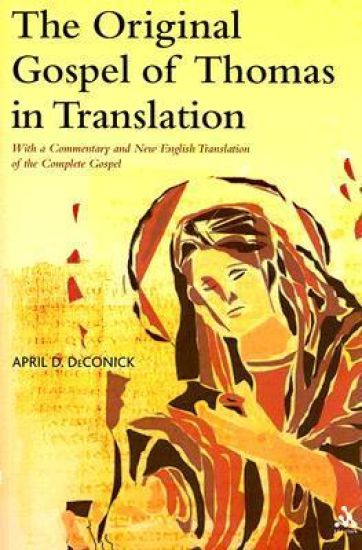
An enigmatic collection of 114 sayings of Jesus, the 'Gospel of Thomas' was discovered in the sands of Nag Hammadi, Egypt, in the 1940's. Here, April DeConick provides a new English translation of the entire Gospel of Thomas, which includes the original 'kernel' of the Gospel and all the sayings. Whilst most other translations are of the Coptic text with only occasional reference to the Greek fragment variants, this translation integrates the Greek and offers new solutions to complete the lacunae. A unique feature of this book is that translations to the parallels of the Gospel are also included. Since its discovery, scholars and the public alike have been intrigued to know what the Gospel says and what light it sheds on the formation of early Christianity. In 'Recovering the Original Gospel of Thomas', April DeConick argued that the gospel was a 'rolling corpus,' a book of sayings that grew over time, beginning as a simple written gospel containing oracles of the prophet Jesus. As the community faced various crises and constituency changes, including the delay of the Eschaton and the need to accommodate Gentiles within the group, its traditions were reinterpreted and the sayings in their gospel updated, accommodating the present experiences of the community. This volume was originally published in hardback as volume 287 in the Journal for the Study of the New Testament Supplement series and is part of the Early Christianity in Context subseries.
This title provides the first comprehensive analysis of the stages of development of the Gospel of Thomas, including a reconstruction, translation, and analysis of the original form of this gospel, the Kernel Gospel of Thomas, as well as the later accretions. The author develops a complete analysis of the origin and meaning of Gospel of Thomas as it developed through various oral and literary compositional stages, from the earliest apocalyptic Kernel Gospel from Jerusalem (30-50 C. E.) to its final form as an early Christian mystical Gospel with Alexandrian affinities (90 C. E.).
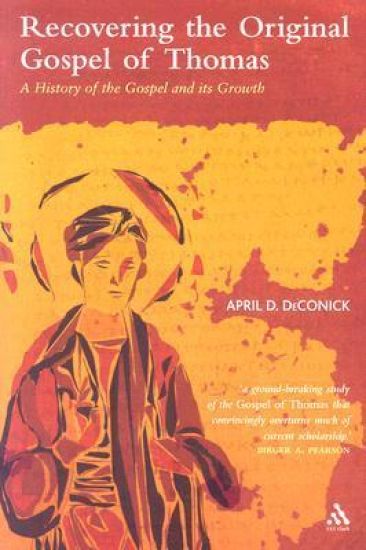
The "Gospel of Thomas" is an enigmatic collection of 114 sayings of Jesus. Here, April DeConick explores tough questions that have occupied scholars since the discovery of this gospel in the sands of Nag Hammadi, Egypt, in the 1940's. Where did this gospel come from? When was it written? Who wrote it? Why was it composed? What is its meaning? Rather than taking the conventional approach to answering these questions, DeConick examines these issues anew by proposing that the gospel developed within a climate dominated by oral consciousness as a product of communal memory. She argues that the gospel was a "rolling corpus," a book of sayings that grew over time, beginning as a simple written gospel containing oracles of the prophet Jesus. This suggests that the sayings in the gospel represent different moments in the history of the Thomasine community and can be read as memoirs of practices, beliefs, and conflicts that arose within the community over time. As the community faced various crises and constituency changes, including the delay of the Eschaton and the need to accommodate Gentiles within the group, its traditions were reinterpreted and the sayings in their gospel updated, accommodating the present experiences of the community. This is volume 286 in the "Library of New Testament Studies" series and is part of the "Early Christianity in Context" series.
The Gospel of John has always been perceived as a more mystical Gospel than the Synoptics. This book explores the mysticism of John in its historical context and puts forward evidence that the mysticism developed in this text is the result of the textualization of a dialogue between the Johannine and Thomasine Christians on the subject of soteriology. In contradiction to the Christians who revered the Gospel of Thomas and taught salvation through ascent and vision mysticism, the Johannine Gospel argues for a mysticism based on the faith experience. Evidence from the Preachings of John, the Gospel of the Savior (P. Berolinensis 22220), the Apocryphon of James, the Ascension of Isaiah, and the Dialogue of the Savior is examined to show that this soteriological controversy did not end with the composition of the Gospel of John but continued well into the second century. This book not only sheds new light on the development of Johannine ideology, but also forges a new path in New Testament