Kirjojen hintavertailu – 12 859 818 kirjaa ja 27 kauppaa
Kirjailija
April Henning
Kirjat ja teokset yhdessä paikassa: 6 kirjaa, julkaisuja vuosilta 2021–2024, suosituimpiin kuuluu Online Doping. Vertaile teosten hintoja ja tarkista saatavuus suomalaisista kirjakaupoista.
Building on extensive online research with different drug communities and doping spaces, the authors illustrate how the online world of doping has developed into a digital ecosystem, and present an argument for understanding doping as a cyborgified concept.
This book examines the bodies, communities, and cultures that evolve in different online doping spaces. By engaging in critical analysis of the interrelatedness of online and offline doped realities, the book provides a comprehensive analysis influenced by digital sociology and feminist theory. It focuses on the intersection of doping, bodies, and technology, and is structured around three interconnected themes prominent in doping research but less acknowledged in online environments: doping spaces and communities; gender and power relationships; and the relationship between online activities and offline social life. Building on extensive online research with different drug communities and doping spaces, the authors illustrate how the online world of doping has developed into a digital ecosystem, and present an argument for understanding doping as a cyborgified concept. It will be of interest to students and researchers of sport and digital sociology, media studies, social work, drug studies and gender studies
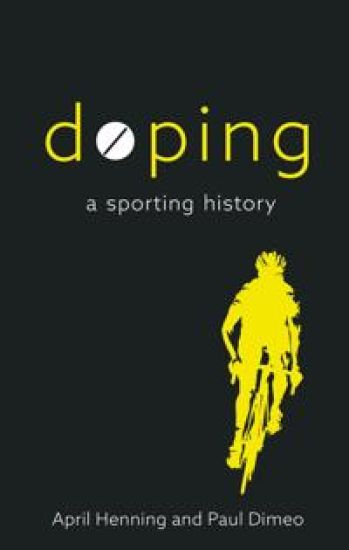
Why is doping a perennial problem for sport? Is this solely a contemporary phenomenon? And should doping always be regarded as cheating, or do today’s anti-doping measures go too far? Drawing on case studies from the early twentieth century to the present day, Doping: A Sporting History explores why the current anti-doping system looks as it does, charting its origins to the founding of the modern Olympic Games. From interwar notions of sporting purity to the post-war stimulant crisis, what seemed an easily resolvable problem soon became an impossible challenge as pharmacology improved, the policy system stuttered, and Cold War politics allowed doping to flourish. The late twentieth century saw the creation of the World Anti-Doping Agency, but has the intensity of these global measures led to unintended harms? From the cyclist Tommy Simpson, who died in 1967 on Mont Ventoux with amphetamines in his jersey, to ? Team Russia’s expulsion from the 2018 Winter Olympics, Doping: A Sporting History is a gripping, provocative account that ultimately proposes a new approach: one for the inclusion and protection of athletes themselves.
Why has doping, both as a practice and a social phenomenon, been approached largely as a question of context: sport or fitness? Individuals may use substances to enhance sporting performance or within the framework of gym and fitness culture to create a perfect body. But clearly, people who dope are not bound to a singular context. It is quite the opposite, as individuals weave between and move across various settings in their trajectories to and from doping, as goals, identities, ambitions, and lifestyles change over time. Still, these stark categorizations often made in public discourse - and reinforced by scholars - have continued to ignore these lived experiences and limit our understanding of doping. Building on data gathered through ethnographic fieldwork, studies of online doping communities, and in-depth case studies, this book embraces the challenge of moving beyond traditional and historical doping dichotomies - such as those of sport or fitness, online or offline, pleasure or harm, masculinity or femininity, and health or harm - and, in a sociologically informed analysis, it develops new terminology to understand trajectories to and from doping. It argues that there are multiple ways to understand doped bodies and doping practices, and that we must approach these questions from the perspective of both/and rather than either/or. By imploding these divisions, it offers updated and nuanced ways of both empirically and theoretically rethinking doping use and experiences attached to the practice.