

Kirjailija
Apuleius
Kirjat ja teokset yhdessä paikassa: 86 kirjaa, julkaisuja vuosilta 1786–2026, suosituimpiin kuuluu The Golden Asse. Vertaile teosten hintoja ja tarkista saatavuus suomalaisista kirjakaupoista.
Nimi esiintyy myös muodoissa: - Apuleius
86 kirjaa
Kirjojen julkaisuvuodet: 1786–2026.


The Apologia and Florida of Apuleius of Madaura (Cram Edition)
Apuleius; Harold Edgeworth Butler
Xpresspress
2026
Nidottu


Psyche und Eros. Ein milesisches Märchen in der Darstellung und Auffassung des Apulejus beleuchtet und auf seinen mythologischen Zusammenhang Gehalt und Ursprung zurückgeführt
Apuleius; Adolf Zinzow
Antigonos Verlag
2024
pokkari
Der Goldene Esel Oder Metamorphosen: Lateinisch - Deutsch. Mit Einer Griechisch-Deutschen Ausgabe Von (Ps.?-)Lukian, Lukios Oder Der Esel
Apuleius
de Gruyter Akademie Forschung
2023
sidottu
The Golden Ass (title in the manuscripts: Metamorphoses) by Apuleius (2nd century AD) is the only completely preserved prose novel in Roman literature and one of the greatest in world literature. The story told by a first-person narrator resembles a picaresque novel and has repeatedly inspired modern novelists. The inserted, sometimes extremely piquant novellas, especially the "fairy tale" of Cupid and Psyche, for example in Boccaccio's Decamerone, also had a broad impact. The description of the Isis cult in the last of the eleven books has also always aroused great interest. A new Tusculum edition - the old one dates from 1958 - is a desideratum because the text has only been interpreted on the basis of modern literary studies since the 1980s (most recently by an internationally renowned research group in Groningen) and the results of this research should definitely be taken into account when editing, translating and cataloguing the work. The German rendering is based on the target language but, unlike that of its predecessors, is as literal as possible and thus fulfils the requirements of a modern bilingual edition.
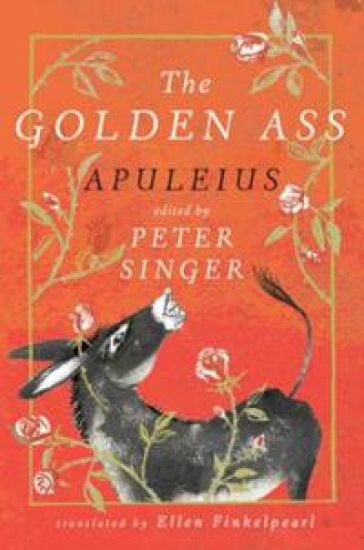
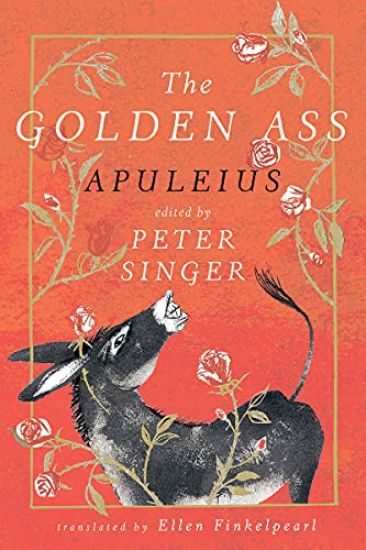
Apuleius’s The Golden Ass, one of a handful of extant ancient novels, remains relatively unknown. Peter Singer, the renowned philosopher and author of the modern classic Animal Liberation, remedies this neglect, bringing the comic tale back to the wider reading public. With a version stripped of the many tales extraneous to the main narrative, Singer exposes the core of the text: the adventures of the man-turned-animal, Lucius. Singer has teamed with Apuleius scholar and translator Ellen Finkelpearl to create a delightful rollicking story in which we follow the adventures of this cocky young man transformed into a donkey, through his travails, erotic adventures and enlightenment. With Singer’s vision, superbly illustrated by prize-winning artists Anya and and Varya Kendel, this newly rendered canonical work is bound to be enjoyed by anyone who cares about human and animal life. Afterwords by Singer and Finkelpearl assess the significance of The Golden Ass for our thoughts about animals, ancient and modern.
Eager to learn the rules of magic, Lucius agrees to participate in a shapeshifting spell that suddenly goes awry, transforming the man into a donkey. His life is abruptly upended as he is attacked, stolen and sold multiple times before finding relief through divine intervention. Lucius is enamored with witchcraft and begs a woman to transform him into a bird. Unfortunately, she fails, and he is immediately turned into an ass. This leads to a tumultuous journey that takes Lucius away from his friends and puts him into the hands of strangers. He is sold by thieves, cooks and farmers, forced to engage in strange and laborious tasks. With each owner comes a different set of obstacles and inevitable misunderstandings. A rare text stemming from Roman antiquity, The Golden Ass is infused with mythological elements. The story covers a wide range of topics from witchcraft to adultery and murder. This expansive narrative has enough twists to keep any reader on the edge of their seat. With an eye-catching new cover, and professionally typeset manuscript, this edition of The Golden Ass is both modern and readable.
Eager to learn the rules of magic, Lucius agrees to participate in a shapeshifting spell that suddenly goes awry, transforming the man into a donkey. His life is abruptly upended as he is attacked, stolen and sold multiple times before finding relief through divine intervention. Lucius is enamored with witchcraft and begs a woman to transform him into a bird. Unfortunately, she fails, and he is immediately turned into an ass. This leads to a tumultuous journey that takes Lucius away from his friends and puts him into the hands of strangers. He is sold by thieves, cooks and farmers, forced to engage in strange and laborious tasks. With each owner comes a different set of obstacles and inevitable misunderstandings. A rare text stemming from Roman antiquity, The Golden Ass is infused with mythological elements. The story covers a wide range of topics from witchcraft to adultery and murder. This expansive narrative has enough twists to keep any reader on the edge of their seat. With an eye-catching new cover, and professionally typeset manuscript, this edition of The Golden Ass is both modern and readable.
This book has been considered by academicians and scholars of great significance and value to literature. This forms a part of the knowledge base for future generations. So that the book is never forgotten we have represented this book in a print format as the same form as it was originally first published. Hence any marks or annotations seen are left intentionally to preserve its true nature.
This book has been considered by academicians and scholars of great significance and value to literature. This forms a part of the knowledge base for future generations. So that the book is never forgotten we have represented this book in a print format as the same form as it was originally first published. Hence any marks or annotations seen are left intentionally to preserve its true nature.

Apuleius: Amor und Psyche Lesefreundlicher Gro druck in 16-pt-Schrift Gro format, 210 x 297 mm Berliner Ausgabe, 2020 Durchgesehener Neusatz bearbeitet und eingerichtet von Theodor Borken Mrchen aus den Metamorphosen des Apuleius. Hier in der deutschen bersetzung von Eduard Norden, Leipzig, 1902. Umschlaggestaltung von Thomas Schultz-Overhage unter Verwendung des Bildes: Alphonse Legros, Amor und Psyche, vor 1867. Gesetzt aus der Minion Pro, 16 pt. Henricus Edition Deutsche Klassik UG (haftungsbeschr nkt) ber den Autor: Um 124 kommt Apuleius in Madaura, im heutigen Algerien, als Sohn einer wohlhabenden r mischen Familie zur Welt. Sein Verm gen bringt er auf ausgedehnten Reisen fast vollst ndig durch und heiratet 155 die reiche Witwe Aemilia Pudentilla. Er besch ftigt sich mit dem gyptischen Isiskult und muss sich gegen den Vorwurf der Zauberei verteidigen. In den 160er Jahren wird er in Karthago zum Priester geweiht, bevor sich seine Spur verliert. Ort und Datum seines Todes sind nicht bekannt. Seine Metamorphoses, die Augustinus in der Sp tantike mit dem Titel Der goldene Esel bezeichnet, z hlen als fr her Roman zur Weltliteratur.
Urspr nglich lautete der Titel dieses Romans "Elf B cher Metamorphosen". Erst sp ter entstand der Titel "Der goldene Esel". Der Ich-Erz hler l sst sich in ein Zauberwelt entf hren. Nach einer Verwandlung lernt er Schrecken und Abgr nde des Lebens kennen und f rchten. Nach seiner R ckverwandlung erf hrt er den Sinn der Abenteuer und Leiden seines Tierdaseins. Eine der in der verschachtelten Textstruktur des "Goldenen Esels"enthaltenen Erz hlungen ist die Geschichte von Amor und Psyche.
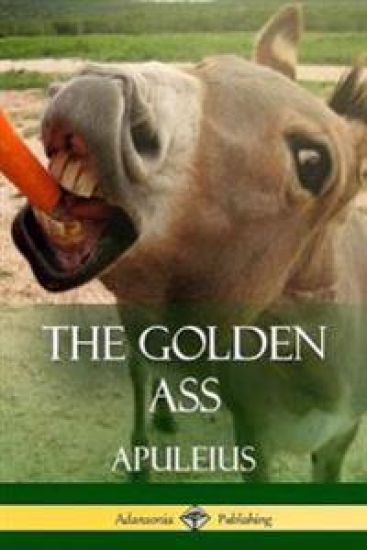
The Golden Ass (Classics of Ancient Roman Literature)
Apuleius; William Adlington
Lulu.com
2019
nidottu
The Golden Ass by Apuleius holds the distinction of being the only novel from Classical Rome to have survived completely to the modern day. This classic translation by William Adlington preserves the original spirit of the text, which is filled with adventurous whimsy. The protagonist, Lucius, has an obsession with magic and wishes above all else to perform and demonstrate his abilities. However one day, during an attempt to turn himself into a bird, Lucius instead turns himself into an ass, or donkey. After this transformation Lucius must journey from place to place, seeking to reverse his fate. What follows are a series of adventures wherein fellow characters, and the ensuing escapades and misfortunes, must be endured by Lucius in spite of his animal form. Facing accusations of murder, almost being cooked for his meat, finding himself under the ownership of a Roman Legionary and meeting the Goddess Isis are just a few of the events that transpire around Lucius.
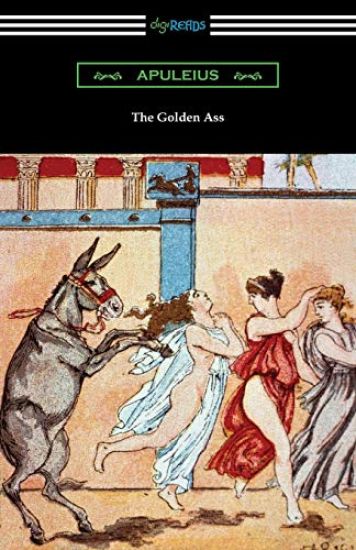
Apuleius was a student of Platonist philosophy and Latin prose writer who produced the novel "Metamorphoses", more popularly known as "The Golden Ass". This work is the only Latin novel to survive in its entirety. Adapted from an earlier Greek story, "The Golden Ass" tells of the adventures of Lucius, a young man who is obsessed with magic. In attempting to perform a spell, Lucius inadvertently transforms himself into an ass. His long and arduous journey is ornately illustrated by Apuleius' witty, imaginative, and often explicit language, in a series of subplots that carry the reader through to Lucius' salvation by the goddess Isis. These include the stories of Cupid and Psyche, Aristomenes, Thelyphron, and others. The novel reflects Apuleius' own fascination with magic and the occult, and although comical at times, contains very serious messages about impiety towards the gods, and the risks of tampering with the supernatural. This edition follows the translation of Thomas Taylor and is printed on premium acid-free paper.
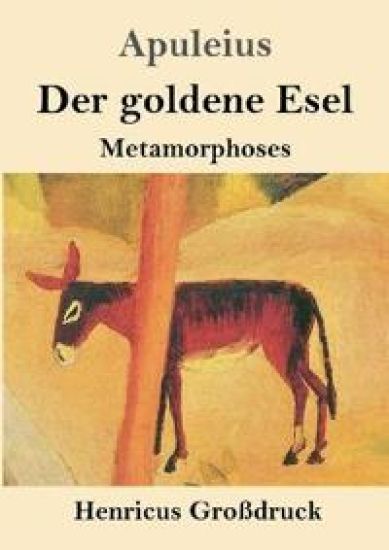
Apuleius: Der goldene Esel. Metamorphoses Lesefreundlicher Gro druck in 16-pt-Schrift Der in einen Esel verwandelte Lucius erz hlt von seinen Irrfahrten, die ihn in absonderliche erotische Abenteuer mit einfachen Zofen und vornehmen M dchen st rzen. Er trifft auf grobe Sadisten und homoerotische Priester, auf Transvestiten und Flagellanten. Verf llt einer adeligen Sodomitin und landet schlie lich aus Scham ber die ffentliche Kopulation allein am Strand von Korinth wo ihm die G ttin Isis erscheint und seine R ckverwandlung betreibt. Der vielschichtige Roman parodiert die Homer'sche Odyssee in burlesk-komischer Art und Weise. Gro format, 210 x 297 mm Berliner Ausgabe, 2019 Durchgesehener Neusatz mit einer Biographie des Autors bearbeitet und eingerichtet von Theodor Borken Entstanden: Um 160/170 n. Chr. . Der Text folgt der bersetzung von August Rode. Textgrundlage ist die Ausgabe: Apulejus: Der goldene Esel. Aus dem Lateinischen bersetzt von August Rode. Berlin: Propyl en-Verlag, 1920. Umschlaggestaltung von Thomas Schultz-Overhage unter Verwendung des Bildes: Macke, August: Esel im Palmenhain, 1914. Gesetzt aus der Minion Pro, 16 pt. Henricus Edition Deutsche Klassik UG (haftungsbeschr nkt) ber den Autor: Um 124 kommt Apuleius in Madaura, im heutigen Algerien, als Sohn einer wohlhabenden r mischen Familie zur Welt. Sein Verm gen bringt er auf ausgedehnten Reisen fast vollst ndig durch und heiratet 155 die reiche Witwe Aemilia Pudentilla. Er besch ftigt sich mit dem gyptischen Isiskult und muss sich gegen den Vorwurf der Zauberei verteidigen. In den 160er Jahren wird er in Karthago zum Priester geweiht, bevor sich seine Spur verliert. Ort und Datum seines Todes sind nicht bekannt. Seine Metamorphoses, die Augustinus in der Sp tantike mit dem Titel Der goldene Esel bezeichnet, z hlen als fr her Roman zur Weltliteratur.
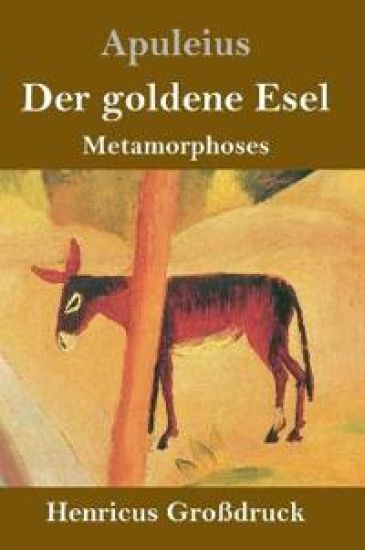
Apuleius: Der goldene Esel. Metamorphoses Lesefreundlicher Gro druck in 16-pt-Schrift Der in einen Esel verwandelte Lucius erz hlt von seinen Irrfahrten, die ihn in absonderliche erotische Abenteuer mit einfachen Zofen und vornehmen M dchen st rzen. Er trifft auf grobe Sadisten und homoerotische Priester, auf Transvestiten und Flagellanten. Verf llt einer adeligen Sodomitin und landet schlie lich aus Scham ber die ffentliche Kopulation allein am Strand von Korinth wo ihm die G ttin Isis erscheint und seine R ckverwandlung betreibt. Der vielschichtige Roman parodiert die Homer'sche Odyssee in burlesk-komischer Art und Weise. Gro format, 210 x 297 mm Berliner Ausgabe, 2019 Durchgesehener Neusatz mit einer Biographie des Autors bearbeitet und eingerichtet von Theodor Borken Entstanden: Um 160/170 n. Chr. . Der Text folgt der bersetzung von August Rode. Textgrundlage ist die Ausgabe: Apulejus: Der goldene Esel. Aus dem Lateinischen bersetzt von August Rode. Berlin: Propyl en-Verlag, 1920. Umschlaggestaltung von Thomas Schultz-Overhage unter Verwendung des Bildes: Macke, August: Esel im Palmenhain, 1914. Gesetzt aus der Minion Pro, 16 pt. Henricus Edition Deutsche Klassik UG (haftungsbeschr nkt) ber den Autor: Um 124 kommt Apuleius in Madaura, im heutigen Algerien, als Sohn einer wohlhabenden r mischen Familie zur Welt. Sein Verm gen bringt er auf ausgedehnten Reisen fast vollst ndig durch und heiratet 155 die reiche Witwe Aemilia Pudentilla. Er besch ftigt sich mit dem gyptischen Isiskult und muss sich gegen den Vorwurf der Zauberei verteidigen. In den 160er Jahren wird er in Karthago zum Priester geweiht, bevor sich seine Spur verliert. Ort und Datum seines Todes sind nicht bekannt. Seine Metamorphoses, die Augustinus in der Sp tantike mit dem Titel Der goldene Esel bezeichnet, z hlen als fr her Roman zur Weltliteratur.