Kirjojen hintavertailu – 12 903 724 kirjaa ja 27 kauppaa

Kirjailija

Archie Brown

Kirjat ja teokset yhdessä paikassa: 13 kirjaa, julkaisuja vuosilta 1997–2022, suosituimpiin kuuluu KOOS KOOTUD JOULUD. Vertaile teosten hintoja ja tarkista saatavuus suomalaisista kirjakaupoista.

13 kirjaa

Kirjojen julkaisuvuodet: 1997–2022.

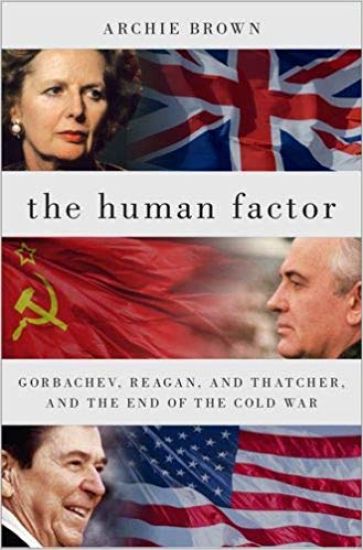
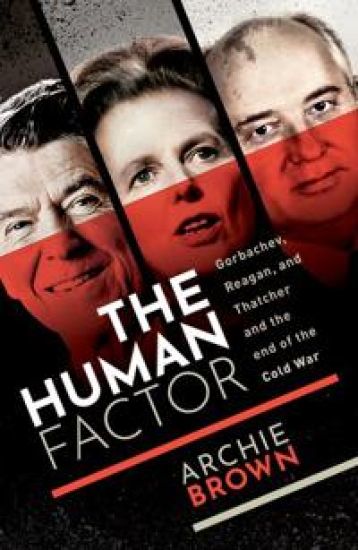
The Human Factor: Gorbachev, Reagan, and Thatcher, and the End of the Cold War
Why did the Cold War end when it did? Few questions have generated more heated debate over the course of the last three decades. Archie Brown, one of the foremost experts on the subject, shows why the popular view that Western economic and military strength left the Soviet Union with no alternative but to admit defeat is erroneous. To understand what really happened, he argues, we need to focus on the parts played by Ronald Reagan, Margaret Thatcher, and especially Mikhail Gorbachev in the crucial years of the 1980s. The Human Factor shows that despite their profound differences, these leaders were able to find common ground at a moment when East-West relations were under the greatest strain. The central figure is Gorbachev, whose unlikely rise to power rocked the establishment, both within the Soviet Union and in the West. While Thatcher's hard lines more closely matched those of her ideological soulmate, Ronald Reagan, she was able to convince Reagan that Gorbachev was a "man to do business with" and became an agent of influence in both directions. By the end of the 1980s East-West relations had been transformed. At a decisive juncture in history the actions and interactions between these three key figures laid the groundwork for a different world. Brown's clear-eyed and fascinating account brings to bear a lifetime of scholarship and engagement, and offers the definitive account of the central role leadership played in ending the Cold War.
The Human Factor

The Human Factor

Archie Brown

Oxford University Press
2022
nidottu
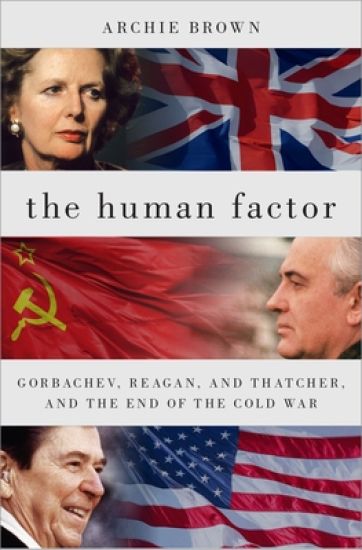
How the Cold War ended - and the people who made it happen In this penetrating analysis of the role of political leadership in the Cold War's ending, Archie Brown shows why the popular view that Western economic and military strength left the Soviet Union with no alternative but to admit defeat is wrong. To understand the significance of the parts played by Mikhail Gorbachev, Ronald Reagan and Margaret Thatcher in East-West relations in the second half of the 1980s, Brown addresses several specific questions: What were the values and assumptions of these leaders, and how did their perceptions evolve? What were the major influences on them? To what extent were they reflecting the views of their own political establishment or challenging them? How important for ending the East-West standoff were their interrelations? Would any of the realistically alternative leaders of their countries at that time have pursued approximately the same policies? The Cold War got colder in the early 1980s and the relationship between the two military superpowers, the USA and the Soviet Union, each of whom had the capacity to annihilate the other, was tense. By the end of the decade, East-West relations had been utterly transformed, with most of the dividing lines -including the division of Europe- removed. Engagement between Gorbachev and Reagan was a crucial part of that process of change. More surprising was Thatcher's role. Regarded by Reagan as his ideological and political soulmate, she formed also a strong and supportive relationship with Gorbachev (beginning three months before he came to power). Promoting Gorbachev in Washington as a man to do business with, she became, in the words of her foreign policy adviser Sir Percy Cradock, an agent of influence in both directions.
The Human Factor: Gorbachev, Reagan, and Thatcher, and the End of the Cold War
In this penetrating analysis of the role of political leadership in the Cold War's ending, Archie Brown shows why the popular view that Western economic and military strength left the Soviet Union with no alternative but to admit defeat is wrong. To understand the significance of the parts played by Mikhail Gorbachev, Ronald Reagan and Margaret Thatcher in East-West relations in the second half of the 1980s, Brown addresses several specific questions: What were the values and assumptions of these leaders, and how did their perceptions evolve? What were the major influences on them? To what extent were they reflecting the views of their own political establishment or challenging them? How important for ending the East-West standoff were their interrelations? Would any of the realistically alternative leaders of their countries at that time have pursued approximately the same policies? The Cold War got colder in the early 1980s and the relationship between the two military superpowers, the USA and the Soviet Union, each of whom had the capacity to annihilate the other, was tense. By the end of the decade, East-West relations had been utterly transformed, with most of the dividing lines - including the division of Europe - removed. Engagement between Gorbachev and Reagan was a crucial part of that process of change. More surprising was Thatcher's role. Regarded by Reagan as his ideological and political soulmate, she formed also a strong and supportive relationship with Gorbachev (beginning three months before he came to power). Promoting Gorbachev in Washington as 'a man to do business with', she became, in the words of her foreign policy adviser Sir Percy Cradock, 'an agent of influence in both directions'.
The Human Factor

The Human Factor

Archie Brown

Oxford University Press
2020
sidottu
In this penetrating analysis of the role of political leadership in the Cold War's ending, Archie Brown shows why the popular view that Western economic and military strength left the Soviet Union with no alternative but to admit defeat is wrong. To understand the significance of the parts played by Mikhail Gorbachev, Ronald Reagan and Margaret Thatcher in East-West relations in the second half of the 1980s, Brown addresses several specific questions: What were the values and assumptions of these leaders, and how did their perceptions evolve? What were the major influences on them? To what extent were they reflecting the views of their own political establishment or challenging them? How important for ending the East-West standoff were their interrelations? Would any of the realistically alternative leaders of their countries at that time have pursued approximately the same policies? The Cold War got colder in the early 1980s and the relationship between the two military superpowers, the USA and the Soviet Union, each of whom had the capacity to annihilate the other, was tense. By the end of the decade, East-West relations had been utterly transformed, with most of the dividing lines -including the division of Europe- removed. Engagement between Gorbachev and Reagan was a crucial part of that process of change. More surprising was Thatcher's role. Regarded by Reagan as his ideological and political soulmate, she formed also a strong and supportive relationship with Gorbachev (beginning three months before he came to power). Promoting Gorbachev in Washington as a man to do business with, she became, in the words of her foreign policy adviser Sir Percy Cradock, an agent of influence in both directions.
Myth of the Strong Leader

Myth of the Strong Leader

Archie Brown

Vintage
2015
pokkari

Halvin toimitettuna 23,90 €

* UPDATED WITH A NEW FOREWORD BY THE AUTHOR *CHOSEN BY BILL GATES AS A BOOK OF THE YEAR 2016Archie Brown challenges the widespread belief that 'strong leaders', dominant individual wielders of power, are the most successful and admirable.
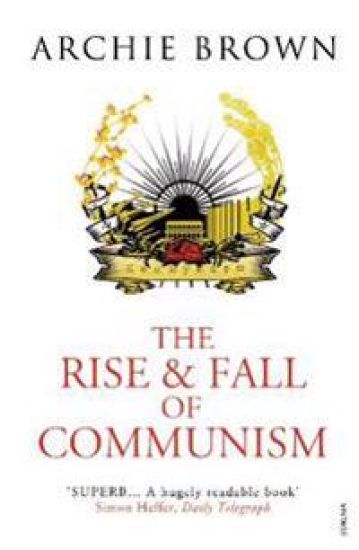
The Rise and Fall of Communism

The Rise and Fall of Communism

Archie Brown

Ecco Press
2011
nidottu

Halvin toimitettuna 25,40 €

"A work of considerable delicacy and nuance.... Brown has crafted a readable and judicious account of Communist history...that is both controversial and commonsensical."--Salon.com"Ranging wisely and lucidly across the decades and around the world, this is a splendid book."--William Taubman, Pulitzer Prize-winning author of Khrushchev: The Man and His EraThe Rise and Fall of Communism is the definitive history from the internationally renowned Oxford authority on the subject. Emeritus Professor of Politics at Oxford University, Archie Brown examines the origins of the most important political ideology of the 20th century, its development in different nations, its collapse in the Soviet Union following perestroika, and its current incarnations around the globe. Fans of John Lewis Gaddis, Samuel Huntington, and avid students of history will appreciate the sweep and insight of this epic and astonishing work.
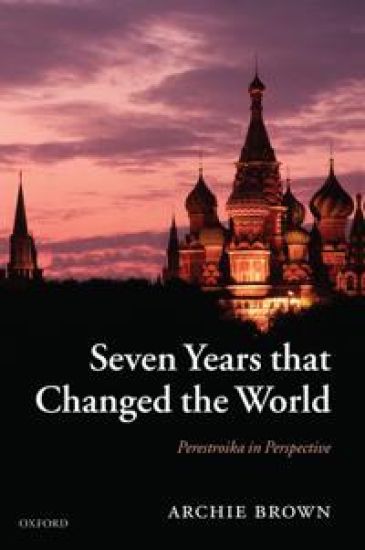
Seven Years that Changed the World

Seven Years that Changed the World

Archie Brown

Oxford University Press
2008
nidottu
A rigorously argued and lively interpretation of the transformation of the Soviet system, the disintegration of the Soviet state, the end of the Cold War, and the role of Mikhail Gorbachev. Written by a leading authority on Soviet politics, this thoroughly researched book draws on new archival sources and puts perestroika in fresh perspective. Perestroika began as an attempt by a minority within the leadership of the Communist Party to reform the Soviet system. The decisive role was played by the new General Secretary, Mikhail Gorbachev. Perestroika (reconstruction) developed into an attempt to move from Communism to competitive elections and a market economy of a social democratic type. This 'revolution from above' had profound consequences, both intended and unintended. The latter included the dissolution of the Soviet state. Four of the ten chapters were written in 'real time' - in the second half of the 1980s while perestroika was still underway. The other six chapters provide an up-to-date discussion of such important issues as the stimuli to perestroika, its intellectual origins and development, its influence on other countries and their influence on developments in the Soviet Union, and the ending of the Cold War. Archie Brown takes issue with a number of popular interpretations of perestroika - and of the end of the Cold War - and draws on new archival sources in a book which is both clearly and vigorously argued and well documented.
Seven Years that Changed the World

Seven Years that Changed the World

Archie Brown

Oxford University Press
2007
sidottu
A rigorously argued and lively interpretation of the transformation of the Soviet system, the disintegration of the Soviet state, the end of the Cold War, and the role of Mikhail Gorbachev. Written by a leading authority on Soviet politics, this thoroughly researched book draws on new archival sources and puts perestroika in fresh perspective. Perestroika began as an attempt by a minority within the leadership of the Communist Party to reform the Soviet system. The decisive role was played by the new General Secretary, Mikhail Gorbachev. Perestroika (reconstruction) developed into an attempt to move from Communism to competitive elections and a market economy of a social democratic type. This 'revolution from above' had profound consequences, both intended and unintended. The latter included the dissolution of the Soviet state. Four of the ten chapters were written in 'real time' - in the second half of the 1980s while perestroika was still underway. The other six chapters provide an up-to-date discussion of such important issues as the stimuli to perestroika, its intellectual origins and development, its influence on other countries and their influence on developments in the Soviet Union, and the ending of the Cold War. Archie Brown takes issue with a number of popular interpretations of perestroika - and of the end of the Cold War - and draws on new archival sources in a book which is both clearly and vigorously argued and well documented.
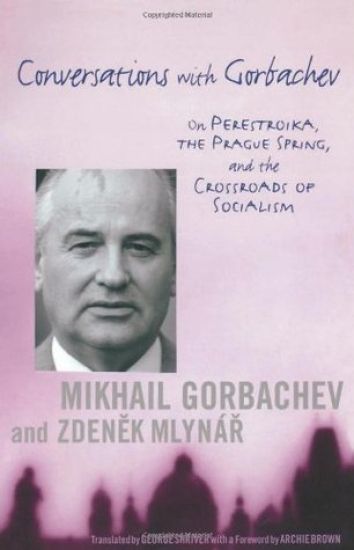
Conversations with Gorbachev

Conversations with Gorbachev

Mikhail Gorbachev; Zdenek Mlynar; Archie Brown

Columbia University Press
2003
pokkari
Mikhail Gorbachev and Zdenek Mlynar were friends for half a century, since they first crossed paths as students in 1950. Although one was a Russian and the other a Czech, they were both ardent supporters of communism and socialism. One took part in laying the groundwork for and carrying out the Prague spring; the other opened a new political era in Soviet world politics. In 1993 they decided that their conversations might be of interest to others and so they began to tape-record them. This book is the product of that "thinking out loud" process. It is an absorbing record of two friends trying to explain to one another their views on the problems and events that determined their destinies. From reminiscences of their starry-eyed university days to reflections on the use of force to "save socialism" to contemplation of the end of the cold war, here is a far more candid picture of Gorbachev than we have ever seen before.
Conversations with Gorbachev

Conversations with Gorbachev

Mikhail Gorbachev; Zdenek Mlynar; Archie Brown

Columbia University Press
2002
sidottu
Mikhail Gorbachev and Zdenek Mlynar were friends for half a century, since they first crossed paths as students in 1950. Although one was a Russian and the other a Czech, they were both ardent supporters of communism and socialism. One took part in laying the groundwork for and carrying out the Prague spring; the other opened a new political era in Soviet world politics. In 1993 they decided that their conversations might be of interest to others and so they began to tape-record them. This book is the product of that "thinking out loud" process. It is an absorbing record of two friends trying to explain to one another their views on the problems and events that determined their destinies. From reminiscences of their starry-eyed university days to reflections on the use of force to "save socialism" to contemplation of the end of the cold war, here is a far more candid picture of Gorbachev than we have ever seen before.
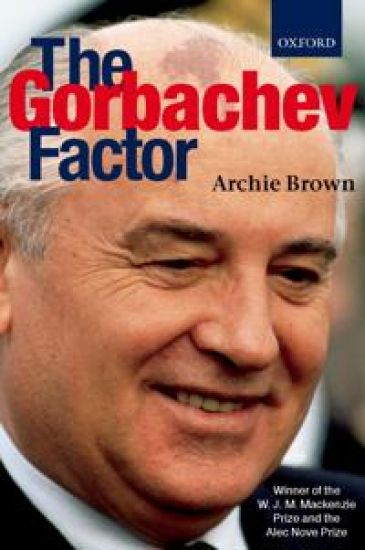
The Gorbachev Factor

The Gorbachev Factor

Archie Brown

Oxford University Press
1997
nidottu
`To understand this singular man, the reader can do no better than to turn to Archie Brown's astute and lucid book. There have been several excellent works on Mr Gorbachev ... but none examines the subject as thoroughly as this volume ... a rich study, as impressive in its sweep as in its details.' Abraham Brumberg, New York Times `Archie Brown's book is not only a richly researched, easily readable biography of Gorbachev himself. It should be studied at once in every diplomatic service worthy of the name, starting with our own Foreign Office.' Michael Foot, Evening Standard `Archie Brown has mastered the material and met the people ... he writes with a historical perspective unavailable to authors of the instant biographies which appeared while Gorbachev was in power.' Rodric Braithwaite, Financial Times `Archie Brown's closely reasoned book ... makes a better case for Gorbachev's record as a reformer than Gorbachev's own memoirs ... the most thorough exposition of Gorbachev's domestic political record yet to appear.' Jack F. Matlock, Jr, New York Review of Books `This Oxford don, for years one of the world's most talented Kremlinologists, has already found the memoirs, documents and interviews that allow him to provide a remarkably detailed and authoritative account of the key moments in Gorbachev's career.' Robert G. Kaiser, Washington Post `It is hard to come away from this admirable book without an affection for Gorbachev's insistence on peaceful change, his willingness to let Eastern Europe go and his determination to nurture a pluralist culture.' Nick Cohen, Observer `Brown's latest book is the product of many years of intensive research: it proves to be the most detailed and revealing study of the man who revolutionised the USSR. Excellent.' Good Book Guide