Kirjojen hintavertailu – 12 859 828 kirjaa ja 27 kauppaa

Kirjailija

Ariel Glucklich

Kirjat ja teokset yhdessä paikassa: 10 kirjaa, julkaisuja vuosilta 1994–2025, suosituimpiin kuuluu Religion : i historia, samtid och framtid. Vertaile teosten hintoja ja tarkista saatavuus suomalaisista kirjakaupoista.

10 kirjaa

Kirjojen julkaisuvuodet: 1994–2025.

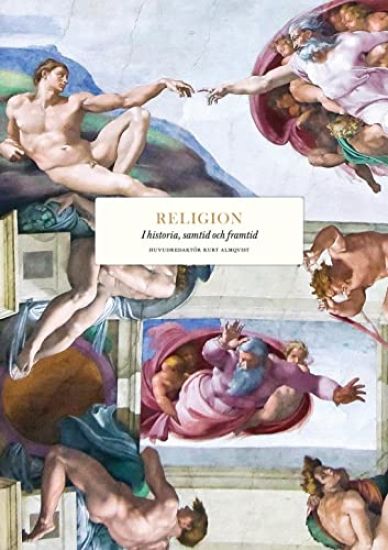
Religion : i historia, samtid och framtid

Religion : i historia, samtid och framtid

Janne Haaland Matlary; Daniel T. Potts; Julius J. Lipner; Robin Osborne; John Scheid; Martin Goodman; Diarmaid Macculloch; Elaine Pagels; Reza Aslan; Wouter J. Hanegraaff; Gary Lachman; Malise Ruthven; Marco Pasi; William O’Reilly; Ariel Glucklich; Wolfgang Palaver; Mona Siddiqui; Candida R. Moss; Esther Benbassa; Richard Miles; A.N. Wilson; Jessica Frazier; Simon May; Armin W. Geertz; Harvey Whitehouse; Pär Stenbäck; Benedetta Berti; Göran Rosenberg; Jayne Svenungsson; Adrian Wooldridge; Chakravarthi Ram-Prasad

Bokförlaget Stolpe
2020
sidottu
Tron på en styrande, övergripande, himmelsk princip har följt människan genom historien. Mer än 80 procent av världens befolkning har idag en religiös tillhörighet och även i sekulära stater fortsätter religionen att spela en viktig roll. Det går inte att förstå politik och internationella relationer idag utan att inkludera religionen som en aspekt av det kulturella sammanhanget. Essäerna i denna antologi, som härrör från Engelsbergsseminariet 2014, spänner över en mångfald ämnen i dagens såväl som gårdagens samhällen. De utforskar religionen i relation till människans villkor och skildrar hur den manifesterar sig i individens egna upplevelser. För att förstå oss själva behöver vi också förstå religionen.
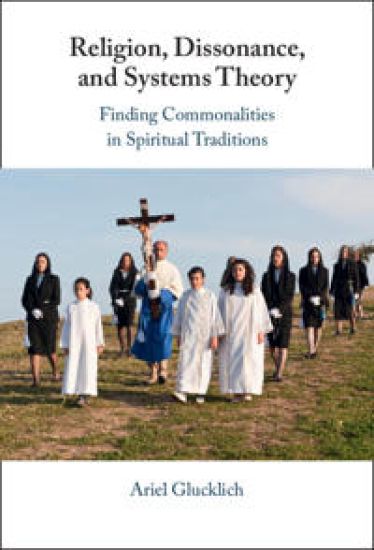
Religion, Dissonance, and Systems Theory

Religion, Dissonance, and Systems Theory

Ariel Glucklich

Cambridge University Press
2025
sidottu
Religious belief systems are often marked by internal dissonance. Mitigating this dissonance can lead to surprising religious phenomena, including blood libels, scapegoating, religious violence, the worship of saints and martyrs, asceticism, austerities, as well as processions, fasting, and clowning. In this study, Ariel Glucklich provides a new approach to understanding how religious actions emerge in the context of belief systems. Providing an innovative psychological and social understanding of the causes that stimulate believers to action, he examines a range of religious phenomena in India, Israel, Austria, Italy, and the United States. Glucklich's new theory enables recognition of the patterns that account for the full complexity of actions inspired by religious beliefs and systems. His systematic comparison of actions across traditional boundaries offers a novel approach to cause and effect in comparative religion and religious studies more broadly. Glucklich's book also generates new questions regarding a universal phenomenon that has escaped notice up to now.
The Joy of Religion

The Joy of Religion

Ariel Glucklich

Cambridge University Press
2020
pokkari
All religions describe spiritual experience as pleasant, and the goal of the religious pursuit as profoundly joyful. But many religions also condemn sensory pleasures and the desire for objects of pleasure. In this book, Ariel Glucklich resolves this apparent contradiction by showing how religious practices that instill self-control and discipline transform one type of pleasure into the pleasures of mastery and play. Using historical data and psychological analysis, he details how the rituals, mystical practices, moral teachings, and sacred texts of the world's religions act as psychological instruments that induce well-being. Glucklich also shows that in promoting joy and pleasure, religion also strengthens social bonds and enhances an individual's pursuit of meaning.
The Joy of Religion

The Joy of Religion

Ariel Glucklich

Cambridge University Press
2020
sidottu
All religions describe spiritual experience as pleasant, and the goal of the religious pursuit as profoundly joyful. But many religions also condemn sensory pleasures and the desire for objects of pleasure. In this book, Ariel Glucklich resolves this apparent contradiction by showing how religious practices that instill self-control and discipline transform one type of pleasure into the pleasures of mastery and play. Using historical data and psychological analysis, he details how the rituals, mystical practices, moral teachings, and sacred texts of the world's religions act as psychological instruments that induce well-being. Glucklich also shows that in promoting joy and pleasure, religion also strengthens social bonds and enhances an individual's pursuit of meaning.
Dying for Heaven

Dying for Heaven

Ariel Glucklich

HARPERCOLLINS PUBLISHERS INC
2010
nidottu
In Dying for Heaven, Georgetown scholar and advisor to the defense community Ariel Glucklich explains the religious motivation of terrorism. This provocative work of political science argues that the very best qualities of religion--its ability to make people feel good and bring them together--are in fact its most dangerous. Glucklich, author of Sacred Pain and Climbing Chamundi Hill, offers a new understanding of religion and provides a vision for preventing further religiously-inspired violence.
The Footsteps of Vishnu

The Footsteps of Vishnu

Ariel Glucklich

Oxford University Press Inc
2007
sidottu
Most books about Hinduism begin by noting the immense size and complexity of the subject. Hinduism is vast and diverse, they say. Or it doesn't exist at all - Hinduism is merely a convenient (and foreign) term that masks a plurality of traditions. In either case, readers are discouraged by the sense that they are getting only a tiny sample or a shallow overview of something huge and impossible to understand. This book is designed to be accessible and comprehensive in a way that other introductions are not, maintaining an appealing narrative and holding the reader's interest in the unfolding sequence of ideas through time and place. Each of the 13 chapters combines historical material with key religious and philosophical ideas, supported by substantial quotations from scriptures and other texts. The overarching organizational principle is a historical narrative largely grounded in archaeological information. Historic places and persons are fleshed out as actors in a narrative about the relation of the sacred to ordinary existence as it is mediated through arts, sciences, rituals, and philosophical ideas. Although many books purport to introduce the Hindu tradition, this is the only one with a broad historical focus that emphasizes archaeological as well as textual evidence. It will nicely complement Vasuda Narayanan's forthcoming introduction, which takes the opposite approach of focusing on the lived experience of Hindu believers.
Sacred Pain

Sacred Pain

Ariel Glucklich

Oxford University Press Inc
2003
nidottu
Why do mystics and devout laypeople in many different religious traditions glorify physical pain, some going so far as to ritually mutilate themselves in the name of the divine? In this erudite and wide-ranging study, Glucklich, a professor of theology at Georgetown University, offers a compelling explanation. Drawing on the fields of psychology, neurophysiology and religious studies, he observes that pain "the most familiar and universal aspect of all human experiences" affects both the body and the mind. Pain triggers an altered state of consciousness in which one's sense of self is diminished, creating an absence that can make way for a new and affirming presence. "The task of sacred pain," Glucklich writes, "is to transform destructive or disintegrative suffering into a positive religious-psychological mechanism for reintegration within a more deeply valued level of reality than individual existence." Although this state of transcendence exists across cultures, the way in which the experience is interpreted is culturally specific. To demonstrate this, Glucklich draws upon a wide range of examples, from the tortures of the Inquisition to Native American trials of endurance. He concludes by exploring what we may have lost with the development of medical anesthetics. This fascinating, closely argued study suggests that, in religion as in sports, there is no gain without pain.
The End of Magic

The End of Magic

Ariel Glucklich

Oxford University Press Inc
1997
nidottu
Glucklich offers a new approach towards the definition and understanding of magic. Basing himself in the Indian city of Banaras, where magic is a familiar part of everyday life, he reviews the major theories that have explained (or explained away) magic over the last century. He argues that all of these theories leave out something critical, namely what he calls "magical consciouness" - a special state of awareness of magicians and their clients which, though extraordinary, is also perfectly natural.
The End of Magic

The End of Magic

Ariel Glucklich

Oxford University Press Inc
1997
sidottu
Glucklich offers a new approach towards the definition and understanding of magic. Basing himself in the Indian city of Banaras, where magic is a familiar part of everyday life, he reviews the major theories that have explained (or explained away) magic over the last century. He argues that all of these theories leave out something critical, namely what he calls "magical consciouness" - a special state of awareness of magicians and their clients which, though extraordinary, is also perfectly natural.
The Sense of Adharma

The Sense of Adharma

Ariel Glucklich

Oxford University Press Inc
1994
sidottu
Addressing one of the most difficult conceptual topics in the study of classical Hinduism, Ariel Glucklich presents a rigorous phenomenology of dharma, or order. The work moves away from the usual emphasis on symbols and theoretical formulations of dharma as a religious and moral norm. Instead, it focuses on images that emerge from the basic experiential interaction of the body in its spatial and temporal contexts, such as the sensation of water on the skin during the morning purification, or the physical manipulation of the bride during the marriage ritual. Images of dharma are examined in myths, rituals, art, and even the physical landscape of the Hindu world. The varied and contingent experiences of dharma infuse it with a meaning that transcends a false analytical distinction from adharma, or chaos. Glucklich shows that when dharma is experienced by means of living images, it becomes inescapably temporal, and therefore inseparable from adharma.