Kirjojen hintavertailu – 12 859 818 kirjaa ja 27 kauppaa

Kirjailija

Ariella Azoulay

Kirjat ja teokset yhdessä paikassa: 7 kirjaa, julkaisuja vuosilta 2011–2023, suosituimpiin kuuluu Walead Beshty. Vertaile teosten hintoja ja tarkista saatavuus suomalaisista kirjakaupoista.

7 kirjaa

Kirjojen julkaisuvuodet: 2011–2023.

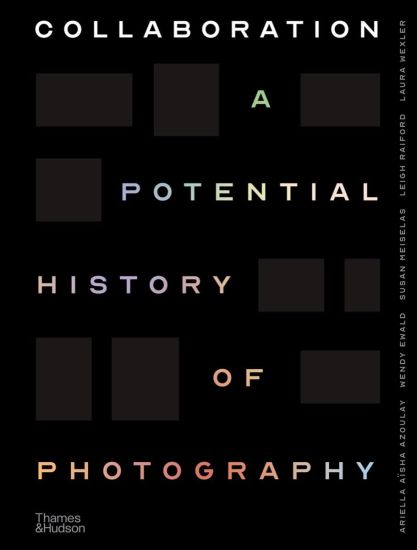
Collaboration

Collaboration

Ariella Azoulay; Wendy Ewald; Susan Meiselas; Leigh Raiford; Laura Wexler

THAMES HUDSON LTD
2023
sidottu

Halvin toimitettuna 91,00 €

A new, revolutionary history of photography from a stellar team of writers and thinkers that challenges all existing narratives by focusing on the complex collaborations between photographer and subject. Collaboration presents a groundbreaking and multifaceted history of photography which explores photography through the lens of collaboration, challenging the dominant narratives around photographic history and authorship. In a vast, collaborative effort led by five of the great thinkers and practitioners in photography that includes more than 550 photographs and over 80 text contributors, this book breaks apart photography’s ‘single creator’ tradition by bringing to light tangible traces of collaboration – the various relationships, exchanges and interactions which occur between all participants in the event of photography. This book will provide the keys to understanding and decoding the complex politics of seeing. The conditions of collaboration in photography are explored through over 100 photography projects, divided into eight thematic chapters. The photographs from each project are presented non-hierarchically alongside quotes, testimonies, and short texts by guest contributors. These networks of texts and images provide perspective on a vast array of photographic themes, from Araki’s provocative portraits of women to archival files from the Spanish Civil War. Collaboration is not an ultimate account of what photography is, does, or means. Rather, the book is an inspiration for teaching and an open invitation to scholars, activists, photographers and others to practice always with and alongside others and participate actively in this engagement and enquiry.
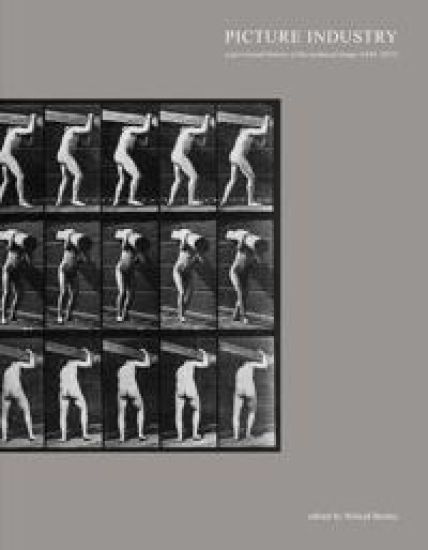
Walead Beshty

Walead Beshty

Giorgio Agamben; Ariella Azoulay; Roland Barthes; Georges Didi-Huberman; Harun Farocki; Morgan Fisher; Coco Fusco; Rosalind Krauss; Allan Sekula; Hito Steyerl

JRP Ringier
2018
sidottu
Proposing an alternative history of the optical image, Picture Industry explores the materiality of images and the technologies that govern their reception. Spanning from the late 19th century to the present with images produced for scientific and artistic contexts, Picture Industry includes the work of more than 70 artists and practitioners. But this is not a typical exhibition catalog; it goes beyond the exhibition, presenting an anthology of texts that reveal the range of methodological approaches to the world of images. Picture Industry brings together essays by, among others, Giorgio Agamben, Cory Arcangel, Ariella Azoulay, Roland Barthes, Georges Bataille, Jean Baudrillard, Ericka Beckman, Walter Benjamin, Georges Didi-Huberman, Thomas A. Edison, Harun Farocki, Morgan Fisher, Vilem Flusser, Coco Fusco, Tristan Garcia, Octavio Getino and Fernando Solanas, Sigfried Giedion, Mark Godfrey, Kenneth Goldsmith, Dan Graham, Friedrich A. Kittler, Boris Mikhailov, Craig Owens, Erwin Panofsky, Seth Price, Siegfried Kracauer, Rosalind Krauss, Bruno Latour, Etienne-Jules Marey, Martha Rosler, Allan Sekula, Hito Steyerl, William Henry Fox Talbot, Gilles de la Tourette and Alan Turing.
Aim Duelle Luski and Horizontal Photography

Aim Duelle Luski and Horizontal Photography

Ariella Azoulay

Leuven University Press
2014
pokkari
Exploring radically new possibilities for contemporary photography by an internationally leading theorist. This book is the product of a unique collaboration between Israeli artist and philosopher Aïm Deüelle Lüski and visual culture theorist Ariella Azoulay. In their longstanding working relationship, they research how to theorize the structure of the contemporary scopic regime and open a space for its civil transformation. On this occasion, Azoulay interprets a particular series of cameras built by Deüelle Lüski, along with photographs taken by these cameras. Unlike conventional cameras and their vertical photography, Deüelle Lüski's cameras seek to generate new sets of relations between the camera and the world. Azoulay's text unfolds four different ‘short histories' of problems in photography, each of which deconstructs what otherwise might appear as a coherent photographic regime, yet which is shown to be based solely on principles of sovereignty and possession. Through and with Deüelle Lüski's project Azoulay seeks to ‘potentialize' the history of photography, that is, to recover long forgotten, un-materialized possibilities. The book contains 100 images and a conversation between the author and the artist. This publication is GPRC-labeled (Guaranteed Peer-Reviewed Content).
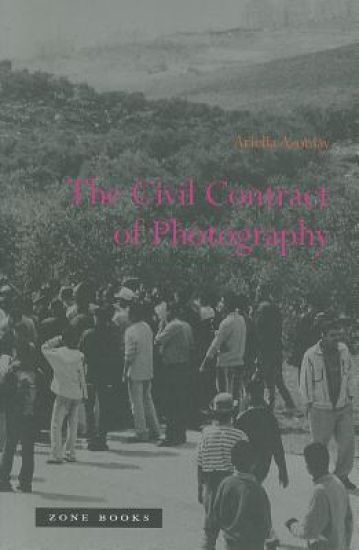
The Civil Contract of Photography

The Civil Contract of Photography

Ariella Azoulay

Zone Books
2012
pokkari

Halvin toimitettuna 28,10 €

An argument that anyone can pursue political agency and resistance through photography, even those with flawed or nonexistent citizenship. In this compelling work, Ariella Azoulay reconsiders the political and ethical status of photography. Describing the power relations that sustain and make possible photographic meanings, Azoulay argues that anyone-even a stateless person-who addresses others through photographs or is addressed by photographs can become a member of the citizenry of photography. The civil contract of photography enables anyone to pursue political agency and resistance through photography. Photography, Azoulay insists, cannot be understood separately from the many catastrophes of recent history. The crucial arguments of her book concern two groups with flawed or nonexistent citizenship: the Palestinian noncitizens of Israel and women in Western societies. Azoulay analyzes Israeli press photographs of violent episodes in the Occupied Territories, and interprets various photographs of women-from famous images by stop-motion photographer Eadweard Muybridge to photographs from Abu Ghraib prison. Azoulay asks this question: under what legal, political, or cultural conditions does it become possible to see and to show disaster that befalls those who can claim only incomplete or nonexistent citizenship? Drawing on such key texts in the history of modern citizenship as the Declaration of the Rights of Man together with relevant work by Giorgio Agamben, Jean-Francois Lyotard, Susan Sontag, and Roland Barthes, Azoulay explores the visual field of catastrophe, injustice, and suffering in our time. Her book is essential reading for anyone seeking to understand the disasters of recent history-and the consequences of how these events and their victims have been represented.
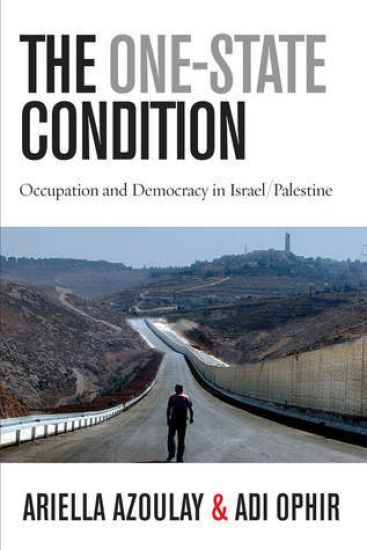
The One-State Condition

The One-State Condition

Ariella Azoulay; Adi Ophir

Stanford University Press
2012
pokkari
Since the start of the occupation of Palestinian territories in 1967, Israel's domination of the Palestinians has deprived an entire population of any political status or protection. But even decades on, most people speak of this rule—both in everyday political discussion and in legal and academic debates—as temporary, as a state of affairs incidental and external to the Israeli regime. In The One-State Condition, Ariella Azoulay and Adi Ophir directly challenge this belief. Looking closely at the history and contemporary formation of the ruling apparatus—the technologies and operations of the Israeli army, the General Security Services, and the legal system imposed in the Occupied Territories—Azoulay and Ophir outline the one-state condition of Israel/Palestine: the grounding principle of Israeli governance is the perpetuation of differential rule over populations of differing status. Israeli citizenship is shaped through the active denial of Palestinian citizenship and civil rights. Though many Israelis, on both political right and left, agree that the occupation constitutes a problem for Israeli democracy, few ultimately admit that Israel is no democracy or question the very structure of the Israeli regime itself. Too frequently ignored are the lasting effects of the deceptive denial of the events of 1948 and 1967, and the ways in which the resulting occupation has reinforced the sweeping militarization and recent racialization of Israeli society. Azoulay and Ophir show that acknowledgment of the one-state condition is not only a prerequisite for considering a one- or two-state solution; it is a prerequisite for advancing new ideas to move beyond the trap of this false dilemma.
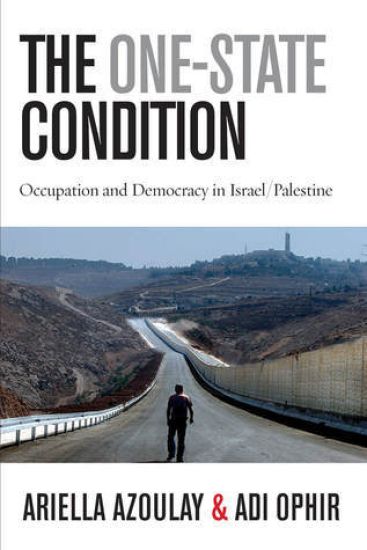
The One-State Condition

The One-State Condition

Ariella Azoulay; Adi Ophir

Stanford University Press
2012
sidottu
Since the start of the occupation of Palestinian territories in 1967, Israel's domination of the Palestinians has deprived an entire population of any political status or protection. But even decades on, most people speak of this rule—both in everyday political discussion and in legal and academic debates—as temporary, as a state of affairs incidental and external to the Israeli regime. In The One-State Condition, Ariella Azoulay and Adi Ophir directly challenge this belief. Looking closely at the history and contemporary formation of the ruling apparatus—the technologies and operations of the Israeli army, the General Security Services, and the legal system imposed in the Occupied Territories—Azoulay and Ophir outline the one-state condition of Israel/Palestine: the grounding principle of Israeli governance is the perpetuation of differential rule over populations of differing status. Israeli citizenship is shaped through the active denial of Palestinian citizenship and civil rights. Though many Israelis, on both political right and left, agree that the occupation constitutes a problem for Israeli democracy, few ultimately admit that Israel is no democracy or question the very structure of the Israeli regime itself. Too frequently ignored are the lasting effects of the deceptive denial of the events of 1948 and 1967, and the ways in which the resulting occupation has reinforced the sweeping militarization and recent racialization of Israeli society. Azoulay and Ophir show that acknowledgment of the one-state condition is not only a prerequisite for considering a one- or two-state solution; it is a prerequisite for advancing new ideas to move beyond the trap of this false dilemma.
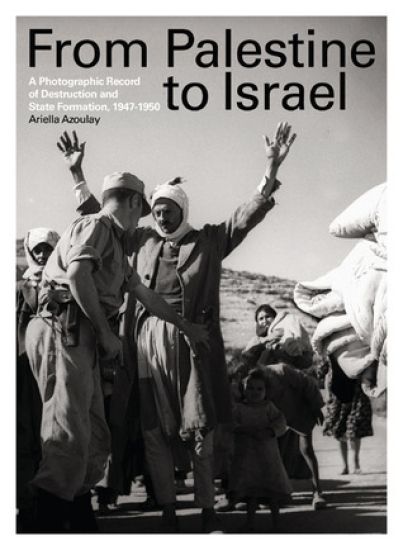
From Palestine to Israel

From Palestine to Israel

Ariella Azoulay

Pluto Press
2011
pokkari
In this carefully curated and beautifully presented photobook, Ariella Azoulay offers a new perspective on four crucial years in the history of Palestine/Israel. The book reconstructs the processes by which the Palestinian majority in Mandatory Palestine became a minority in Israel, while the Jewish minority established a new political entity in which it became a majority ruling a minority Palestinian population. By reading over 200 photographs from that period, most of which were previously confined to Israeli state archives, Azoulay recounts the events and the stories that for years have been ignored or only partially acknowledged in Israel and the West. Including substantial analytical text, this book will give activists, scholars and journalists a new perspective on the origins of the Palestine-Israel conflict.