Kirjojen hintavertailu – 12 859 827 kirjaa ja 27 kauppaa

Kirjailija

Arindam Dutta

Kirjat ja teokset yhdessä paikassa: 5 kirjaa, julkaisuja vuosilta 2005–2018, suosituimpiin kuuluu The Bureaucracy of Beauty. Vertaile teosten hintoja ja tarkista saatavuus suomalaisista kirjakaupoista.

5 kirjaa

Kirjojen julkaisuvuodet: 2005–2018.

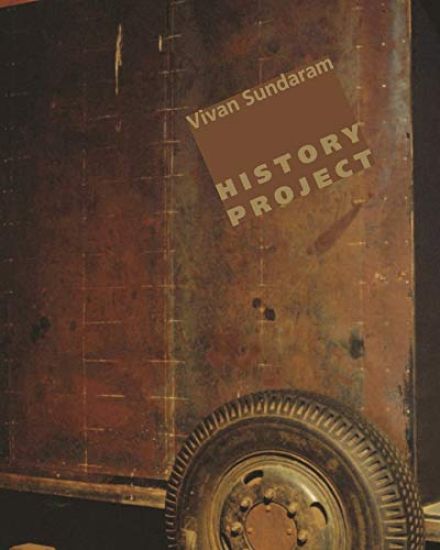
Vivan Sundaram – History Project

Vivan Sundaram – History Project

Homi Bhabha; Geeta Kapur; Saloni Mathur; Arindam Dutta; Sibaji Bandyopadhyay

Tulika Book
2018
sidottu
This book is an intensive reconsideration of the very first site-specific installation staged in India. Vivan Sundaram, one of India's most innovative artists, located his History Project, marking fifty years of Indian independence, in a hugely visited and popular public institution, the Victoria Memorial and Museum in Kolkata. The artist's choice of setting was by way of a challenge: to 'occupy' an imperial edifice and change its orientation; to reflect India's struggle for independence and the emerging nation's stake in modernity through an anachronistic mirror; and to engage with postcolonial contradictions through recursive narration. It needed an artwork scaled to the proportion of these issues and the book examines how Sundaram met this challenge. His ideology and aesthetic, his formal choices and method, are critically investigated in a series of essays contributed by distinguished authors: cultural theorists, art and architectural historians. The book carries abundant, well-annotated illustrations of the complex installation.

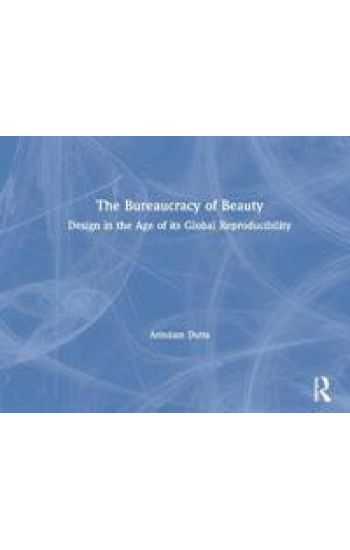
The Bureaucracy of Beauty

The Bureaucracy of Beauty

Arindam Dutta

Routledge
2006
sidottu
The Bureaucracy of Beauty is a wide-ranging work of cultural theory that connects literary studies, postcoloniality, the history of architecture and design, and the history and present of empire. Professor Ananya Roy of UC Berkeley calls it a "fantastic book," and in many ways this is the best description of it. The Bureaucracy of Beauty begins with nineteenth-century Britain's Department of Science and Arts, a venture organized by the Board of Trade, and how the DSA exerted a powerful influence on the growth of museums, design schools, and architecture throughout the British Empire. But this is only the book's literal subject: in a remarkable set of chapters, Dutta explores the development of international laws of intellectual property, ideas of design pedagogy, the technological distinction between craft and industry, the relation of colonial tutelage to economic policy, the politics and technology of exhibition, and competing philosophies of aesthetics. His thinking across these areas is ignited by engagements with Benjamin, Marx, Adam Smith and Jeremy Bentham, Kant, Mill, Ruskin, and Gandhi. A rich study in the history of ideas, of design and architecture, and of cultural politics, The Bureaucracy of Beauty converges on the issues of present-day globalization. From nineteenth-century Britain to twenty-first century America, The Bureaucracy of Beauty offers a theory of how things - big things -change.
The Bureaucracy of Beauty

The Bureaucracy of Beauty

Arindam Dutta

Routledge
2006
nidottu
The Bureaucracy of Beauty is a wide-ranging work of cultural theory that connects literary studies, postcoloniality, the history of architecture and design, and the history and present of empire. Professor Ananya Roy of UC Berkeley calls it a "fantastic book," and in many ways this is the best description of it. The Bureaucracy of Beauty begins with nineteenth-century Britain's Department of Science and Arts, a venture organized by the Board of Trade, and how the DSA exerted a powerful influence on the growth of museums, design schools, and architecture throughout the British Empire. But this is only the book's literal subject: in a remarkable set of chapters, Dutta explores the development of international laws of intellectual property, ideas of design pedagogy, the technological distinction between craft and industry, the relation of colonial tutelage to economic policy, the politics and technology of exhibition, and competing philosophies of aesthetics. His thinking across these areas is ignited by engagements with Benjamin, Marx, Adam Smith and Jeremy Bentham, Kant, Mill, Ruskin, and Gandhi. A rich study in the history of ideas, of design and architecture, and of cultural politics, The Bureaucracy of Beauty converges on the issues of present-day globalization. From nineteenth-century Britain to twenty-first century America, The Bureaucracy of Beauty offers a theory of how things - big things -change.