

Kirjailija
Aristotle
Kirjat ja teokset yhdessä paikassa: 595 kirjaa, julkaisuja vuosilta 1799–2027, suosituimpiin kuuluu Aristotle: Physics, Book VIII. Vertaile teosten hintoja ja tarkista saatavuus suomalaisista kirjakaupoista.
595 kirjaa
Kirjojen julkaisuvuodet: 1799–2027.

Politics: A Treatise on Government
Aristotle
Createspace Independent Publishing Platform
2017
nidottu
In the Nicomachean Ethics Aristotle asserts that in order to achieve happiness man must live a virtuous life made up of activities in which we use our best human capacities, both ones that contribute to our flourishing as members of a community, and ones that allow us to engage in god-like contemplation. This new 2017 edition of Nicomachean Ethics features an easy to follow translation by William Ross.
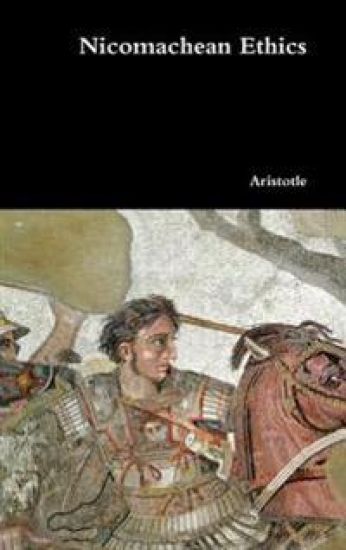
In the Nicomachean Ethics Aristotle asserts that in order to achieve happiness man must live a virtuous life made up of activities in which we use our best human capacities, both ones that contribute to our flourishing as members of a community, and ones that allow us to engage in god-like contemplation. This new 2017 edition of Nicomachean Ethics features an easy to follow translation by William Ross.
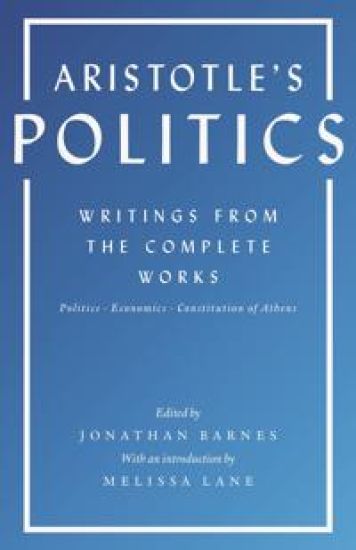
Aristotle was the first philosopher in the Western tradition to address politics systematically and empirically, and he remains a central figure in political theory. This essential volume presents Aristotle's complete political writings--including his Politics, Economics, and Constitution of Athens--in their most authoritative translations, taken from the complete works that is universally recognized as the standard English edition. Edited by Jonathan Barnes, one of the world's leading scholars of ancient philosophy, and with an illuminating introduction by Melissa Lane, an authority on ancient political philosophy, this compact but comprehensive volume will be invaluable for all students of politics, philosophy, classics, or Western thought.
Nicomachean Ethics (Translated by W. D. Ross with an Introduction by R. W. Browne)
Aristotle
Digireads.com
2016
nidottu
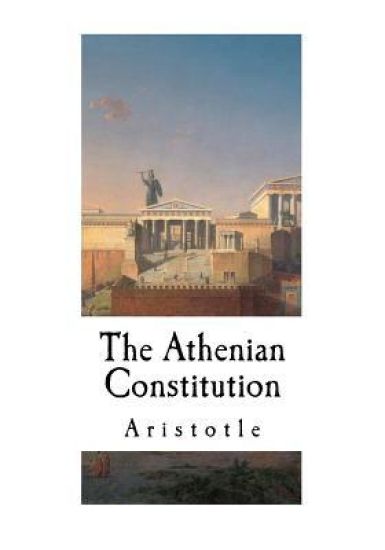
The Athenian Constitution: Aristotle
Aristotle
Createspace Independent Publishing Platform
2016
nidottu
The Athenian Constitution - Aristotle - Translated by Sir Frederic G. Kenyon - The Constitution of the Athenians or the Athenian Constitution refers to two texts from Classical antiquity: one probably by Aristotle or a student of his, the second attributed to Xenophon, but not thought to be his work. The Aristotelian text is contained in two leaves of a papyrus codex discovered at Oxyrhynchus, Egypt in 1879. The other work was traditionally included among the shorter works of Xenophon. Now the ancient constitution, as it existed before the time of Draco, was organized as follows. The magistrates were elected according to qualifications of birth and wealth. At first they governed for life, but subsequently for terms of ten years. The first magistrates, both in date and in importance, were the King, the Polemarch, and the Archon. The earliest of these offices was that of the King, which existed from ancestral antiquity. To this was added, secondly, the office of Polemarch, on account of some of the kings proving feeble in war; for it was on this account that Ion was invited to accept the post on an occasion of pressing need. The last of the three offices was that of the Archon, which most authorities state to have come into existence in the time of Medon. Others assign it to the time of Acastus, and adduce as proof the fact that the nine Archons swear to execute their oaths
Posterior Analytics: Aristotle
Aristotle
Createspace Independent Publishing Platform
2016
nidottu
Halvin toimitettuna 15,40 €

Aristotle's Ethics and Politics are the main sources of philosophy that he was known for. In Ethics he argued for the view that virtues are what make up the ethical behaviour of any person. In order to be a "good person" ethics must be present in the form of virtues. Meanwhile in Politics, he argues that the city or state must come before family which comes before the individual. The idea that the need s of the many outweighs the needs of the few had its roots in Aristotle's philosophy of politics.