Kirjojen hintavertailu – 12 859 824 kirjaa ja 27 kauppaa

Kirjailija

Aristotle

Kirjat ja teokset yhdessä paikassa: 595 kirjaa, julkaisuja vuosilta 1799–2027, suosituimpiin kuuluu Aristotle: Physics, Book VIII. Vertaile teosten hintoja ja tarkista saatavuus suomalaisista kirjakaupoista.

595 kirjaa

Kirjojen julkaisuvuodet: 1799–2027.

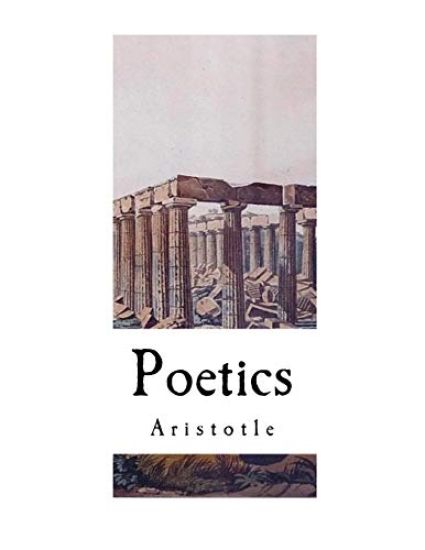
The Poetics of Aristotle: Aristotle's Poetics

The Poetics of Aristotle: Aristotle's Poetics

Aristotle

Createspace Independent Publishing Platform
2018
nidottu
The Poetics of Aristotle. A Translation by S. H. Butcher. Aristotle's Poetics is the earliest surviving work of dramatic theory and first extant philosophical treatise to focus on literary theory in the West. This has been the traditional view for centuries. However, recent work is now challenging whether Aristotle focuses on literary theory per se (given that not one poem exists in the treatise) or whether he focuses instead on dramatic musical theory that only has language as one of the elements. The work was lost to the Western world for a long time. It was available in the Middle Ages and early Renaissance only through a Latin translation of an Arabic version written by Averroes.

Politics: The Complete 8 Books

Politics: The Complete 8 Books

Aristotle

Createspace Independent Publishing Platform
2018
nidottu
Politics by Aristotle and translated by Benjamin Jowett. The Complete 8 Books. Politics is a work of political philosophy by Aristotle, a 4th-century BC Greek philosopher. The end of the Nicomachean Ethics declared that the inquiry into ethics necessarily follows into politics, and the two works are frequently considered to be parts of a larger treatise, or perhaps connected lectures, dealing with the "philosophy of human affairs". The title of the Politics literally means "the things concerning the polis". Aristotle's Politics is divided into eight books which are each further divided into chapters. Citations of this work, as with the rest of the works of Aristotle, are often made by referring to the Bekker section numbers. Politics spans the Bekker sections 1252a to 1342b.
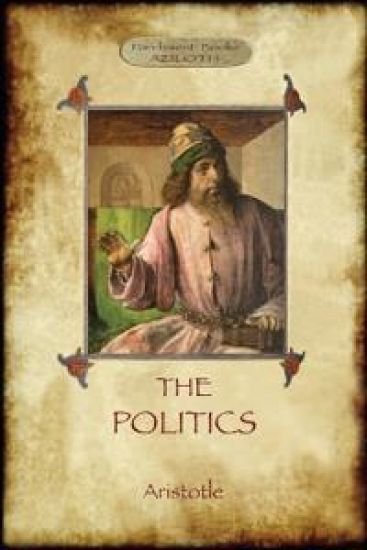
The Politics

The Politics

Aristotle

Aziloth Books
2018
pokkari
Written over two thousand years ago, Aristotle's celebrated work discusses the various benefits and dangers of the major political systems of his time: republic, democracy, aristocracy, oligarchy and tyranny, with a view to deciding which constitutes the ideal polity. Along the way, we are treated to discussions on a wide swathe of topics, from music and the role of women, through warfare, slavery and the education of children, to the responsibilities of a citizen, and what constitutes the 'good life' (for Aristotle: "to achieve happiness and pursue virtue"). Not all of the great Philosopher's conclusions chime with our modern ideas, but his penetrating, thought-provoking analyses will stir your mind, and surprise with their continued relevance.
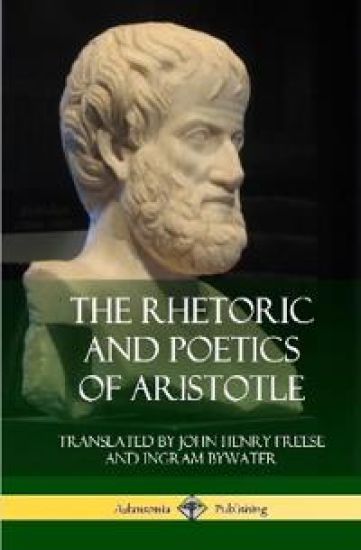
The Rhetoric and Poetics of Aristotle (Hardcover)

The Rhetoric and Poetics of Aristotle (Hardcover)

Aristotle; John Henry Freese; Ingram Bywater

Lulu.com
2018
sidottu
This superb edition contains two of Aristotle's greatest writings in authoritative translations. The Rhetoric is translated by Cambridge scholar John Henry Freese, and The Poetics is translated by Oxford scholar of classics Ingram Bywater. Aristotle's legendary treatise on speech explains and instructs on the powers of oratory to move and persuade people. Composed amid the popular Greek culture, in which aspiring and reigning politicians would perfect the oratorical arts to influence voting and their subjects, Rhetoric is a summation of an art whose poignancy and power could change the face of an entire society. The Poetics of Aristotle sets out the essential nature of drama and the performing arts. Each chapter deals with a different element of drama and its composition, discussing the process by which Greek society had come to define its written literature.
The Rhetoric and Poetics of Aristotle

The Rhetoric and Poetics of Aristotle

Aristotle; John Henry Freese; Ingram Bywater

Lulu.com
2018
pokkari
This superb edition contains two of Aristotle's greatest writings in authoritative translations. The Rhetoric is translated by Cambridge scholar John Henry Freese, and The Poetics is translated by Oxford scholar of classics Ingram Bywater. Aristotle's legendary treatise on speech explains and instructs on the powers of oratory to move and persuade people. Composed amid the popular Greek culture, in which aspiring and reigning politicians would perfect the oratorical arts to influence voting and their subjects, Rhetoric is a summation of an art whose poignancy and power could change the face of an entire society. The Poetics of Aristotle sets out the essential nature of drama and the performing arts. Each chapter deals with a different element of drama and its composition, discussing the process by which Greek society had come to define its written literature.
Politics

Politics

Aristotle

Createspace Independent Publishing Platform
2018
nidottu
Politics Aristotle Politics - Aristotle's treatise on the state, containing the beginnings of social and political philosophy. The treatise was written in recent years (335-322 BC) of Aristotle's life in Athens, influenced by Macedonia. The book addresses the problems of the family as a cell of the state, slavery, citizenship, the definition of the state, as well as the forms of its governance and goals. The ultimate goal that Aristotle sets for himself in Politics is the theoretical construction of an ideal state. We are delighted to publish this classic book as part of our extensive Classic Library collection. Many of the books in our collection have been out of print for decades, and therefore have not been accessible to the general public. The aim of our publishing program is to facilitate rapid access to this vast reservoir of literature, and our view is that this is a significant literary work, which deserves to be brought back into print after many decades. The contents of the vast majority of titles in the Classic Library have been scanned from the original works. To ensure a high quality product, each title has been meticulously hand curated by our staff. Our philosophy has been guided by a desire to provide the reader with a book that is as close as possible to ownership of the original work. We hope that you will enjoy this wonderful classic work, and that for you it becomes an enriching experience.
The Poetics

The Poetics

Aristotle

Createspace Independent Publishing Platform
2018
nidottu

Halvin toimitettuna 17,40 €

Rare edition with unique illustrations and elegant classic cream paper. Aristotle's Poetics is the earliest surviving work of dramatic theory and the first extant philosophical treatise to focus on literary theory. Includes unique illustrations.
Rhetoric

Rhetoric

Aristotle

Lulu.com
2018
pokkari
In Rhetoric, the Greek philosopher Aristotle offers both theory and instruction upon the power of eloquent speech, particularly its uses in political oratory delivered to an audience. Composed amid the popular Greek culture, in which aspiring and reigning politicians would perfect the oratorical arts to influence voting and their subjects, Rhetoric is a summation of an art whose poignancy and power could change the face of an entire society. Mindful of the distinctions to be made between speech with an emotional argument, and speech espousing a rational argument, Aristotle examines both while making further subdivisions. Together with the qualities essential in the actual speech, the philosopher also mentions the knowledge which all speakers aspiring to public office should hold ahead of giving speeches. This edition of the Rhetoric utilizes the classic translation by John Henry Freese, a Cambridge academic who authored numerous translations of, and essays concerning, classical antiquity.
Rhetoric (Hardcover)

Rhetoric (Hardcover)

Aristotle

Lulu.com
2018
sidottu
In Rhetoric, the Greek philosopher Aristotle offers both theory and instruction upon the power of eloquent speech, particularly its uses in political oratory delivered to an audience. Composed amid the popular Greek culture, in which aspiring and reigning politicians would perfect the oratorical arts to influence voting and their subjects, Rhetoric is a summation of an art whose poignancy and power could change the face of an entire society. Mindful of the distinctions to be made between speech with an emotional argument, and speech espousing a rational argument, Aristotle examines both while making further subdivisions. Together with the qualities essential in the actual speech, the philosopher also mentions the knowledge which all speakers aspiring to public office should hold ahead of giving speeches. This edition of the Rhetoric utilizes the classic translation by John Henry Freese, a Cambridge academic who authored numerous translations of, and essays concerning, classical antiquity.
On the Soul

On the Soul

Aristotle

Oxford University Press
2018
nidottu
'. . . the more honourable animals have been allotted a more honourable soul. . . ' What is the nature of the soul? It is this question that Aristotle sought to answer in De Anima (On the Soul). In doing so he offers a psychological theory that encompasses not only human beings but all living beings. Its basic thesis, that the soul is the form of an organic body, sets it in sharp contrast with both Pre-Socratic physicalism and Platonic dualism. On the Soul contains Aristotle's definition of the soul, and his explanations of nutrition, perception, cognition, and animal self-motion. The general theory in De Anima is augmented in the shorter works of Parva Naturalia, which deal with perception, memory and recollection, sleep and dreams, longevity, life-cycles, and psycho-physiology. This new translation brings together all of Aristotle's extant and complementary psychological works, and adds as a supplement ancient testimony concerning his lost writings dealing with the soul. The introduction by Fred D. Miller, Jr. explains the central place of the soul in Aristotle's natural science, the unifying themes of his psychological theory, and his continuing relevance for modern philosophy and psychology.
Ethics

Ethics

Aristotle; W D Ross

Lulu.com
2018
pokkari
This complete edition of Aristotle's Ethics offers the authoritative translation to English by W. D. Ross. Aristotle conceived of the term 'ethics' as a way of examining the moral thought of his teacher Plato, and Plato's contemporary Socrates. Wishing to keep a simple definition, Aristotle conceived of ethics as the moral and behavioural ideal of the way in which human life is conducted. The philosopher's principle work of moral philosophy is entitled Nicomachean Ethics, and is comprised of ten distinct books. In order to properly define ethical behaviour, Aristotle attempts to conceive of a society that is ideal in the sense of securing the maximum happiness for the entire population. After defining the nature of happiness, Aristotle commences to discuss the various virtues people may aspire to in order to live ethically. Having first appeared in 1908, the iteration of the Ethics presented here has stood the test of time. It continues to be cited and favoured by numerous scholars to this day.
Ethics (Hardcover)

Ethics (Hardcover)

Aristotle; W D Ross

Lulu.com
2018
sidottu
This complete edition of Aristotle's Ethics offers the authoritative translation to English by W. D. Ross. Aristotle conceived of the term 'ethics' as a way of examining the moral thought of his teacher Plato, and Plato's contemporary Socrates. Wishing to keep a simple definition, Aristotle conceived of ethics as the moral and behavioural ideal of the way in which human life is conducted. The philosopher's principle work of moral philosophy is entitled Nicomachean Ethics, and is comprised of ten distinct books. In order to properly define ethical behaviour, Aristotle attempts to conceive of a society that is ideal in the sense of securing the maximum happiness for the entire population. After defining the nature of happiness, Aristotle commences to discuss the various virtues people may aspire to in order to live ethically. Having first appeared in 1908, the iteration of the Ethics presented here has stood the test of time. It continues to be cited and favoured by numerous scholars to this day.
Nicomachean Ethics: Aristotle

Nicomachean Ethics: Aristotle

Aristotle

Createspace Independent Publishing Platform
2018
nidottu
Nicomachean Ethics by Aristotle. The Nicomachean Ethics is the name normally given to Aristotle's best-known work on ethics. The work, which plays a pre-eminent role in defining Aristotelian ethics, consists of ten books, originally separate scrolls, and is understood to be based on notes from his lectures at the Lyceum. The title is often assumed to refer to his son Nicomachus, to whom the work was dedicated or who may have edited it (although his young age makes this less likely). Alternatively, the work may have been dedicated to his father, who was also called Nicomachus. 'EVERY art and every inquiry, and similarly every action and pursuit, is thought to aim at some good; and for this reason the good has rightly been declared to be that at which all things aim. But a certain difference is found among ends; some are activities, others are products apart from the activities that produce them. Where there are ends apart from the actions, it is the nature of the products to be better than the activities. Now, as there are many actions, arts, and sciences, their ends also are many; the end of the medical art is health, that of shipbuilding a vessel, that of strategy victory, that of economics wealth. But where such arts fall under a single capacity - as bridle-making and the other arts concerned with the equipment of horses fall under the art of riding, and this and every military action under strategy, in the same way other arts fall under yet others - in all of these the ends of the master arts are to be preferred to all the subordinate ends; for it is for the sake of the former that the latter are pursued. It makes no difference whether the activities themselves are the ends of the actions, or something else apart from the activities, as in the case of the sciences just mentioned.'
Politics A Treatise on Government

Politics A Treatise on Government

Aristotle

Createspace Independent Publishing Platform
2018
nidottu
The Politics of Aristotle is the second part of a treatise of which the Ethics is the first part. It looks back to the Ethics as the Ethics looks forward to the Politics. For Aristotle did not separate, as we are inclined to do, the spheres of the statesman and the moralist. In the Ethics he has described the character necessary for the good life, but that life is for him essentially to be lived in society, and when in the last chapters of the Ethics he comes to the practical application of his inquiries, that finds expression not in moral exhortations addressed to the individual but in a description of the legislative opportunities of the statesman.
The Athenian Constitution

The Athenian Constitution

Aristotle

Createspace Independent Publishing Platform
2018
nidottu
The Athenian Constitution is both a history and an analysis of Athens' political machinery between the seventh and fourth centuries BC, which stands as a model of democracy at a time when city-states lived under differing kinds of government. The writer recounts the major reforms of Solon, the rule of the tyrant Pisistratus and his sons, the emergence of the democracy in which power was shared by all free male citizens, and the leadership of Pericles and the demagogues who followed him. He goes on to examine the city's administration in his own time - the council, the officials and the judicial system. For its information on Athens' development and how the democracy worked, The Athenian Constitution is an invaluable source of knowledge about the Athenian city-state.
The Poetics of Aristotle

The Poetics of Aristotle

Aristotle

Createspace Independent Publishing Platform
2018
nidottu
In his near-contemporary account of Greek tragedy, Aristotle examines the dramatic elements of plot, character, language and spectacle that combine to produce pity and fear in the audience, and asks why we derive pleasure from this apparently painful process. Taking examples from the plays of Aeschylus, Sophocles and Euripides, The Poetics introduces into literary criticism such central concepts as mimesis ('imitation'), hamartia ('error'), and katharsis ('purification'). Aristotle explains how the most effective tragedies rely on complication and resolution, recognition and reversals, centring on characters of heroic stature, idealized yet true to life. One of the most powerful, perceptive and influential works of criticism in Western literary history, the Poetics has informed serious thinking about drama ever since.
Poetics

Poetics

Aristotle

Lulu.com
2018
pokkari
In Poetics, Aristotle sets about laying the foundations of critical thought about the arts. One of the most influential books in Western civilization, Poetics reveals not only a great intellect analyzing the nature of poetry, music, and drama, but also a down-to-earth understanding of the practical problems facing the poet and playwright.
Poetics

Poetics

Aristotle

Lulu.com
2018
sidottu
In Poetics, Aristotle sets about laying the foundations of critical thought about the arts. One of the most influential books in Western civilization, Poetics reveals not only a great intellect analyzing the nature of poetry, music, and drama, but also a down-to-earth understanding of the practical problems facing the poet and playwright.