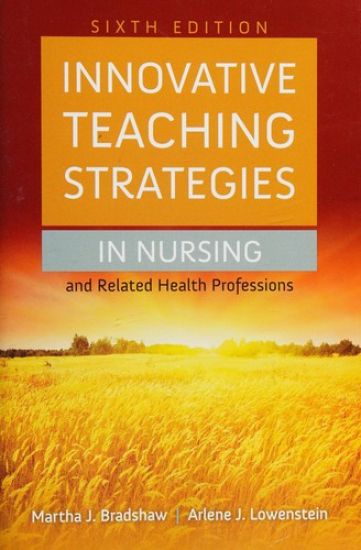
Innovative Teaching Strategies In Nursing And Related Health Professions
Martha Bradshaw; Arlene Lowenstein
Jones and Bartlett Publishers, Inc
2013
nidottu
Innovative Teaching Strategies in Nursing and Related Health Professions, Sixth Edition is focused on providing in-depth coverage around teaching, learning and evaluation strategies for Nurse Educators and health professionals. The text addresses different styles of learning, diversity in the classroom and critical thinking. Creative and innovative strategies and techniques are woven throughout the text with an emphasis on the importance of simulation in the classroom. The authors bring key concepts to life by including specific examples and suggestions for how to implement teaching strategies, how to identify types of learners as well as how to predict potential issues or challenges with each strategy. The Sixth Edition addresses specific teaching-learning strategies for traditional classroom settings, the clinical arena, and through the use of technology for both web-based and virtual simulation. The new edition focuses on the strategy behind the use of technology to help the students understand how it helps to promote learning and engagement. Innovative Teaching Strategies in Nursing and Related Health Professions, Sixth Edition is appropriate for all graduate level courses for health professions educators. A unique quality of this text is that it can be used in any health professions program other than nursing. No other Health professions education text acknowledges fields other than nursing. This text is widely used by students who practice and teach in a variety of health professions and is viewed as an integral resource for their professional development. Key Features: - Provides specific examples and suggestions for how or when to use particular teaching strategies according to type of learner in the classroom - Addresses trends in health care and education of health professionals (Reference is made to the 2003 report from the Institute of Medicine on health professions education. Examples throughout point to the changing nature of patient care and show how to prepare students to practice in diverse settings) - Discusses the use of Library Resources - Includes coverage of the education of health professionals New to this Edition: Clinical Reasoning Research and teaching the strategies of searching written by a Research Librarian Innovation of new teaching methods and technologies Emphasis on simulation Extensive revision of Concept Mapping chapter along with information on how to grade a student’s map Teaching preparation and the use of resources Synchronous Learning