Kirjojen hintavertailu – 12 859 818 kirjaa ja 27 kauppaa

Kirjailija

Arlette Farge

Kirjat ja teokset yhdessä paikassa: 6 kirjaa, julkaisuja vuosilta 1993–2021, suosituimpiin kuuluu Der Geschmack des Archivs. Vertaile teosten hintoja ja tarkista saatavuus suomalaisista kirjakaupoista.

6 kirjaa

Kirjojen julkaisuvuodet: 1993–2021.

Disorderly Families

Disorderly Families

Arlette Farge; Michel Foucault

University of Minnesota Press
2021
nidottu
The first English translation of letters of arrest from eighteenth century France held in the archives of the Bastille Drunken and debauched husbands; libertine wives; vagabonding children. These and many more are the subjects of requests for confinement written to the king of France in the eighteenth century. These letters of arrest (lettres de cachet) from France’s Ancien Régime were often associated with excessive royal power and seen as a way for the king to imprison political opponents. In Disorderly Families, first published in French in 1982, Arlette Farge and Michel Foucault collect ninety-four letters from ordinary families who, with the help of hired scribes, submitted complaints to the king to intervene and resolve their family disputes. Gathered together, these letters show something other than the exercise of arbitrary royal power, and offer unusual insight into the infamies of daily life. From these letters come stories of divorce and marital conflict, sexual waywardness, reckless extravagance, and abandonment. The letters evoke a fluid social space in which life in the home and on the street was regulated by the rhythms of relations between husbands and wives, or parents and children. Most impressively, these letters outline how ordinary people seized the mechanisms of power to address the king and make demands in the name of an emerging civil order. Arlette Farge and Michel Foucault were fascinated by the letters’ explosive qualities and by how they both illustrated and intervened in the workings of power and governmentality. Disorderly Families sheds light on Foucault’s conception of political agency and his commitment to theorizing how ordinary lives come to be touched by power. This first English translation is complete with an introduction from the book’s editor, Nancy Luxon, as well as notes that contextualize the original 1982 publication and eighteenth-century policing practices.
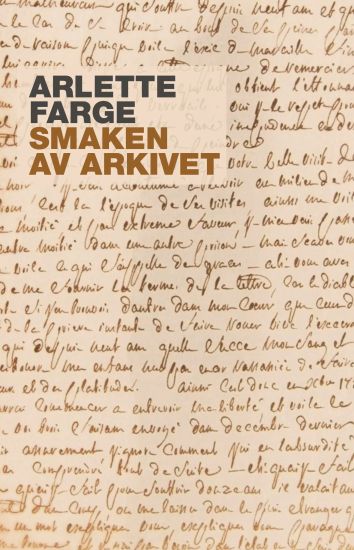
Smaken av arkivet

Smaken av arkivet

Arlette Farge

Glänta Produktion
2019
nidottu
Arlette Farges klassiska essä är ett både personligt och akademiskt nytänkande försvar för arkivet som den främsta källan till kunskap om det förflutna. Arkivet är en nyckel till det förflutna, inte bara för historievetenskapen, utan även för, och till, det moderna samhället. Men vad är egentligen ett arkiv? Hur formar dokumentmassorna den bild vi kan göra oss av det förflutna, och av vårt eget nu? Med utgångspunkt i polisförhör och domstolshandlingar från 1700-talets Frankrike påtalar Farge dubbelheten i hur ordningsmakten samtidigt som den frånkänt de allra fattigaste förmågan till självständigt tänkande också visat en oerhörd upptagenhet av att i förhör och protokoll nedteckna deras minsta avvikelse. Den varsamhet med vilken historikern bör närma sig dem som aldrig räknats som historiens subjekt utgör här tyngdpunkten i vad som utvecklas till ett personligt, kritiskt och sinnligt möte med arkivets dammiga ark. Arlette Farge är historiker och forskningsledare i modern historia vid Centre National de la Recherche Scientifique i Paris, Frankrike. Hennes specialområde är livet i 1700-talets städer. Tillsammans med Michel Foucault har hon givit ut Le Désordre des familles (1982), som dokumenterar vanliga medborgares försök att komma till tals med makten.
The Allure of the Archives

The Allure of the Archives

Arlette Farge; Natalie Zemon Davis

Yale University Press
2015
pokkari
An exquisite appreciation of the distinctive rewards of historical research and a classic guide to the personal yet disciplined craft of discovery, now in its first English translation. Arlette Farge’s Le Goût de l’archive is widely regarded as a historiographical classic. While combing through two-hundred-year-old judicial records from the Archives of the Bastille, historian Farge was struck by the extraordinarily intimate portrayal they provided of the lives of the poor in pre-Revolutionary France, especially women. She was seduced by the sensuality of old manuscripts and by the revelatory power of voices otherwise lost. In The Allure of the Archives, she conveys the exhilaration of uncovering hidden secrets and the thrill of venturing into new dimensions of the past. Originally published in 1989, Farge’s classic work communicates the tactile, interpretive, and emotional experience of archival research while sharing astonishing details about life under the Old Regime in France. At once a practical guide to research methodology and an elegant literary reflection on the challenges of writing history, this uniquely rich volume demonstrates how surrendering to the archive’s allure can forever change how we understand the past.
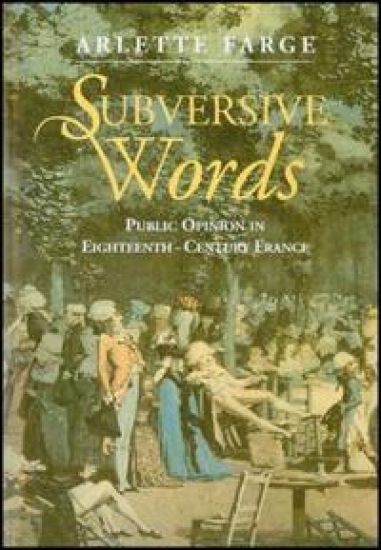
Subversive Words

Subversive Words

Arlette Farge

Polity Press
1994
nidottu
This important and original book addresses the nature of public opinion, the relation between rulers and ruled, and the role of popular rumours in eighteenth century France. Arlette Farge draws on chronicles, newspapers, memoirs, police records and newsheets to show that ordinary Parisians had definite opinions on what was happening in their city.
Fragile Lives

Fragile Lives

Arlette Farge

Polity Press
1993
nidottu
The lives of ordinary Parisians in the eighteenth-century are the topic of this vivid and important study. Through the experiences of men, women and children, Arlette Farge traces the solidarities and conflicts which arose between men and women, rich and poor, masters and servants, neighbours and colleagues. The author deals with three arenas of conflict and solidarity: the home, the workplace and the street. By examining these interwoven lives, Farge is able to challenge our conventional perception of everyday experience in the eighteenth century, of the aspirations of women both within the family and as abandoned mistresses, of the behaviour of the crowd as active and passive participants in street violence, and of the workshop as the arena for social conflicts. The author vividly describes a society, in the process of mutation, which was gradually reconstructing a new set of values.