
Kirjailija
Armen Avanessian
Kirjat ja teokset yhdessä paikassa: 14 kirjaa, julkaisuja vuosilta 2014–2026, suosituimpiin kuuluu Selling Senses. Vertaile teosten hintoja ja tarkista saatavuus suomalaisista kirjakaupoista.
14 kirjaa
Kirjojen julkaisuvuodet: 2014–2026.
«Metafysikk for vår tid» er et forsøk på å gjøre de klassiske metafysiske kategoriene fra filosofihistorien relevante for vår egen tid. Avanessian tar for seg begreper som substans og aksidens, form og materie, liv og død og gir dem ny mening. Han henter filosofihistorien ut av de støvete bokhyllene og bruker den til å forstå de stadig raskere nyvinningene innenfor teknologi, medier, vitenskap og økonomi som preger vår egen tid.
The triumph of technological rationality and of the sciences as a whole has by no means provided answers to humanity’s great questions. Instead, it has raised new and old questions and problems. To orient ourselves in the twenty-first century, we must take a new look at the central categories of philosophy that, often unbeknownst to us, continue to shape our everyday thinking. Future Metaphysics is an attempt at restating the importance of the great metaphysical categories for the present: how our contemporary predicament forces us both to reclaim them and to give them a radically new twist. Armen Avanessian re-examines and displaces categories like substance and accident, form and matter, life and death, giving them an unexpected twist. What if the idea of accident, for instance, had to take into account the many new kinds of glitches, crashes and crises – from finance to ecology, from technological catastrophes to social collapses – that permeate our culture and make everyday news? Can we keep on using this concept as it was traditionally meant to be used when risk and chance have become part of the very substance of our world, so rendering the distinction between substance and accident meaningless? The other concepts and distinctions require a similar interrogation, giving birth to a new metaphysical landscape, where the most urgent realities of the twenty-first century impinge on the most fundamental categories of thought.
The triumph of technological rationality and of the sciences as a whole has by no means provided answers to humanity’s great questions. Instead, it has raised new and old questions and problems. To orient ourselves in the twenty-first century, we must take a new look at the central categories of philosophy that, often unbeknownst to us, continue to shape our everyday thinking. Future Metaphysics is an attempt at restating the importance of the great metaphysical categories for the present: how our contemporary predicament forces us both to reclaim them and to give them a radically new twist. Armen Avanessian re-examines and displaces categories like substance and accident, form and matter, life and death, giving them an unexpected twist. What if the idea of accident, for instance, had to take into account the many new kinds of glitches, crashes and crises – from finance to ecology, from technological catastrophes to social collapses – that permeate our culture and make everyday news? Can we keep on using this concept as it was traditionally meant to be used when risk and chance have become part of the very substance of our world, so rendering the distinction between substance and accident meaningless? The other concepts and distinctions require a similar interrogation, giving birth to a new metaphysical landscape, where the most urgent realities of the twenty-first century impinge on the most fundamental categories of thought.
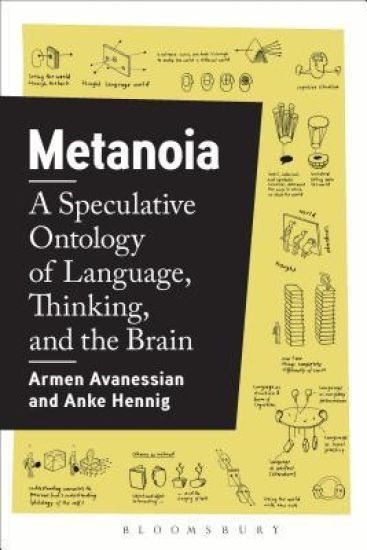
Fusing speculative realism, analytical and linguistic philosophy this book theorises the fundamental impact the experience of reading has on us. In reading, language provides us with a world and meaning becomes perceptible. We can connect with another subjectivity, another place, another time. At its most extreme, reading changes our understanding of the world around us. Metanoia— meaning literally a change of mind or a conversion—refers to this kind of new way of seeing. To see the world in a new light is to accept that our thinking has been irrevocably transformed. How is that possible? And is it merely an intellectual process without any impact on the world outside our brains? Tackling these questions, this book mobilizes discussions from linguistics, literary theory, philosophy of language, and cognitive science. It re-articulates linguistic consciousness by underlining the poetic, creative moment of language and sheds light on the ability of language to transform not only our thinking but the world around us as well.
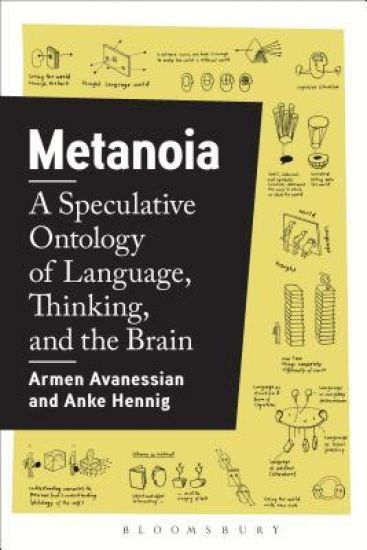
Fusing speculative realism, analytical and linguistic philosophy this book theorises the fundamental impact the experience of reading has on us. In reading, language provides us with a world and meaning becomes perceptible. We can connect with another subjectivity, another place, another time. At its most extreme, reading changes our understanding of the world around us. Metanoia— meaning literally a change of mind or a conversion—refers to this kind of new way of seeing. To see the world in a new light is to accept that our thinking has been irrevocably transformed. How is that possible? And is it merely an intellectual process without any impact on the world outside our brains? Innovatively tackling these questions, this book mobilizes discussions from linguistics, literary theory, philosophy of language, and cognitive science. It re-articulates linguistic consciousness by underlining the poetic, creative moment of language and sheds light on the ability of language to transform not only our thinking but the world around us as well.
The invention of the present-tense novel is a literary event whose importance is on par with the discovery of perspective in painting. From the first novels shaped by interior monologues and the use of the present tense in the tradition of modernism, the present tense has, over the course of its century-long evolution, changed the conditions of fictional narration, along with our conceptions of time in a philosophical and linguistic framework. Indeed, to understand the work of an increasing number of contemporary writers – J. M. Coetzee, Tom McCarthy, Thomas Pynchon, to name only a few – it is necessary to both understand the distinct linguistic and literary qualities of the present tense as well as its historical transformation into a genuine tense of contemporary storytelling. For the first time in literary scholarship, Present Tense: A Poetics offers an account of a profound development in 20th- and 21st-century fiction.
The invention of the present-tense novel is a literary event whose importance is on par with the discovery of perspective in painting. From the first novels shaped by interior monologues and the use of the present tense in the tradition of modernism, the present tense has, over the course of its century-long evolution, changed the conditions of fictional narration, along with our conceptions of time in a philosophical and linguistic framework. Indeed, to understand the work of an increasing number of contemporary writers – J. M. Coetzee, Tom McCarthy, Thomas Pynchon, to name only a few – it is necessary to both understand the distinct linguistic and literary qualities of the present tense as well as its historical transformation into a genuine tense of contemporary storytelling. For the first time in literary scholarship, Present Tense: A Poetics offers an account of a profound development in 20th- and 21st-century fiction.
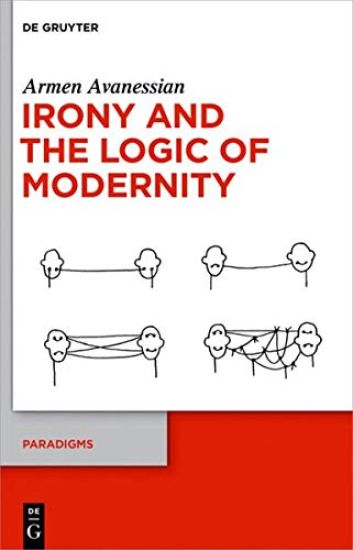
The logic of modernity is an ironical logic. Modern irony, a flash of genius produced by Romantic theorists, is first discussed, e.g. in Hegel and Kierkegaard, as an ethical problem personified in figures such as the aesthete, the seducer, the flaneur, or the dandy. It fully develops in the novel, the modern genre par excellence: in novels of the early 19th century no less than in those of postmodernity or in those of the masters of citation, parody, and pastiche of classical modernism (Musil, Joyce, and Proust). This book, however, goes one step further. Looking at how such different authors as Schmitt, Kafka, and Rorty identify the political conflicts, contradictions, and paradoxes of the 20th century as ironical and offers a comprehensive account of the constitutive irony of modernity’s ethical, poetical, and political logic.
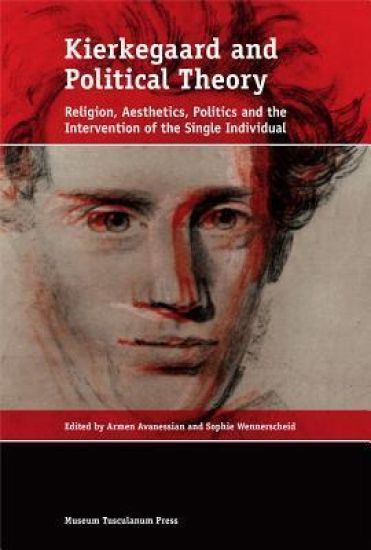
Kierkegaard and Political Theory
Sophie Wennerscheid; Armen Avanessian
Museum Tusculanum Press
2014
nidottu
Søren Kierkegaard's radical protestant philosophy of the individual -- in which a person's leap of faith is favoured over general ethics -- has become a model for many contemporary political theorists. Thinkers such as Slavoj Zizek and Alain Badiou have drawn on its revolutionary spirit to position truth above the constraints of political systems. In Kierkegaard and Political Theory, contributors from a wide range of disciplines -- including theology, sociology, philosophy, and aesthetics -- examine just how crucial Kierkegaard's anti-institutional thinking has been to such efforts and to modernity as a whole. The contributors convincingly position Kierkegaard's radical philosophy as the starting point for contemporary political theory. They show how he pioneered a modernity defined as an argument -- an experience -- of the impossibility of rationally comprehending a system of thinking. They show how religious and aesthetic experiences function as a response to this impossibility, how their coherence in politics must always be questioned, especially in history's extreme example: totalitarianism. Engaging this and many other subjects, they provide a compelling new line in Kierkegaard studies that illuminates new contours of our political thought.