Kirjojen hintavertailu – 12 875 614 kirjaa ja 26 kauppaa
Kirjailija
Armin J. Husemann
Kirjat ja teokset yhdessä paikassa: 8 kirjaa, julkaisuja vuosilta 2013–2023, suosituimpiin kuuluu Form, Leben und Bewusstsein. Vertaile teosten hintoja ja tarkista saatavuus suomalaisista kirjakaupoista.
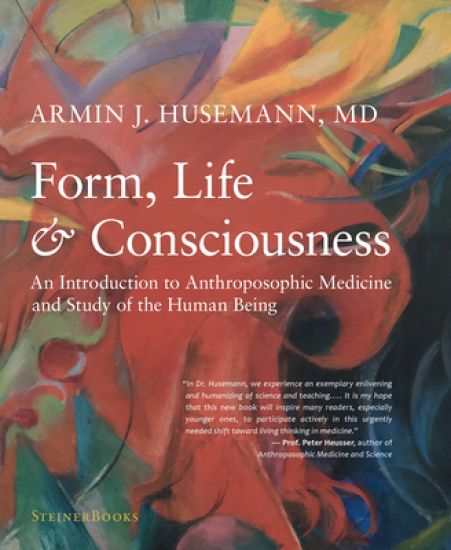
"You take all of Nature together to shed light on individual details; in the totality of her phenomena, you seek to explain the individual. From simple levels of organization, you ascend to the more complex, ultimately assembling the most complex of all--the human being." --Friedrich Schiller (in a letter to Goethe) Dr. Armin Husemann outlines--for doctors, therapists, students, and other interested readers--the basics and essential aspects of anthroposophic medicine. He takes the reader on an exciting journey of discovery through the realms of minerals, plants, animals, and humankind. In doing so, diverse, unfamiliar perspectives open up for the practice of medicine and other forms of healthcare and therapy. Dr. Husemann provides an abundance of scientific details that look at the whole person today. He shows ways to recapture the human being within the context of life, nature, and its spiritual origin. This is the essence and basis of anthroposophically extended medicine. The author uses numerous examples to illustrate how a phenomenological encounter with nature leads to a fuller understanding of the human organism and its various clinical pictures, opening new ways toward a more holistic practice of therapies and the healing process. Form, Life, and Consciousness is one of those rare resources that serve as a guide for the professional while also remaining accessible to those who are interested in gaining a better understanding of the whole human being and a spiritual-scientific approach to medicine and therapy. ∞ ∞ ∞ C O N T E N T S Foreword: "From Reductionist Science to Living Thinking in Medicine"Preface 1. Form and life2. Life and Consciousness: From Amphibians to Reptiles3. Humans and Animals4. The Human Being and the Processes of Nature5. Clinical Pictures and Disease Patterns6. Working Principles of Therapeutic Eurythmy7. Medical Thinking and Moral Practice Afterword: "Goethe's Thinking Applied to the Physician's Path of Training"
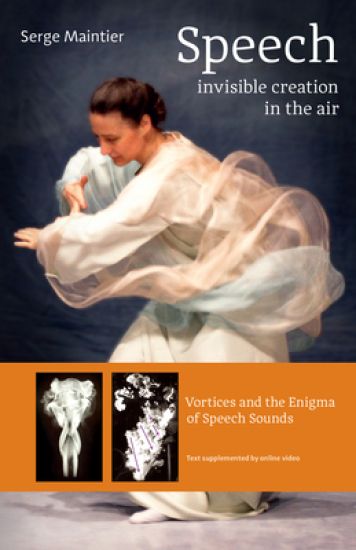
How the sounds of spoken language arise is ultimately still a mystery to researchers. Acoustic phonetics has analyzed sound phenomena, whereas articulatory phonetics determines the physiological formation of spoken language. Little is known about the air, however, the central element of speech both within and immediately outside the body as it relates to audible sounds. In 1924, Rudolf Steiner expressed the wish that an experimental method would be found by which sounds from the speaker's mouth could be rendered visible and thereby confirm the primal phenomenon embodied in the art of eurythmy as "visible speech." Following Steiner's suggestions, Johanna Zinke first succeeded in capturing these air sound forms on photographic plates in 1962. She showed that each spoken sound generates a reproducible figure for a split second in midair. Maintier expanded on this work with the help of acoustic and laser-video phonetic analysis, showing that the segmentation of speech signals correlates with the speech air-flow figures. His results further reveal a surprising connection with modern flow and chaos research. Maintier therefore concludes that speaking goes far beyond production of acoustic waves; it arises through precise modulations of breath. It is an "art of movement."
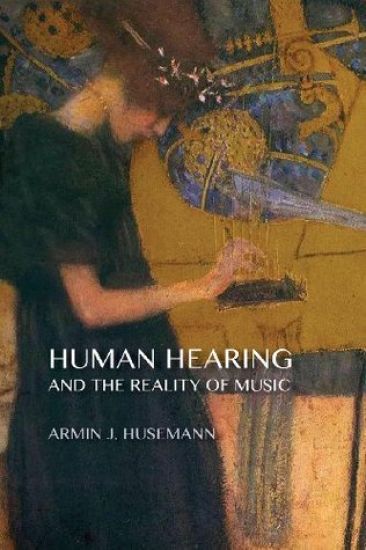
Music is not simply something we hear. We experience it and love it; it is a primal human need. If, as the pianist Alfred Brendel put it, that we are able to "take music at its word," we confront questions that also moved the author since his adolescent years: What takes hold of me when I experience music? What reality touches me when music is playing? What happens physiologically in the human body when we experience and make music? The author approaches these questions from three perspectives: first, from his personal experience and active love of music; second, from the physiological perspective; and third, from Rudolf Steiner's spiritual science. Dr. Husemann--author of The Harmony of the Human Body--shows how hearing is a sensory activity that encompasses far more than processes in the ear and brain, and that the whole body is involved. He also discusses the relationship between music and chemistry. Music is "chemistry from the inside." And finally, from 1915 to 1918, Rudolf Steiner developed a physiology of artistic imagination based on the movement of the cerebrospinal fluid during respiration. Human Hearing and the Reality of Music is the first attempt to relate Steiner's spiritual research to the findings of natural scientific research in this area.