Kirjojen hintavertailu – 12 903 733 kirjaa ja 27 kauppaa
Kirjailija
Armin W. Geertz
Kirjat ja teokset yhdessä paikassa: 6 kirjaa, julkaisuja vuosilta 2011–2026, suosituimpiin kuuluu Religion : i historia, samtid och framtid. Vertaile teosten hintoja ja tarkista saatavuus suomalaisista kirjakaupoista.
Janne Haaland Matlary; Daniel T. Potts; Julius J. Lipner; Robin Osborne; John Scheid; Martin Goodman; Diarmaid Macculloch; Elaine Pagels; Reza Aslan; Wouter J. Hanegraaff; Gary Lachman; Malise Ruthven; Marco Pasi; William O’Reilly; Ariel Glucklich; Wolfgang Palaver; Mona Siddiqui; Candida R. Moss; Esther Benbassa; Richard Miles; A.N. Wilson; Jessica Frazier; Simon May; Armin W. Geertz; Harvey Whitehouse; Pär Stenbäck; Benedetta Berti; Göran Rosenberg; Jayne Svenungsson; Adrian Wooldridge; Chakravarthi Ram-Prasad
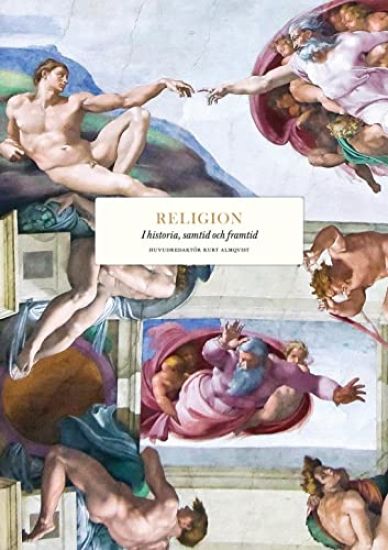
Tron på en styrande, övergripande, himmelsk princip har följt människan genom historien. Mer än 80 procent av världens befolkning har idag en religiös tillhörighet och även i sekulära stater fortsätter religionen att spela en viktig roll. Det går inte att förstå politik och internationella relationer idag utan att inkludera religionen som en aspekt av det kulturella sammanhanget. Essäerna i denna antologi, som härrör från Engelsbergsseminariet 2014, spänner över en mångfald ämnen i dagens såväl som gårdagens samhällen. De utforskar religionen i relation till människans villkor och skildrar hur den manifesterar sig i individens egna upplevelser. För att förstå oss själva behöver vi också förstå religionen.

One of the most exciting developments in the study of religion during recent years is the application of cognitive theory. Many people are inspired by the thought that understanding human cognition can somehow help us to understand religion. Others are more sceptical. What can neurophysiology possibly tell us about social and cultural phenomena? How do we get from the neurone to the Qu'ran? This book will enlighten those who know little about cognitive theory, introducing them to the background and subject areas where cognitive approaches can be useful. Armin Geertz shows that cognitive approaches are broader and allow for many more possibilities than pioneers in the cognitive study of religion have touched upon in the past. Using a minimum of neuro-jargon and presenting clear explanations of terms where necessary, this book offers an informative guide to cognitive theory to develop plausible interpretations and explanations of religious thought and behaviour. Armin Geertz explains how cognitive theory offers a toolbox to help us to understand the texts, behaviours, and attitudes we are confronted with in the study of religion.
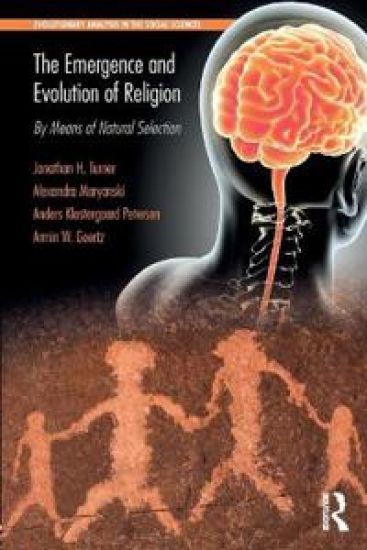
Written by leading theorists and empirical researchers, this book presents new ways of addressing the old question: Why did religion first emerge and then continue to evolve in all human societies? The authors of the book—each with a different background across the social sciences and humanities—assimilate conceptual leads and empirical findings from anthropology, evolutionary biology, evolutionary sociology, neurology, primate behavioral studies, explanations of human interaction and group dynamics, and a wide range of religious scholarship to construct a deeper and more powerful explanation of the origins and subsequent evolutionary development of religions than can currently be found in what is now vast literature. While explaining religion has been a central question in many disciplines for a long time, this book draws upon a much wider array of literature to develop a robust and cross-disciplinary analysis of religion. The book remains true to its subtitle by emphasizing an array of both biological and sociocultural forms of selection dynamics that are fundamental to explaining religion as a universal institution in human societies. In addition to Darwinian selection, which can explain the biology and neurology of religion, the book outlines a set of four additional types of sociocultural natural selection that can fill out the explanation of why religion first emerged as an institutional system in human societies, and why it has continued to evolve over the last 300,000 years of societal evolution. These sociocultural forms of natural selection are labeled by the names of the early sociologists who first emphasized them, and they can be seen as a necessary supplement to the type of natural selection theorized by Charles Darwin. Explanations of religion that remain in the shadow cast by Darwin’s great insights will, it is argued, remain narrow and incomplete when explaining a robust sociocultural phenomenon like religion.
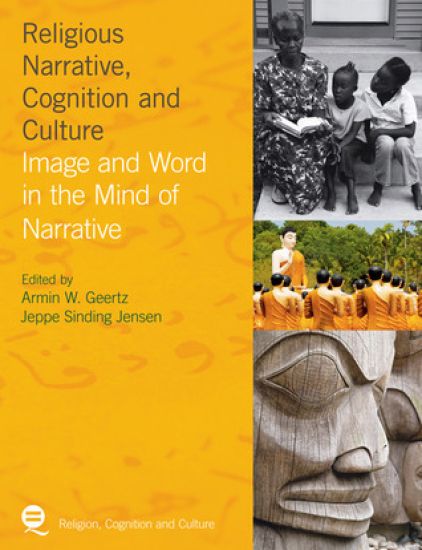
'Religious Narrative, Cognition and Culture' brings together some of the world's leading scholars in the fields of cognitive science and comparative religion. The essays range across diverse fields: the neurological processes and possible genetic foundations of how language emerged; the possible phylogenetic routes in the development of language and culture; the complex interrelations between the ontogenesis and the sociogenesis of cognitive processes; the value of a combination of neurology, narratology and a reworked speech-act approach that focuses on narrative; how the psychology of ritual helps make narrative beliefs possible; religious narratives; emotional communication; the role of gossip as religious narrative; area studies of religious narrative and cognition in the Bible; Indian Epic literature; Australian Aboriginal mythology and ritual; modern religious forms such as New Age, Asatro, astrological narrative and virtual rituals in cyberspace.