Kirjojen hintavertailu – 12 872 014 kirjaa ja 27 kauppaa

Kirjailija

Arnold Aronson

Kirjat ja teokset yhdessä paikassa: 11 kirjaa, julkaisuja vuosilta 1993–2023, suosituimpiin kuuluu Architect of Dreams: The Theatrical Vision of Joseph Urban. Vertaile teosten hintoja ja tarkista saatavuus suomalaisista kirjakaupoista.

11 kirjaa

Kirjojen julkaisuvuodet: 1993–2023.

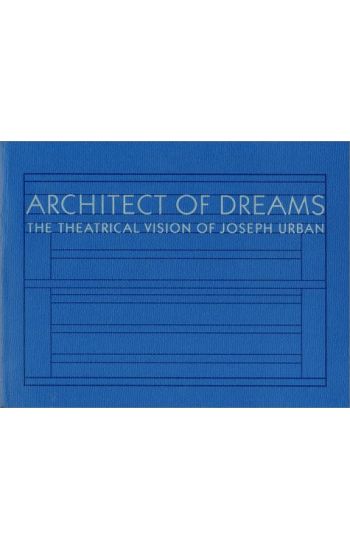
Architect of Dreams: The Theatrical Vision of Joseph Urban

Architect of Dreams: The Theatrical Vision of Joseph Urban

Arnold Aronson; Gwynedd Cannan

Wallach Art Gallery
2000
nidottu
Previous research on Joseph Urban (1872-1933) has focused on his architectural career; yet after moving from Vienna to the U. S. in 1912, he devoted much of his energies to the stage, especially productions for the Metropolitan Opera and the Ziegfeld Follies. A seminal figure in the history of American theater, he introduced to the U. S. the sophistication of European developments in stage design, experiments with lighting, and painterly effects which paralleled developments in modernist literature, painting, and dance. Architect of Dreams documents more than 100 finely rendered watercolors, photographs, and three-dimensional stage models. Arnold Aronson (professor of theatre arts at Columbia University) contributes a major essay. In other essays, Derek E. Ostergard contextualizes Urban's architecture, and Matthew Wilson Smith examines Urban's work in film.
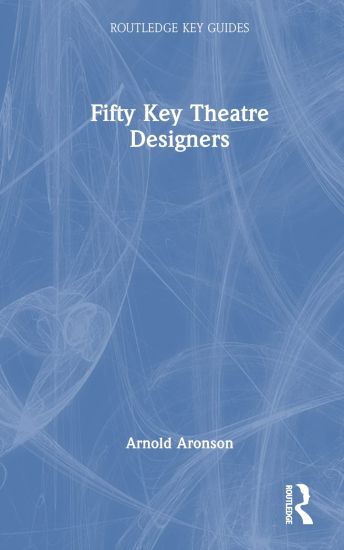
Fifty Key Theatre Designers

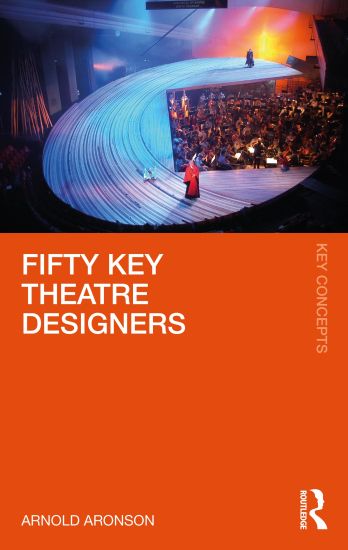
Fifty Key Theatre Designers

Arnold Aronson

TAYLOR FRANCIS LTD
2023
nidottu
Fifty Key Theatre Designers looks at the history of theatrical scenography by examining the work and contributions of fifty ground-breaking set, costume, lighting, and projection designers since the Renaissance. Developments of scenic design are traced from the introduction of perspective painting to create illusionistic scenery in Renaissance Italy to the use of digital projection in the twenty-first century. The book also discusses important landmarks in the evolution of costume and lighting design, as well as the introduction of film and video technology to stage design. A broad range of work is explored, including opera, dance, Broadway and West End commercial theatre, avant-garde performance, and even Olympic spectacles. Each chapter features one designer, including basic biographical information and a discussion of that artist’s style, aesthetics, and contributions. Designers covered include Sebastiano Serlio, Ferdinando Bibiena, Richard Wagner, Adolphe Appia, and Edward Gordon Craig, amongst many other notable individuals. Each chapter also includes references to other significant designers with similar aesthetics or who made similarly important contributions to the development of that aspect of scenography. This book is ideal for undergraduates and graduates of scenography, theatrical design, and theatre history.
Fifty Key Theatre Designers

Fifty Key Theatre Designers

Arnold Aronson

TAYLOR FRANCIS LTD
2023
sidottu
Fifty Key Theatre Designers looks at the history of theatrical scenography by examining the work and contributions of fifty ground-breaking set, costume, lighting, and projection designers since the Renaissance. Developments of scenic design are traced from the introduction of perspective painting to create illusionistic scenery in Renaissance Italy to the use of digital projection in the twenty-first century. The book also discusses important landmarks in the evolution of costume and lighting design, as well as the introduction of film and video technology to stage design. A broad range of work is explored, including opera, dance, Broadway and West End commercial theatre, avant-garde performance, and even Olympic spectacles. Each chapter features one designer, including basic biographical information and a discussion of that artist’s style, aesthetics, and contributions. Designers covered include Sebastiano Serlio, Ferdinando Bibiena, Richard Wagner, Adolphe Appia, and Edward Gordon Craig, amongst many other notable individuals. Each chapter also includes references to other significant designers with similar aesthetics or who made similarly important contributions to the development of that aspect of scenography. This book is ideal for undergraduates and graduates of scenography, theatrical design, and theatre history.
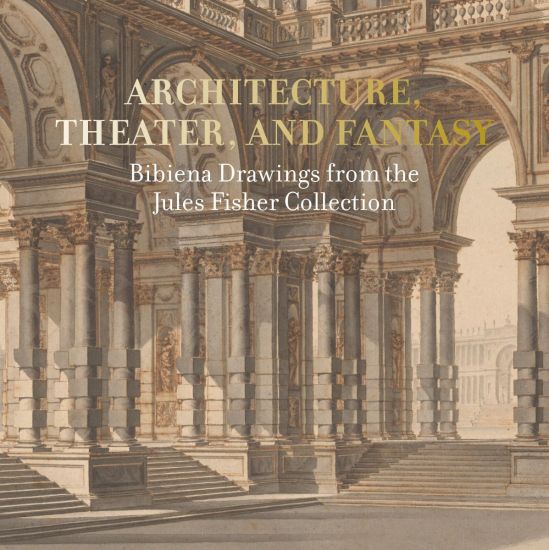
Architecture, Theater, and Fantasy

Architecture, Theater, and Fantasy

Diane Kelder; John J. Marciari; Laurel O. Peterson; Arnold Aronson

Paul Holberton Publishing
2021
pokkari
This exhibition catalog explores the remarkable theatrical designs of Italy's influential Bibiena family in the seventeenth and eighteenth centuries. For nearly a century, members of three generations of the Bibiena family were the most highly sought theater designers in Europe. Their elaborate stage designs were used for operas, festivals, and courtly performances across Europe, from their native Italy to cities as far afield as Vienna, Prague, Stockholm, St. Petersburg, and Lisbon. Beyond these performances, the distinctive Bibiena style survives through their remarkable drawings. Architecture, Theater, and Fantasy commemorates a group of Bibiena drawings from the collection of Jules Fisher, the Tony Award–winning lighting designer, gifted to the Morgan Library and Museum in New York. Accompanying the first US exhibition of these works in more than thirty years, these drawings demonstrate the range of the Bibienas' output, from energetic sketches to detailed watercolors. Representations of imagined palace interiors and lavish illusionistic architecture illuminate the visual splendor of the Baroque period.
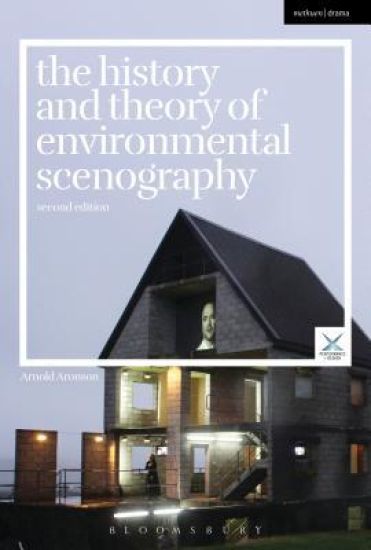
The History and Theory of Environmental Scenography
A classic work of theatre history and criticism when first published, Arnold Aronson's formative study surveyed the phenomenon known as environmental theatre. Now updated in this richly illustrated second edition to reflect developments and practice since the 1980s, it offers readers a comprehensive study of the theatre practice which has evolved to become the dominant mode of much contemporary innovative performance. For most audiences, particularly in the Western tradition, theatre means going to a building in which seats face a stage on which actors perform a play. But there has always been a vital alternative that came to be known as environmental theatre. Whether in folk performances, street theatre, avant-garde performance, utopian architecture, Happenings, mass spectacles, or contemporary immersive theatre, the relationship of the spectator to the performance has been one in which the audience is surrounded or immersed in a shared space, in which the multiple events may be happening simultaneously, and in which the experience of theatrical space is visceral and often kinetic. This book examines the history of this phenomenon and looks at a range of contemporary practice. New chapters examine how the 'transformed spaces' of earlier work have become the interactive and immersive productions that characterize the work of companies such as Punchdrunk, dreamthinkspeak, Teatro da Vertigem, En Garde Arts, and The Industry, among others. Updated to take account of the burgeoning scholarship on the subject, The History and Theory of Environmental Scenography remains the authoritative account that illuminates present day theatre practice and its antecedents.
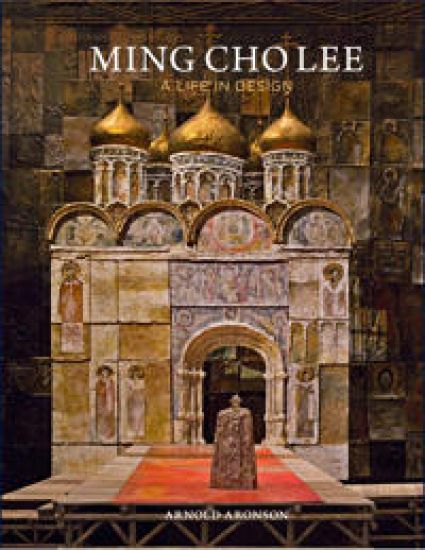
Ming Cho Lee: A Life in Design

Ming Cho Lee: A Life in Design

Arnold Aronson

Theatre Communications Group Inc.,U.S.
2014
sidottu
Ming Cho Lee is considered to be the most influential stage designer in the United States in the past forty years, and one of the most respected designers in the world. His work with theater, opera, and dance companies in the 1960s, particularly the New York Shakespeare Festival, the New York City Opera, and the Joffrey Ballet, transformed the very nature of the design in America and introduced a scenic vocabulary and spatial aesthetic that underlies scenographic styles to the present day. Lavishly illustrated with over five hundred images in both color and black and white, this book chronicles Lee's career from his early training as a water-colorist in China, his designs for over three hundred productions, and his esteemed forty-year career at the Yale School of Drama as a mentor to an entire generations of scenic designers. A recipient of the National Medal of Arts, the highest national award given in the arts awarded by the President of the United States, Lee's work has been showcased at the New York Public Library for the Performing Arts, and in fall 2013, the Yale School of Architecture will host a major retrospective of his work. His other awards include a Tony Award, Outer Circle Critics' Award, and three Drama Desk Awards. Arnold Aronson has taught at Columbia University since 1991 and has previously worked in the theater departments at Hunter College, The University of Michigan, Cornell University, and The University of Virginia. He served as the editor of "Theatre Design & Technology" from 1978 to 1988 and is the author of "American Set Design." In 2007, he served as the first non-Czech General Commissioner of the Prague Quadrennial of Stage Design and Theatre Architecture.
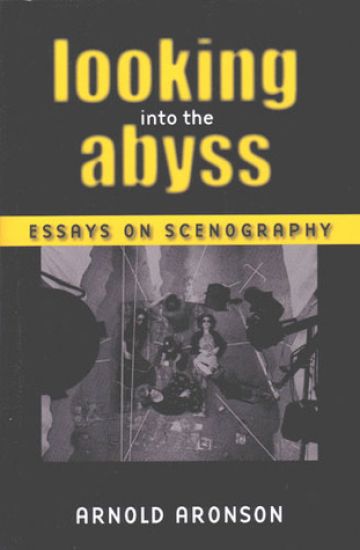
Looking Into the Abyss

Looking Into the Abyss

Arnold Aronson

The University of Michigan Press
2005
sidottu
Theater is, first and foremost, a visual art; Looking Into the Abyss examines the ways in which the visual theater affects our understanding of the dramatic event. Arnold Aronson, an internationally prominent historian and theorist of theater set design, opens with an overview of scenographic concepts, including postmodern design and the use of new media in the theater, and continues with analyses of the work of specific designers (including Richard Foreman and David Rockwell) and scenographic responses to playwrights like Chekhov and Tony Kushner. These essays serve to open a dialogue that will bring the physical aspect of theater back into its proper place: an element as integral to the performance as the spoken word, and they will inspire theater-goers to become more aware of their role as seers of the theater. Arnold Aronson is Professor of Theater, Columbia University. He is author of American Avant-Garde Theatre: A History; Architect of Dreams: The Theatrical Vision of Joseph Urban; American Set Design; and The History and Theory of Environmental Scenography.
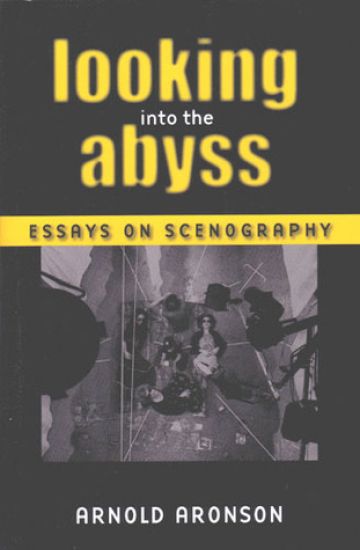
Looking Into the Abyss

Looking Into the Abyss

Arnold Aronson

The University of Michigan Press
2005
nidottu
Theater is, first and foremost, a visual art; Looking Into the Abyss examines the ways in which the visual theater affects our understanding of the dramatic event. Arnold Aronson, an internationally prominent historian and theorist of theater set design, opens with an overview of scenographic concepts, including postmodern design and the use of new media in the theater, and continues with analyses of the work of specific designers (including Richard Foreman and David Rockwell) and scenographic responses to playwrights like Chekhov and Tony Kushner. These essays serve to open a dialogue that will bring the physical aspect of theater back into its proper place: an element as integral to the performance as the spoken word, and they will inspire theater-goers to become more aware of their role as seers of the theater. Arnold Aronson is Professor of Theater, Columbia University. He is author of American Avant-Garde Theatre: A History; Architect of Dreams: The Theatrical Vision of Joseph Urban; American Set Design; and The History and Theory of Environmental Scenography.
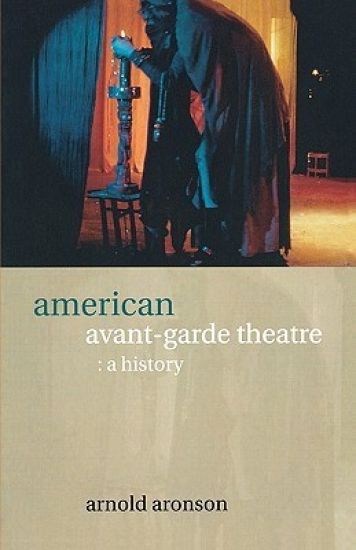
American Avant-Garde Theatre

American Avant-Garde Theatre

Arnold Aronson

Routledge
2000
nidottu
This stunning contribution to the field of theatre history is the first in-depth look at avant-garde theatre in the United States from the early 1950s to the 1990s. American Avant-Garde Theatre offers a definition of the avant-garde, and looks at its origins and theoretical foundations by examining: *Gertrude Stein *John Cage *The Beat writers *Avant-garde cinema *Abstract Expressionism *Minimalism There are fascinating discussions and illustrations of the productions of the Living Theatre, the Wooster Group, Open Theatre, Ontological-Hysteric Theatre and Performance Group. among many others. Aronson also examines why avant-garde theatre declined and virtually disappeared at the end of the twentieth century.
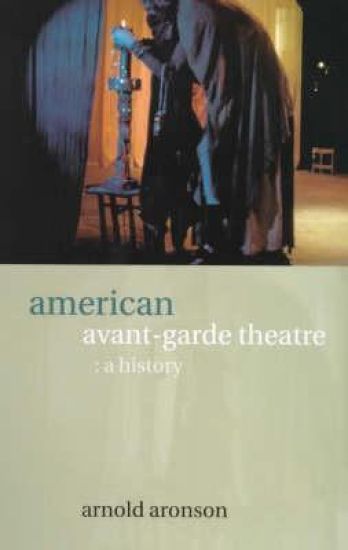
American Avant-Garde Theatre

American Avant-Garde Theatre

Arnold Aronson

Routledge
2000
sidottu
This stunning contribution to the field of theatre history is the first in-depth look at avant-garde theatre in the United States from the early 1950s to the 1990s. American Avant-Garde Theatre offers a definition of the avant-garde, and looks at its origins and theoretical foundations by examining: *Gertrude Stein *John Cage *The Beat writers *Avant-garde cinema *Abstract Expressionism *Minimalism There are fascinating discussions and illustrations of the productions of the Living Theatre, the Wooster Group, Open Theatre, Ontological-Hysteric Theatre and Performance Group. among many others. Aronson also examines why avant-garde theatre declined and virtually disappeared at the end of the twentieth century.