Kirjojen hintavertailu – 12 903 725 kirjaa ja 27 kauppaa

Kirjailija

Arnold Pacey

Kirjat ja teokset yhdessä paikassa: 10 kirjaa, julkaisuja vuosilta 1978–2021, suosituimpiin kuuluu Technology in World Civilization. Vertaile teosten hintoja ja tarkista saatavuus suomalaisista kirjakaupoista.

10 kirjaa

Kirjojen julkaisuvuodet: 1978–2021.

Technology in World Civilization

Technology in World Civilization

Arnold Pacey; Francesca Bray

MIT Press
2021
nidottu
The new edition of a milestone work on the global history of technology. This milestone history of technology, first published in 1990 and now revised and expanded in light of recent research, broke new ground by taking a global view, avoiding the conventional Eurocentric perspective and placing the development of technology squarely in the context of a world civilization. Case studies include technological dialogues between China and West Asia in the eleventh century, medieval African states and the Islamic world, and the United States and Japan post-1950. It examines railway empires through the examples of Russia and Japan and explores current synergies of innovation in energy supply and smartphone technology through African cases. The book uses the term technological dialogue to challenges the top-down concept of technology transfer, showing instead that technologies are typically modified to fit local needs and conditions, often triggering further innovation. The authors trace these encounters and exchanges over a thousand years, examining changes in such technologies as agriculture, firearms, printing, electricity, and railroads. A new chapter brings the narrative into the twenty-first century, discussing technological developments including petrochemicals, aerospace, and digitalization from often unexpected global viewpoints and asking what new kind of industrial revolution is needed to meet the challenges of the Anthropocene.

Addingham Houses 1750-1850: Built in a time of village expansion

Addingham Houses 1750-1850: Built in a time of village expansion

Arnold Pacey

Createspace Independent Publishing Platform
2014
nidottu
Before 1750 Addingham was a small farming community but during the next 100 years (the period covered by this book) the village was transformed by the coming of the textile industry and the construction of substantial mills and related enterprises. This expansion produced wealthy mill owners who needed suitable housing for themselves and their families and also lesser properties for their workers. It is very fortunate that so many houses of this period still exist in Addingham (which has over 100 listed buildings) and, indeed, much of Main Street is still lined by original buildings. In the first part of this book, local historian Arnold Pacey has written chapters about the principle property owners, particularly the Cunliffes and the Cockshotts, and describes the houses that they built, with detailed pen and ink drawings (mainly by the author) of architectural features, and photographs of some of the houses. The second part of the book is devoted to the builders, stonemasons and other craftsmen who built the houses and the distinctive working methods which left their mark and show who built which house. Particularly featured here are generations of the Breare family. The second edition, published 2015, has the addition of an old photograph of North Street which has provided the author with further information about the houses in that street and enabled related changes and additions to the text.
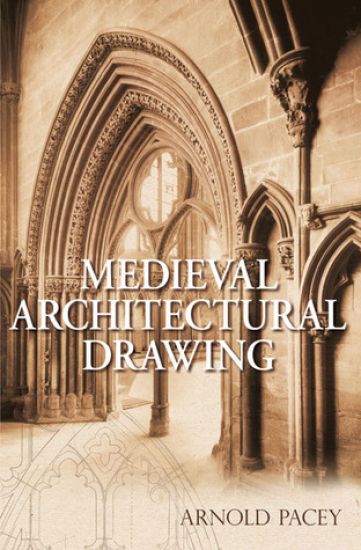
Medieval Architectural Drawing

Medieval Architectural Drawing

Arnold Pacey

The History Press Ltd
2008
sidottu
Presents clues based on some of the builders' drawings on monuments. This book also investigates the drawing techniques of carpenters and wood-carvers. It shows that the medieval drawing techniques continued in use after the end of the Middle Ages, and demonstrates how craftsmen working for Christopher Wren used some of the old techniques.
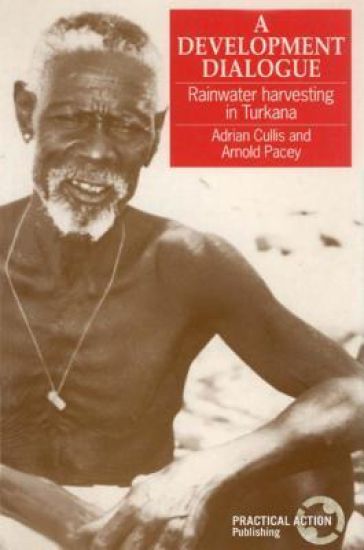
Development Dialogue

Development Dialogue

Adrian Cullis; Arnold Pacey

Practical Action Publishing
1992
sidottu
Describes the Turkana rainwater harvesting project, a water-conservation technology based on priorities identified by local people, adapted by them and in which local pastoralists and gardeners took full responsibility for control and administration.
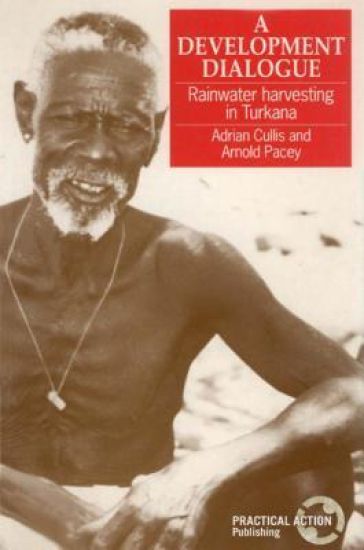
Development Dialogue

Development Dialogue

Adrian Cullis; Arnold Pacey

Practical Action Publishing
1992
nidottu
The African Sahel has one of the poorest regional economies in the world. Within it pastoralists are particularly vulnerable because development policy has often failed to address local concerns. By contrast, the Turkana rainwater harvesting project described in this book stands out in its simplicity - a basic water conservation technology based on priorities identified by local people, adapted by them, and in which local pastoralists and gardeners take full responsibility for the control and administration of their work. The authors illustrate the project's progress through a series of descriptive scenes which discuss the successes and learning experiences. The whole process, covering the years 1984 to 1990, was one of continuous dialogue between western technological principles and experience, and local observation and knowledge - resulting in a successful learning process promising to empower local people to better cope with economic pressures and the harsh environment. Written and designed for development workers, farmers and agricultural fieldworkers, researchers and extensionists, as well as project planners and advisors, this companion to Rainwater Harvesting has lessons in participatory techniques for all those engaged in projects involving development agencies and local people.
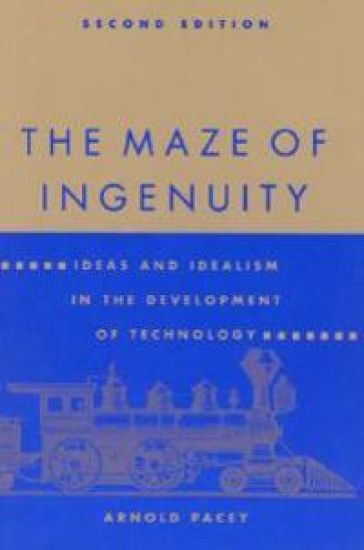
The Maze of Ingenuity

The Maze of Ingenuity

Arnold Pacey

MIT Press
1992
pokkari
From cathedrals to star wars, Arnold Pacey looks at the interaction of technologies and society over the last thousand years and uses that survey to argue for a more humane form of future technological development. The second edition of The Maze of Ingenuity concentrates on Europe and North America and incorporates recent insights from the history and sociology of technology. A new series of chapters extends Pacey's discussion of the role of ideas and ideals in technology in the period since the industrial revolution. ContentsThe Cathedral Builders: European Technical Achievement between 1100 and 1280 * A Century of Invention: 1250-1350 * Mathematics and the Arts: 1450-1600 * The Practical Arts and the Scientific Revolution * Social Ideals in Technical Change: German Miners and English Puritans, 1450-1650 * The State and Technical Progress: 1660-1770 * Technology in the Industrial Revolution * Conflicting Ideals in Engineering: America and Britain, 1790-1870 * Institutionalizing Technical Ideals, 1820-1920 * Idealistic Trends in Twentieth-Century Technology
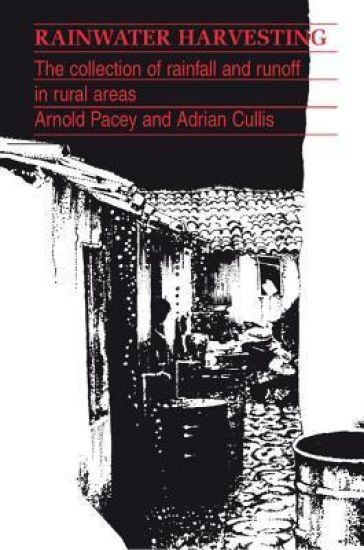
Rainwater Harvesting

Rainwater Harvesting

Arnold Pacey; Adrian Cullis

ITDG Publishing
1986
nidottu
This book emphasizes the importance of social, economic, and environmental considerations when planning and implementing projects. For rural development workers, it aims to fill the gap in existing literature on the gathering and storage of water.
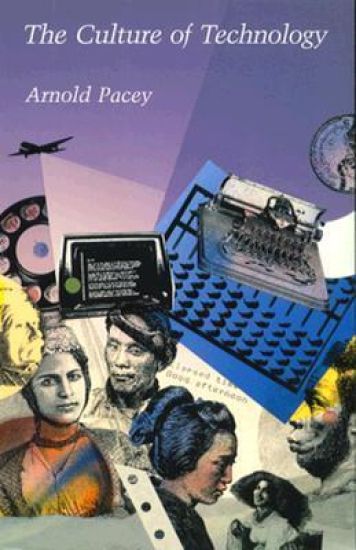
The Culture of Technology

The Culture of Technology

Arnold Pacey

MIT Press
1985
pokkari
The Culture of Technology examines our often conflicting attitudes toward nuclear weapons, biological technologies, pollution, Third World development, automation, social medicine, and industrial decline. It disputes the common idea that technology is "value-free" and shows that its development and use are conditioned by many factors-political and cultural as well as economic and scientific. Many examples from a variety of cultures are presented. These range from the impact of snowmobiles in North America to the use of water pumps in rural India, and from homemade toys in Africa to electricity generation in Britain-all showing how the complex interaction of many influences in every community affects technological practice. Arnold Pacey, who lives near Oxford, England, has a degree in physics and has lectured on both the history of technology and technology policy, with a particular focus on the development of technologies appropriate to Third World needs. He is the author of The Maze of Ingenuity (MIT Press paperback).
Gardening for Better Nutrition

Gardening for Better Nutrition

Arnold Pacey

ITDG Publishing
1978
nidottu
A nutritional approach directed to rural women to encourage them to grow more and better food for their families in areas of widespread malnutrition. Includes details of suitable tools, plant varieties and gardening methods for the tropics and subtropics.