
Kirjailija
Arnold Schoenberg
Kirjat ja teokset yhdessä paikassa: 15 kirjaa, julkaisuja vuosilta 1950–2025, suosituimpiin kuuluu Pelleas Und Melisande. Vertaile teosten hintoja ja tarkista saatavuus suomalaisista kirjakaupoista.
15 kirjaa
Kirjojen julkaisuvuodet: 1950–2025.
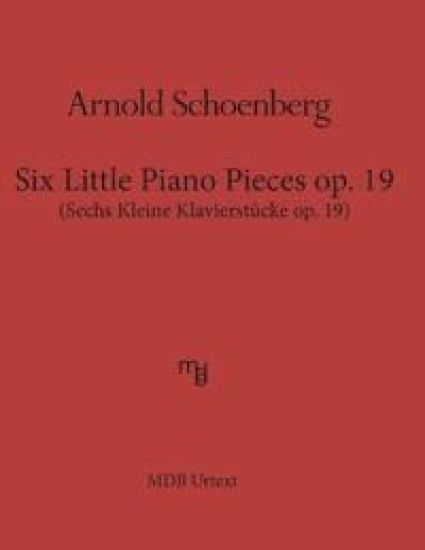
Six Little Piano Pieces op. 19 (MDB Urtext)
Arnold Schoenberg
Createspace Independent Publishing Platform
2016
pokkari
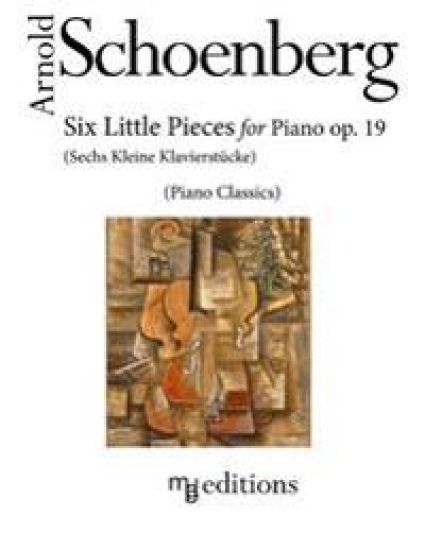
Six Little Pieces for Piano op. 19
Arnold Schoenberg
Createspace Independent Publishing Platform
2016
pokkari
Arnold Schoenberg's Six Little Pieces for Piano op. 19 (Sechs kleine Klavierstuecke) in a new edition with a clear, easy-to-read layout and complete with full translation of the German text, fingering and critical notes. These 6 short pieces are a fundamental part of 20th century piano repertoire. Arnold Sch nberg, 6 Little Pieces for Piano opus 19.
Modern Music, V23, No. 4, Fall, 1946
Manfred Bukofzer; Arnold Schoenberg; Charlotte Trowbridge
Literary Licensing, LLC
2013
nidottu
Theory of Harmony
Arnold Schoenberg; Roy E. (TRN) Carter; Walter (FRW) Frisch
University of California Press
2010
pokkari
Halvin toimitettuna 42,10 €
There is a new critical foreword by Walter Frisch, H. Harold Gumm/Harry and Albert von Tilzer Professor of Music at Columbia University, that expands this centennial edition. Frisch puts Schoenberg's masterpiece into historical and ideological context, delineating the connections between music, theory, art, science, and architecture in turn-of-the century Austro-German culture.
Style and Idea
Arnold Schoenberg; Leonard (EDT) Stein; Leo (TRN) Black
University of California Press
2010
pokkari
One of the most influential collections of music ever published, "Style and Idea" includes Schoenberg's writings about himself and his music as well as studies of many other composers and reflections on art and society. There is an interpretive essay by Joseph Auner, Chair and Professor of Music at Tufts University, that augments this anniversary edition.
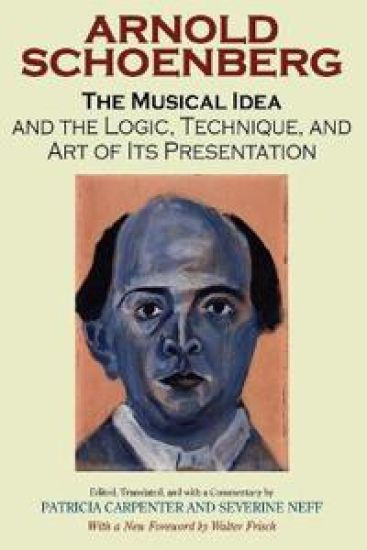
The Musical Idea and the Logic, Technique, and Art of Its Presentation, New Paperback English Edition
Arnold Schoenberg
Indiana University Press
2006
pokkari
The Gedanke manuscripts, from which The Musical Idea is compiled, are legendary writings of Arnold Schoenberg. Central to his concern was his concept of the "musical idea," which represents the wholeness of the musical work and embraces Schoenberg's notions of motive, gestalt, phrase, theme, rhythm, harmony, and form. Ultimately, the musical idea is the vision of the composer by which a musical work achieves unity in relation to the means by which the work is comprehended in its unity by the listener.
For nearly a century, it has inspired composers, scholars, critics, performers, and visual artists. Severine Neff re-creates for her readers the quartet's historical, cultural, and musical background–its introduction of the human voice, its genesis during a personal crisis in the composer's life, the scandal at its premiere, and its endlessly controversial reception, both critical and analytic. This volume includes a newly edited, authoritative score of the quartet, as well as previously unavailable and newly translated texts by Grant Chorley. "Indispensable for understanding one of the central compositions of the twentieth century."—Walter Frisch, Columbia University.
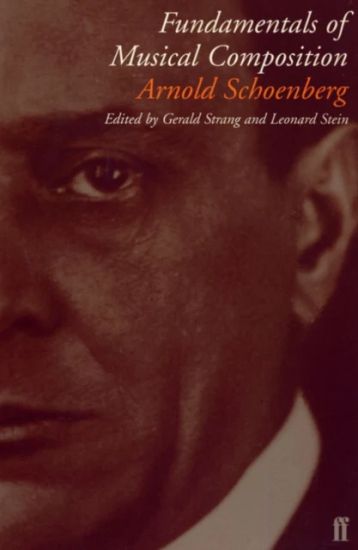
Fundamentals of Musical Composition
Arnold Schoenberg
Faber Faber
1999
nidottu
Halvin toimitettuna 25,60 €
A reissue of a classic that represents the culmination of over 40 years in Schoenberg's life devoted to the teaching of musical principles to students and composers in Europe and America. This book can be used for analysis as well as for composition.
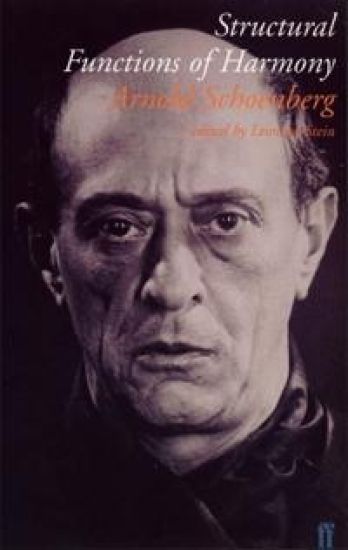
Structural Functions of Harmony
Arnold Schoenberg
Faber Faber
1999
pokkari
Halvin toimitettuna 23,70 €
First published in 1948, Structural Functions of Harmony is Schoenberg's last theoretical work and contains his ultimate thoughts on classical and romantic harmony. The opening chapters are a resume of the basic principles of the early Theory of Harmony; the subsequent chapters demonstrate the concept of 'monotonality', whereby all modulations to different keys within a movement are analysed not in relation to each other but in terms of the irrelationship to one central tonality (tonic) as the centre of all harmonic change. Schoenberg's music examples range from the entire development sections of classical symphonies to analyses of the harmonic progressions of Strauss, Debussy, Reger, and his own early music.

The Musical Idea and the Logic, Technique, and Art of its Presentation
Arnold Schoenberg
Columbia University Press
1995
sidottu
This treatise relates Schoenberg's concept of the musical idea. It defines his thought on gestalt, motive, grundgestalt, phrase, rhythm and accent, the construction function of harmony, homophonic and contrapuntal forms, and compositional coherence.
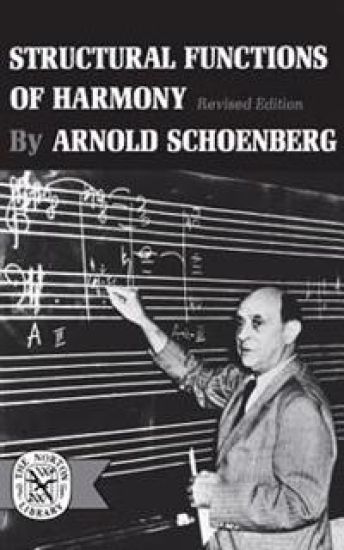
The earlier chapters recapitulate in condensed form the principles laid down in his Theory of Harmony; the later chapters break entirely new ground, for they analyze the system of key relationships within the structure of whole movements and affirm the principle of "monotonality," showing how all modulations within a movement are merely deviations from, and not negations of, its main tonality. Schoenberg's argument is supported by music examples, which range from entire development sections of classical symphonies to analyses of the experimental harmonic progressions of Strauss, Debussy, Reger, and Schoenberg's own early music. The final chapter, "Apollonian Evaluation of a Dionysian Epoch," discusses the music of our time, with particular reference to the possibility of new methods of harmonic analysis. Structural Functions of Harmony is a standard work on its subject and provides an invaluable key to the development of musical structure during the last two hundred and fifty years. This new edition, with corrections, a new preface, and an index of subject headings, has been prepared under the editorial supervision of Leonard Stein.
This book is full of essays which Arnold Schoenberg wrote on style and idea. He talks about the relationship to the text, new and outmoded music, composition in twelve tones, entertaining through composing, the relationship of heart and mind in music, evaluation of music, and other essays. Arnold Schoenberg (13 September 1874 - 13 July 1951) was an Austrian and later American composer, associated with the expressionist movement in German poetry and art, and leader of the Second Viennese School. He used the spelling Sch nberg until after his move to the United States in 1934 (Steinberg 1995, 463), "in deference to American practice" (Foss 1951, 401), though one writer claims he made the change a year earlier (Ross 2007, 45). Schoenberg was known early in his career for successfully extending the traditionally opposed German Romantic traditions of both Brahms and Wagner, and later and more notably for his pioneering innovations in atonality. During the rise of the Nazi party in Austria, his music was labeled, alongside swing and jazz, as degenerate art. In the 1920s, he developed the twelve-tone technique, a widely influential compositional method of manipulating an ordered series of all twelve notes in the chromatic scale. He also coined the term developing variation, and was the first modern composer to embrace ways of developing motifs without resorting to the dominance of a centralized melodic idea. Schoenberg's approach, both in terms of harmony and development, is among the major landmarks of 20th century musical thought; at least three generations of composers in the European and American traditions have consciously extended his thinking and, in some cases, passionately reacted against it. Schoenberg was also a painter, an important music theorist, and an influential teacher of composition; his students included Alban Berg, Anton Webern, Hanns Eisler, and later John Cage, Lou Harrison, Earl Kim, Wayne Barlow, and many other prominent musicians. Many of Schoenberg's practices, including the formalization of compositional method, and his habit of openly inviting audiences to think analytically, are echoed in avant-garde musical thought throughout the 20th century. His often polemical views of music history and aesthetics were crucial to many of the 20th century's significant musicologists and critics, including Theodor Adorno, Charles Rosen, and Carl Dahlhaus. Schoenberg's archival legacy is collected at the Arnold Sch nberg Center in Vienna.