Kirjojen hintavertailu – 12 859 828 kirjaa ja 27 kauppaa

Kirjailija

Aron Rodrigue

Kirjat ja teokset yhdessä paikassa: 6 kirjaa, julkaisuja vuosilta 1990–2015, suosituimpiin kuuluu Jews and Muslims. Vertaile teosten hintoja ja tarkista saatavuus suomalaisista kirjakaupoista.

6 kirjaa

Kirjojen julkaisuvuodet: 1990–2015.

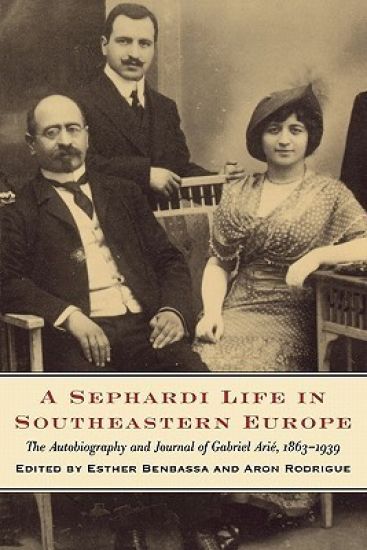
A Sephardi Life in Southeastern Europe

A Sephardi Life in Southeastern Europe

Esther Benbassa; Aron Rodrigue

University of Washington Press
2015
sidottu
Autobiographical texts are rare in the Sephardi world. Gabriel Arié's writings provide a special perspective on the political, economic, and cultural changes undergone by the Eastern Sephardi community in the decades before its dissolution, in regions where it had been constituted since the expulsion from Spain in 1492. His history is a fascinating memoir of the Sephardi and Levantine bourgeoisie of the time. For his entire life, Arié—teacher, historian, community leader, and businessman—was caught between East and West. Born in a small provincial town in Ottoman Bulgaria in 1863, he witnessed the disappearance of a social and political order that had lasted for centuries and its replacement by new ideas and new ways of life, which would irreversibly transform Jewish existence. A Sephardi Life in Southeastern Europe publishes in full the autobiography (covering the years 1863-1906) and journal (1906-39) of Gabriel Arié, along with selections from his letters to the Alliance Israélite Universelle. An introduction by Esther Benbassa and Aron Rodrigue analyzes his life and examines the general and the Jewish contexts of the Levant at the end of the nineteenth and the beginning of the twentieth centuries.

Jews and Muslims

Jews and Muslims

Aron Rodrigue

University of Washington Press
2015
sidottu
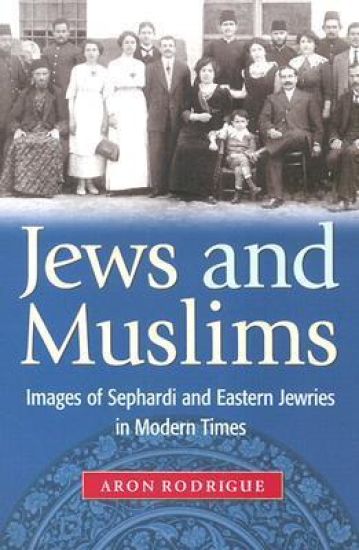
Following the rise of Islam, many Jewish communities lived in predominantly Muslim lands. Muslim-Jewish co-existence was not seriously challenged until the modern period when European colonialism and the emergence of Zionism and Arab nationalism led to growing friction and conflict, resulting in the mass departures of Jews from these lands in the middle of the twentieth century. Jews and Muslims throws light on the history of these communities and on the developments that led to the snapping of ties between Jews and Muslims by focusing on the century before the end of Jewish life in these areas. It interweaves analysis with translations of primary documents drawn from the archives of a French-Jewish organization, the Alliance Israelite Universelle, that had an extensive Jewish school network around the Mediterranean basin and whose teachers reported extensively on local events and trends over the decades. It illuminates the political, socio-economic, and cultural changes that eroded the place of Jews in Middle Eastern societies and offers a unique perspective, from within, on the historical background of some of the most vexing problems of the modern Middle East. National Jewish Book Awards Honor Book
Jews and Muslims

Jews and Muslims

Aron Rodrigue

University of Washington Press
2003
pokkari
Following the rise of Islam, many Jewish communities lived in predominantly Muslim lands. Muslim-Jewish co-existence was not seriously challenged until the modern period when European colonialism and the emergence of Zionism and Arab nationalism led to growing friction and conflict, resulting in the mass departures of Jews from these lands in the middle of the twentieth century. Jews and Muslims throws light on the history of these communities and on the developments that led to the snapping of ties between Jews and Muslims by focusing on the century before the end of Jewish life in these areas. It interweaves analysis with translations of primary documents drawn from the archives of a French-Jewish organization, the Alliance Israelite Universelle, that had an extensive Jewish school network around the Mediterranean basin and whose teachers reported extensively on local events and trends over the decades. It illuminates the political, socio-economic, and cultural changes that eroded the place of Jews in Middle Eastern societies and offers a unique perspective, from within, on the historical background of some of the most vexing problems of the modern Middle East. National Jewish Book Awards Honor Book
Sephardi Jewry

Sephardi Jewry

Esther Benbassa; Aron Rodrigue

University of California Press
2000
pokkari
Until the publication of this remarkably comprehensive history of the Sephardi diaspora, only limited attention had been given to the distinctive Judeo-Spanish cultural entity that flourished in the Balkans and Asia Minor for more than four centuries. Yet the great majority of Sephardi Jews, after their expulsion from Spain in 1492 and subsequently from Portugal, found their way to this region, drawn by the political stability and relatively tolerant rule of the Ottoman Empire, as well as by promising socioeconomic conditions. Esther Benbassa and Aron Rodrigue show how Sephardi society and culture developed in the Levant, sharing language, religion, customs, and communal life as they did nowhere else, both during prosperous times and during the declining fortunes of the seventeenth and eighteenth centuries. The impact of westernization, the end of Ottoman power, and the rise of fragmenting nation-states transformed this vital community in the modern era. And, like many other Jewish communities, the unique Judeo-Spanish culture was dispersed and destroyed by the Holocaust and the migrations of the twentieth century. "Sephardi Jewry" presents its vivid history in a readable, well-documented narrative.
A Sephardi Life in Southeastern Europe

A Sephardi Life in Southeastern Europe

Esther Benbassa; Aron Rodrigue

University of Washington Press
1998
pokkari
Autobiographical texts are rare in the Sephardi world. Gabriel Arié's writings provide a special perspective on the political, economic, and cultural changes undergone by the Eastern Sephardi community in the decades before its dissolution, in regions where it had been constituted since the expulsion from Spain in 1492. His history is a fascinating memoir of the Sephardi and Levantine bourgeoisie of the time. For his entire life, Arié—teacher, historian, community leader, and businessman—was caught between East and West. Born in a small provincial town in Ottoman Bulgaria in 1863, he witnessed the disappearance of a social and political order that had lasted for centuries and its replacement by new ideas and new ways of life, which would irreversibly transform Jewish existence. A Sephardi Life in Southeastern Europe publishes in full the autobiography (covering the years 1863-1906) and journal (1906-39) of Gabriel Arié, along with selections from his letters to the Alliance Israélite Universelle. An introduction by Esther Benbassa and Aron Rodrigue analyzes his life and examines the general and the Jewish contexts of the Levant at the end of the nineteenth and the beginning of the twentieth centuries.
French Jews, Turkish Jews

French Jews, Turkish Jews

Aron Rodrigue

Indiana University Press
1990
sidottu
The Alliance Israélite Universelle, a French-Jewish organization founded in 1860, occupies a crucial place in the history of Sephardi communities in the modern period. In the fifty years after its creation, the Alliance established a vast network of schools in the lands of Islam for the purpose of "civilizing" the local Jewish communities and remaking them in the idealized self-image of French Jewry. This study, drawing on the author's extensive research in the archives of the Alliance in Paris, focuses on the work of the Alliance among Turkish Jewry, one of the communities most strongly affected by the organizations' activities. Although the Alliance played a conclusive role in the Westernization of Turkish Jews, it was also the unwitting catalyst for the emrgence of new political movements such as Zionism, which turned away from the Alliance's ideology and ultimately threatened the survival of its schools. This book illuminates an important episode in the history of Sephardi and French Jewries as they interacted through the Alliance Israélite Universelle and draws important conclusions about the transformation of European as well as Middle Eastern Jewries in the modern era.