Kirjojen hintavertailu – 12 903 725 kirjaa ja 27 kauppaa

Kirjailija

Arshad Mehmood Abbasi

Kirjat ja teokset yhdessä paikassa: 4 kirjaa, julkaisuja vuosilta 2011–2016, suosituimpiin kuuluu Wild Edible Vegetables of Lesser Himalayas. Vertaile teosten hintoja ja tarkista saatavuus suomalaisista kirjakaupoista.

4 kirjaa

Kirjojen julkaisuvuodet: 2011–2016.

Wild Edible Vegetables of Lesser Himalayas

Wild Edible Vegetables of Lesser Himalayas

Arshad Mehmood Abbasi; Munir Hussain Shah; Mir Ajab Khan

Springer International Publishing AG
2016
nidottu
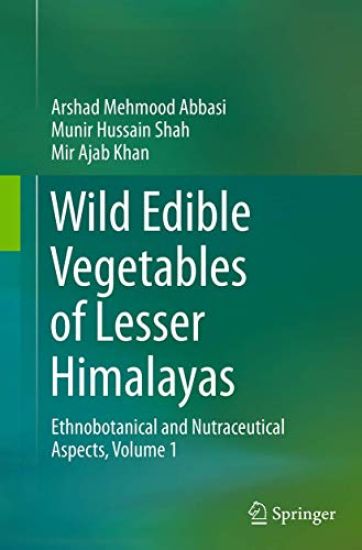
Our intention with this book was to present the reader with the most accurate, significant, and up-to-date background and knowledge in the areas of ethnomedicinal and nutraceutical vegetation for the Lesser Himalayas in a comprehensive text. Wild Edible Vegetables of Lesser Himalayas provides a complete review of over 50 important plants of this region and details each species including photographs, botanical name, local name, family, flowering and fruiting period, status and habitat, parts used, distribution, ethnobotanical uses, cultural aspects, medicinal uses, and nutraceutical aspects. Medicinal uses include mode of preparation, method of application and diseases studied; cultural aspects and index; nutraceutical data provides analysis of fats, proteins, fibers, carbohydrates, ash, moisture content, dry matter, and energy value; elemental analysis includes various essential and toxic metals; phytochemical screening includes total phenolics, flavonoids, flavonols and ascorbic acid, and antioxidant potential in terms of DPPH scavenging activity, hydroxyl radical scavenging activity, H2O2 scavenging activity, Fe2+ chelating activity, ferric reducing antioxidant power, and phosphomolybdenum assay for each species. Wild Edible Vegetables of Lesser Himalayas is a concise and handy guide for scientists, scholars, and students interested in the study of agriculture, food science, nutraceutical science, bioscience, biodiversity, applied ethnobotany, ethnoecology, and ecology.
Medicinal Plant Biodiversity of Lesser Himalayas-Pakistan

Medicinal Plant Biodiversity of Lesser Himalayas-Pakistan

Arshad Mehmood Abbasi; Mir Ajab Khan; Mushtaq Ahmad; Muhammad Zafar

Springer-Verlag New York Inc.
2016
nidottu
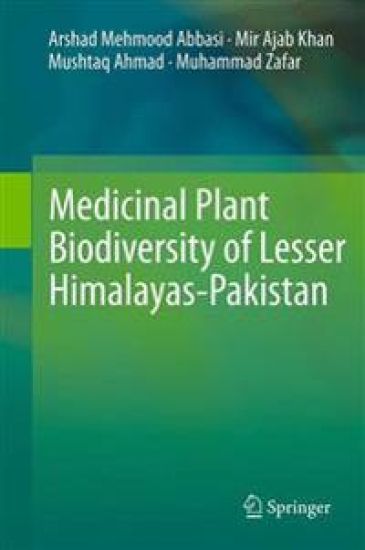
The Himalayan region is among the largest mountains systems of the world with uncounted unique medicinal plants resources. The lesser Himalayas ranges are the extension of Greater Himalayas. They have unique ecology, vegetation and diversity of medicinal flora due to tremendous variation in the altitude, climate and associated wildlife. The utilization of medicinal plants in medicine suffers from the fact that although plants are used to treat diseases, scientific evidence is lacking in many cases. Different societies of the world use the plants according to their own beliefs and knowledge and previous experiences. Their knowledge about the use of the plants is usually not known to the other world or science. This book provides a brief introduction of Lesser Himalayas, ethnobotanical aspects, marketing and anthropogenic pressure on medicinal flora. It comprises one hundred medicinal plant species including Pteridophytes, Gymnosperms and Angiosperms (Monocots and Dicots) along with their scientific description and traditional uses.
Wild Edible Vegetables of Lesser Himalayas

Wild Edible Vegetables of Lesser Himalayas

Arshad Mehmood Abbasi; Munir Hussain Shah; Mir Ajab Khan

Springer International Publishing AG
2014
sidottu
Our intention with this book was to present the reader with the most accurate, significant, and up-to-date background and knowledge in the areas of ethnomedicinal and nutraceutical vegetation for the Lesser Himalayas in a comprehensive text. Wild Edible Vegetables of Lesser Himalayas provides a complete review of over 50 important plants of this region and details each species including photographs, botanical name, local name, family, flowering and fruiting period, status and habitat, parts used, distribution, ethnobotanical uses, cultural aspects, medicinal uses, and nutraceutical aspects. Medicinal uses include mode of preparation, method of application and diseases studied; cultural aspects and index; nutraceutical data provides analysis of fats, proteins, fibers, carbohydrates, ash, moisture content, dry matter, and energy value; elemental analysis includes various essential and toxic metals; phytochemical screening includes total phenolics, flavonoids, flavonols and ascorbic acid, and antioxidant potential in terms of DPPH scavenging activity, hydroxyl radical scavenging activity, H2O2 scavenging activity, Fe2+ chelating activity, ferric reducing antioxidant power, and phosphomolybdenum assay for each species. Wild Edible Vegetables of Lesser Himalayas is a concise and handy guide for scientists, scholars, and students interested in the study of agriculture, food science, nutraceutical science, bioscience, biodiversity, applied ethnobotany, ethnoecology, and ecology.
Medicinal Plant Biodiversity of Lesser Himalayas-Pakistan

Medicinal Plant Biodiversity of Lesser Himalayas-Pakistan

Arshad Mehmood Abbasi; Mir Ajab Khan; Mushtaq Ahmad; Muhammad Zafar

Springer-Verlag New York Inc.
2011
sidottu
The Himalayan region is among the largest mountains systems of the world with uncounted unique medicinal plants resources. The lesser Himalayas ranges are the extension of Greater Himalayas. They have unique ecology, vegetation and diversity of medicinal flora due to tremendous variation in the altitude, climate and associated wildlife. The utilization of medicinal plants in medicine suffers from the fact that although plants are used to treat diseases, scientific evidence is lacking in many cases. Different societies of the world use the plants according to their own beliefs and knowledge and previous experiences. Their knowledge about the use of the plants is usually not known to the other world or science. This book provides a brief introduction of Lesser Himalayas, ethnobotanical aspects, marketing and anthropogenic pressure on medicinal flora. It comprises one hundred medicinal plant species including Pteridophytes, Gymnosperms and Angiosperms (Monocots and Dicots) along with their scientific description and traditional uses.