
Kirjojen hintavertailu – 12 903 735 kirjaa ja 27 kauppaa

Kirjailija

Artemus B. Engle

Kirjat ja teokset yhdessä paikassa: 2 kirjaa, julkaisuja vuosilta 2009–2024, suosituimpiin kuuluu The Inner Science of Buddhist Practice. Vertaile teosten hintoja ja tarkista saatavuus suomalaisista kirjakaupoista.

2 kirjaa

Kirjojen julkaisuvuodet: 2009–2024.

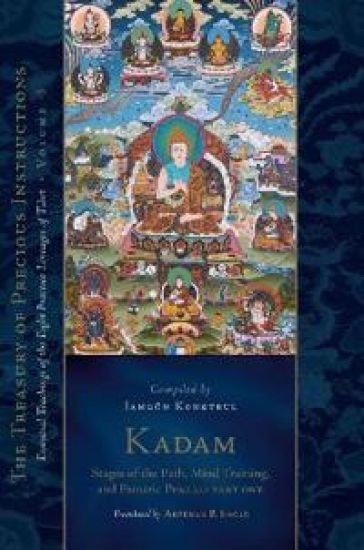
Kadam: Stages of the Path, Mind Training, and Esoteric Practice, Part One

Kadam: Stages of the Path, Mind Training, and Esoteric Practice, Part One

Jamgon Kongtrul Lodro Taye; Artemus B. Engle

SHAMBHALA PUBLICATIONS INC
2024
sidottu
​A comprehensive selection of texts central to the Kadam lineage of Tibetan Buddhism, including topics like Mind Training, Stages of the Path, and esoteric tantric instructions. The Treasury of Precious Instructions by Jamg n Kongtrul Lodr Taye, one of Tibet's greatest Buddhist masters, is a shining jewel of Tibetan literature, presenting essential teachings from the entire spectrum of practice lineages that existed in Tibet. In its eighteen volumes, Kongtrul brings together some of the most important texts on key topics of Buddhist thought and practice as well as authoring significant new sections of his own. ​​The Kadam lineage derives from the teachings and practices taught by the Indian master Atiśa and his Tibetan students. Atiśa spent twelve years in Tibet and left a scholarly and devotional lineage that would be significant to all traditions of Tibetan Buddhism, but particularly the Geluk, the tradition of the Dalai Lamas, which fashioned themselves as the New Kadam tradition. ​ Jamg n Kongtrul's catalog to The Treasury of Precious Instructions classifies Kadam literature into five categories: treatise, instruction, esoteric practice, ancillary works, and associated works. The first two are the main topics covered in this volume: Lamrim, or Stages of the Path, and Lojong, or Mind Training. These two Kadam teachings continue to exert a significant influence on Tibetan Buddhism and therefore represent the legacy of the Kadam tradition. ​The first centers around "The Lamp for the Path to Enlightenment," written by the eleventh-century Indian master Atiśa who spent twelve years in Tibet, and this volume also includes stories of Atiśa's life and travels. The second set of teachings consists of aphorisms known as the Seven-Point Mind Training, meant to be used as contemplative practices to develop compassion and transform the mind. These selections show not only the foundational texts of the Kadam tradition but also the widespread impact these teachings continued to have across traditions.
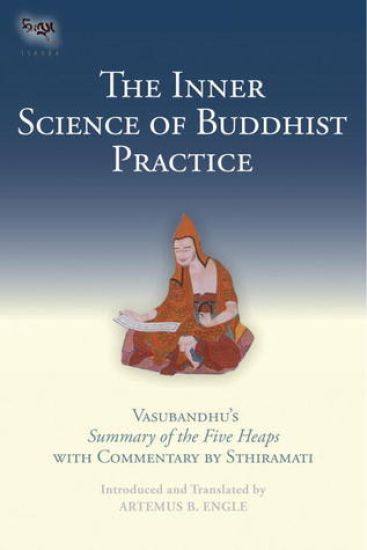
The Inner Science of Buddhist Practice

The Inner Science of Buddhist Practice

Artemus B. Engle; Sthiramati Sthiramati

Snow Lion Publications
2009
sidottu
The Inner Science of Buddhist Practice contains translations of texts by two historically important Indian buddhist scholars: Vasubhandhu's Summary of the Five Heaps and Sthiramati's commentary on Vasubandhu's root text. These works present the traditional Buddhist analysis of ordinary experience and provide rich resources for studying Buddhist and Western interpretations of the psychology of spiritual development. According to Buddhist doctrine, the mind of an ordinary person, even at birth, holds deeply ingrained predispositions that lead us to perceive the elements of everyday experience mistakenly and to believe, for instance, that entities persist through time, that the pleasures we pursue are genuinely satisfying, that our own personal being is governed by a real self, and that all physical and mental phenomena have a distinct, independent, and real essence. Our everyday language only serves to reinforce and deepen these erring notions. Buddhist teaching reveals how to reject these flawed beliefs and replace them with a model that both more accurately represents our experience and is indispensable to the realizations that will free us from cyclic existence. The ability to accomplish this rests largely with learning the unique vocabulary and explanations found in Buddhist literature, since that is how we will discover what is mistaken about our untutored beliefs and where we will gain the intellectual skills that are needed to construct a new and more refined conceptual infrastructure. Engle's introduction explores how the material contained in the two translations can specifically improve practice of the Tibetan teaching system known as Lamrim, or "Stages of the Path." Each of the levels of motivation described by the Lamrim teachings is examined in light of the doctrine of the five heaps--form, feeling, conception, formations, and consciousness--to show how greater understanding of the classical Buddhist doctrines can enhance practice of that portion of the instruction.