

Kirjailija
Arthur Brooks
Kirjat ja teokset yhdessä paikassa: 10 kirjaa, julkaisuja vuosilta 2005–2025, suosituimpiin kuuluu The Life Of Christ In The World. Vertaile teosten hintoja ja tarkista saatavuus suomalaisista kirjakaupoista.
10 kirjaa
Kirjojen julkaisuvuodet: 2005–2025.

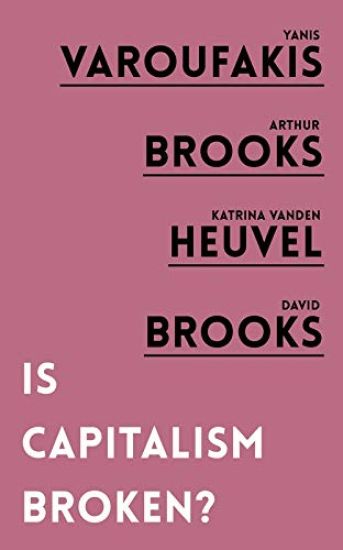
Is Capitalism Broken?
Yanis Varoufakis; Arthur Brooks; Katrina vanden Heuvel; David Brooks
Oneworld Publications
2020
pokkari
'We need to organise politically to defend the weak, empower the many and prepare the ground for reversing the absurdities of capitalism.' – Yanis Varoufakis 'Capitalism over the past twenty-five years has been an incredible moral good.' – David Brooks The Munk debate on capitalism There is a growing belief that the capitalist system no longer works. Inequality is rampant. The environment is being destroyed for profits. In some western nations, life expectancy is even falling. Political power is wielded by wealthy elites and big business, not the people. But for proponents of capitalism, it is the engine of progress, not just making all of us materially better off, but helping to address everything from women’s rights to political freedoms. We seem to stand at a crossroads: do we need to fix the system as a matter of urgency, or would it be better to hold our nerve?
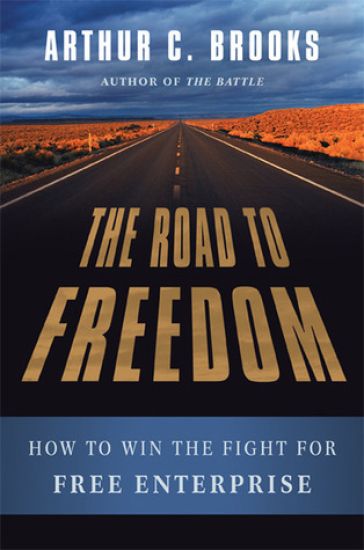
Entrepreneurship, personal responsibility, and upward mobility: These traditions are at the heart of the free enterprise system, and have long been central to America's exceptional culture. In recent years, however, policymakers have dramatically weakened these traditions,by exploding the size of government, propping up their corporate cronies, and trying to reorient our system from rewarding merit to redistributing wealth. In The Road to Freedom , American Enterprise Institute President Arthur C. Brooks shows that this trend cannot be reversed through materialistic appeals about the economic efficiency of capitalism. Rather, free enterprise requires a moral defence rooted in the ideals of earned success, equality of opportunity, charity, and basic fairness. Brooks builds this defence and demonstrates how it is central to understanding the major policy issues facing America today. The future of the free enterprise system has become a central issue in our national debate, and Brooks offers a practical manual for defending it over the coming years. Both a moral manifesto and a prescription for concrete policy changes, The Road to Freedom will help Americans in all walks of life translate the philosophy of free enterprise into action, to restore both our nation's greatness and our own well-being in the process.
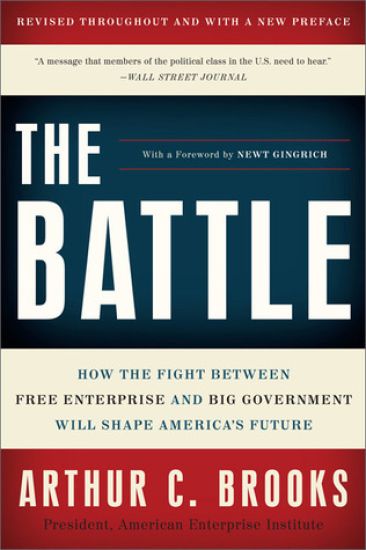
America faces a new culture war- one that threatens our long-standing culture of free enterprise. Free enterprise embodies the values that define us as a nation: individual liberty, equal opportunity, entrepreneurship, and self-reliance. But the recent economic crisis has distorted these values, leading many Americans to forget the evils of socialism- which, as Arthur C. Brooks reveals, is back with a vengeance. Its proponents are playing for keeps, and if they win, America will be changed forever, both economically and culturally. At once a call to action and a crucial redefinition of the gulf that divides Americans, The Battle offers a plan of action for the defence of free enterprise, the very soul of America.
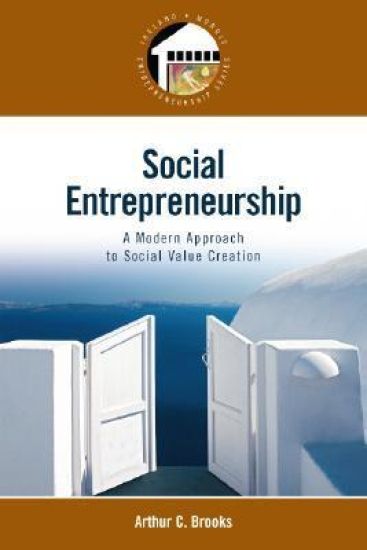
For undergraduate and graduate courses in social entrepreneurship and nonprofit management. This text brings together the established pedagogy of entrepreneurship with cutting edge nonprofit and public management tools.
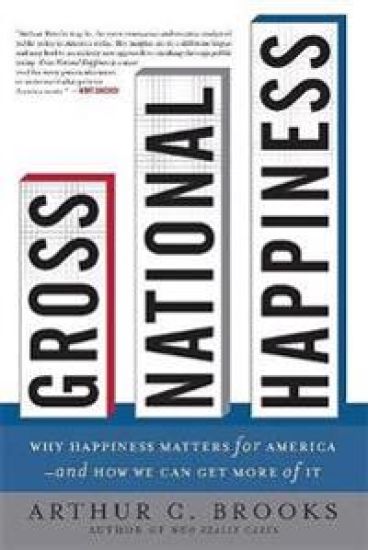
Who are the happiest Americans? Surveys show that religious people think they are happier than secularists, and secularists think they are happier than religious people. Liberals believe they are happier than conservatives, and conservatives disagree. In fact, almost every group thinks it is happier than everyone else. In this provocative new book, Arthur C. Brooks explodes the myths about happiness in America. As he did in the controversial Who Really Cares: The Surprising Truth About Compassionate Conservatism , Brooks examines vast amounts of evidence and empirical research to uncover the truth about who is happy in America, who is not, and-most important-why. He finds that there is a real happiness gap" in America today, and it lies disconcertingly close to America's cultural and political fault lines. The great divide between the happy and the unhappy in America, Brooks shows, is largely due to differences in social and cultural values. The values that bring happiness are faith, charity, hard work, optimism, and individual liberty. Secularism, excessive reliance on the state to solve problems, and an addiction to security all promote unhappiness. What can be done to maximize America's happiness? Replete with the unconventional wisdom for which Brooks has come to be known, Gross National Happiness offers surprising and illuminating conclusions about how our government can best facilitate Americans in their pursuit of happiness.
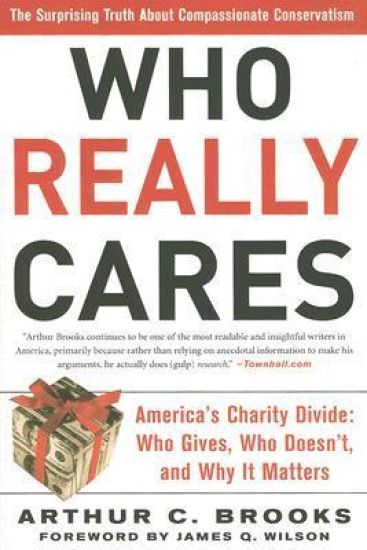
Presents an analysis of the charitable contributions of various groups in society, based on income, education, race, religion, and politics, and argues that charitable giving strengthens the nation as a whole, improving financial health and enhancing quality of life. Reprint.
A Portrait of the Visual Arts
Kevin F. McCarthy; Elizabeth Heneghan Ondaatje; Arthur Brooks; Andras Szanto
RAND
2005
pokkari
Providing information about developments in the visual arts world, this book promotes analysis of the sector, describing the characteristics of visual arts consumers (collectors and appreciators), artists, finances, and organizations. The third in a series that examines the state of the arts in America, this analysis shows, in addition to lines around the block for special exhibits, well-paid superstar artists, flourishing university visual arts programs, and a global expansion of collectors, developments in the visual arts also tell a story of rapid, even seismic change, systemic imbalances, and dislocation.
This study offers a new framework for understanding how the arts create private and public value, highlights the importance of the arts' intrinsic benefits, and identifies how both instrumental and intrinsic benefits are created. During the past decade, arts advocates have relied on an instrumental approach to the benefits of the arts in arguing for support of the arts. This report evaluates these arguments and asserts that a new approach is needed. This new approach offers a more comprehensive view of how the arts create private and public value, underscores the importance of the arts' intrinsic benefits, and links the creation of benefits to arts involvement.