Kirjojen hintavertailu – 12 903 725 kirjaa ja 27 kauppaa

Kirjailija

Arthur Evans

Kirjat ja teokset yhdessä paikassa: 38 kirjaa, julkaisuja vuosilta 2003–2026, suosituimpiin kuuluu Anthropology and the Classics. Vertaile teosten hintoja ja tarkista saatavuus suomalaisista kirjakaupoista.

38 kirjaa

Kirjojen julkaisuvuodet: 2003–2026.

The Evans Symposium

The Evans Symposium

Arthur Evans

White Crane Books
2018
sidottu
In 1975 Arthur Evans presented a series of lectures based on his research into LGBT history and cultural roots in European societies of the medieval era. That became Witchcraft and the Gay Counterculture. The remaining materials that had been in the original book have been gathered into a sequel of sorts called Moon Lady Rising.
The Horsemen of Tarentum

The Horsemen of Tarentum

Arthur Evans

Hansebooks
2017
pokkari
The Horsemen of Tarentum is an unchanged, high-quality reprint of the original edition of 1889. Hansebooks is editor of the literature on different topic areas such as research and science, travel and expeditions, cooking and nutrition, medicine, and other genres. As a publisher we focus on the preservation of historical literature. Many works of historical writers and scientists are available today as antiques only. Hansebooks newly publishes these books and contributes to the preservation of literature which has become rare and historical knowledge for the future.
The Palace of Minos

The Palace of Minos

Arthur Evans

Cambridge University Press
2013
pokkari
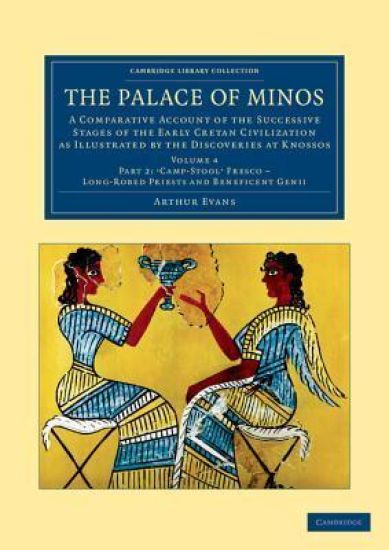
Inspired by Schliemann's discoveries at Mycenae and Troy, Sir Arthur John Evans (1851–1941), keeper of Oxford's Ashmolean Museum from 1884 to 1908, trustee of the British Museum and fellow of the Royal Society, used his inherited wealth to purchase land in Crete at Knossos. From 1900 he commenced excavations there in co-operation with the British School at Athens. Work continued for eight full seasons, uncovering a Bronze Age palace and bringing to light further architectural and artefactual remains of Minoan civilisation, including numerous texts in Linear A and Linear B. Evans' speculative reconstruction of the site in reinforced concrete remains controversial, and some of his interpretations are disputed, but his pioneering work is painstakingly detailed in this highly illustrated multi-volume work, published between 1921 and 1935, with an index volume appearing in 1936. Part 2 of Volume 4 first appeared in 1935.
The Palace of Minos

The Palace of Minos

Arthur Evans

Cambridge University Press
2013
pokkari
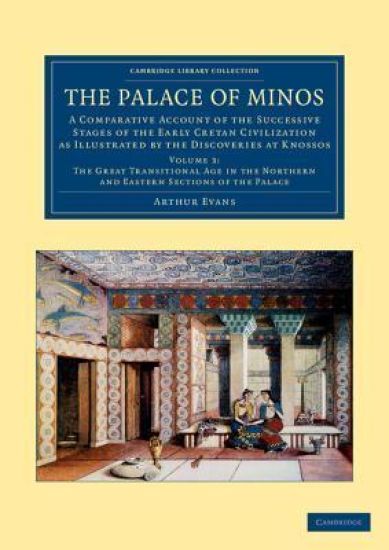
Inspired by Schliemann's discoveries at Mycenae and Troy, Sir Arthur John Evans (1851–1941), keeper of Oxford's Ashmolean Museum from 1884 to 1908, trustee of the British Museum and fellow of the Royal Society, used his inherited wealth to purchase land in Crete at Knossos. From 1900 he commenced excavations there in co-operation with the British School at Athens. Work continued for eight full seasons, uncovering a Bronze Age palace and bringing to light further architectural and artefactual remains of Minoan civilisation, including numerous texts in Linear A and Linear B. Evans' speculative reconstruction of the site in reinforced concrete remains controversial, and some of his interpretations are disputed, but his pioneering work is painstakingly detailed in this highly illustrated multi-volume work, published between 1921 and 1935, with an index volume appearing in 1936. Volume 3 first appeared in 1930.
The Palace of Minos

The Palace of Minos

Arthur Evans

Cambridge University Press
2013
pokkari
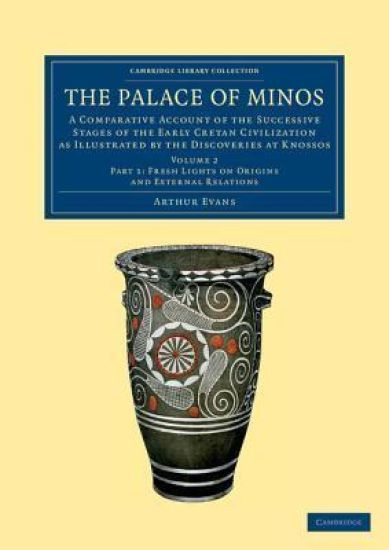
Inspired by Schliemann's discoveries at Mycenae and Troy, Sir Arthur John Evans (1851–1941), keeper of Oxford's Ashmolean Museum from 1884 to 1908, trustee of the British Museum and fellow of the Royal Society, used his inherited wealth to purchase land in Crete at Knossos. From 1900 he commenced excavations there in co-operation with the British School at Athens. Work continued for eight full seasons, uncovering a Bronze Age palace and bringing to light further architectural and artefactual remains of Minoan civilisation, including numerous texts in Linear A and Linear B. Evans' speculative reconstruction of the site in reinforced concrete remains controversial, and some of his interpretations are disputed, but his pioneering work is painstakingly detailed in this highly illustrated multi-volume work, published between 1921 and 1935, with an index volume appearing in 1936. Part 1 of Volume 2 first appeared in 1928.
The Palace of Minos

The Palace of Minos

Arthur Evans

Cambridge University Press
2013
pokkari
Inspired by Schliemann's discoveries at Mycenae and Troy, Sir Arthur John Evans (1851–1941), keeper of Oxford's Ashmolean Museum from 1884 to 1908, trustee of the British Museum and fellow of the Royal Society, used his inherited wealth to purchase land in Crete at Knossos. From 1900 he commenced excavations there in co-operation with the British School at Athens. Work continued for eight full seasons, uncovering a Bronze Age palace and bringing to light further architectural and artefactual remains of Minoan civilisation, including numerous texts in Linear A and Linear B. Evans' speculative reconstruction of the site in reinforced concrete remains controversial, and some of his interpretations are disputed, but his pioneering work is painstakingly detailed in this highly illustrated multi-volume work, published between 1921 and 1935, with an index volume appearing in 1936. Volume 1 (1921) opens with a sketch of Minoan civilisation and then surveys its early history.

The Palace of Minos

The Palace of Minos

Arthur Evans

Cambridge University Press
2013
pokkari
Inspired by Schliemann's discoveries at Mycenae and Troy, Sir Arthur John Evans (1851–1941), keeper of Oxford's Ashmolean Museum from 1884 to 1908, trustee of the British Museum and fellow of the Royal Society, used his inherited wealth to purchase land in Crete at Knossos. From 1900 he commenced excavations there in co-operation with the British School at Athens. Work continued for eight full seasons, uncovering a Bronze Age palace and bringing to light further architectural and artefactual remains of Minoan civilisation, including numerous texts in Linear A and Linear B. Evans' speculative reconstruction of the site in reinforced concrete remains controversial, and some of his interpretations are disputed, but his pioneering work is painstakingly detailed in this highly illustrated multi-volume work, published between 1921 and 1935, with an index volume appearing in 1936. Part 2 of Volume 2 first appeared in 1928.
The Palace of Minos

The Palace of Minos

Arthur Evans

Cambridge University Press
2013
pokkari
Inspired by Schliemann's discoveries at Mycenae and Troy, Sir Arthur John Evans (1851–1941), keeper of Oxford's Ashmolean Museum from 1884 to 1908, trustee of the British Museum and fellow of the Royal Society, used his inherited wealth to purchase land in Crete at Knossos. From 1900 he commenced excavations there in co-operation with the British School at Athens. Work continued for eight full seasons, uncovering a Bronze Age palace and bringing to light further architectural and artefactual remains of Minoan civilisation, including numerous texts in Linear A and Linear B. Evans' speculative reconstruction of the site in reinforced concrete remains controversial, and some of his interpretations are disputed, but his pioneering work is painstakingly detailed in this highly illustrated multi-volume work, published between 1921 and 1935, with an index volume appearing in 1936. Part 1 of Volume 4 first appeared in 1935.
The Palace of Minos 4 Volume Set in 7 Pieces

The Palace of Minos 4 Volume Set in 7 Pieces

Arthur Evans

Cambridge University Press
2013
muu
Inspired by Schliemann's discoveries at Mycenae and Troy, Sir Arthur John Evans (1851–1941), keeper of Oxford's Ashmolean Museum from 1884 to 1908, trustee of the British Museum and fellow of the Royal Society, used his inherited wealth to purchase land in Crete at Knossos. From 1900 he commenced excavations there in co-operation with the British School at Athens. Work continued for eight full seasons, uncovering a Bronze Age palace and bringing to light further architectural and artefactual remains of Minoan civilisation, including numerous texts in Linear A and Linear B. Evans' speculative reconstruction of the site in reinforced concrete remains controversial, and some of his interpretations are disputed, but his pioneering work is painstakingly detailed in this highly illustrated multi-volume work, published between 1921 and 1935, with an index volume appearing in 1936.
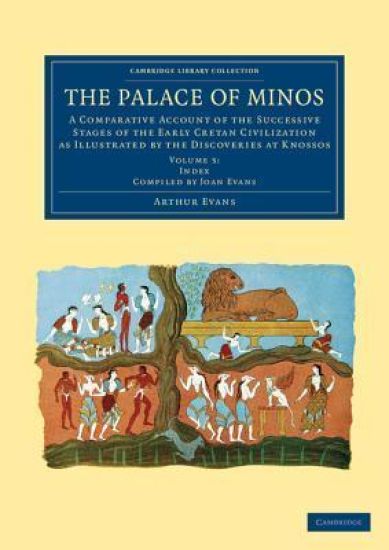
The Palace of Minos: Volume 5, Index Volume

The Palace of Minos: Volume 5, Index Volume

Arthur Evans

Cambridge University Press
2013
pokkari
Inspired by Schliemann's discoveries at Mycenae and Troy, Sir Arthur John Evans (1851–1941), keeper of Oxford's Ashmolean Museum from 1884 to 1908, trustee of the British Museum and fellow of the Royal Society, used his inherited wealth to purchase land in Crete at Knossos. From 1900 he commenced excavations there in co-operation with the British School at Athens. Work continued for eight full seasons, uncovering a Bronze Age palace and bringing to light further architectural and artefactual remains of Minoan civilisation, including numerous texts in Linear A and Linear B. Evans' speculative reconstruction of the site in reinforced concrete remains controversial, and some of his interpretations are disputed, but his work was pioneering and published in several volumes between 1921 and 1935. The index to this monumental achievement, published in 1936, was the result of a painstaking collaboration with his half-sister, Dame Joan Evans (1893–1977).
FileMaker Pro Business Applications - For versions 8 and 8.5

FileMaker Pro Business Applications - For versions 8 and 8.5

Arthur Evans

Jones and Bartlett Publishers, Inc
2008
nidottu
The ability to manage information is the key to businesses thriving in an increasingly competitive market. With FileMaker® Pro Business Applications, small business owners and workgroup managers can find out how to write custom database applications in order to add value to critical business information. After demonstrating how easily a database can be written using FileMaker Pro, this book presents a set of 11 business database case studies, all of which can be easily adapted by readers for their own data management requirements. The final section of the book offers ideas on deploying database solutions over a network and the web. Learn how to build a database and design layouts; create relationships between tables; automate tasks using scripts and buttons; secure data through the use of accounts and privileges; exchange data with other applications.
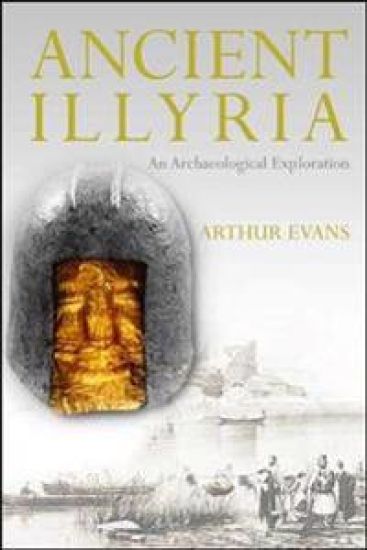
Ancient Illyria

Ancient Illyria

Arthur Evans

I.B. Tauris
2006
sidottu
Illyria is the name given to the ancient region of the Balkans on the Adriatic coast from which most historians of the Balkans believe modern Albanians descend. This illuminating work by the celebrated archaeologist, Arthur Evans, examines the lives of the ancient Illyrians and contains many penetrating insights into the region. Drawing on his extensive travels in the area in the 1880s, Ancient Illyria presents for the first time Evans' original analysis of the diverse archaeological sites of the region to construct a full and fascinating history. Never before published as a single volume, this classic work is still the best account and contains the most detailed research into the subject. Fully illustrated and including pictures of some Roman inscriptions which were later destroyed during the Serbian occupation of Kosovo, this invaluable guide to the archaeology and history of ancient Illyria is an essential text for all historians and everyone interested in the Balkans.