Kirjojen hintavertailu – 12 903 724 kirjaa ja 27 kauppaa
Kirjailija
Arthur Laffer
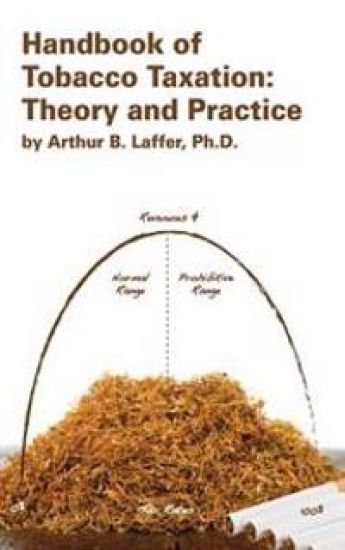
Kirjat ja teokset yhdessä paikassa: 9 kirjaa, julkaisuja vuosilta 1992–2015, suosituimpiin kuuluu Handbook of Tobacco Taxation: Theory and Practice. Vertaile teosten hintoja ja tarkista saatavuus suomalaisista kirjakaupoista.
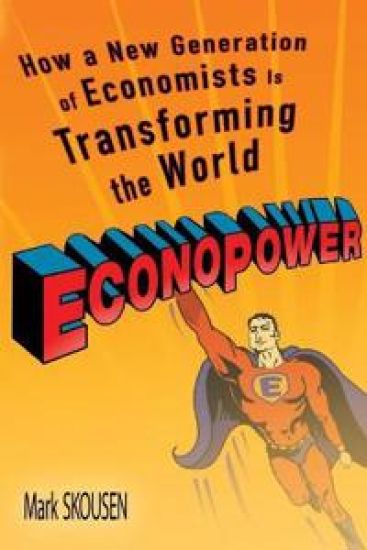
EconoPower will provide you with a firm understanding of the influence of modern economics and how it can be used to improve the world we live in. It offers practical advice on numerous personal financial matters—earning, saving, investing, and retiring—based on the breakthrough contributions of behavioral economists. And it looks at how economists are working successfully on issues such as public education, crime, and global warming. EconoPower also examines how a new economic philosophy may dominate the new millennium.
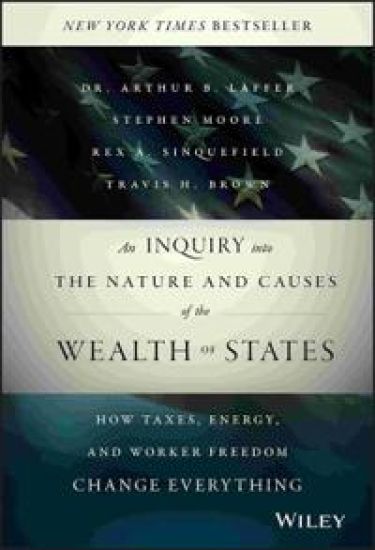
A passionate, detailed, quantified argument for state-level tax reform An Inquiry into the Nature and Causes of the Wealth of States explains why eliminating or lowering tax burdens at the state level leads to economic growth and wealth creation. A passionate argument for tax reform, the book shows that even states with small populations can benefit enormously with the right policies. The authors’ detailed exposition evaluates the impact state and local government policies have on a state’s relative performance and economic growth overall, backed up with economic data and analysis. Facts don’t lie. But they do point clearly to the failure of so-called progressive tax schemes designed more to curry favor with selected constituencies than to create an economic system that leads to individual wealth as the reward for hard work and entrepreneurial risk taking. An Inquiry into the Nature and Causes of the Wealth of States is a detailed and critical look at income taxation across the nation, and drills down into an analysis of the economic growth or malaise that results from tax policy. Arguing eloquently that a state cannot tax itself into prosperity, just as the impoverished cannot spend themselves into wealth, the authors point out what many inherently know but often fear to say out loud. The book provides detailed quantitative analysis, and discusses the policy variables that can have enormous effects on the financial well-being of states and individual residents, such as: Personal and corporate income tax ratesTotal tax burden as a percentage of personal incomeEstate and inheritance taxesRight-to-work laws An Inquiry into the Nature and Causes of the Wealth of States shows everyone how to evaluate state-level fiscal and economic policies to become more competitive.
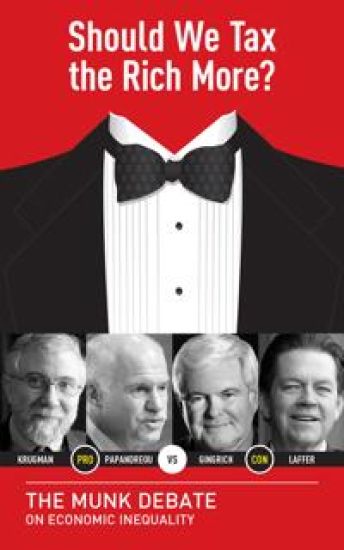
As middle-class incomes stagnate in advanced economies while the rich experience record income gains, the eleventh semi-annual Munk Debate pits wealth redistribution supporters Paul Krugman and George Papandreou against Newt Gingrich and Arthur Laffer to debate taxation — should the rich pay more? For some the answer is obvious: redistribute the wealth of the top income earners who have enjoyed, for almost a generation, the lion’s share of all income gains. Imposing higher taxes on the wealthy is the best way for countries such as Canada to reinvest in their social safety nets, education, and infrastructure while protecting the middle class. Others argue that anemic economic growth, not income inequality, is the real problem facing advanced countries. In a globalized economy, raising taxes on society’s wealth creators leads to capital flight, falling government revenues, and less money for the poor. These same voices contend that lowering taxes on everyone stimulates innovation and investment, fuelling future prosperity. In this edition of the Munk Debates — Canada’s premier international debate series — Nobel Prize–winning economist Paul Krugman and former Prime Minster of Greece George Papandreou square off against former Speaker of the U. S. House of Representatives Newt Gingrich and famed economist Arthur Laffer to debate if the rich should bear the brunt of higher taxes. For the first time ever, this stimulating debate, which will take place in front of a sold-out audience, will be available in print. With advanced countries facing overextended social services, crumbling infrastructure, and sluggish economic growth, the Munk Debate on economic inequality tackles the essential public policy issue: Should we tax the rich more?
An insightful examination of the skills needed to be a proactive investor and find diverse investment opportunities in the emerging economy There is no little league on Wall Street and no white belts. Here or abroad, you are put in immediately with the black belts – the best and the brightest. Think like an amateur and they will eat your lunch in China or in the U. S. Attempting to invest overseas like a robot and following the leader will produce results just as bad as investing that way at home. While many investors are smart, creative individuals, when exposed to the herd, they tend to follow group mentality and succumb to what the people around them believe. Avoiding this trap can mean big profits for you. With The Investment Warrior, author Daniel Frishberg-a financial professional with more than thirty years experience in the industry-shows you how to break from the pack and build a winning portfolio. The investor in the old economy didn't think critically about changing economic or political conditions around the world. He never really had to. He was lulled to sleep by the enduring dominance of the U. S. economy. This book teaches you to be an awake and aware investor, ready for the changing financial environment. Throughout the book, Frishberg discusses what it takes to successfully invest both domestically and abroad and provides practical examples. This book Goes beyond the current crisis and explores the importance of diversifying and escaping the "herd" mentality that hinders most investorsContains insights into investing for the long term and taking advantage of the growing world economyDetails the staggering amount of resources being applied to the global boom and what this means for your investments The lessons of this book go beyond today's economic crisis. Frishberg will provide you with insights to be used in all investing circumstances. Everyone wants to oversimplify. This is one of the most costly human foibles. You can capture considerable profits by going out on your own, and with The Investment Warrior as your guide, you'll quickly discover how.
The world is changing and has neverbeen more challenging to private equityplayers, public companies, and investors. Withrecord market volatility and a global economiccrisis, decision makers of all types canlearn from successful private equity playersand other top value builders. Private equity is growing at a rapid rate, with $2.7 trillion intransactions since 2001 and buyouts occurringin every type of market, including decliningones. And now, with the end of investmentbanks as we know them, the door is open tomore opportunities than ever. In The Private Equity Edge, economics giantArthur B. Laffer, along with value-buildingexperts William J. Hass and Shepherd G. Pryor IV, combines the concepts of intrinsicvalue, macroeconomics, and incentives intoa single strategy used by today’s top valuebuilders. You’ll learn how to create valuewhile reducing risk by:Thoroughly exploring relevant datato quantify ranges of value and riskAnticipating reactions of thosewhom you seek to influenceExploring possibilities and optionsbefore making major decisionsEmploying incentive systems that workin both up and down marketsExamples of major private equity playersat Blackstone, KKR, Carlyle, Cerberus, andMadison Dearborne Partners illustrate whatto do and what to avoid in specific situations. Decision makers seeking to take full advantageof the new, interconnected world ofbusiness and economics will learn how tomake the best decision the first time around,quickly and with conviction—the key toseizing the private equity edge.
State governments are ultimately competitors in their economic policies when people, products and capital are free to move across state borders. Nowhere is this competition more apparent than in the United States where individual states compete to promote economic growth by attracting industry with tax holidays, outright grants, subsidized financing and other means. Yet, the arguably greater influence of state fiscal policy on investment decisions has largely been ignored. This book redresses that deficiency by providing a collection of chapters which discuss the theoretical and practical linkage between investment strategy and state economic policy. Specifically, it uses changes in relative state burdens as a measure of state fiscal policy and shows that by altering the incentives to work, save and invest, changes in a state's tax burden relative to other states influence decisions on whether, how much and where to invest. The book is divided into three parts. The first section provides the theoretical framework for the book and discusses application of the basic model to explain the persistent differences in observed real income across states; the level of economic activity; and business starts and failures. The second section discusses, among other things, the implications of changes in state economic policy for investments in real estate; common stocks of small capitalization firms; and state general obligation bonds. The third section of the book, which examines the political dimensions of state economic policy, begins with a discussion of the effect of state economic policy on relative population shifts and reapportionment and ends with a proposal for a flat tax.