Kirjailija
Arthur Machen
Kirjat ja teokset yhdessä paikassa: 463 kirjaa, julkaisuja vuosilta 2002–2026, suosituimpiin kuuluu Hehkuva pyramidi ja muita kauhukertomuksia. Vertaile teosten hintoja ja tarkista saatavuus suomalaisista kirjakaupoista.
463 kirjaa
Kirjojen julkaisuvuodet: 2002–2026.
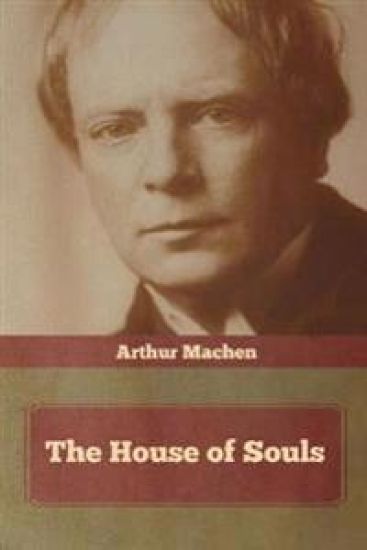
Arthur Machen (March 1863 - 15 December 1947) was the pen-name of Arthur Llewellyn Jones, a Welsh author and mystic of the 1890s and early 20th century. He is best known for his influential supernatural, fantasy, and horror fiction. His novella The Great God Pan (1890; 1894) has garnered a reputation as a classic of horror, with Stephen King describing it as "Maybe the best horror story] in the English language." He is also well known for "The Bowmen", a short story that was widely read as fact, creating the legend of the Angels of Mons. Machen's literary significance is substantial; his stories have been translated into many languages and reprinted in short story anthologies countless times. In the sixties, a paperback reprint in the Ballantine Adult Fantasy series brought him to the notice of a new generation. More recently, the small press has continued to keep Machen's work in print. In 2010, to mark the 150 years since Machen's birth, two volumes of Machen's work were republished in the prestigious Library of Wales series. Literary critics such as Wesley D. Sweetser and S. T. Joshi see Machen's works as a significant part of the late Victorian revival of the gothic novel and the decadent movement of the 1890s, bearing direct comparison to the themes found in contemporary works like Robert Louis Stevenson's Strange Case of Dr Jekyll and Mr Hyde, Bram Stoker's Dracula, and Oscar Wilde's The Picture of Dorian Gray. At the time authors like Wilde, William Butler Yeats, and Arthur Conan Doyle were all admirers of Machen's works. He is also usually noted in the better studies of Anglo-Welsh literature. The French writer Paul-Jean Toulet translated Machen's The Great God Pan into French and visited Machen in London. Charles Williams was also a devotee of Machen's work, which inspired Williams' own fiction. Historian of fantastic literature Brian Stableford has suggested that Machen "was the first writer of authentically modern horror stories, and his best works must still be reckoned among the finest products of the genre". (wikipedia.org)
The Great God Pan is a horror and fantasy novella by Welsh writer Arthur Machen. Machen was inspired to write The Great God Pan by his experiences at the ruins of a pagan temple in Wales. What would become the first chapter of the novella was published in the magazine The Whirlwind in 1890. Machen later extended The Great God Pan and it was published as a book alongside another story, "The Inmost Light", in 1894. The novella begins with an experiment to allow a woman named Mary to see the supernatural world. This is followed by an account of a series of mysterious happenings and deaths over many years surrounding a woman named Helen Vaughan. At the end, the heroes confront Helen and force her to kill herself. She undergoes a series of supernatural transformations before dying and she is revealed to be the child of Mary and the god Pan. On publication, it was widely denounced by the press as degenerate and horrific because of its implied sexual content, and the novella hurt Machen's reputation as an author. Beginning in the 1920s, Machen's work was critically re-evaluated and The Great God Pan has since garnered a reputation as a classic of horror. Literary critics have noted the influence of other nineteenth-century authors on The Great God Pan and offered differing opinions on whether or not it can be considered an example of Gothic fiction or science fiction. The novella has influenced the work of horror writers such as Bram Stoker, H. P. Lovecraft, and Stephen King, and has been adapted for the stage twice.
The Hill of Dreams is a semi-autobiographical novel by the Welsh writer Arthur Machen. The novel recounts the life of a young man, Lucian Taylor, focusing on his dreamy childhood in rural Wales, in a town based on Caerleon. The Hill of Dreams of the title is an old Roman fort where Lucian has strange sensual visions, including ones of the town in the time of Roman Britain. Later, the novel describes Lucian's attempts to make a living as an author in London, enduring poverty and suffering in the pursuit of art and history. The Hill of Dreams was little noticed on its publication in 1907 save in a glowing review by Alfred Douglas. It was actually written between 1895 and 1897 and has elements of the style of the decadent and aesthetic movement of the period, seen through Machen's own mystical preoccupations. Lord Dunsany admired The Hill of Dreams and wrote an introduction to a 1954 reprint of the novel. In Henry and June, Henry Miller tells Ana s Nin about The Hill of Dreams. According to the Friends of Arthur Machen website, the novel isalmost undoubtedly Machen's most important and moving work. Lucian Taylor, the hero, is damned either through contact with an erotically pagan "other" world or through something degenerate in his own nature, which he thinks of as a "faun". He becomes a writer, and when he moves to London he becomes trapped by the increasing reality of the dark imaginings of this creature within him, which become increasingly real. Machen drew copiously on his own early years in Wales and London, and the book as a whole is an exploration through imagination of a potential fate which he personally avoided. One of the first explorations in fiction of the figure of the doomed artist, who is biographically so much a part of the decadent 1890s. (wikipedia.org)
The Great God Pan is a horror and fantasy novella by Welsh writer Arthur Machen. Machen was inspired to write The Great God Pan by his experiences at the ruins of a pagan temple in Wales. What would become the first chapter of the novella was published in the magazine The Whirlwind in 1890. Machen later extended The Great God Pan and it was published as a book alongside another story, "The Inmost Light", in 1894. The novella begins with an experiment to allow a woman named Mary to see the supernatural world. This is followed by an account of a series of mysterious happenings and deaths over many years surrounding a woman named Helen Vaughan. At the end, the heroes confront Helen and force her to kill herself. She undergoes a series of supernatural transformations before dying and she is revealed to be the child of Mary and the god Pan. On publication, it was widely denounced by the press as degenerate and horrific because of its implied sexual content, and the novella hurt Machen's reputation as an author. Beginning in the 1920s, Machen's work was critically re-evaluated and The Great God Pan has since garnered a reputation as a classic of horror. Literary critics have noted the influence of other nineteenth-century authors on The Great God Pan and offered differing opinions on whether or not it can be considered an example of Gothic fiction or science fiction. The novella has influenced the work of horror writers such as Bram Stoker, H. P. Lovecraft, and Stephen King, and has been adapted for the stage twice.
Arthur Machen (March 1863 - 15 December 1947) was the pen-name of Arthur Llewellyn Jones, a Welsh author and mystic of the 1890s and early 20th century. He is best known for his influential supernatural, fantasy, and horror fiction. His novella The Great God Pan (1890; 1894) has garnered a reputation as a classic of horror, with Stephen King describing it as "Maybe the best horror story] in the English language." He is also well known for "The Bowmen", a short story that was widely read as fact, creating the legend of the Angels of Mons. Machen's literary significance is substantial; his stories have been translated into many languages and reprinted in short story anthologies countless times. In the sixties, a paperback reprint in the Ballantine Adult Fantasy series brought him to the notice of a new generation. More recently, the small press has continued to keep Machen's work in print. In 2010, to mark the 150 years since Machen's birth, two volumes of Machen's work were republished in the prestigious Library of Wales series. Literary critics such as Wesley D. Sweetser and S. T. Joshi see Machen's works as a significant part of the late Victorian revival of the gothic novel and the decadent movement of the 1890s, bearing direct comparison to the themes found in contemporary works like Robert Louis Stevenson's Strange Case of Dr Jekyll and Mr Hyde, Bram Stoker's Dracula, and Oscar Wilde's The Picture of Dorian Gray. At the time authors like Wilde, William Butler Yeats, and Arthur Conan Doyle were all admirers of Machen's works. He is also usually noted in the better studies of Anglo-Welsh literature. The French writer Paul-Jean Toulet translated Machen's The Great God Pan into French and visited Machen in London. Charles Williams was also a devotee of Machen's work, which inspired Williams' own fiction. Historian of fantastic literature Brian Stableford has suggested that Machen "was the first writer of authentically modern horror stories, and his best works must still be reckoned among the finest products of the genre". (wikipedia.org)
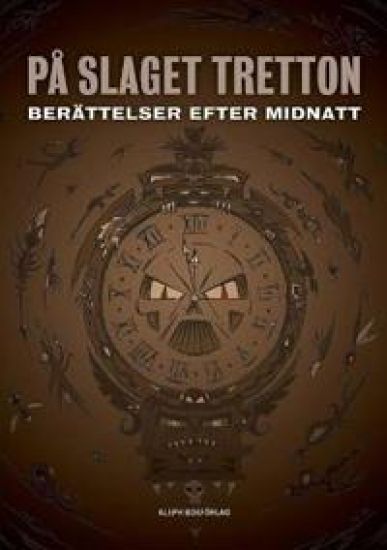
En bok som blandar klassiskt och nytt, utlandska forfattare med svenska. Urvalet tacker allt fran overnaturliga skrackhistorier till vardagsnara psykologiska rysare.
På slaget tretton
Howard Phillips Lovecraft; Gustav Meyrink; Arthur Machen
Aleph Bokforlag
2019
pokkari
Tretton skrackklassiker for finsmakaren, skrivna av H. P. Lovecraft, Gustav Meyrink, Rudyard Kipling med flera.
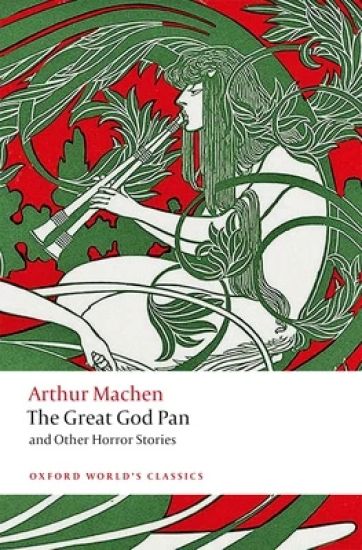
The Great God Pan and Other Horror Stories
Arthur Machen
Oxford University Press
2019
nidottu
Halvin toimitettuna 18,90 €
Something pushed out from the body there on the floor, and stretched forth a slimy, wavering tentacle... Perhaps no figure better embodies the transition from the Gothic tradition to modern horror than Arthur Machen. In the final decade of the nineteenth century, the Welsh writer produced a seminal body of tales of occult horror, spiritual and physical corruption, and malignant survivals from the primeval past which horrified and scandalised-late-Victorian readers. Machen's 'weird fiction' has influenced generations of storytellers, from H. P. Lovecraft to Guillermo Del Toro-and it remains no less unsettling today. This new collection, which includes the complete novel The Three Impostors as well as such celebrated tales as The Great God Pan and The White People, constitutes the most comprehensive critical edition of Machen yet to appear. In addition to the core late-Victorian horror classics, a selection of lesser-known prose poems and later tales helps to present a fuller picture of the development of Machen's weird vision. The edition's introduction and notes contextualise the life and work of this foundational figure in the history of horror.
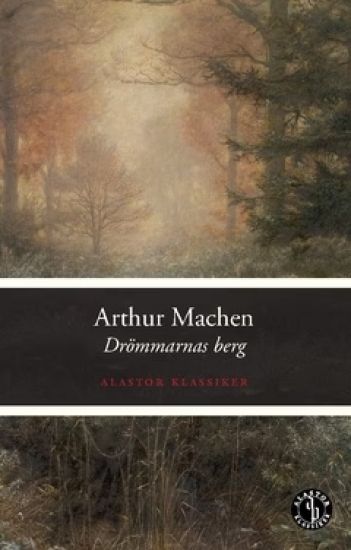
Arthur Machens Drömmarnas berg har kallats såväl den vackraste som den mest dekadenta bok som har skrivits på det engelska språket. Det här är berättelsen om den unge Lucian Taylor som hemsöks av underliga drömmar och visioner efter att ha vistats i en gammal romersk borgruin. Verklighetens till synes solida sömmar börjar snart att spricka och Lucian försvinner in i fantasins värld. Lovecraft korade Machen till en av de främsta skräckförfattarna genom tiderna; Arthur Conan Doyle ansåg honom vara ett geni, och Stephen King, Clive Barker, H. G. Wells, Jorge Luis Borges och Arthur Miller har alla intygat Machens betydelse för sina författarskap. Detta är den första svenska utgåvan av The Hill of Dreams, och den innehåller även Machens prosapoetiska tablåer Ornament i jade samt en opublicerad inledning av författaren, samt kommentarer, efterord och förord av översättaren Arthur Isfelt.
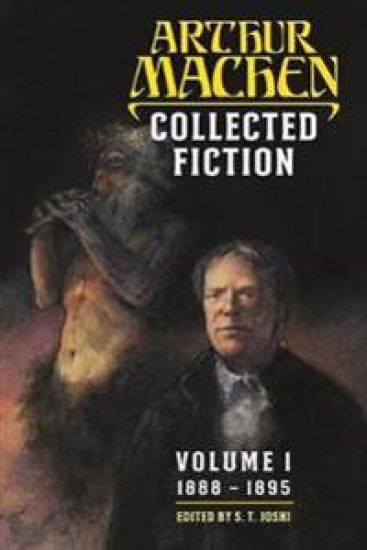
Welsh writer Arthur Machen (1863-1947) is one of the towering figures in the Golden Age of weird fiction, and his novels and tales have influenced generations of weird writers and remain immensely popular among readers. But much of his work has been difficult to obtain, remaining buried in obscure magazines and newspapers of a century ago or published in expensive limited editions. This is the first edition of Machen's fiction to be based on a thorough examination of his manuscripts and early publications. It is also the first edition to arrange Machen's fiction chronologically by date of writing. This first volume contains his charming picaresque novel The Chronicle of Clemendy (1888), an exquisite imitation of the medieval narratives of Chaucer and Boccaccio. At this time Machen was a young journalist who had moved from his native Wales to London, and he wrote a number of humorous and slightly risqu sketches for fashionable London magazines. But then he published "The Great God Pan" (1894), one of the pioneering works in the entire range of weird fiction. It was condemned by contemporary reviewers as the work of a diseased mind. Machen followed it up with the episodic novel The Three Impostors (1895), containing the brilliant segments "The Novel of the Black Seal" (which features the Little People, a sub-human race lurking on the edges of civilization), "The Novel of the White Powder," and other vivid narratives. The edition has been prepared by S. T. Joshi, a leading authority on weird fiction and the author of The Weird Tale (1990) and Unutterable Horror: A History of Supernatural Fiction (2012). Joshi has prepared textually corrected editions of the work of H. P. Lovecraft, Ambrose Bierce, and many other weird writers.
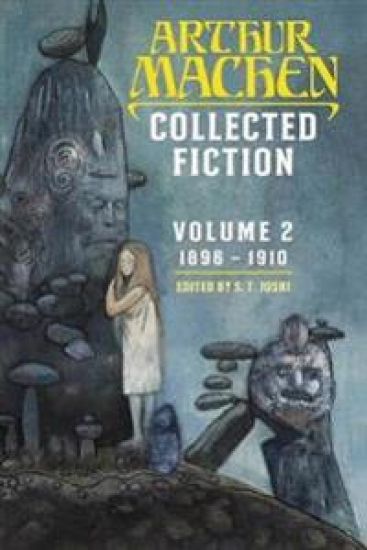
This second volume of Machen's collected fiction begins with Machen's most accomplished novel, The Hill of Dreams (written in 1895-97 and published in 1907), which H. P. Lovecraft called a "memorable epic of the sensitive aesthetic mind." It features Lucian Taylor, a young man from the country who struggles to become a writer in London. His ruminations on life, love, and authorship are extraordinarily poignant, and at one point he engages in a lengthy dream of being back in ancient Rome, in the town of Isca Silurum, near his birthplace in Wales. Later in 1897 Machen wrote a series of exquisite prose poems that were later published as Ornaments in Jade (1924). These ten vignettes display Machen's luminous prose at its most evocative, and they touch upon the possibility of strange and wondrous phenomena concealed behind the outward fa ade of the mundane world. Machen's most accomplished weird tale, "The White People," is also found here. Its account of a young girl insidiously inculcated in the witch-cult, told entirely from her own perspective as she jots down her thoughts and impressions in a diary, achieves the pinnacle of clutching fear. A very different work is the short novel A Fragment of Life, telling of how a seemingly ordinary couple rediscover their sense of wonder in the world around them. The novel The Secret Glory (written around 1907) is a discursive novel that searingly condemns the British school system for destroying the imaginations of its pupils. The entire work--including the final two chapters, first published only in a limited edition in 1992--is included here. The edition has been prepared by S. T. Joshi, a leading authority on weird fiction and the author of The Weird Tale (1990) and Unutterable Horror: A History of Supernatural Fiction (2012). Joshi has prepared textually corrected editions of the work of H. P. Lovecraft, Ambrose Bierce, and many other weird writers.
Arthur Machen, pseudonym of Arthur Llewellyn Jones, (born March 3, 1863, Caerleon, Monmouthshire, Eng.--died Dec. 15, 1947, Beaconsfield, Buckinghamshire), Welsh novelist and essayist, a forerunner of 20th-century Gothic science fiction. Machen's work was deeply influenced by his childhood in Wales and his readings in the occult and metaphysics. He lived most of his life in poverty as a clerk, teacher, and translator. In 1902 he became an actor with Benson's Shakespearean Repertory Company. And, in 1912, approaching his 50th birthday, he joined the staff of the London Evening News. The quality of Machen's writing was demonstrated early in World War I when the newspaper published the short story "The Angel of Mons" from The Bowmen and Other Legends of War (1915), which circulated widely as a true story and gave hope to thousands of soldiers in battle. Like Thomas Hardy, Machen responded to the spiritual power and antiquity of the British countryside. His fantasies are often set in medieval England or Wales, as in the autobiographical The Hill of Dreams (1907), which evokes ancient Roman forts and Welsh mysteries. Even his stories set in London are deeply romantic and nostalgic for a pre-industrial era. Other works include The Terror (1917), The Great God Pan and the Inmost Light (1894), Far Off Things (1922), and Things Near and Far (1923). Machen also translated Casanova's Memoirs (12 vol., 1930). (britannica.com)
This book is a result of an effort made by us towards making a contribution to the preservation and repair of original classic literature. In an attempt to preserve, improve and recreate the original content, we have worked towards: 1. Type-setting & Reformatting: The complete work has been re-designed via professional layout, formatting and type-setting tools to re-create the same edition with rich typography, graphics, high quality images, and table elements, giving our readers the feel of holding a 'fresh and newly' reprinted and/or revised edition, as opposed to other scanned & printed (Optical Character Recognition - OCR) reproductions. 2. Correction of imperfections: As the work was re-created from the scratch, therefore, it was vetted to rectify certain conventional norms with regard to typographical mistakes, hyphenations, punctuations, blurred images, missing content/pages, and/or other related subject matters, upon our consideration. Every attempt was made to rectify the imperfections related to omitted constructs in the original edition via other references. However, a few of such imperfections which could not be rectified due to intentional\unintentional omission of content in the original edition, were inherited and preserved from the original work to maintain the authenticity and construct, relevant to the work. We believe that this work holds historical, cultural and/or intellectual importance in the literary works community, therefore despite the oddities, we accounted the work for print as a part of our continuing effort towards preservation of literary work and our contribution towards the development of the society as a whole, driven by our beliefs. We are grateful to our readers for putting their faith in us and accepting our imperfections with regard to preservation of the historical content. HAPPY READING
Machen's "Thesaurus Incantatus" is a work in two parts; the first is a short metaphoric story (partially in the form of a fantasy work) that describes alchemy in a veiled manner, and the second is a lengthy list of works for sale at the time by the publisher. While the former is the work, technically, itself, the latter is such a good springboard for occultists to begin researching other texts that it almost eclipses the actual alchemical materials which were central to the booklet. The date of manufacture has been inferred due to the use of the date 1888 in one part of the latter segment to seemingly describe the contemporary era.