
Kirjailija
Arthur Miller
Kirjat ja teokset yhdessä paikassa: 126 kirjaa, julkaisuja vuosilta 1953–2027, suosituimpiin kuuluu Death of a Salesman: EinFach Englisch Unterrichtsmodelle. Vertaile teosten hintoja ja tarkista saatavuus suomalaisista kirjakaupoista.
126 kirjaa
Kirjojen julkaisuvuodet: 1953–2027.
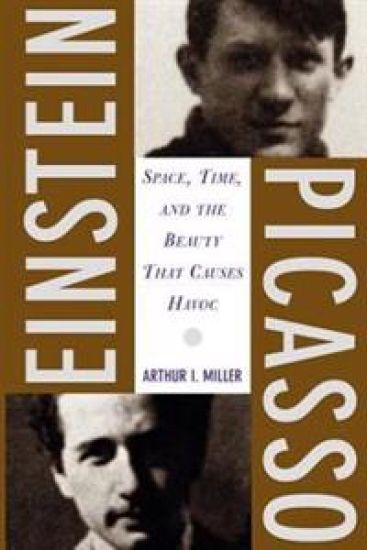
The most important scientist of the twentieth century and the most important artist had their periods of greatest creativity almost simultaneously and in remarkably similar circumstances. This fascinating parallel biography of Albert Einstein and Pablo Picasso as young men examines their greatest creations-Picasso's Les Demoiselles d'Avignon and Einstein's special theory of relativity. Miller shows how these breakthroughs arose not only from within their respective fields but from larger currents in the intellectual culture of the times. Ultimately, Miller shows how Einstein and Picasso, in a deep and important sense, were both working on the same problem.

For some fifty years now, Arthur Miller has been not only America's premier playwright, but also one of our foremost public intellectuals and cultural critics. Echoes Down the Corridor gathers together a dazzling array of more than forty previously uncollected essays and works of reportage. Here is Arthur Miller, the brilliant social and political commentator-but here, too, Miller the private man behind the internationally renowned public figure. Witty and wise, rich in artistry and insight, Echoes Down the Corridor reaffirms Arthur Miller's standing as one of the greatest writers of our time.
Written in 1945, Focus was Arthur Miller's first novel and one of the first books to directly confront American anti-Semitism. It remains as chilling and incisive today as it was at the time of its controversial debut. As World War II draws to a close, anti-Semitism is alive and well in Brooklyn, New York. Here, Newman, an American of English descent, floats through a world of multiethnic neighborhoods indifferent to the racism around him. That is, until he begins to wear glasses that render him "Jewish" in the eyes of others, making him the target of anti-Semitic prosecution. As he and his wife find friendship and support from a Jewish immigrant, Newman slowly begins to understand the racial hatreds that surround him.
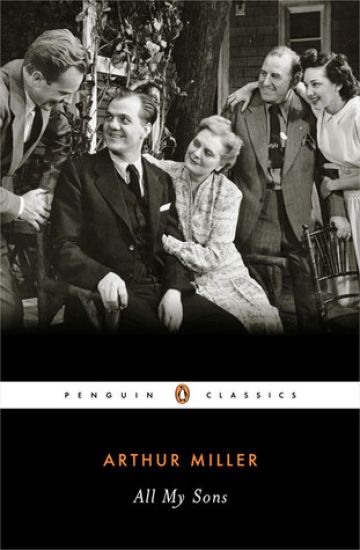
A Penguin Classic Joe Keller and Steve Deever, partners in a machine shop during World War II, turned out defective airplane parts, causing the deaths of many men. Deever was sent to prison while Keller escaped punishment and went back to business, making himself very wealthy in the ensuing years. In Miller's work of tremendous power, a love affair between Keller's son, Chris, and Ann Deever, Steve's daughter, the bitterness of George Keller, who returns from the war to find his father in prison and his father's partner free, and the reaction of a son to his father's guilt escalate toward a climax of electrifying intensity. Winner of the Drama Critics' Award for Best New Play in 1947, All My Sons established Arthur Miller as a leading voice in the American theater. All My Sons introduced themes that thread through Miller's work as a whole: the relationships between fathers and sons and the conflict between business and personal ethics. This edition features an introduction by Christopher Bigsby. For more than seventy years, Penguin has been the leading publisher of classic literature in the English-speaking world. With more than 1,700 titles, Penguin Classics represents a global bookshelf of the best works throughout history and across genres and disciplines. Readers trust the series to provide authoritative texts enhanced by introductions and notes by distinguished scholars and contemporary authors, as well as up-to-date translations by award-winning translators.
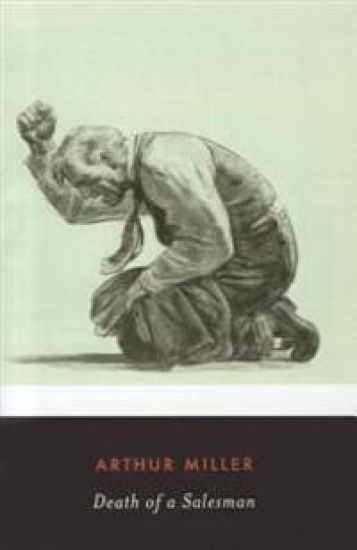
Arthur Miller's extraordinary masterpiece, Death of a Salesman changed the course of modern theatre, and has lost none of its power as an examination of American life. 'A man is not an orange. You can't eat the fruit and throw the peel away'Willy Loman is on his last legs. Failing at his job, dismayed at his the failure of his sons, Biff and Happy, to live up to his expectations, and tortured by his jealousy at the success and happiness of his neighbour Charley and his son Bernard, Willy spirals into a well of regret, reminiscence, and A scathing indictment of the ultimate failure of the American dream, and the empty pursuit of wealth and success, is a harrowing journey. In creating Willy Loman, his destructively insecure anti-hero, Miller defined his aim as being 'to set forth what happens when a man does not have a grip on the forces of life'.
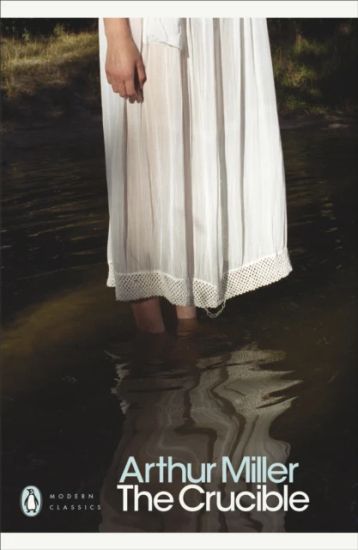
Arthur Miller's classic parable of mass hysteria draws a chilling parallel between the Salem witch-hunt of 1692 - 'one of the strangest and most awful chapters in human history' - and the American anti-communist purges led by Senator McCarthy in the 1950s. The story of how the small community of Salem is stirred into madness by superstition, paranoia and malice, culminating in a violent climax, is a savage attack on the evils of mindless persecution and the terrifying power of false accusations. A depiction of innocent men and women destroyed by malicious rumour, The Crucible is also a powerful indictment of McCarthyism and the 'frontier mentality' of Cold War America.

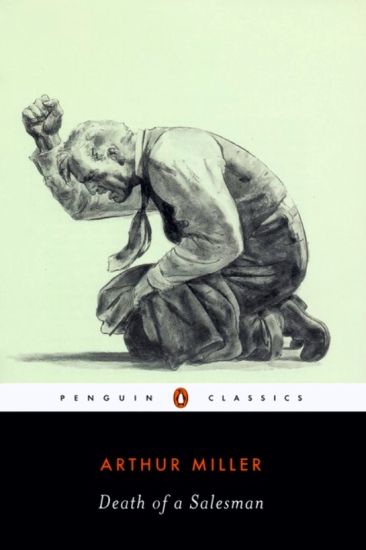
Death of a Salesman: Certain Private Conversations in Two Acts and a Requiem
Arthur Miller
PENGUIN CLASSICS
1998
nidottu
The Pulitzer Prize-winning tragedy of a salesman's deferred American dream A Penguin Classic Since it was first performed in 1949, Arthur Miller's Pulitzer Prize-winning drama about the tragic shortcomings of an American dreamer has been recognized as a milestone of the theater. Willy Loman, the protagonist of Death of a Salesman, has spent his life following the American way, living out his belief in salesmanship as a way to reinvent himself. But somehow the riches and respect he covets have eluded him. At age 63, he searches for the moment his life took a wrong turn, the moment of betrayal that undermined his relationship with his wife and destroyed his relationship with Biff, the son in whom he invested his faith. Willy lives in a fragile world of elaborate excuses and daydreams, conflating past and present in a desperate attempt to make sense of himself and of a world that once promised so much. This Penguin Classics edition features an introduction by Christopher W. E. Bigsby. For more than seventy years, Penguin has been the leading publisher of classic literature in the English-speaking world. With more than 1,700 titles, Penguin Classics represents a global bookshelf of the best works throughout history and across genres and disciplines. Readers trust the series to provide authoritative texts enhanced by introductions and notes by distinguished scholars and contemporary authors, as well as up-to-date translations by award-winning translators.

Now a major film from 20th Century Fox This is the first-ever adaptation of Arthur Miller's twentieth century classic for the big screen. Set in the 17th century, it famously mirrors the communist "witch-hunts" of McCarthyism in 50s America. A fascinating and disturbing dramatisation of the collective psychology of persecution it shows all too painfully how even a close-knit rural community can be desolated once doubt and suspicion take hold.
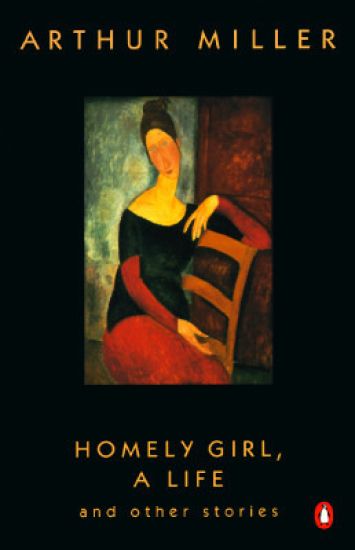
In his long career, Arthur Miller has charted some of the most hidden aspects of the American character, and made us recognize ourselves. With Homely Girl, A Life, he turns his attention to a smaller, more intimate, canvas, but one that in its deceptive delicacy still encompasses a vast range of human fears, ambitions, and desires. Janice--the eponymous homely girl--has hated her face ever since she was a child and her mother held up Ivory Snow advertisements to her, saying, "Now that is beauty." Homely she is, but also fiercely herself. Still, it is not until she falls in love with a blind musician that she feels her full nature unfold in this exquisite portrait of a woman finding a language to describe herself. Flanked by two stories also set in Manhattan, "Fame" and "Fitter's Night," Homely Girl, A Life pays homage to a city constantly reinventing itself--and to the classic Miller themes of work, honor, and identity." Chekhovian . . . deserves praising to the top of the highest skyscraper for its humanity, wit, depth" --A. N. Wilson

A haunting examination of groupthink and mass hysteria in a rural community, presented here with enlightening criticism and commentary "I believe that the reader will discover here the essential nature of one of the strangest and most awful chapters in human history," Arthur Miller wrote in an introduction to The Crucible, his classic play about the witch-hunts and trials in seventeenth-century Salem, Massachusetts. Based on historical people and real events, Miller's drama is a searing portrait of a community engulfed by hysteria. In the rigid theocracy of Salem, rumors that women are practicing witchcraft galvanize the town's most basic fears and suspicions; and when a young girl accuses Elizabeth Proctor of being a witch, self-righteous church leaders and townspeople insist that Elizabeth be brought to trial. The ruthlessness of the prosecutors and the eagerness of neighbor to testify against neighbor brilliantly illuminate the destructive power of socially sanctioned violence. Written in 1953, The Crucible is a mirror Miller uses to reflect the anti-communist hysteria inspired by Senator Joseph McCarthy's "witch-hunts" in the United States. Within the text itself, Miller contemplates the parallels, writing: "Political opposition...is given an inhumane overlay, which then justifies the abrogation of all normally applied customs of civilized behavior. A political policy is equated with moral right, and opposition to it with diabolical malevolence." This Viking Critical Library edition of Arthur Miller's dramatic recreation of the Salem witch trials contains the complete text of The Crucible as well as extensive critical and contextual material about the play and the playwright, including: Selections from Miller's writings on his most frequently performed play Essays on the historical background of The Crucible, including personal narratives by participants in the trials and records of witchcraft in Salem from the original documents Reviews of The Crucible, in production by Brooks Atkinson, Walter Kerr, Eric Bentley, and others Excerpts from Jean-Paul Sartre's Les Sorci res de Salem, a "spin-off" of Miller's play, and three analogous works by Twain, Shaw, and Budd Schulberg Critical essays on the play, on Miller, and on the play in the context of Miller's oeuvre An introduction by the editor, a chronology, a list of topics for discussion and papers prepared by Malcolm Cowley, and a bibliography
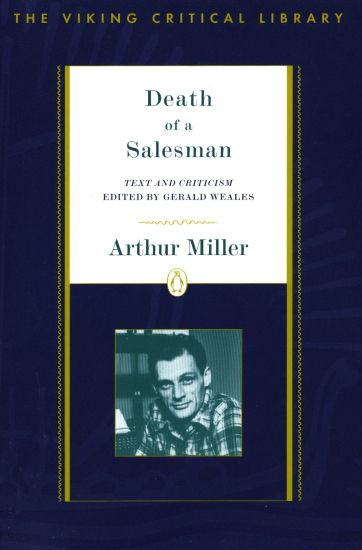
The Pulitzer Prize-winning tragedy of a salesman's deferred American dream, presented here with enlightening commentary and criticism Willy Loman, the protagonist of Death of a Salesman, has spent his life following the American way, living out his belief in salesmanship as a way to reinvent himself. But somehow the riches and respect he covets have eluded him. At age 63, he searches for the moment his life took a wrong turn, the moment of betrayal that undermined his relationship with his wife and destroyed his relationship with Biff, the son in whom he invested his faith. Willy lives in a fragile world of elaborate excuses and daydreams, conflating past and present in a desperate attempt to make sense of himself and of a world that once promised so much. Since it was first performed in 1949, Arthur Miller's Pulitzer Prize-winning drama about the tragic shortcomings of an American dreamer has been recognized as a milestone of the theater. This Viking Critical Library edition of Death of a Salesman contains the complete text of the play, typescript facsimiles, and extensive critical and contextual material including: Conflicting reviews about its opening night by Robert Garland, Harold Clurman, Eleanor Clark, and othersFive articles by Miller on his play, including "Tragedy and the Common Man" and his "Introduction to Collected Plays"Critical essays by John Gassner, Ivor Brown, Joseph A. Hynes, and othersGeneral essays on Miller by William Weigand, Allan Seager, and othersAnalogous works by Eudora Welty, Walter D. Moody, Tennessee Williams, and Irwin ShawThe stage designer's account, presented in selections from Designing for the Theatre by Jo MielzinerAn in-depth introduction by the editor, a chronology, a list of topics for discussion and papers, and a bibliography

'Broken Glass is a brave, bighearted attempt by one of the pathfinders of postwar drama to look at the tangle of evasions and hostilities by which the soul contrives to hide its emptiness from itself.' John Lahr (The New Yorker) Brooklyn, 1938: Sylvia Gellburg is stricken by a mysterious paralysis in her legs for which the doctor can find no cause. He soon realizes that she is obsessed by the devastating news from Germany, where government thugs have begun smashing Jewish stores. But this experience is intermeshed with what he learns is her strange relationship with her husband Philip. When the two seemingly unrelated situations concatenate, a tragic flare of light opens on the age. 'His strongest play for many years, a gripping and at times powerfully affecting drama. As almost always in his work, it balances private lives with public morality... It is also an amazingly full-blooded piece, bursting with pain and passion.' (Charles Spencer Daily Telegraph)
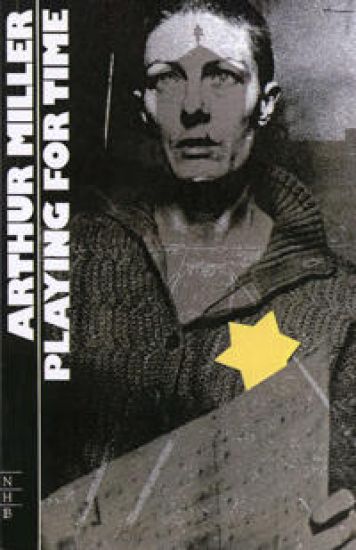
The extraordinary story of the women's orchestra in Auschwitz, originally filmed for television with Vanessa Redgrave, and adapted for the stage by Miller himself. Fania Fénelon, a Parisian singer, is arrested by the Nazis and sent to Auschwitz. There, she finds herself swept into the orchestra, composed entirely of female prisoners and founded as entertainment for the camp commandants. As long as the orchestra continues to find favour, its members will be spared the gas chambers. But Fania is struggling with the corruption of what she holds most sacred in the world – her music – and the morals of the orchestra members are being ground down every day. They are, quite literally, playing for time. Arthur Miller's stageplay Playing for Time is adapted from the 1980 CBS television film, written by Miller himself, and based on acclaimed musician Fania Fénelon's autobiography The Musicians of Auschwitz. The television film starred Vanessa Redgrave as Fénelon. The stageplay was first staged at 1-Act Theatre, San Francisco, in 1985.

Kein anderer amerikanischer Autor kann auf eine so lange und so tiefe Auseinandersetzung mit dem kulturellen und politischen Leben in den Vereinigten Staaten zurückblicken wie Arthur Miller. Kaum einer hat so früh zu den bekannten Schriftstellern des Landes gehört, auf keinen anderen Intellektuellen hat sich die Neugier der Öffentlichkeit so konzentriert. Beginnend mit Erinnerungen an das New Yorker jüdisch-bürgerliche Elternhaus berichtet er über die Jahre der McCarthy-Ära und die Fünfziger Jahre, in denen er mit seinen Theaterstücken :Der Tod des Handlungsreisenden9 und :Hexenjagd9 zu Amerikas berühmtestem Dramatiker avancierte. Mit großer Einfühlsamkeit schreibt Miller über seine Ehe mit Marilyn Monroe, woraus deutlich wird, welch zentralen Platz er ihr in seinem Leben zuweist. "Arthur Miller hat ein herausragendes Erinnerungsbuch geschrieben, das keineswegs nur die Miller-Philologen, Theaterkritiker, Filmhistoriker und Monroe-Fans interessiert, sondern über weite Strecken eine bewegende Lektüre verspricht und den American Way of Life besser verstehen lehrt." Frankfurter Rundschau

Danger: Memory!: I Can't Remember Anything/Clara
Arthur Miller
Dramatist's Play Service
1987
pokkari

Drama in drei Akten. Eine Familiengeschichte aus den Jahren nach dem Zweiten Weltkrieg.