Kirjojen hintavertailu – 12 859 819 kirjaa ja 27 kauppaa
Kirjailija
Arthur Morrison
Kirjat ja teokset yhdessä paikassa: 167 kirjaa, julkaisuja vuosilta 2004–2026, suosituimpiin kuuluu Martin Hewitt, Investigator. Vertaile teosten hintoja ja tarkista saatavuus suomalaisista kirjakaupoista.
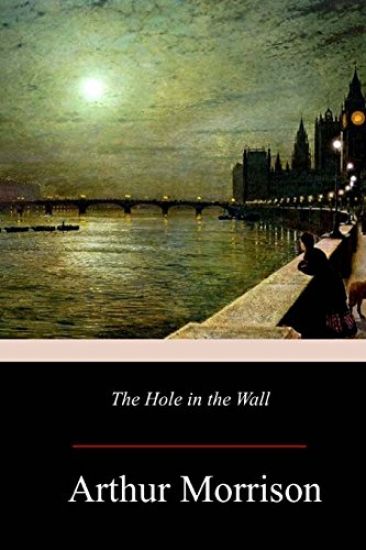
The Hole in the Wall by Arthur Morrison This is one of the most gripping adventure stories ever written. Stephen Kemp goes to live with his mysterious grandfather after his mother's death, and is gradually drawn into the seedy world which Captain Nat Kemp inhabits. Morrison brilliantly conveys the child's sharp observation of all that goes on around him, and builds up portrait of the London East End he himself may have known as a boy. We are delighted to publish this classic book as part of our extensive Classic Library collection. Many of the books in our collection have been out of print for decades, and therefore have not been accessible to the general public. The aim of our publishing program is to facilitate rapid access to this vast reservoir of literature, and our view is that this is a significant literary work, which deserves to be brought back into print after many decades. The contents of the vast majority of titles in the Classic Library have been scanned from the original works. To ensure a high quality product, each title has been meticulously hand curated by our staff. Our philosophy has been guided by a desire to provide the reader with a book that is as close as possible to ownership of the original work. We hope that you will enjoy this wonderful classic work, and that for you it becomes an enriching experience.
Arthur George Morrison (1 November 1863 - 4 December 1945) was an English writer and journalist known for his realistic novels and stories about working-class life in London's East End, and for his detective stories, featuring the detective Martin Hewitt. He also collected Japanese art and published several works on the subject. He left a large collection of paintings and other works of art to the British Museum after his death in 1945. Morrison's best known work of fiction is his novel A Child of the Jago (1896). Early life: Morrison was born in Poplar, in the East End of London, on 1 November 1863. His father George was an engine fitter at the London Docks. George died in 1871 of tuberculosis, leaving his wife Jane with three children including Arthur. Arthur spent his youth in the East End. In 1879 he began working as an office boy in the Architect's Department of the London School Board. He later remembered frequenting used bookstores in Whitechapel Road around this time. In 1880 Arthur's mother took over a shop in Grundy Street. Morrison published his first work, a humorous poem, in the magazine Cycling in 1880, and took up cycling and boxing. He continued to publish works in various cycling journals. Career: In 1885 Morrison published his first serious journalistic work in the newspaper The Globe. In 1886, after having worked his way up to the rank of a third-class clerk, he was appointed to a position at the People's Palace, in Mile End. In 1888 he was given reading privileges at the British Museum. In the same year he published a collection of thirteen sketches entitled Cockney Corner, describing life and conditions in several London districts including Soho, Whitechapel, and Bow Street. In 1889 he became an editor of the paper Palace Journal, reprinting some of his Cockney Corner sketches, and writing commentaries on books and other subjects including the life of London poor people. In 1890 he left this job and joined the editorial staff of The Globe and moved to lodgings in the Strand. In 1891 he published his first book The Shadows Around Us, a collection of supernatural stories. In October 1891 his short story A Street was published in Macmillan's Magazine. In 1892 he collaborated with illustrator J. A. Sheppard on a collection of animal sketches, one entitled My Neighbors' Dogs, for The Strand Magazine. Later that year he married Elizabeth Thatcher at Forest Gate. He befriended writer and editor William Ernest Henley around this time, publishing stories of working-class life in Henley's National Observer between 1892-94. His son Guy Morrison was born in 1893. In 1894 Morrison published his first detective story featuring the detective Martin Hewitt. In November he published his short story collection Tales of Mean Streets, dedicating the work to Henley. The collection was reviewed in 1896 in America by Jacob Riis. Morrison later said that the work was publicly banned. Reviewers of the collection objected to his story Lizerunt, causing Morrison to write a response in 1895. Later in 1894 he published Martin Hewitt, Investigator. In 1895 he was invited by writer and clergyman Reverend A. O. M. Jay to visit the Old Nichol Street Rookery. Morrison continued to develop his interest in Japanese art, which he had been introduced to by a friend in 1890. Morrison began writing his novel A Child of the Jago in early 1896. The novel was published in November by Henley. It described in graphic detail living conditions in the East End, including the permeation of violence into everyday life (it was a barely fictionalised account of life in the Old Nichol Street Rookery). Morrison also published The Adventures of Martin Hewitt in 1896. A second edition of A Child of the Jago came out in 1897............
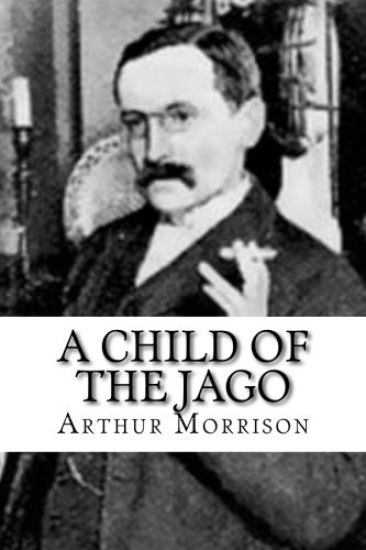
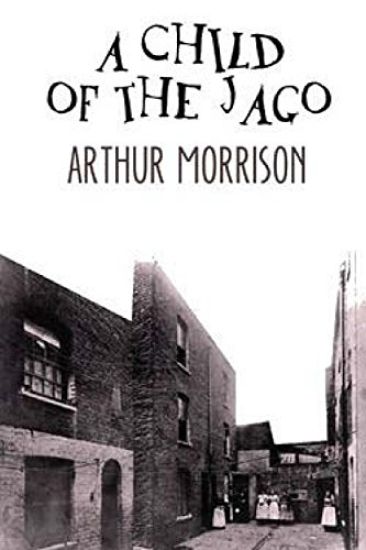
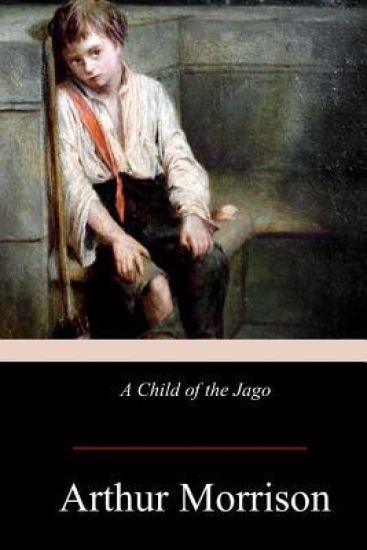
This novel, first published in 1896, is the story of Dick Perrot, born and bred in the Jago; but it is also a brilliant portrait of the community. The Jago is a London slum where crime and violence are the only way of life, and from which there is no escape for the inhabitants. Only the characters themselves are fictional: Morrison's descriptions of the fearful physical conditions are based directly on what he saw. He conjures up an extraordinarily vivid picture of a world which, even as he wrote, was about to vanish in one of the first of the slum clearance schemes.
Martin Hewitt, Investigator is a book published by Arthur Morrison in 1894. It is a collection of 7 detective stories: The Lenton Croft Robberies, The Loss of Sammy Crockett, The Case of Mr. Foggatt, The Case of the Dixon Torpedo, The Quinton Jewel Affair, The Stanway Cameo Mystery & The Affair of the Tortoise. Though ostensibly Hewitt depends on logic to solve crimes, the stories mostly hinge on a clever gimmick. Sometimes all of the clues are provided for the reader to guess the solution, but for the most part one can only marvel at Hewitt's cleverness in figuring out bizarre solutions, and accept the solution he presents.
This novel, first published in 1896, is the story of Dick Perrot, born and bred in the Jago; but it is also a brilliant portrait of the community. The Jago is a London slum where crime and violence are the only way of life, and from which there is no escape for the inhabitants. Only the characters themselves are fictional: Morrison's descriptions of the fearful physical conditions are based directly on what he saw. He conjures up an extraordinarily vivid picture of a world which, even as he wrote, was about to vanish in one of the first of the slum clearance schemes.
Arthur George Morrison (1 November 1863 - 4 December 1945) was an English writer and journalist known for his realistic novels and stories about working-class life in London's East End, and for his detective stories, featuring the detective Martin Hewitt. He also collected Japanese art and published several works on the subject. He left a large collection of paintings and other works of art to the British Museum after his death in 1945. Morrison's best known work of fiction is his novel A Child of the Jago (1896).
After midnight on a hot summer night, when many of the residents of the Jago, likened to "great rats", prefer to sleep in the street to avoid the oppressive heat and stench of the closely packed houses. A man lured into a dwelling by a woman is brutally coshed, robbed and dragged unconscious into the street where others remove his boots. Dicky Perrott, 8 or 9 years old (the uncertainty is telling) makes his way home to the single room in which his family dwells, where he finds his mother, Hannah Perrott and flea-bitten baby sister, Looey, but only a crust of bread to eat. As dawn breaks his father, Josh Perrott, returns home with a club sticky with blood and hair, suggesting another robbery.
Arthur George Morrison (1 November 1863 - 4 December 1945) was an English writer and journalist known for his realistic novels and stories about working-class life in London's East End, and for his detective stories, featuring the detective Martin Hewitt. He also collected Japanese art and published several works on the subject. He left a large collection of paintings and other works of art to the British Museum after his death in 1945. Morrison's best known work of fiction is his novel A Child of the Jago (1896).
Arthur George Morrison (1 November 1863 - 4 December 1945) was an English writer and journalist known for his realistic novels and stories about working-class life in London's East End, and for his detective stories, featuring the detective Martin Hewitt. He also collected Japanese art and published several works on the subject. He left a large collection of paintings and other works of art to the British Museum after his death in 1945. Morrison's best known work of fiction is his novel A Child of the Jago (1896).
Arthur George Morrison (1 November 1863 - 4 December 1945) was an English writer and journalist known for his realistic novels and stories about working-class life in London's East End, and for his detective stories, featuring the detective Martin Hewitt. He also collected Japanese art and published several works on the subject. He left a large collection of paintings and other works of art to the British Museum after his death in 1945. Morrison's best known work of fiction is his novel A Child of the Jago (1896).
The novel recounts the brief life of Dicky Perrott, a child growing up in the "Old Jago", a fictionalisation of the Old Nichol, a slum in the East End of London.