Kirjojen hintavertailu – 12 903 725 kirjaa ja 27 kauppaa
Kirjailija
Arthur Pontynen
Kirjat ja teokset yhdessä paikassa: 5 kirjaa, julkaisuja vuosilta 2005–2024, suosituimpiin kuuluu 23% More Spiritual!. Vertaile teosten hintoja ja tarkista saatavuus suomalaisista kirjakaupoista.
Ever bought that one book that utterly changed your spiritual life, made it deeper, quicker, and 23% more efficient? Neither has anyone else, but that has not stopped the relentless manufacture of fad products and programs that promise a ""better way."" Fads, which have led to havoc in the wider culture, have also found their way into Christendom. Now we have specifically Christian examples of invented problems, with churches struggling over musical choices, carpet colors, and various techniques. Christians are frequently following the world, blissfully unaware in their thinking that ""the new thing"" must be better merely because it is new. 23% More Spiritual examines some of the most well-known fads of the past century, provides a history of how we got here, outlines the problems in pursuing ""the fad,"" and offers a solution, one seeking goodness and perfection.
In daily life we consciously attempt to reconcile what with why, factual knowledge with understanding. Currently, it is commonplace to presume that understanding is limited to the production of facts, which we place into narratives of understanding. We exist in a world of facts with no why to find, living in a culture that vacillates between identity and tolerance, authoritarianism and anarchism. Neglected is the importance of seeking good judgments in daily life, that is, of being wise. This book analyzes the millennial shift from seeking Truth to asserting subjective meanings, so that we can escape that sordid condition. It is necessary to challenge current dominant modes of thought and interpretation in order to live intelligently and peacefully. Western Civilization and the Enlightenment are historically associated with seeking to understand, with the goal of being right with an intelligible and therefore meaningful reality. That goal remains worthy of our efforts.
Ever bought that one book that utterly changed your spiritual life, made it deeper, quicker, and 23% more efficient? Neither has anyone else, but that has not stopped the relentless manufacture of fad products and programs that promise a ""better way."" Fads, which have led to havoc in the wider culture, have also found their way into Christendom. Now we have specifically Christian examples of invented problems, with churches struggling over musical choices, carpet colors, and various techniques. Christians are frequently following the world, blissfully unaware in their thinking that ""the new thing"" must be better merely because it is new. 23% More Spiritual examines some of the most well-known fads of the past century, provides a history of how we got here, outlines the problems in pursuing ""the fad,"" and offers a solution, one seeking goodness and perfection.
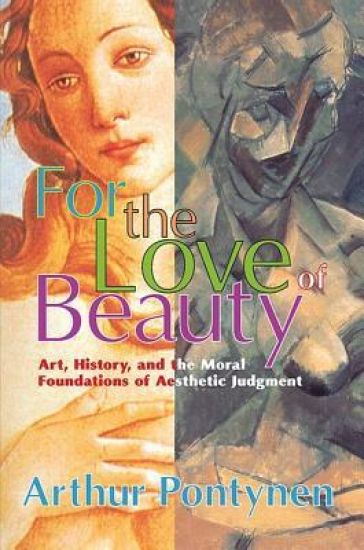
For most of the last century the methodology of art history has followed a positivist approach, emphasizing form and style, fact and history as the means of studying works of art. By contrast the philosophical pursuit of truth, once central to the fine arts and humanities has largely been abandoned. In For The Love of Beauty, Arthur Pontynen offers a searching and ambitious critique of modern aesthetic practice that aims to restore the pursuit of the knowledge of reality--Being--to its rightful place. Pontynen begins by addressing the question of why the pursuit of truth (be it called Dao, Dharma, God, Logos, Ideal, etc.) is no longer acceptable in academic circles even though it has been intrinsic to the purpose of art at most times and in most cultures. Lacking the pursuit of truth, of some degree of knowledge of what is true and good, the humanities necessarily lack intellectual and cultural grounding and purpose. Fields of study such as philosophy, music, art, and history are therefore trivialized and brutalized. Pontynen's focus on the study of the visual arts details the how the denial of purpose and quality in modernist and postmodernist aesthetics has denied art any possibility of transcending entertainment, therapy, or propaganda. In place of the established narratives, Pontynen offers a counter-narrative based on a cross-cultural pursuit of the good, the true, and the beautiful. He recognizes that substantively different cultural traditions exist and that the truth claims of each may be valid in whole or in part. He shows how the history of art parallels the intellectual history of Western culture and how these parallels affect both aesthetics and ethics. Pontynen engages with those elements of modernist and postmodernist thought that might be true. His purpose is not simply to deny their validity but to engage a viewpoint that does not privilege the notion of a purposeless cosmos. For the Love of Beauty will be of interest to art historians, students of aesthetics, ethics, and intellectual historians.
For most of the last century the methodology of art history has followed a positivist approach, emphasizing form and style, fact and history as the means of studying works of art. By contrast the philosophical pursuit of truth, once central to the fine arts and humanities has largely been abandoned. In For The Love of Beauty, Arthur Pontynen offers a searching and ambitious critique of modern aesthetic practice that aims to restore the pursuit of the knowledge of reality--Being--to its rightful place. Pontynen begins by addressing the question of why the pursuit of truth (be it called Dao, Dharma, God, Logos, Ideal, etc.) is no longer acceptable in academic circles even though it has been intrinsic to the purpose of art at most times and in most cultures. Lacking the pursuit of truth, of some degree of knowledge of what is true and good, the humanities necessarily lack intellectual and cultural grounding and purpose. Fields of study such as philosophy, music, art, and history are therefore trivialized and brutalized. Pontynen's focus on the study of the visual arts details the how the denial of purpose and quality in modernist and postmodernist aesthetics has denied art any possibility of transcending entertainment, therapy, or propaganda. In place of the established narratives, Pontynen offers a counter-narrative based on a cross-cultural pursuit of the good, the true, and the beautiful. He recognizes that substantively different cultural traditions exist and that the truth claims of each may be valid in whole or in part. He shows how the history of art parallels the intellectual history of Western culture and how these parallels affect both aesthetics and ethics. Pontynen engages with those elements of modernist and postmodernist thought that might be true. His purpose is not simply to deny their validity but to engage a viewpoint that does not privilege the notion of a purposeless cosmos. For the Love of Beauty will be of interest to art historians, students of aesthetics, ethics, and intellectual historians.