Kirjojen hintavertailu – 12 859 818 kirjaa ja 27 kauppaa
Kirjailija
Arthur Rackham
Kirjat ja teokset yhdessä paikassa: 90 kirjaa, julkaisuja vuosilta 2000–2026, suosituimpiin kuuluu Undine. Vertaile teosten hintoja ja tarkista saatavuus suomalaisista kirjakaupoista.
Peter Pan in Kensington Gardens is a novel by J. M. Barrie, illustrated by Arthur Rackham, and published by Hodder & Stoughton in late November or early December 1906; it is one of four major literary works by Barrie featuring the widely known literary character he created, Peter Pan. Peter is a seven-day-old infant who, "like all infants", used to be part bird. Peter has complete faith in his flying abilities, so, upon hearing a discussion of his adult life, he is able to escape out of the window of his London home and return to Kensington Gardens. Upon returning to the Gardens, Peter is shocked to learn from the crow Solomon Caw that he is not still a bird, but more like a human - Solomon says he is crossed between them as a "Betwixt-and-Between". Unfortunately, Peter now knows he cannot fly, so he is stranded in Kensington Gardens.
Gulliver's Travels, whose full title is Travels into Several Remote Nations of the World. In Four Parts. By Lemuel Gulliver, First a Surgeon, and then a Captain of Several Ships, (1726, amended 1735), is a prose satire 1] 2] by Irish writer and clergyman Jonathan Swift, that is both a satire on human nature and the "travellers' tales" literary subgenre. It is Swift's best known full-length work, and a classic of English literature. He himself claimed that he wrote Gulliver's Travels "to vex the world rather than divert it". The book became popular as soon as it was published. John Gay wrote in a 1726 letter to Swift that "It is universally read, from the cabinet council to the nursery. The travel begins with a short preamble in which Lemuel Gulliver gives a brief outline of his life and history before his voyages. During his first voyage, Gulliver is washed ashore after a shipwreck and finds himself a prisoner of a race of tiny people, less than 6 inches (0.50 ft) tall, who are inhabitants of the island country of Lilliput. After giving assurances of his good behavior, he is given a residence in Lilliput and becomes a favorite of the Lilliput Royal Court. He is also given permission by the King of Lilliput to go around the city on condition that he must not harm their subjects.
Travels into Several Remote Nations of the World. In Four Parts. By Lemuel Gulliver, First a Surgeon, and then a Captain of Several Ships, commonly known as Gulliver's Travels (1726, amended 1735), is a prose satire by Irish writer and clergyman Jonathan Swift, that is both a satire on human nature and the "travellers' tales" literary subgenre. It is Swift's best known full-length work, and a classic of English literature. The book became popular as soon as it was published. John Gay wrote in a 1726 letter to Swift that "It is universally read, from the cabinet council to the nursery." The book begins with a short preamble in which Lemuel Gulliver, in the literary style of the time, gives a brief outline of his life and history before his voyages. Part I: A Voyage to Lilliput-- During his first voyage, Gulliver is washed ashore after a shipwreck and finds himself a prisoner of a race of tiny people, less than 6 inches (15 cm) tall, who are inhabitants of the island country of Lilliput. After giving assurances of his good behaviour, he is given a residence in Lilliput and becomes a favourite of the court. From there, the book follows Gulliver's observations on the Court of Lilliput. He is also given permission to go around the city on condition that he must not harm their subjects. Gulliver assists the Lilliputians to subdue their neighbours, the Blefuscudians, by stealing their fleet. However, he refuses to reduce the island nation of Blefuscu to a province of Lilliput, displeasing the King and the court. Gulliver is charged with treason for, among other crimes, "making water" in the capital, though he was putting out a fire and saving countless lives. He is convicted and sentenced to be blinded, but with the assistance of a kind friend, he escapes to Blefuscu. Here he spots and retrieves an abandoned boat and sails out to be rescued by a passing ship, which safely takes him back home. Part II: A Voyage to Brobdingnag, Part III: A Voyage to Laputa, Balnibarbi, Luggnagg, and Glubbdubdrib, Part IV: A Voyage to the Country of the Houyhnhnms. Arthur Rackham (19 September 1867 - 6 September 1939) was an English book illustrator. Rackham was born in Lewisham, then still part of Kent as one of 12 children. In 1884, at the age of 17, he was sent on an ocean voyage to Australia to improve his fragile health, accompanied by two aunts. At the age of 18, he worked as a clerk at the Westminster Fire Office and began studying part-time at the Lambeth School of Art. Jonathan Swift (30 November 1667 - 19 October 1745) was an Anglo-Irish satirist, essayist, political pamphleteer (first for the Whigs, then for the Tories), poet and cleric who became Dean of St Patrick's Cathedral, Dublin. Swift is remembered for works such as Gulliver's Travels, A Modest Proposal, A Journal to Stella, Drapier's Letters, The Battle of the Books, An Argument Against Abolishing Christianity and A Tale of a Tub. He is regarded by the Encyclop dia Britannica as the foremost prose satirist in the English language, and is less well known for his poetry. He originally published all of his works under pseudonyms - such as Lemuel Gulliver, Isaac Bickerstaff, Drapier's Letters as MB Drapier - or anonymously. He is also known for being a master of two styles of satire, the Horatian and Juvenalian styles. His deadpan, ironic writing style, particularly in A Modest Proposal, has led to such satire being subsequently termed "Swiftian"...............
Thank you for checking out this children's classic by Guga Books. We appreciate your business and look forward to serving you soon. We have thousands of titles available, and we invite you to search for us by name, contact us via our website, or download our most recent catalogues. It all started with "Once upon a time..." and always ended with "Happily ever after", and the in between spaces were filled with jolly tales of good deeds and bad goings on, all of which had some sort of moral o' the story, and some didn't seem to say much of anything other than not to anger the gods or the fairies or the kings and queens, lest they put you to sleep for good long ages. My grandmother would set us on her lap with care, open the book between us, and read with her high lilting voice those words which we came to know and to love, "Once upon a time..." and "Happily ever after." These became such important words to us, and in time, we came to read them to our own children, and as good years pass, perhaps our children will read the same storys to our grandchildren. There is a time for twice told tales, and any time will suit me just fine. Some time is only half better. No time is no good at all. Read often, read often. There is nothing more lazy than a mind left unfilled by the fairy stories of our youth. They give us imagination, and creativity, and foolishness -- and no life is fulfilled that has not a little bit of foolery in it. And once their letters are learned upon, they became words that had meaning, and finally sentences and paragraphs, all of these culminated into stories, essays, and articles. All this, from the fat tome of fairy tales, read upon granny's knee.
""A Fairy Book"" by Arthur Rackham is a collection of fairy tales from different cultures and regions, including stories from the Brothers Grimm, Hans Christian Andersen, and Charles Perrault. The book features Rackham's distinctive illustrations, which bring these classic tales to life with his signature blend of whimsy and darkness. The stories included in the book range from well-known tales like ""Cinderella"" and ""Little Red Riding Hood"" to lesser-known tales like ""The Three Little Men in the Wood"" and ""The Golden Crab."" Rackham's illustrations capture the magic and enchantment of these stories, making this book a must-read for anyone who loves fairy tales and beautiful illustrations. This is a new release of the original 1923 edition. This scarce antiquarian book is a facsimile reprint of the old original and may contain some imperfections such as library marks and notations. Because we believe this work is culturally important, we have made it available as part of our commitment for protecting, preserving, and promoting the world's literature in affordable, high quality, modern editions, that are true to their original work.
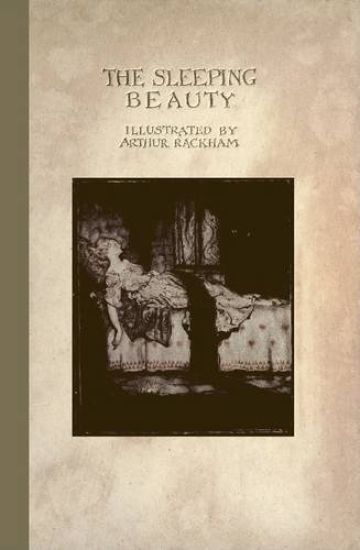
The timeless tale of the spellbound princess takes on a delightful dimension in this hardcover keepsake edition. Arthur Rackham, the leading figure of the Golden Age of Illustration, envisions a fantasy world in the form of crisp black-and-white silhouettes. Six full- and three-color plates include an image featured only in the original edition's limited run of 625 signed copies.
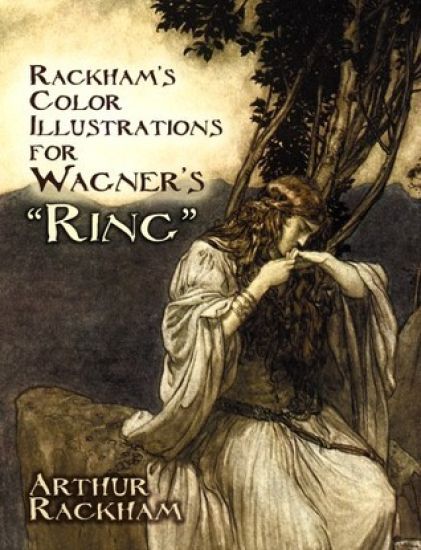
By the time he created these images, Rackham was England's leading illustrator, famous throughout the world for his interpretations of fairy tales and myths. These illustrations from the original 1911 and 1912 editions, widely regarded as the greatest representations of Wagner's drama, constitute Rackham's masterworks. 64 full-page color images and 9 vignettes.