Kirjojen hintavertailu – 12 903 724 kirjaa ja 27 kauppaa

Kirjailija

Arthur S. Reber

Kirjat ja teokset yhdessä paikassa: 6 kirjaa, julkaisuja vuosilta 1996–2023, suosituimpiin kuuluu The Sentient Cell. Vertaile teosten hintoja ja tarkista saatavuus suomalaisista kirjakaupoista.

Nimi esiintyy myös muodoissa: Arthur S Reber

6 kirjaa

Kirjojen julkaisuvuodet: 1996–2023.

The Sentient Cell

The Sentient Cell

Arthur S. Reber; Frantisek Baluska; William Miller

Oxford University Press
2023
sidottu
All species, extant and extinct, from the simplest unicellular prokaryotes to humans, have an existential consciousness. Without sentience, the first cells that emerged some 4 billion years ago would have been evolutionary dead-ends, unable to survive in the chaotic, dangerous environment in which life first appeared and evolved. In this book, Arthur Reber's theory, the Cellular Basis of Consciousness (CBC), is outlined and distinguished from those models that argue that minds could be instantiated on artificial entities and those that maintain consciousness requires a nervous system. The CBC framework takes a novel approach to classic topics such as the origin-of-life, philosophy of mind, the role of genes, the impact of cognition, and how biological information is processed by all species. It also calls for a rethinking of a variety of issues including the moral implications of the sentient capacities of all species, how welfare concerns need to be expanded beyond where they currently are, and critically, how all life is intertwined in a coordinated cognitive ecology. The Sentient Cell explores this revolutionary model, which updates the standard neo-Darwinian framework within which current approaches operate and examines the underlying biomolecular features that are the likely candidates for the "invention" of consciousness and outline their role in cellular life.
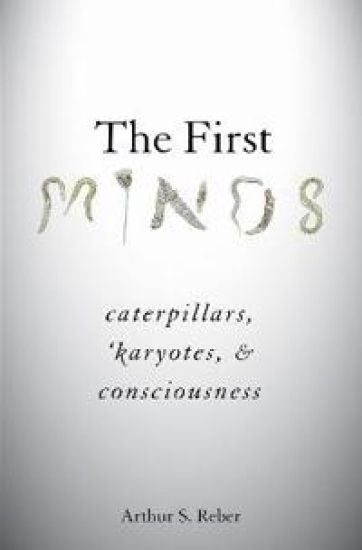
The First Minds

The First Minds

Arthur S. Reber

Oxford University Press Inc
2019
sidottu

Halvin toimitettuna 43,90 €

First Minds: Caterpillars, 'Karyotes, and Consciousness presents a novel theory of the origins of mind and consciousness dubbed the Cellular Basis of Consciousness (CBC). It argues that sentience emerged with life itself. The most primitive unicellular species of bacteria are conscious, though it is a sentience of a primitive kind. They have minds, though they are tiny and limited in scope. Hints that cells might be conscious can be found in the writings of a few cell biologists but a fully developed theory has never been put forward before. Other approaches to the origins of consciousness are examined and shown to be seriously or fatally flawed, specifically approaches based on: (a) the assumption that minds are computational and can be captured by an Artificial Intelligence, (b) efforts to discover the neuro-correlates of mental experiences and, (c) looking for consciousness in less complex species by identifying those that have precursors of those neuro-correlates. Reber shows how each of these approaches is shown to be either essentially impossible (the AI models) or so burdened by philosophical and empirical difficulties that they are effectively unworkable. The CBC approach is developed using standard models of evolutionary biology. The remarkable repertoire of single-celled species that micro- and cell-biologists have discovered is reviewed. Bacteria, for example, have sophisticated sensory and perceptual systems, learn, form memories, make decisions based on information about their environment relative to internal metabolic states, communicate with each other, and even show a primitive form of altruism. All such functions are indicators of sentience. Finally, the implications of the CBC model are discussed along with a number of related issues in evolutionary biology, philosophy of mind, the possibility of sentient plants, the ethical repercussions of universal animal sentience, and the long-range impact of adopting the CBC stance.
Xero to Sixty

Xero to Sixty

Arthur S. Reber

Createspace Independent Publishing Platform
2015
nidottu
It's 1959. Xerxes ("Xero") Konstantakis flunks out of Columbia U. and, torn between the expectations of his Greek immigrant parents and his own urge to find an angle, runs away with the circus. The circus, real and metaphorical, becomes the touchstone for his life. With Sinatra's "My Way" echoing in his head, he takes us through the end of the 20th century accompanied by an assortment of friends, gypsies, acrobats, lawyers, poker players, con artists, a couple of Mafia hoods, a genial Irish gangster and the denizens of his very own underground poker club. He learns it's not about going legit - it's about being the best degenerate you can be. ***** "A coming of age novel about a literate poker-playing layabout of Greek descent. It's high time to reclaim the phrase "rollicking tale" - and Reber's Xero to Sixty is just the book to do it " Peter Alson, author of Confessions of an Ivy League Bookie and Take Me to the River "Xero, circus traveler, poker player and self-reflective intellectual is a fascinating character. Most poker pros are boring. Not Xero. Reber brings this character to life in rich sentences and telling details. Enjoy the ride." Alan Schoonmaker, author of Anxiety and the Executive and The Psychology of Poker "A delightfully bumpy on-the-road tale full of characters living on the fringes. Humor and introspection paint bizarre situations in quick and cleverly written brushstrokes." Alan Geik, author of Glenfiddich Inn "If you'd ever wished you'd played in the edgier days of poker, Arthur Reber provides you a glimpse into what it was like. Suffocated by the rules of college, his hero seeks his fortune on the rougher edges of society. A great tour of back rooms and hustles now disappearing." Linda Johnson, First Lady of Poker
Poker, Life and Other Confusing Things

Poker, Life and Other Confusing Things

Arthur S Reber

Conjelco, LLC
2014
pokkari
The average "guy on the street" misunderstands a lot of things and poker and psychology are right up there with string theory in physics and mathematical models of economics. But there's a curious twist here. They know they don't "get" string theory and economics, but they often think they "get" poker and psychology. They typically do not. Most people think that poker is gambling like other casino games such as roulette, baccarat or even the slots. It isn't. Those are games of pure chance, dominated by random outcomes. Poker is a game of skill where the decisions players make trump the random distributions of cards. Poker is a game played with cards for money. The cards are the least important part of the game. It is ridiculously complicated. Going out on a limb the author claims that it is the most complex game people play regularly. It is more complex than chess or bridge or backgammon. Poker is also a microcosm of life. If you play the game seriously you know this. Because the game mirrors so much of life it shares many psychological burdens. We are the products of evolution and, as anthropologists, evolutionary psychologists and sociologists have shown, our genetic history carries with it a set of behavioral predispositions. If threatened we are prone to counterattack. If stressed we often lose our deliberative abilities. When we are the conquerors, certain neuro-hormonal changes occur in our brains. If conquered, different ones do and they do very different things. We pride ourselves on rationality but the ascension of our species works against it. When things look bleak, we reach for gods and angels, faces in the clouds, mystical rustling in the bushes. If hurt comes to those close, we gather forces with like against different. When it happens to those distant from us we are cavalier. It is not easy to overcome these tendencies. They share a common bond with the genetic roots that also make democracy hard, discourage tolerance and encourage us to embrace religion. These trends are found everywhere and penetrate all the even mildly interesting things we do - and that includes playing complex and intensely competitive games like poker. They are also the reason why is it such a devilishly hard game to master. Poker is a microcosm of life precisely because it is the most intellectually complex, emotionally rich, and social game we've ever invented. In these essays Arthur S. Reber tries to take elements of the human condition, those that social scientists have learned a good deal about, and show how they interlock with the game. Some chapters start with a psychological principle and look at what it can tell us about poker. Some begin with a particular aspect of the game and seek to unpack the psychological processes that underlie it. Others look at mathematical and statistical aspects with an eye to the impact they have on our perceptions and understanding of how to play the game. Still others examine individuals who play and write about poker. There is some poker strategy buried in these essays but not directly. They weren't written to teach anyone how to play poker. Some of them may help you play better but the real goal is understanding the game from the psychologist's perspective. As some wag once said, "poker is a people game played with cards and money." They got that right.
The Penguin Dictionary of Psychology (4th Edition)

The Penguin Dictionary of Psychology (4th Edition)

Arthur S Reber; Emily Reber; Rhianon Allen

Penguin Books Ltd
2009
pokkari

Halvin toimitettuna 20,30 €

The Penguin Dictionary of Psychology has become a byword for demystifying the language of this complex subject. Now fully updated for its fourth edition, this wide-ranging and accessible dictionary is invaluable for both students and professionals, and an indispensable guide to all areas of psychology and psychiatry.-Covers related fields such as neuroscience and social psychology-Describes how terms are employed, their wider connotations and past usage-Looks in detail at such key concepts as addiction and instinct
Implicit Learning and Tacit Knowledge

Implicit Learning and Tacit Knowledge

Arthur S. Reber

Oxford University Press Inc
1996
nidottu
Implicit knowledge, a term coined by Reber in 1965, is acquired independent of conscious attempts to learn, and generally without the capacity to communicate what has been acquired. One of the core assumptions of this argument is that implicit learning is a fundamental process, one that lies at the very heart of the adaptive behavioural repertoire of every complex organism. This is a highly readable account of the cognitive unconscious, focusing in particular on the problem of implicit learning.