Kirjojen hintavertailu – 12 903 725 kirjaa ja 27 kauppaa
Kirjailija
Arthur van Riel
Kirjat ja teokset yhdessä paikassa: 6 kirjaa, julkaisuja vuosilta 2004–2025, suosituimpiin kuuluu Trials of Convergence. Vertaile teosten hintoja ja tarkista saatavuus suomalaisista kirjakaupoista.
This open access book analyzes how sound choices can be made in Dutch health care policies, and shows why they are necessary, urgent, and even inevitable. Analyzing the current functioning and funding of the Dutch health care system, this book shows how three dimensions of sustainability – financial, staffing and societal – are under increasing pressure. This study explores priority setting in health care and calls for well-informed, clear and sometimes uncompromising choices in the allocation of means and personnel. This is necessary in order to maintain accessible and high-quality care for all, and to improve public health. Making balanced choices in health care is of particular importance to vulnerable groups whose voices may not be heard as readily or effectively in the public debate, and whose interests are more easily crowded out. Prioritizing in the domain of public health care is first and foremost a political responsibility, but also one for health care providers across the system and ultimately also for citizens. While this work focuses on the Netherlands, similar processes are at play across the developed economies, making it broadly relevant to policy makers, health care professionals and health care (policy) researchers grappling with the questions surrounding the sustainability of public health care.
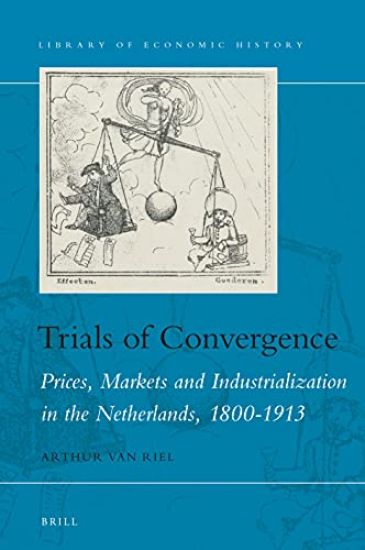
For over a century now, historians have debated the causes of the lagged industrialization of the Dutch economy during the nineteenth century. To this debate, Trials of Convergence brings the analytical perspective of prices, factor costs and the functioning of markets. Its critical insight is that only an approach based on the integrated incentive structure of the economy allows us to delimit the role of alternative explanations. Using statistical reconstruction and microdata, it shows that the retarded transition resulted from a confluence of forces. These ranged from open economy effects and natural endowments to the resilient influence of the institutions of the former Dutch Republic and the fiscal policy adopted in response to Belgian secession. At the height of the British Industrial Revolution the Dutch economy slowed, triggering a return to the problems of eighteenth-century stagnation. All this meant that the transition to 'modern economic growth' after 1860 came about only in a changed international context and after a period of politico-economic reform.
This Open Access book from the Netherlands Scientific Council for Government Policy explains how money creation and banking works, describes the main problems of the current monetary and financial system and discusses several reform options. This book systematically evaluates proposals for fundamental monetary reform, including ideas to separate money and credit by breaking up banks, introducing a central bank digital currency, and introducing public payment banks. By drawing on these plans, the authors suggest several concrete reforms to the current banking system with the aim to ensure that the monetary system remains stable, contributes to the Dutch economy, fairly distributes benefits, costs and risks, and enjoys public legitimacy. This systematic approach, and the accessible way in which the book is written, allows specialized and non-specialised readers to understand the intricacies of money, banking, monetary reform and financial innovation, far beyond the Dutch context.
This Open Access book from the Netherlands Scientific Council for Government Policy explains how money creation and banking works, describes the main problems of the current monetary and financial system and discusses several reform options. This book systematically evaluates proposals for fundamental monetary reform, including ideas to separate money and credit by breaking up banks, introducing a central bank digital currency, and introducing public payment banks. By drawing on these plans, the authors suggest several concrete reforms to the current banking system with the aim to ensure that the monetary system remains stable, contributes to the Dutch economy, fairly distributes benefits, costs and risks, and enjoys public legitimacy. This systematic approach, and the accessible way in which the book is written, allows specialized and non-specialised readers to understand the intricacies of money, banking, monetary reform and financial innovation, far beyond the Dutch context.
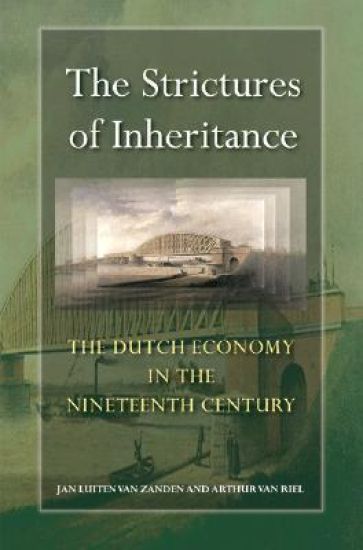
A major feat of research and synthesis, this book presents the first comprehensive history of the Dutch economy in the nineteenth century--an important but poorly understood piece of European economic history. Based on a detailed reconstruction of extensive economic data, the authors account for demise of the Dutch economy's golden age. After showing how institutional factors combined to make the Dutch economy a victim of its own success, the book traces its subsequent emergence as a modern industrial economy. Between 1780 and 1914, the Netherlands went through a double transition. Its economy--which, in the words of Adam Smith, was approaching a "stationary state" in the eighteenth century--entered a process of modern economic growth during the middle decades of the nineteenth. At the same time, the country's sociopolitical structure was undergoing radical transformation as the decentralized polity of the republic gave way to a unitary state. As the authors show, the dramatic transformation of the Dutch political structure was intertwined with equally radical changes in the institutional structure of the economy. The outcome of this dual transition was a rapidly industrializing economy on one side and, on the other, the neocorporatist sociopolitical structure that would characterize the Netherlands in the twentieth century. Analyzing both processes with a focus on institutional change, this book argues that the economic and political development of the Netherlands can be understood only in tandem.