
Kirjojen hintavertailu – 12 903 725 kirjaa ja 27 kauppaa

Kirjailija

Artur S. d'Avila Garcez

Kirjat ja teokset yhdessä paikassa: 3 kirjaa, julkaisuja vuosilta 2002–2010, suosituimpiin kuuluu Neural-Symbolic Learning Systems. Vertaile teosten hintoja ja tarkista saatavuus suomalaisista kirjakaupoista.

3 kirjaa

Kirjojen julkaisuvuodet: 2002–2010.

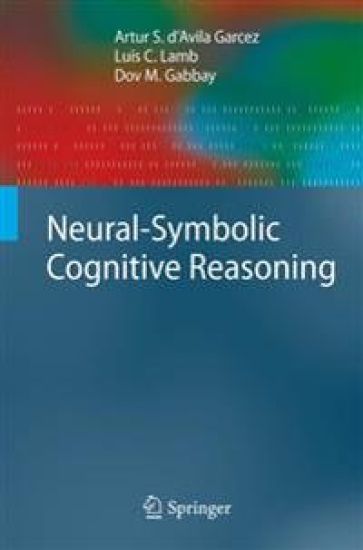
Neural-Symbolic Cognitive Reasoning

Neural-Symbolic Cognitive Reasoning

Artur S. D'Avila Garcez; Luís C. Lamb; Dov M. Gabbay

Springer-Verlag Berlin and Heidelberg GmbH Co. K
2010
nidottu
Humans are often extraordinary at performing practical reasoning. There are cases where the human computer, slow as it is, is faster than any artificial intelligence system. Are we faster because of the way we perceive knowledge as opposed to the way we represent it? The authors address this question by presenting neural network models that integrate the two most fundamental phenomena of cognition: our ability to learn from experience, and our ability to reason from what has been learned. This book is the first to offer a self-contained presentation of neural network models for a number of computer science logics, including modal, temporal, and epistemic logics. By using a graphical presentation, it explains neural networks through a sound neural-symbolic integration methodology, and it focuses on the benefits of integrating effective robust learning with expressive reasoning capabilities. The book will be invaluable reading for academic researchers, graduate students, and senior undergraduates in computer science, artificial intelligence, machine learning, cognitive science and engineering. It will also be of interest to computational logicians, and professional specialists on applications of cognitive, hybrid and artificial intelligence systems.
Neural-Symbolic Cognitive Reasoning

Neural-Symbolic Cognitive Reasoning

Artur S. D'Avila Garcez; Luís C. Lamb; Dov M. Gabbay

Springer-Verlag Berlin and Heidelberg GmbH Co. K
2008
sidottu
Humans are often extraordinary at performing practical reasoning. There are cases where the human computer, slow as it is, is faster than any artificial intelligence system. Are we faster because of the way we perceive knowledge as opposed to the way we represent it? The authors address this question by presenting neural network models that integrate the two most fundamental phenomena of cognition: our ability to learn from experience, and our ability to reason from what has been learned. This book is the first to offer a self-contained presentation of neural network models for a number of computer science logics, including modal, temporal, and epistemic logics. By using a graphical presentation, it explains neural networks through a sound neural-symbolic integration methodology, and it focuses on the benefits of integrating effective robust learning with expressive reasoning capabilities. The book will be invaluable reading for academic researchers, graduate students, and senior undergraduates in computer science, artificial intelligence, machine learning, cognitive science and engineering. It will also be of interest to computational logicians, and professional specialists on applications of cognitive, hybrid and artificial intelligence systems.
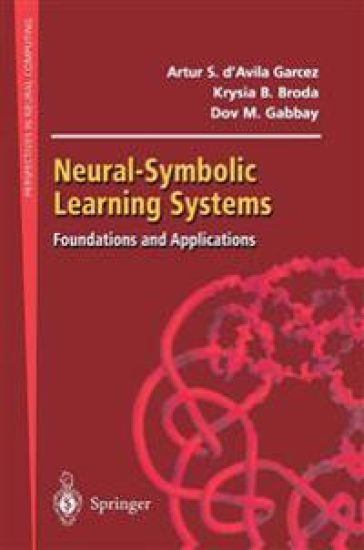
Neural-Symbolic Learning Systems

Neural-Symbolic Learning Systems

Artur S. d'Avila Garcez; Krysia B. Broda; Dov M. Gabbay

Springer London Ltd
2002
nidottu
Artificial Intelligence is concerned with producing devices that help or replace human beings in their daily activities. Neural-symbolic learning systems play a central role in this task by combining, and trying to benefit from, the advantages of both the neural and symbolic paradigms of artificial intelligence. This book provides a comprehensive introduction to the field of neural-symbolic learning systems, and an invaluable overview of the latest research issues in this area. It is divided into three sections, covering the main topics of neural-symbolic integration - theoretical advances in knowledge representation and learning, knowledge extraction from trained neural networks, and inconsistency handling in neural-symbolic systems. Each section provides a balance of theory and practice, giving the results of applications using real-world problems in areas such as DNA sequence analysis, power systems fault diagnosis, and software requirements specifications. Neural-Symbolic Learning Systems will be invaluable reading for researchers and graduate students in Engineering, Computing Science, Artificial Intelligence, Machine Learning and Neurocomputing. It will also be of interest to Intelligent Systems practitioners and anyone interested in applications of hybrid artificial intelligence systems.