Kirjojen hintavertailu – 12 903 725 kirjaa ja 27 kauppaa

Kirjailija

Arturo Molina

Kirjat ja teokset yhdessä paikassa: 16 kirjaa, julkaisuja vuosilta 2013–2025, suosituimpiin kuuluu Digital Technologies for Sustainable Manufacturing. Vertaile teosten hintoja ja tarkista saatavuus suomalaisista kirjakaupoista.

16 kirjaa

Kirjojen julkaisuvuodet: 2013–2025.

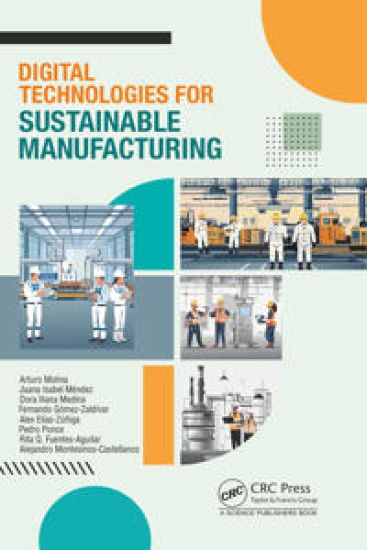
Digital Technologies for Sustainable Manufacturing

Digital Technologies for Sustainable Manufacturing

Arturo Molina; Alex Elías Zúñiga; Dora Iliana Medina; Fernando Gómez Zaldívar; Juana Isabel Méndez; Pedro Ponce; Rita Q. Fuentes-Aguilar; Alejandro Montesinos-Castellanos

TAYLOR FRANCIS LTD
2025
sidottu
Digital Technologies for Sustainable Manufacturing provides a practical framework for promoting sustainability in manufacturing by combining Life Cycle Engineering with the 5S principles (Social, Sustainable, Sensing, Smart, and Safe). This book introduces ten core digital technologies—including AI, simulation tools, IoT, digital twins, additive manufacturing, CAD tools, blockchain, cloud computing, AR/VR, and robotics and automation—as vital drivers for fostering innovation and resilience across materials, products, processes, manufacturing systems, and supply chains. Each chapter blends theory with real-world case studies and shows how competitive intelligence helps stakeholders anticipate trends and make strategic decisions. This comprehensive book prepares engineers, scientists, and leaders to create a more sustainable, efficient, and future-ready manufacturing ecosystem.
Interoperability Principles and Standards: Applications to Collaborative and Automated Systems

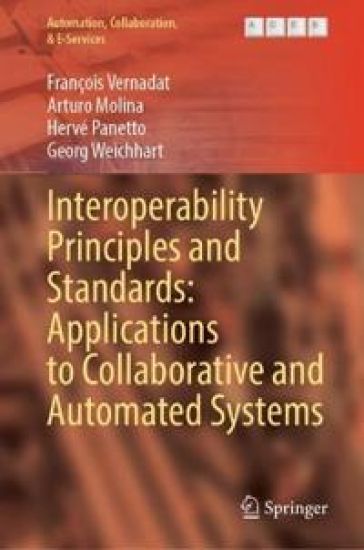
Interoperability Principles and Standards: Applications to Collaborative and Automated Systems

François Vernadat; Arturo Molina; Hervé Panetto; Georg Weichhart

Springer International Publishing AG
2025
sidottu
Interoperability is the ability for two or more systems to interoperate, i.e., to share and use common information and/or to use functionality of one another. The purpose of the book is to explain what one should know to be able to understand or implement systems interoperability at the technical, semantic and organization levels of an enterprise system or of a collaborative automated system. In particular, it presents the rationale, the basics, the common methods and the essential standards for the engineering of interoperable systems. The book is intended to serve as a textbook for those who need (1) to study basic principles, concepts and techniques along with applications of systems interoperability and (2) need to know applicable standards for planning, engineering or implementing interoperability solutions. Applications will concern, but are not limited to, automated (collaborative) environments. The book should also serve as a reference document for students and academia at under-graduate and graduate levels or in engineering schools as well as for researchers, practitioners, consultants and engineers faced with interoperability problems in service, industrial, government or administrative sectors.
Greenhouse Design and Control

Greenhouse Design and Control

Pedro Ponce; Arturo Molina; Paul Cepeda; Esther Lugo; Brian MacCleery

TAYLOR FRANCIS LTD
2024
nidottu
Agricultural production is one of the main keys to the development of healthy societies. It is anticipated that agricultural systems will increasingly have to contend with temperature, humidity and water stress in the near future. This makes the need to increase the efficiency of land and water use ever more urgent. The control and design of greenhouses allows to increase dramatically the quality of crops and extend the cultivation period year-round. A properly designed autonomous greenhouse based on hydroponics can greatly reduce the amounts of nutrients and energy expended in agricultural production. This book deals with different types of greenhouses, materials, structures, advanced control techniques and tendencies that are needed for designing and controlling an advanced greenhouse. The control system is presented as an integral system which covers the explanation of basic and advanced concepts for a real time controller. Also, structural analysis is introduced, whereby mechanical design is regarded as a key factor. The book incorporates simulations and experimental results, and utilizes LabVIEW and ADAMS software. Finally, it provides a perspective on the present state and future of greenhouses globally. Written in a highly accessible manner, this book will prove useful to horticulturalists, agricultural engineers, greenhouse engineers and designers. Its easy-to-absorb contents are also suitable for (under)graduate students and researchers in agricultural and electronic engineering, horticulture, crop cultivation and soft computing.
Data and AI Driving Smart Cities

Data and AI Driving Smart Cities

Pedro Ponce; Therese Peffer; Juana Isabel Mendez Garduno; Ursula Eicker; Arturo Molina; Troy McDaniel; Edgard D. Musafiri Mimo; Ramanunni Parakkal Menon; Kathryn Kaspar; Sadam Hussain

Springer International Publishing AG
2024
nidottu
This book illustrates how the advanced technology developed for smart cities requires increasing interaction with citizens to motivate and incentive them. Gamification, serious games, machine learning, dynamic interfaces, and social networks are some elements integrated holistically to provide novel solutions to design and develop smart cities.
Challenge-Based Learning, Research, and Innovation

Challenge-Based Learning, Research, and Innovation

Arturo Molina

Springer International Publishing AG
2024
nidottu
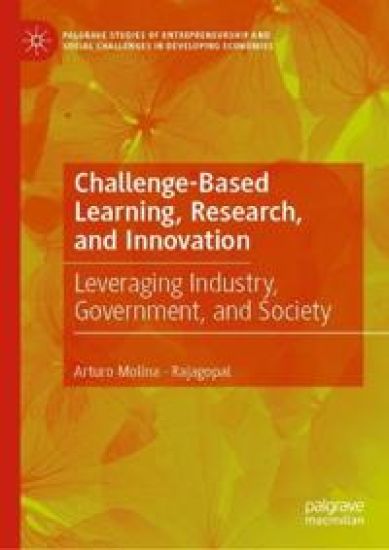
Challenge-based research focuses on addressing societal and environmental problems. One way of doing so is by transforming existing businesses to profitable ventures through co-creation and co-evolution. Drawing on the resource-based view, this book discusses how social challenges can be linked with the industrial value-chain through collaborative research, knowledge sharing, and transfer of technology to deliver value. The work is divided into three sections: Part 1 discusses social challenges, triple bottom line, and entrepreneurship as drivers for research, learning, and innovation while Part 2 links challenge-based research to social and industrial development in emerging markets. The final section considers research-based innovation and the role of technology, with the final chapter bridging concepts and practices to shape the future of society and industry. The authors present the RISE paradigm, which integrates people (society), planet (sustainability),and profit (industry and business) as critical constructs for socio-economic and regional development. Arguing that the converging of society and industry is essential for the business ecosystem to stay competitive in the marketplace, this book analyzes possible approaches to linking challenge-based research with social and industrial innovations in the context of sectoral challenges like food production, housing, energy, biotechnology, and sustainability. It will serve as a valuable resource to researchers interested in topics such as social challenges, innovation, technology, sustainability, and society-industry linkage.
Data and AI Driving Smart Cities

Data and AI Driving Smart Cities

Pedro Ponce; Therese Peffer; Juana Isabel Mendez Garduno; Ursula Eicker; Arturo Molina; Troy McDaniel; Edgard D. Musafiri Mimo; Ramanunni Parakkal Menon; Kathryn Kaspar; Sadam Hussain

Springer International Publishing AG
2023
sidottu
This book illustrates how the advanced technology developed for smart cities requires increasing interaction with citizens to motivate and incentive them. Megacities' needs have been encouraging for the creation of smart cities in which the needs of inhabitants are collected using virtualization and digitalization systems. On the other hand, machine learning algorithms have been implemented to provide better solutions for diverse areas in smart cities, such as transportation and health. Besides, conventional electric grids have transformed into smart grids, improving energy quality. Gamification, serious games, machine learning, dynamic interfaces, and social networks are some elements integrated holistically to provide novel solutions to design and develop smart cities. Also, this book presents in a friendly way the concept of social devices that are incorporated into smart homes and buildings. This book is used to understand and design smart cities where citizens are strongly interconnected so the demand response time can be reduced.
Challenge-Based Learning, Research, and Innovation

Challenge-Based Learning, Research, and Innovation

Arturo Molina

Springer International Publishing AG
2023
sidottu
Challenge-based research focuses on addressing societal and environmental problems. One way of doing so is by transforming existing businesses to profitable ventures through co-creation and co-evolution. Drawing on the resource-based view, this book discusses how social challenges can be linked with the industrial value-chain through collaborative research, knowledge sharing, and transfer of technology to deliver value. The work is divided into three sections: Part 1 discusses social challenges, triple bottom line, and entrepreneurship as drivers for research, learning, and innovation while Part 2 links challenge-based research to social and industrial development in emerging markets. The final section considers research-based innovation and the role of technology, with the final chapter bridging concepts and practices to shape the future of society and industry. The authors present the RISE paradigm, which integrates people (society), planet (sustainability),and profit (industry and business) as critical constructs for socio-economic and regional development. Arguing that the converging of society and industry is essential for the business ecosystem to stay competitive in the marketplace, this book analyzes possible approaches to linking challenge-based research with social and industrial innovations in the context of sectoral challenges like food production, housing, energy, biotechnology, and sustainability. It will serve as a valuable resource to researchers interested in topics such as social challenges, innovation, technology, sustainability, and society-industry linkage.
Enabling Systems for Intelligent Manufacturing in Industry 4.0

Enabling Systems for Intelligent Manufacturing in Industry 4.0

Arturo Molina; Pedro Ponce; Jhonattan Miranda; Daniel Cortés

Springer Nature Switzerland AG
2022
nidottu
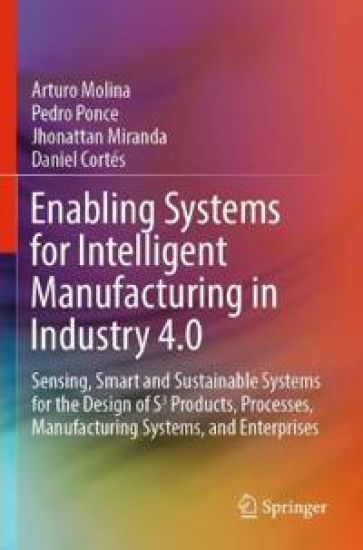
This book introduces the concept of sensing, smart and sustainable systems (S3 systems) to support the design and redesign of products, services, business and manufacturing processes, manufacturing systems, and enterprises. The concept of S3 systems theory is introduced and explained in detail to support designers and engineers in their development task. This approach is embraced in the implementation of emergent Information and communication technologies and artificial intelligence techniques. The text helps the reader to understand the relationship between intelligent manufacturing, S3 systems and Industry 4.0. It presents a review of current approaches to design and development of technology-based products. Finally, it enlarges on the sensing, smart and sustainable systems theory to give examples of S3 systems as case studies.
Power System Fundamentals

Power System Fundamentals

Pedro Ponce; Arturo Molina; Omar Mata; Luis Ibarra; Brian MacCleery

TAYLOR FRANCIS LTD
2021
nidottu
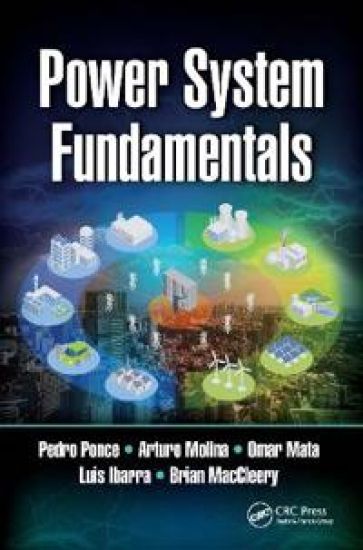
Smart grids are linked with smart homes and smart meters. These smart grids are the new topology for generating, distributing, and consuming energy. If these smart devices are not connected in a smart grid, then they cannot work properly; hence, the conventional power systems are swiftly changing in order to improve the quality of electrical energy. This book covers the fundamentals of power systems—which are the pillars for smart grids —with a focus on defining the smart grid with theoretical and experimental electrical concepts. Power System Fundamentals begins by discussing electric circuits, the basic systems in smart grids, and finishes with a complete smart grid concept. The book allows the reader to build a foundation of understanding with basic and advanced exercises that run on simulation before moving to experimental results. It is intended for readers who want to comprehensively cover both the basic and advanced concepts of smart grids.
Enabling Systems for Intelligent Manufacturing in Industry 4.0

Enabling Systems for Intelligent Manufacturing in Industry 4.0

Arturo Molina; Pedro Ponce; Jhonattan Miranda; Daniel Cortés

Springer Nature Switzerland AG
2021
sidottu
This book introduces the concept of sensing, smart and sustainable systems (S3 systems) to support the design and redesign of products, services, business and manufacturing processes, manufacturing systems, and enterprises. The concept of S3 systems theory is introduced and explained in detail to support designers and engineers in their development task. This approach is embraced in the implementation of emergent Information and communication technologies and artificial intelligence techniques. The text helps the reader to understand the relationship between intelligent manufacturing, S3 systems and Industry 4.0. It presents a review of current approaches to design and development of technology-based products. Finally, it enlarges on the sensing, smart and sustainable systems theory to give examples of S3 systems as case studies.
Fuzzy Logic Type 1 and Type 2 Based on LabVIEW™ FPGA

Fuzzy Logic Type 1 and Type 2 Based on LabVIEW™ FPGA

Pedro Ponce-Cruz; Arturo Molina; Brian MacCleery

Springer International Publishing AG
2018
nidottu
This book is a comprehensive introduction to LabVIEW FPGA™, a package allowing the programming of intelligent digital controllers in field programmable gate arrays (FPGAs) using graphical code. It shows how both potential difficulties with understanding and programming in VHDL and the consequent difficulty and slowness of implementation can be sidestepped. The text includes a clear theoretical explanation of fuzzy logic (type 1 and type 2) with case studies that implement the theory and systematically demonstrate the implementation process. It goes on to describe basic and advanced levels of programming LabVIEW FPGA and show how implementation of fuzzy-logic control in FPGAs improves system responses. A complete toolkit for implementing fuzzy controllers in LabVIEW FPGA has been developed with the book so that readers can generate new fuzzy controllers and deploy them immediately. Problems and their solutions allow readers to practice the techniques and to absorb the theoretical ideas as they arise. Fuzzy Logic Type 1 and Type 2 Based on LabVIEW FPGA™, helps students studying embedded control systems to design and program those controllers more efficiently and to understand the benefits of using fuzzy logic in doing so. Researchers working with FPGAs find the text useful as an introduction to LabVIEW and as a tool helping them design embedded systems.
Power System Fundamentals

Power System Fundamentals

Pedro Ponce; Arturo Molina; Omar Mata; Luis Ibarra; Brian MacCleery

CRC Press
2017
sidottu
Smart grids are linked with smart homes and smart meters. These smart grids are the new topology for generating, distributing, and consuming energy. If these smart devices are not connected in a smart grid, then they cannot work properly; hence, the conventional power systems are swiftly changing in order to improve the quality of electrical energy. This book covers the fundamentals of power systems—which are the pillars for smart grids —with a focus on defining the smart grid with theoretical and experimental electrical concepts. Power System Fundamentals begins by discussing electric circuits, the basic systems in smart grids, and finishes with a complete smart grid concept. The book allows the reader to build a foundation of understanding with basic and advanced exercises that run on simulation before moving to experimental results. It is intended for readers who want to comprehensively cover both the basic and advanced concepts of smart grids.
Artificial Organic Networks

Artificial Organic Networks

Hiram Ponce-Espinosa; Pedro Ponce-Cruz; Arturo Molina

Springer International Publishing AG
2017
nidottu
This monograph describes the synthesis and use of biologically-inspired artificial hydrocarbon networks (AHNs) for approximation models associated with machine learning and a novel computational algorithm with which to exploit them. The reader is first introduced to various kinds of algorithms designed to deal with approximation problems and then, via some conventional ideas of organic chemistry, to the creation and characterization of artificial organic networks and AHNs in particular. The advantages of using organic networks are discussed with the rules to be followed to adapt the network to its objectives. Graph theory is used as the basis of the necessary formalism. Simulated and experimental examples of the use of fuzzy logic and genetic algorithms with organic neural networks are presented and a number of modeling problems suitable for treatment by AHNs are described:· approximation;· inference;· clustering;· control;· classification; and· audio-signal filtering. The text finishes with a consideration of directions in which AHNs could be implemented and developed in future. A complete LabVIEW™ toolkit, downloadable from the book’s page at springer.com enables readers to design and implement organic neural networks of their own. The novel approach to creating networks suitable for machine learning systems demonstrated in Artificial Organic Networks will be of interest to academic researchers and graduate students working in areas associated with computational intelligence, intelligent control, systems approximation and complex networks.
Fuzzy Logic Type 1 and Type 2 Based on LabVIEW™ FPGA

Fuzzy Logic Type 1 and Type 2 Based on LabVIEW™ FPGA

Pedro Ponce-Cruz; Arturo Molina; Brian MacCleery

Springer International Publishing AG
2016
sidottu
This book is a comprehensive introduction to LabVIEW FPGA™, a package allowing the programming of intelligent digital controllers in field programmable gate arrays (FPGAs) using graphical code. It shows how both potential difficulties with understanding and programming in VHDL and the consequent difficulty and slowness of implementation can be sidestepped. The text includes a clear theoretical explanation of fuzzy logic (type 1 and type 2) with case studies that implement the theory and systematically demonstrate the implementation process. It goes on to describe basic and advanced levels of programming LabVIEW FPGA and show how implementation of fuzzy-logic control in FPGAs improves system responses. A complete toolkit for implementing fuzzy controllers in LabVIEW FPGA has been developed with the book so that readers can generate new fuzzy controllers and deploy them immediately. Problems and their solutions allow readers to practice the techniques and to absorb the theoretical ideas as they arise. Fuzzy Logic Type 1 and Type 2 Based on LabVIEW FPGA™, helps students studying embedded control systems to design and program those controllers more efficiently and to understand the benefits of using fuzzy logic in doing so. Researchers working with FPGAs find the text useful as an introduction to LabVIEW and as a tool helping them design embedded systems.
Greenhouse Design and Control

Greenhouse Design and Control

Pedro Ponce; Arturo Molina; Paul Cepeda; Esther Lugo; Brian MacCleery

CRC Press
2014
sidottu
Agricultural production is one of the main keys to the development of healthy societies. It is anticipated that agricultural systems will increasingly have to contend with temperature, humidity and water stress in the near future. This makes the need to increase the efficiency of land and water use ever more urgent. The control and design of greenhouses allows to increase dramatically the quality of crops and extend the cultivation period year-round. A properly designed autonomous greenhouse based on hydroponics can greatly reduce the amounts of nutrients and energy expended in agricultural production. This book deals with different types of greenhouses, materials, structures, advanced control techniques and tendencies that are needed for designing and controlling an advanced greenhouse. The control system is presented as an integral system which covers the explanation of basic and advanced concepts for a real time controller. Also, structural analysis is introduced, whereby mechanical design is regarded as a key factor. The book incorporates simulations and experimental results, and utilizes LabVIEW and ADAMS software. Finally, it provides a perspective on the present state and future of greenhouses globally. Written in a highly accessible manner, this book will prove useful to horticulturalists, agricultural engineers, greenhouse engineers and designers. Its easy-to-absorb contents are also suitable for (under)graduate students and researchers in agricultural and electronic engineering, horticulture, crop cultivation and soft computing.
Artificial Organic Networks

Artificial Organic Networks

Hiram Ponce-Espinosa; Pedro Ponce-Cruz; Arturo Molina

Springer International Publishing AG
2013
sidottu
This monograph describes the synthesis and use of biologically-inspired artificial hydrocarbon networks (AHNs) for approximation models associated with machine learning and a novel computational algorithm with which to exploit them. The reader is first introduced to various kinds of algorithms designed to deal with approximation problems and then, via some conventional ideas of organic chemistry, to the creation and characterization of artificial organic networks and AHNs in particular. The advantages of using organic networks are discussed with the rules to be followed to adapt the network to its objectives. Graph theory is used as the basis of the necessary formalism. Simulated and experimental examples of the use of fuzzy logic and genetic algorithms with organic neural networks are presented and a number of modeling problems suitable for treatment by AHNs are described:· approximation;· inference;· clustering;· control;· classification; and· audio-signal filtering. The text finishes with a consideration of directions in which AHNs could be implemented and developed in future. A complete LabVIEW™ toolkit, downloadable from the book’s page at springer.com enables readers to design and implement organic neural networks of their own. The novel approach to creating networks suitable for machine learning systems demonstrated in Artificial Organic Networks will be of interest to academic researchers and graduate students working in areas associated with computational intelligence, intelligent control, systems approximation and complex networks.