Kirjojen hintavertailu – 12 859 829 kirjaa ja 27 kauppaa

Kirjailija

Arvind Subramanian

Kirjat ja teokset yhdessä paikassa: 5 kirjaa, julkaisuja vuosilta 2011–2016, suosituimpiin kuuluu Towards a Better Global Economy. Vertaile teosten hintoja ja tarkista saatavuus suomalaisista kirjakaupoista.

5 kirjaa

Kirjojen julkaisuvuodet: 2011–2016.

Towards a Better Global Economy

Towards a Better Global Economy

Franklin Allen; Jere R. Behrman; Nancy Birdsall; Shahrokh Fardoust; Dani Rodrik; Andrew Steer; Arvind Subramanian

Oxford University Press
2016
nidottu
Substantial progress in the fight against extreme poverty was made in the last two decades. But the slowdown in global economic growth and significant increases in income inequality in many developed and developing countries raise serious concerns about the continuation of this trend into the 21st century. The time has come to seriously think about how improvements in official global governance, coupled with and reinforced by rising activism of 'global citizens' can lead to welfare-enhancing and more equitable results for global citizens through better national and international policies. This book examines the factors that are most likely to facilitate the process of beneficial economic growth in low-, middle-, and high-income countries. It examines past, present, and future economic growth; demographic changes; the hyperglobalization of trade; the effect of finance on growth; climate change and resource depletion; and the sense of global citizenship and the need for global governance in order to draw longer-term implications, identify policy options for improving the lives of average citizens around the world, and make the case for the need to confront new challenges with truly global policy responses. The book documents how demographic changes, convergence, and competition are likely to bring about massive shifts in the sectoral and geographical composition of global output and employment, as the center of gravity of the global economy moves toward Asia and emerging economies elsewhere. It shows that the legacies of the 2008-09 crisis-high unemployment levels, massive excess capacities, and high debt levels-are likely to reduce the standard of living of millions of people in many countries over a long period of adjustment and that fluctuations in international trade, financial markets, and commodity prices, as well as the tendency of institutions at both the national and international level to favor the interests of the better-off and more powerful pose substantial risks for citizens of all countries. The chapters and their policy implications are intended to stimulate public interest and facilitate the exchange of ideas and policy dialogue.
Towards a Better Global Economy

Towards a Better Global Economy

Franklin Allen; Jere R. Behrman; Nancy Birdsall; Shahrokh Fardoust; Dani Rodrik; Andrew Steer; Arvind Subramanian

Oxford University Press
2014
sidottu
Substantial progress in the fight against extreme poverty was made in the last two decades. But the slowdown in global economic growth and significant increases in income inequality in many developed and developing countries raise serious concerns about the continuation of this trend into the 21st century. The time has come to seriously think about how improvements in official global governance, coupled with and reinforced by rising activism of 'global citizens' can lead to welfare-enhancing and more equitable results for global citizens through better national and international policies. This book examines the factors that are most likely to facilitate the process of beneficial economic growth in low-, middle-, and high-income countries. It examines past, present, and future economic growth; demographic changes; the hyperglobalization of trade; the effect of finance on growth; climate change and resource depletion; and the sense of global citizenship and the need for global governance in order to draw longer-term implications, identify policy options for improving the lives of average citizens around the world, and make the case for the need to confront new challenges with truly global policy responses. The book documents how demographic changes, convergence, and competition are likely to bring about massive shifts in the sectoral and geographical composition of global output and employment, as the center of gravity of the global economy moves toward Asia and emerging economies elsewhere. It shows that the legacies of the 2008-09 crisis-high unemployment levels, massive excess capacities, and high debt levels-are likely to reduce the standard of living of millions of people in many countries over a long period of adjustment and that fluctuations in international trade, financial markets, and commodity prices, as well as the tendency of institutions at both the national and international level to favor the interests of the better-off and more powerful pose substantial risks for citizens of all countries. The chapters and their policy implications are intended to stimulate public interest and facilitate the exchange of ideas and policy dialogue.
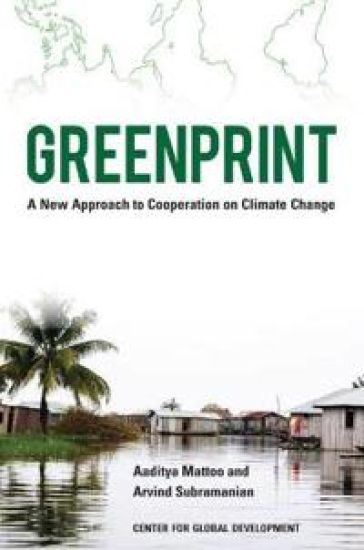
Greenprint

Greenprint

Aaditya Mattoo; Arvind Subramanian

Centre for Global Development
2013
nidottu
Beleaguered by mutual recrimination between rich and poor countries, squeezed by the zero-sum arithmetic of a shrinking global carbon budget, and overtaken by shifts in economic and hence bargaining power between these countries, international cooperation on climate change has floundered. Given these three factors - which Arvind Subramanian and Aaditya Mattoo call the “narrative,” “adding up,” and “new world” problems - the wonder is not the current impasse; it is, rather, the belief that progress might be possible at all. In this book, the authors argue that any chance of progress must address each of these problems in a radically different way. First, the old narrative of recrimination must cede to a narrative based on recognition of common interests. Second, leaders must shift the focus away from emissions cuts to technology generation. Third, the old “cash-for-cuts” approach must be abandoned for one that requires contributions from all countries calibrated in magnitude and form to their current level of development and future prospects.
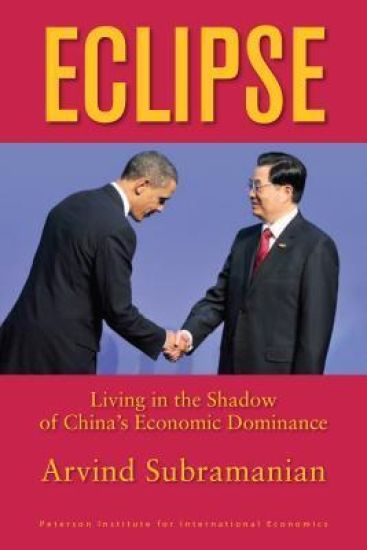
Eclipse – Living in the Shadow of China`s Economic Dominance

Eclipse – Living in the Shadow of China`s Economic Dominance

Arvind Subramanian

The Peterson Institute for International Economics
2011
nidottu
In his new book, Arvind Subramanian presents the following possibilities: What if, contrary to common belief, China's economic dominance is a present-day reality rather than a faraway possibility? What if the renminbi's takeover of the dollar as the world's reserve currency is not decades, but mere years, away? And what if the United States's economic preeminence is not, as many economists and policymakers would like to believe, in its own hands, but China's to determine? Subramanian's analysis is based on a new index of economic dominance grounded in a historical perspective. His examination makes use of real-world examples, comparing China's rise with the past hegemonies of Great Britain and the United States. His attempt to quantify and project economic and currency dominance leads him to the conclusion that China's dominance is not only more imminent, but also broader in scope, and much larger in magnitude, than is currently imagined. He explores the profound effect this might have on the United States, as well as on the global financial and trade system. Subramanian concludes with a series of policy proposals for other nations to reconcile China's rise with continued openness in the global economic order, and to insure against China becoming a malign hegemon.
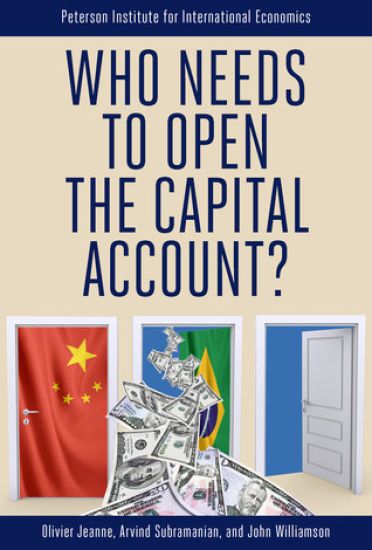
Who Needs to Open the Capital Account?

Who Needs to Open the Capital Account?

Olivier Jeanne; Arvind Subramanian; John Williamson

The Peterson Institute for International Economics
2011
nidottu
Most countries emerged from the Second World War with capital accounts that were closed to the rest of the world. Since then, a process of capital account opening has occurred, with the result that all developed and many emerging-market countries now have capital accounts that are both de facto and de jure open, while many developing countries also have de facto openness. This study examines this in part by considering some of the first lessons from the current global financial crisis. This crisis may change the terms of the debate on capital account liberalization in a deeper and more lasting way than any of the crises of the past two decades because it may mark a reversal in the secular trend of financial liberalization at the core of the international financial system. The current crisis also raises new questions about the appropriate policy responses to boom-bust dynamics in domestic credit and in international credit flows. Intellectual consistency is needed between the domestic and international dimensions of financial regulation and the policies aimed at dealing with boom-bust dynamics in domestic and international credit.