Kirjojen hintavertailu – 12 903 727 kirjaa ja 27 kauppaa
Kirjailija
Arvind Verma
Kirjat ja teokset yhdessä paikassa: 9 kirjaa, julkaisuja vuosilta 2003–2022, suosituimpiin kuuluu Dental Plaque's Role in Clearance of Salivary Sucrose. Vertaile teosten hintoja ja tarkista saatavuus suomalaisista kirjakaupoista.
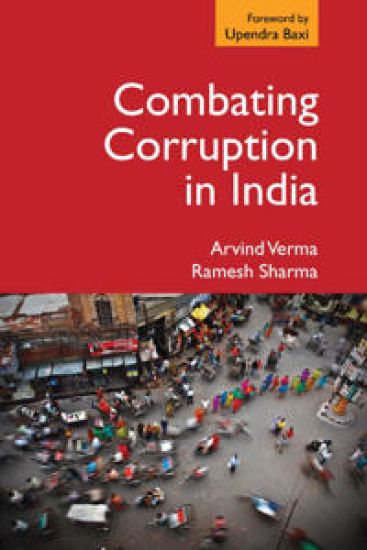
As corruption continues to be a persistent problem in India, concerned citizens believe empowered police agencies independent of political control are effective ways to deal with corrupt officials and politicians. What is corruption and how is it facilitated? What are the appropriate agencies to combat corruption professionally in India? Why are these not effective in deterring corrupt practices? Are the alternative solutions to tackle corruption successful? This book seeks to engage with these questions, discuss and analyze them, and conduct a thorough analysis of law, bureaucratic organizations, official data, case studies and comparative international institutions. It analyzes vast data to argue that a corrupt state only maintains the façade of rule of law but will not permit any inquiry beyond that of individual deviance. Using criminological perspectives, it presents a novel mechanism, the 'Doctrine of Good Housekeeping', for public officials to combat and prevent corruption within their own institutions.
In the past two decades, Muslim countries across the globe have been faced with a crisis in governance. Starting with a summary of Islamic Law (Sharia) and its implications for law enforcement, this book will highlight the unique needs and challenges of law enforcement, and particularly policing, in these communities. It will provide a scholarly exposition of Sharia law and how it is compatible (or not) with policing in a modern context. The role and contribution of Sharia Law towards conceptualizing law enforcement in a modern context is certainly worth looking forward to, especially understanding its co-existence with civil law in countries with minority Muslim communities. Featuring case studies from throughout the Muslim world, this volume will highlight key qualities of Sharia law and Muslim culture that play a role in law enforcement, including: case processing, community policing, police administration, human rights, and the influence of globalization. Taking a comprehensive approach, this work provides a historical context for colonization events in Muslim countries and their influence on current law enforcement systems, as well as providing key insights into the particular norms that make up the bases for Muslim societies, and their unique needs. Looking into the future, it provides guidelines for how community policing can play a proactive role in law enforcement and crime prevention.
In the past two decades, Muslim countries across the globe have been faced with a crisis in governance. Starting with a summary of Islamic Law (Sharia) and its implications for law enforcement, this book will highlight the unique needs and challenges of law enforcement, and particularly policing, in these communities. It will provide a scholarly exposition of Sharia law and how it is compatible (or not) with policing in a modern context. The role and contribution of Sharia Law towards conceptualizing law enforcement in a modern context is certainly worth looking forward to, especially understanding its co-existence with civil law in countries with minority Muslim communities. Featuring case studies from throughout the Muslim world, this volume will highlight key qualities of Sharia law and Muslim culture that play a role in law enforcement, including: case processing, community policing, police administration, human rights, and the influence of globalization. Taking a comprehensive approach, this work provides a historical context for colonization events in Muslim countries and their influence on current law enforcement systems, as well as providing key insights into the particular norms that make up the bases for Muslim societies, and their unique needs. Looking into the future, it provides guidelines for how community policing can play a proactive role in law enforcement and crime prevention.
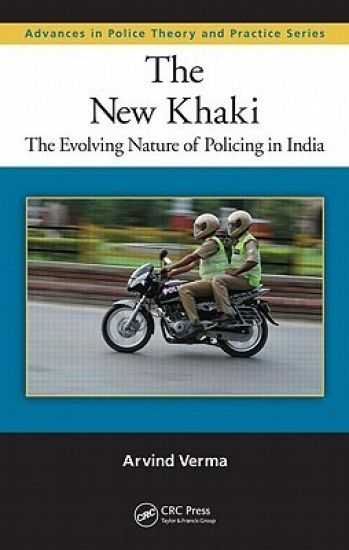
In a democratic society, police are expected to be accountable to the people they serve, upholding the rights of citizens and following due process. In India, however, political pressure in the competitive electoral arena forces the police to adopt questionable means and dubious strategies. As a hierarchical bureaucratic organization, disciplined in a military tradition and schooled in colonial traditions of deference to authority figures, India’s police personnel have effectively alienated the very people they are supposed to serve and protect. In response to the overwhelmingly bleak pessimism of researchers and analysts scrutinizing India’s police force, The New Khaki: The Evolving Nature of Policing in India highlights those unobtrusive and indirect paths toward effective transformation in spite of politicians and bureaucrats. Analyzing the obstacles to reform, the book argues forcefully and systematically to present areas of potential innovation and successful case studies. Focusing on practical and actionable options, the book examines how the use of new technology, the judiciary, and other creative administrative mechanisms can give determined police leaders the methods to change the policing system and its practices. It also provides strong evidence for the role of research and scholarship in transforming the police organization, offering illustrative examples and creative responses to endemic problems. The case studies presented here suggest that even when the powerful sections of society and those who control the police are not ready to bring changes, imaginative police leadership can find creative means to transform their organization to serve the people. The New Khaki: The Evolving Nature of Policing in India is a must-read for all those who are concerned about policing and interested in its improvement for a better world.
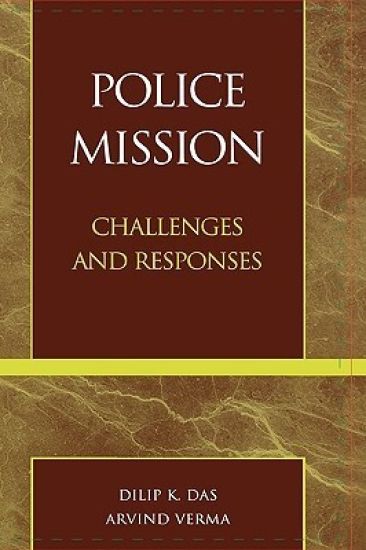
What is the best management style for the police? Police Mission discusses the values and norms inherent in the American police mission, and examines how police respond to challenges that arise while attempting to uphold this mission. It reveals that the way officers are being trained in ethics and human relations are not effective as they could be, and argues that policing has to move towards a greater emphasis on human values, moral sensitivity, and discerning judgment. A large number of themes ranging from personnel management, occupational culture, and innovative experiments in US policing techniques are examined. Several organizational theories as well as examples of international policing efforts from England to Japan are also analyzed. An important contribution to police literature, this book will be a valuable aid to students of criminology as well as practitioners and researchers of police science.