Kirjojen hintavertailu – 12 859 829 kirjaa ja 27 kauppaa
Kirjailija
Ash Amin
Kirjat ja teokset yhdessä paikassa: 14 kirjaa, julkaisuja vuosilta 2002–2023, suosituimpiin kuuluu Arts of the Political. Vertaile teosten hintoja ja tarkista saatavuus suomalaisista kirjakaupoista.
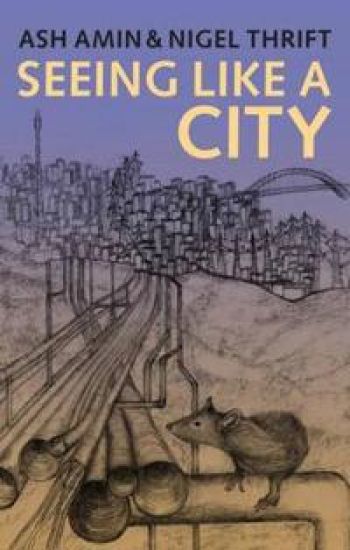
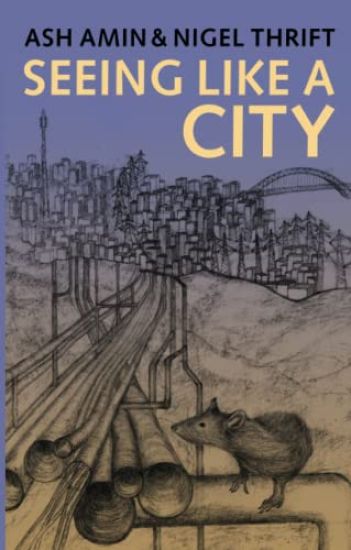
Seeing like a city means recognizing that cities are living things made up of a tangle of networks, built up from the agency of countless actors. Cities must not be considered as expressions of larger paradigms or sites of human effort and organization alone. Within their density, size and sprawl can be found a world of symbols, bodies, buildings, technologies and infrastructures. It is the machine-like combination, interaction and confrontation of these different elements that make a city. Such a view locates urban outcomes and influences in the character of these networks, which together power urban life, allocating resources, shaping social opportunities, maintaining order and simply enabling life. More than the silent stage on which other powers perform, such networks represent the essence of the city. They also form an important political project, a politics of small interventions with large effects. The increasing evidence for an Anthropocene bears out the way in which humanity has stamped its footprint on the planet by constructing urban forms that act as systems for directing life in ways that create both immense power and immense constraint.
Seeing like a city means recognizing that cities are living things made up of a tangle of networks, built up from the agency of countless actors. Cities must not be considered as expressions of larger paradigms or sites of human effort and organization alone. Within their density, size and sprawl can be found a world of symbols, bodies, buildings, technologies and infrastructures. It is the machine-like combination, interaction and confrontation of these different elements that make a city. Such a view locates urban outcomes and influences in the character of these networks, which together power urban life, allocating resources, shaping social opportunities, maintaining order and simply enabling life. More than the silent stage on which other powers perform, such networks represent the essence of the city. They also form an important political project, a politics of small interventions with large effects. The increasing evidence for an Anthropocene bears out the way in which humanity has stamped its footprint on the planet by constructing urban forms that act as systems for directing life in ways that create both immense power and immense constraint.
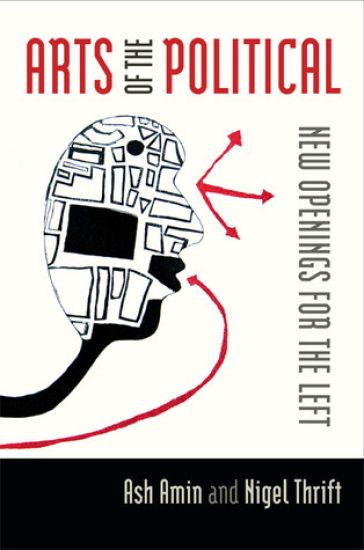
In the West, "the Left," understood as a loose conglomeration of interests centered around the goal of a fairer and more equal society, still struggles to make its voice heard and its influence felt, even amid an overwhelming global recession. In Arts of the Political: New Openings for the Left, Ash Amin and Nigel Thrift argue that only by broadening the domain of what is considered political and what can be made into politics will the Left be able to respond forcefully to injustice and inequality. In particular, the Left requires a more imaginative and experimental approach to the politics of creating a better society. The authors propose three political arts that they consider crucial to transforming the Left: boosting invention, leveraging organization, and mobilizing affect. They maintain that successful Left political movements tend to surpass traditional notions of politics and open up political agency to these kinds of considerations. In other words, rather than providing another blueprint for the future, Amin and Thrift concentrate their attention on a more modest examination of the conduct of politics itself and the ways that it can be made more effective.
In the West, "the Left," understood as a loose conglomeration of interests centered around the goal of a fairer and more equal society, still struggles to make its voice heard and its influence felt, even amid an overwhelming global recession. In Arts of the Political: New Openings for the Left, Ash Amin and Nigel Thrift argue that only by broadening the domain of what is considered political and what can be made into politics will the Left be able to respond forcefully to injustice and inequality. In particular, the Left requires a more imaginative and experimental approach to the politics of creating a better society. The authors propose three political arts that they consider crucial to transforming the Left: boosting invention, leveraging organization, and mobilizing affect. They maintain that successful Left political movements tend to surpass traditional notions of politics and open up political agency to these kinds of considerations. In other words, rather than providing another blueprint for the future, Amin and Thrift concentrate their attention on a more modest examination of the conduct of politics itself and the ways that it can be made more effective.
This book develops a fresh and challenging perspective on the city. Amin and Thrift maintain that the traditional divide between the city and the countryside has been perforated through urban encroachment, the thickening of the links between the two, and urbanization as a way of life.
This book develops a fresh and challenging perspective on the city. Drawing on a wide and diverse range of material and texts, it argues that too much contemporary urban theory is based on nostalgia for a humane, face-to-face and bounded city. Amin and Thrift maintain that the traditional divide between the city and the rest of the world has been perforated through urban encroachment, the thickening of the links between the two, and urbanization as a way of life. They outline an innovative sociology of the city that scatters urban life along a series of sites and circulations, reinstating previously suppressed areas of contemporary urban life: from the presence of non-human activity to the centrality of distant connections. The implications of this viewpoint are traced through a series of chapters on power, economy and democracy. This concise and accessible book will be of interest to students and scholars in sociology, geography, urban studies, cultural studies and politics. .
Increasingly, many people in democracies are turning to a strongarm politics for reassurance against globalization, uncertainty and precarity. In countries ranging from the US and the UK to Brazil, India and Turkey, support has grown for a nativist politics attacking migrants, minorities, liberals and elites as enemies of the nation. Is there a politics of belonging that progressive forces could mobilize to counteract these trends? After Nativism takes up this question, arguing that disarming nativism will require more than improving the security and wellbeing of the ‘left-behind’. The lines drawn by nativism are of an affective nature about imagined community, with meanings of belonging and voice lying at the heart of popular perceptions of just dues. This, argues Ash Amin, is the territory that progressive forces – liberal, social democratic, socialist – need to reclaim in order to shift public sentiment away from xenophobic intolerance towards one of commonality amid difference as a basis for facing existential risk and uncertainty. The book proposes a relational politics of belonging premised on the encounter, fugitive aesthetics, public interest politics, collaboration over common existential threats, and daily collectives and infrastructures of wellbeing. There is ground for progressives to mount a counter-aesthetics of belonging that will convince the discontents of neoliberal globalization that there is a better alternative to nativism.
Increasingly, many people in democracies are turning to a strongarm politics for reassurance against globalization, uncertainty and precarity. In countries ranging from the US and the UK to Brazil, India and Turkey, support has grown for a nativist politics attacking migrants, minorities, liberals and elites as enemies of the nation. Is there a politics of belonging that progressive forces could mobilize to counteract these trends? After Nativism takes up this question, arguing that disarming nativism will require more than improving the security and wellbeing of the ‘left-behind’. The lines drawn by nativism are of an affective nature about imagined community, with meanings of belonging and voice lying at the heart of popular perceptions of just dues. This, argues Ash Amin, is the territory that progressive forces – liberal, social democratic, socialist – need to reclaim in order to shift public sentiment away from xenophobic intolerance towards one of commonality amid difference as a basis for facing existential risk and uncertainty. The book proposes a relational politics of belonging premised on the encounter, fugitive aesthetics, public interest politics, collaboration over common existential threats, and daily collectives and infrastructures of wellbeing. There is ground for progressives to mount a counter-aesthetics of belonging that will convince the discontents of neoliberal globalization that there is a better alternative to nativism.
The impersonality of social relationships in the society of strangers is making majorities increasingly nostalgic for a time of closer personal ties and strong community moorings. The constitutive pluralism and hybridity of modern living in the West is being rejected in an age of heightened anxiety over the future and drummed up aversion towards the stranger. Minorities, migrants and dissidents are expected to stay away, or to conform and integrate, as they come to be framed in an optic of the social as interpersonal or communitarian. Judging these developments as dangerous, this book offers a counter-argument by looking to relations that are not reducible to local or social ties in order to offer new suggestions for living in diversity and for forging a different politics of the stranger. The book explains the balance between positive and negative public feelings as the synthesis of habits of interaction in varied spaces of collective being, from the workplace and urban space, to intimate publics and tropes of imagined community. The book proposes a series of interventions that make for public being as both unconscious habit and cultivated craft of negotiating difference, radiating civilities of situated attachment and indifference towards the strangeness of others. It is in the labour of cultivating the commons in a variety of ways that Amin finds the elements for a new politics of diversity appropriate for our times, one that takes the stranger as there, unavoidable, an equal claimant on ground that is not pre-allocated.
The impersonality of social relationships in the society of strangers is making majorities increasingly nostalgic for a time of closer personal ties and strong community moorings. The constitutive pluralism and hybridity of modern living in the West is being rejected in an age of heightened anxiety over the future and drummed up aversion towards the stranger. Minorities, migrants and dissidents are expected to stay away, or to conform and integrate, as they come to be framed in an optic of the social as interpersonal or communitarian. Judging these developments as dangerous, this book offers a counter-argument by looking to relations that are not reducible to local or social ties in order to offer new suggestions for living in diversity and for forging a different politics of the stranger. The book explains the balance between positive and negative public feelings as the synthesis of habits of interaction in varied spaces of collective being, from the workplace and urban space, to intimate publics and tropes of imagined community. The book proposes a series of interventions that make for public being as both unconscious habit and cultivated craft of negotiating difference, radiating civilities of situated attachment and indifference towards the strangeness of others. It is in the labour of cultivating the commons in a variety of ways that Amin finds the elements for a new politics of diversity appropriate for our times, one that takes the stranger as there, unavoidable, an equal claimant on ground that is not pre-allocated.
"Architectures of Knowledge" seeks to demonstrate that a recognition of the importance of the role of knowledge in economics may lead to a new conception of the firm and public policy. To construct an alternative theorization of knowledge formation and knowledge governance in firms, the text assembles together research in different disciplines: economics, science and technology studies, cognitive sciences (including situated and distributed cognition), economic geography and management science. Placing the concept of community at the very centre of the argument, the text arrives at an understanding of the way in which new pieces of knowledge are created and mobilized in economic activities.
"This book is, in my opinion, a real tour de force. It convincingly assembles together the most advanced research in different disciplines: economics, science and technology studies, cognitive sciences (including situated and distributed cognition), and management science; and in doing so is one of the first systematic attempts to find a common thread between these disciplines... The book develops a framework that allows each theoretical approach its own niche. Neither syncretism, nor eclecticism, but a real integration." Professor Michel Callon, Ecole Nationale Superieure des Mines de Paris, author of The Laws of the Markets, (Blackwell Publishing, 1998) In Architectures of Knowledge. Ash Amin and Patrick Cohendet argue that the time is right for research to explore the relationship between two other dimensions of knowledge in order to explain the innovative performance of firms: between knowledge that is 'possessed' and knowledge that is 'practised' generally within communities of like-minded employees in a firm. The impetus behind this argument is both conceptual and empirical. Conceptually, there is a need to explore the interaction of knowledge that firms possess in the form of established competences or stored memory, with the knowing that occurs in distributed communities through the conscious and unconscious acts of social interaction. Empirically, the impetus comes from the challenge faced by firms to the hierarchically defined architecture that bring together specialized units of (possessed) knowledge and the distributed and always unstable architecture of knowledge that draws on the continuously changing capacity of interpretation among actors. In this book, these questions of the dynamics of innovating/learning through practices of knowing, and the management of the interface between transactional and knowledge imperatives, are approached in a cross-disciplinary and empirically grounded manner. The book is the synthesis of an innovative encounter between a socio-spatial theorist and an economist. The book results from the delicate interplay between two very different epistemologies and consequent positions, but which progressively converged towards what is hoped to be a novel vision. The book begins by explaining why knowledge is becoming more of a core element of the value-generating process in the economy, then juxtaposes the economic and cognitive theorisations of knowledge in firms with pragmatic and socially grounded theorisations and a critical exploration of the neglected dimension of the spatiality of knowledge formation in firms. The book concludes by discussing the corporate governance implications of learning based on competences and communities, and a how national science and technology policies might respond to the idea of learning as a distributed, non-cognitive, practice-based phenomenon.
In recent years there has been a great deal of discussion about the social economy and the term 'the third way' has attained a level of household recognition, especially in America and Britain. Academics and commentators have debated the usefulness of the social economy as a restraint on capitalist excesses with some arguing that the 'third way' is but a poor substitute for a welfare state. This book provides a refreshing and accessible account of real life experience in a social economy. By focusing on new evidence, this book critically analyses such themes as: *the range of academic and policy expectation that have emerged in recent years in the developed world *the policies of New Labour in Britain *the dynamics of social enterprises in Bristol, London, Middlesbrough and Glasgow. These critical assessments lead the authors to reflect in the future potential of the social economy and the possible policy changes that are necessary to maximise whatever opportunity the sector provides.
In recent years there has been a great deal of discussion about the social economy and the term 'the third way' has attained a level of household recognition, especially in America and Britain. Academics and commentators have debated the usefulness of the social economy as a restraint on capitalist excesses with some arguing that the 'third way' is but a poor substitute for a welfare state. This book provides a refreshing and accessible account of real life experience in a social economy. By focusing on new evidence, this book critically analyses such themes as: *the range of academic and policy expectation that have emerged in recent years in the developed world *the policies of New Labour in Britain *the dynamics of social enterprises in Bristol, London, Middlesbrough and Glasgow. These critical assessments lead the authors to reflect in the future potential of the social economy and the possible policy changes that are necessary to maximise whatever opportunity the sector provides.