Kirjojen hintavertailu – 12 859 824 kirjaa ja 27 kauppaa

Kirjailija

Asher Arian

Kirjat ja teokset yhdessä paikassa: 11 kirjaa, julkaisuja vuosilta 1995–2026, suosituimpiin kuuluu Changing New York City Politics. Vertaile teosten hintoja ja tarkista saatavuus suomalaisista kirjakaupoista.

11 kirjaa

Kirjojen julkaisuvuodet: 1995–2026.

Changing New York City Politics

Changing New York City Politics

Asher Arian; Arthur S. Goldberg; John H. Mollenkopf; Edward T. Rogowsky

TAYLOR FRANCIS LTD
2026
nidottu
First published in 1991, Changing New York City Politics provides an important grounding for understanding where New York City politics is likely to go in the coming two years. Three decades after New York City’s first Black mayor was elected and then defeated after only one term, the city’s second Black mayor is facing challenges that in many ways are similar to those of his predecessor, yet different in others. Like David Dinkins, Mayor Eric Adams faces worries about crime and public disorder, recovery from an economic downturn, and criticism over his managerial style. It may be a quite different city today in terms of the makeup of its electorate – less white, more diverse, but certainly no more Black – and Adams may have a closer connection to the Police Department than Dinkins could manage – but the challenges of constructing a multi-racial electoral and governing coalition in the face of skepticism from white voters remains. This book will be of interest to students and researchers of political science, American history, and comparative politics.

The Elections In Israel1988

The Elections In Israel1988

Asher Arian; Michal Shamir

TAYLOR FRANCIS LTD
2024
nidottu
Forty years after becoming an independent state, Israel is still involved in deadly strife with many of its Arab neighbors and with the Palestinians under its military control. The protracted Arab-Israeli conflict is one of the most fundamental features of the Israeli experience; it overshadows economic and social decisions, and often sets the poli
Changing New York City Politics

Changing New York City Politics

Asher Arian; Arthur S. Goldberg; John H. Mollenkopf; Edward T. Rogowsky

TAYLOR FRANCIS LTD
2024
sidottu
First published in 1991, Changing New York City Politics provides an important grounding for understanding where New York City politics is likely to go in the coming two years. Three decades after New York City’s first Black mayor was elected and then defeated after only one term, the city’s second Black mayor is facing challenges that in many ways are similar to those of his predecessor, yet different in others. Like David Dinkins, Mayor Eric Adams faces worries about crime and public disorder, recovery from an economic downturn, and criticism over his managerial style. It may be a quite different city today in terms of the makeup of its electorate – less white, more diverse, but certainly no more Black – and Adams may have a closer connection to the Police Department than Dinkins could manage – but the challenges of constructing a multi-racial electoral and governing coalition in the face of skepticism from white voters remains. This book will be of interest to students and researchers of political science, American history, and comparative politics.

The Elections In Israel1988

The Elections In Israel1988

Asher Arian; Michal Shamir

Routledge
2019
sidottu
Forty years after becoming an independent state, Israel is still involved in deadly strife with many of its Arab neighbors and with the Palestinians under its military control. The protracted Arab-Israeli conflict is one of the most fundamental features of the Israeli experience; it overshadows economic and social decisions, and often sets the poli
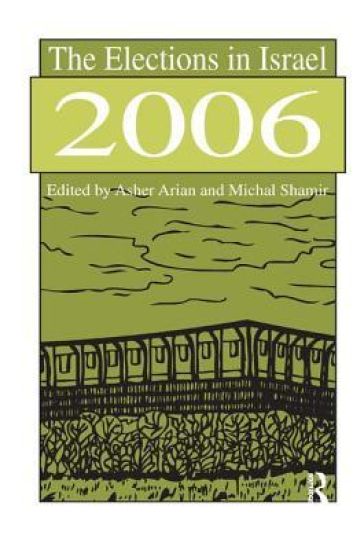
The Elections in Israel 2006

The Elections in Israel 2006

Asher Arian; Michal Shamir

Routledge
2017
nidottu
Several dramatic events preceded the elections to the Seventeenth Knesset on March 28, 2006, beginning with the unilateral withdrawal from Gaza in August 2005 and its attendant and unprecedented removal of Jewish settlements and settlers, followed by major shifts among and within the various political parties. Most dramatic was the split in Likud when Prime Minister Ariel Sharon decided to form a new party, Kadima, leading to the breakup of the Likud party that Sharon had formed in 1973. This volume charts the 2006 elections.
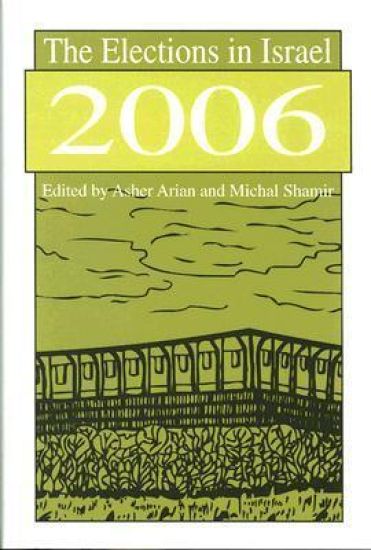
The Elections in Israel 2006

The Elections in Israel 2006

Asher Arian; Michal Shamir

Transaction Publishers
2008
sidottu
Several dramatic events preceded the elections to the Seventeenth Knesset on March 28, 2006, beginning with the unilateral withdrawal from Gaza in August 2005 and its attendant and unprecedented removal of Jewish settlements and settlers, followed by major shifts among and within the various political parties. Most dramatic was the split in Likud when Prime Minister Ariel Sharon decided to form a new party, Kadima, leading to the breakup of the Likud party that Sharon had formed in 1973. This volume charts the 2006 elections.
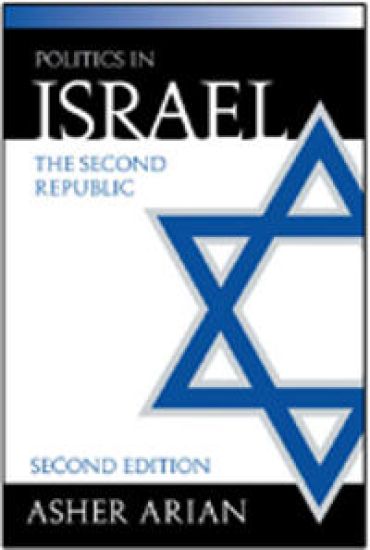
Politics in Israel

Politics in Israel

Asher Arian

CQ Press
2004
nidottu
Politics in Israel is an incisive guide to Israel’s rich past, unpredictable present, and promising but undoubtedly turbulent future. In his new second edition, Asher Arian again takes a comprehensive look at the country’s history, demography, economy, and sociology—and provides cogent analysis of its ever-changing role in the Middle East. Informed by the latest opinion polls, survey data, and election results, Arian clarifies the major issues facing Israeli culture and politics, and explains the complexities of Israel’s political institutions, political behavior, and public policies. He chronicles the significant events in this dynamic nation's relatively brief experience of self-governance and introduces readers to the exceptional personalities who have defined its domestic landscape. New and expanded coverage in the second edition features: the impact of immigration from the former Soviet Unionthe adoption and cancellation of the direct election of the prime ministerthe constitutional revolution occasioned by the expansion of judicial reviewthe weakening of political partiesthe decentralization of the economy and emergence of a stronger capitalist ethicthe political impact of the second intifadaand the dominance of Ariel Sharon
Security Threatened

Security Threatened

Asher Arian

Cambridge University Press
1995
pokkari
Public opinion has played a crucial role in the transitions from war to peace in Israel since the 1967 Six Day war. Security Threatened is the first major analysis of the interactions among opinion, politics and policy in that period, based on opinion surveys of thousands of adult Jews conducted between 1962 and 1994. The public divided during those years into militant hardliners and more conciliatory security positions, and power either shifted between, or was shared by, the Likud and Labour parties. In the late 1980s and early 1990s, with the onset of the intifada, the collapse of the Soviet Union, and the American victory in the Gulf War, all segments of the Israeli public became more conciliatory. Policy initiatives reflected shifts in political power which in turn magnified changes in public opinion. Leaders were constrained by public opinion and by perceptions of threat, but they could also alter policy if they had the will because opinion was rather equally divided; since most people had their minds made up, the opposition could not block their policy.
Security Threatened

Security Threatened

Asher Arian

Cambridge University Press
1995
sidottu
Public opinion has played a crucial role in the transitions from war to peace in Israel since the 1967 Six Day war. Security Threatened is the first major analysis of the interactions among opinion, politics and policy in that period, based on opinion surveys of thousands of adult Jews conducted between 1962 and 1994. The public divided during those years into militant hardliners and more conciliatory security positions, and power either shifted between, or was shared by, the Likud and Labour parties. In the late 1980s and early 1990s, with the onset of the intifada, the collapse of the Soviet Union, and the American victory in the Gulf War, all segments of the Israeli public became more conciliatory. Policy initiatives reflected shifts in political power which in turn magnified changes in public opinion. Leaders were constrained by public opinion and by perceptions of threat, but they could also alter policy if they had the will because opinion was rather equally divided; since most people had their minds made up, the opposition could not block their policy.