Kirjojen hintavertailu – 12 859 829 kirjaa ja 27 kauppaa

Kirjailija

Ashleigh Haw

Kirjat ja teokset yhdessä paikassa: 4 kirjaa, julkaisuja vuosilta 2022–2025, suosituimpiin kuuluu Asylum Seekers in Australian News Media. Vertaile teosten hintoja ja tarkista saatavuus suomalaisista kirjakaupoista.

4 kirjaa

Kirjojen julkaisuvuodet: 2022–2025.

Fake News in Digital Cultures

Fake News in Digital Cultures

Rob Cover; Ashleigh Haw; Jay Thompson

Emerald Publishing Limited
2025
nidottu
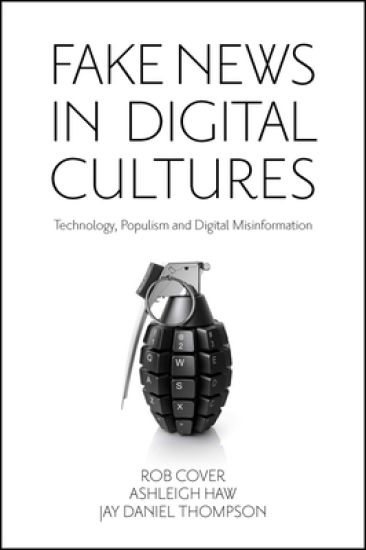
Fake News in Digital Cultures presents a new approach to understanding disinformation and misinformation in contemporary digital communication, arguing that fake news is not an alien phenomenon undertaken by bad actors, but a logical outcome of contemporary digital and popular culture, conceptual changes meaning and truth, and shifts in the social practice of trust, attitude and creativity. Looking not to the problems of the present era but towards the continuing development of a future digital media ecology, the authors explore the emergence of practices of deliberate disinformation. This includes the circulation of misleading content or misinformation, the development of new technological applications such as the deepfake, and how they intersect with conspiracy theories, populism, global crises, popular disenfranchisement, and new practices of regulating misleading content and promoting new media and digital literacies.
Asylum Seekers in Australian News Media

Asylum Seekers in Australian News Media

Ashleigh Haw

Springer International Publishing AG
2024
nidottu
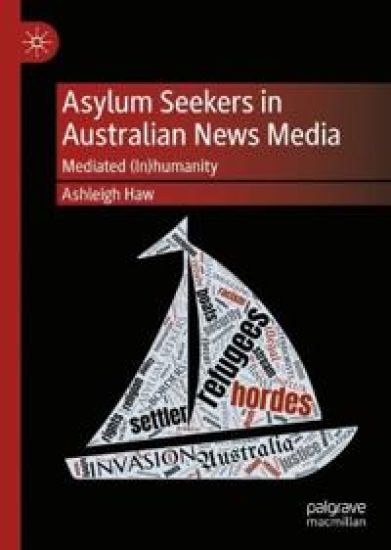
This book sheds light on how the public engage with, make sense of, and discursively evaluate news media constructions of people from asylum seeking backgrounds. As a case study, the author discusses her recent research combining Critical Discourse Analysis with a cultural studies Audience Reception framework to examine the perspectives of 24 Western Australians who took part in semi-structured interviews. During their interviews, participants were asked open-ended questions about: their general views on people seeking asylum, including Australia’s policy responses, their media engagement habits and preferences, and their views concerning how the Australian media represents people seeking asylum. The author compares and contrasts this research with broader interdisciplinary discussion, and the book will therefore appeal to students and scholars of migration, political communication, sociology, audience reception, critical media studies and sociolinguistics.
Asylum Seekers in Australian News Media

Asylum Seekers in Australian News Media

Ashleigh Haw

Springer International Publishing AG
2023
sidottu
This book sheds light on how the public engage with, make sense of, and discursively evaluate news media constructions of people from asylum seeking backgrounds. As a case study, the author discusses her recent research combining Critical Discourse Analysis with a cultural studies Audience Reception framework to examine the perspectives of 24 Western Australians who took part in semi-structured interviews. During their interviews, participants were asked open-ended questions about: their general views on people seeking asylum, including Australia’s policy responses, their media engagement habits and preferences, and their views concerning how the Australian media represents people seeking asylum. The author compares and contrasts this research with broader interdisciplinary discussion, and the book will therefore appeal to students and scholars of migration, political communication, sociology, audience reception, critical media studies and sociolinguistics.
Fake News in Digital Cultures

Fake News in Digital Cultures

Rob Cover; Ashleigh Haw; Jay Thompson

Emerald Publishing Limited
2022
sidottu
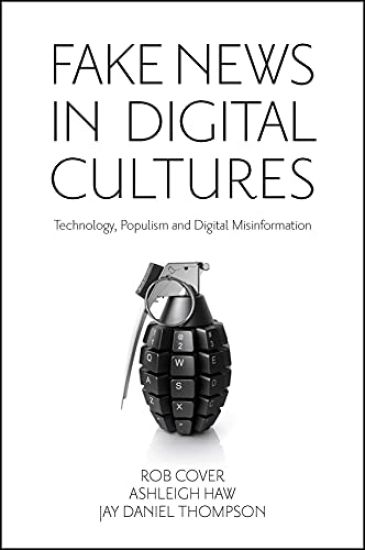
Fake News in Digital Cultures presents a new approach to understanding disinformation and misinformation in contemporary digital communication, arguing that fake news is not an alien phenomenon undertaken by bad actors, but a logical outcome of contemporary digital and popular culture, conceptual changes meaning and truth, and shifts in the social practice of trust, attitude and creativity. Looking not to the problems of the present era but towards the continuing development of a future digital media ecology, the authors explore the emergence of practices of deliberate disinformation. This includes the circulation of misleading content or misinformation, the development of new technological applications such as the deepfake, and how they intersect with conspiracy theories, populism, global crises, popular disenfranchisement, and new practices of regulating misleading content and promoting new media and digital literacies.