Kirjojen hintavertailu – 12 903 725 kirjaa ja 27 kauppaa

Kirjailija

Ashok Kapur

Kirjat ja teokset yhdessä paikassa: 12 kirjaa, julkaisuja vuosilta 1991–2024, suosituimpiin kuuluu India and the South Asian Strategic Triangle. Vertaile teosten hintoja ja tarkista saatavuus suomalaisista kirjakaupoista.

12 kirjaa

Kirjojen julkaisuvuodet: 1991–2024.

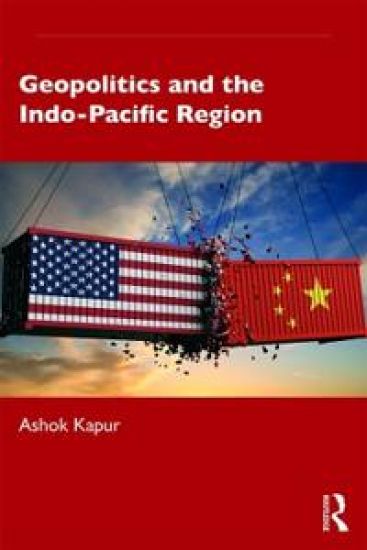
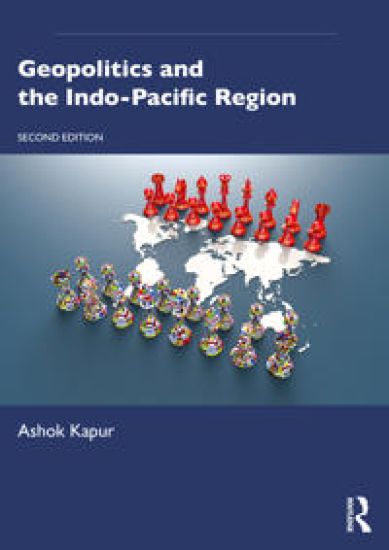
Geopolitics and the Indo-Pacific Region

Geopolitics and the Indo-Pacific Region

Ashok Kapur

TAYLOR FRANCIS LTD
2024
nidottu
Exploring geopolitics of the Indo-Pacific Region, a major hub of global, economic, commercial, military, diplomatic, and cultural activities in the 21st century, this textbook provides students with an introduction to the existing debates, frameworks, and issues surrounding the Indo-Pacific. The second edition has been revised, updated, and expanded to explain the major build-up of deterrence hubs during 2022–2023 in the Indo-Pacific Region (IPR). The hubs have a clear focus on North Asia (Japan and South Korea), the Taiwan Strait and Taiwan and the South China Sea (the Philippines, Vietnam, and Australia), and India and the Indian Ocean littoral areas (the Persian Gulf and the Bay of Bengal). This edition takes into account the effects of the Ukraine–Russia and Israel–Hamas/Iran proxies’ conflicts on the build-up of Russia–China–North Korea–Iran ties and the naval projections by China and Russia in North Pacific, off the Alaska coast, and in relation to Myanmar and Bangladesh and the Gulf/Red Sea areas. Within the purview of maritime security and NATO, the present century is critical with the introduction of missiles and nuclear submarine technology into IPR and by the fragmentation of arms control and nuclear and missile non-proliferation arrangements of the 1960s–2000 period. This volume predicts that China’s oft-proclaimed rise to global hegemonic status is not inevitable because of its many economic–social problems and foreign policy dilemmas. Nor is World War III inevitable because no one seeks unlimited warfare, but the regions in conflict will likely remain on a low boil. However, problem-solving and crisis resolution will remain problematic, keeping the 21st century at its toes, due to the inability of regional powers to unite for the common good. Complete with a list of further reading, Geopolitics and the Indo-Pacific Region fills a gap in the market and will be of great interest to upper-year-level undergraduates, postgraduate students, and researchers studying international relations, IPR geopolitics, Asian politics, and Asian security studies.
Geopolitics and the Indo-Pacific Region

Geopolitics and the Indo-Pacific Region

Ashok Kapur

TAYLOR FRANCIS LTD
2024
sidottu
Exploring geopolitics of the Indo-Pacific Region, a major hub of global, economic, commercial, military, diplomatic, and cultural activities in the 21st century, this textbook provides students with an introduction to the existing debates, frameworks, and issues surrounding the Indo-Pacific. The second edition has been revised, updated, and expanded to explain the major build-up of deterrence hubs during 2022–2023 in the Indo-Pacific Region (IPR). The hubs have a clear focus on North Asia (Japan and South Korea), the Taiwan Strait and Taiwan and the South China Sea (the Philippines, Vietnam, and Australia), and India and the Indian Ocean littoral areas (the Persian Gulf and the Bay of Bengal). This edition takes into account the effects of the Ukraine–Russia and Israel–Hamas/Iran proxies’ conflicts on the build-up of Russia–China–North Korea–Iran ties and the naval projections by China and Russia in North Pacific, off the Alaska coast, and in relation to Myanmar and Bangladesh and the Gulf/Red Sea areas. Within the purview of maritime security and NATO, the present century is critical with the introduction of missiles and nuclear submarine technology into IPR and by the fragmentation of arms control and nuclear and missile non-proliferation arrangements of the 1960s–2000 period. This volume predicts that China’s oft-proclaimed rise to global hegemonic status is not inevitable because of its many economic–social problems and foreign policy dilemmas. Nor is World War III inevitable because no one seeks unlimited warfare, but the regions in conflict will likely remain on a low boil. However, problem-solving and crisis resolution will remain problematic, keeping the 21st century at its toes, due to the inability of regional powers to unite for the common good. Complete with a list of further reading, Geopolitics and the Indo-Pacific Region fills a gap in the market and will be of great interest to upper-year-level undergraduates, postgraduate students, and researchers studying international relations, IPR geopolitics, Asian politics, and Asian security studies.
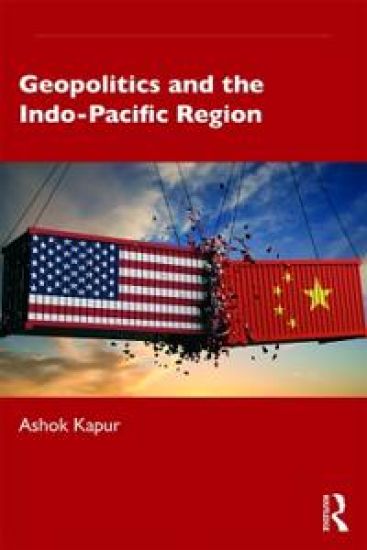
Geopolitics and the Indo-Pacific Region
Exploring the geopolitics of the Indo-Pacific region, a major hub of global economic/commercial, military, diplomatic and cultural activities in the 21st century, this textbook provides students with an introduction to the existing debates, frameworks and issues surrounding the Indo-Pacific. The book explains the historical background to highlight the significance of the region, the shift of power from West to East and the importance of the growing connectivity between Asia-Pacific and the Indo-Pacific areas. Covering relations between China and the USA, India, Vietnam and China’s southern neighbours in Southeast Asia, along with Japan, Taiwan, Australia, Sri Lanka and Myanmar, it presents the different arguments regarding the caveats and meaning of ‘Indo-Pacific’. In so doing, it shows that the region is the 'theatre' of great power and middle power competition and suggests that third parties have an area of autonomy in their dealing with American and Chinese leaders. Complete with a list of further readings, Geopolitics and the Indo-Pacific Region fills a gap in the market and will be of great interest to upper-level undergraduates, postgraduate students and researchers studying international relations, ipe, geopolitics, Asian politics and Asian security studies.
Geopolitics and the Indo-Pacific Region
Exploring the geopolitics of the Indo-Pacific region, a major hub of global economic/commercial, military, diplomatic and cultural activities in the 21st century, this textbook provides students with an introduction to the existing debates, frameworks and issues surrounding the Indo-Pacific. The book explains the historical background to highlight the significance of the region, the shift of power from West to East and the importance of the growing connectivity between Asia-Pacific and the Indo-Pacific areas. Covering relations between China and the USA, India, Vietnam and China’s southern neighbours in Southeast Asia, along with Japan, Taiwan, Australia, Sri Lanka and Myanmar, it presents the different arguments regarding the caveats and meaning of ‘Indo-Pacific’. In so doing, it shows that the region is the 'theatre' of great power and middle power competition and suggests that third parties have an area of autonomy in their dealing with American and Chinese leaders. Complete with a list of further readings, Geopolitics and the Indo-Pacific Region fills a gap in the market and will be of great interest to upper-level undergraduates, postgraduate students and researchers studying international relations, ipe, geopolitics, Asian politics and Asian security studies.
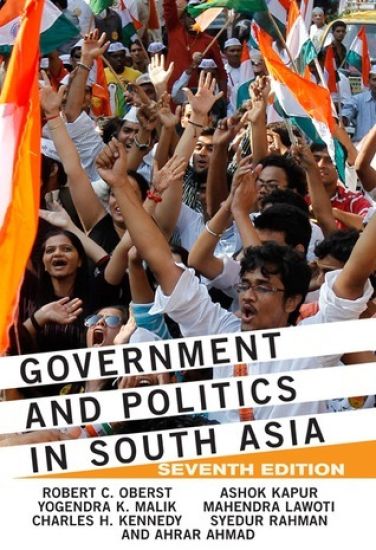
Government and Politics in South Asia

Government and Politics in South Asia

Robert C Oberst; Yogendra K Malik; Charles Kennedy; Ashok Kapur; Mahendra Lawoti

Routledge
2019
sidottu
This comprehensive but accessible text provides students with a systematic introduction to the comparative political study of the leading nations of South Asia: India, Pakistan, Bangladesh, Sri Lanka, and Nepal. The seventh edition is extensively revised and updated, benefiting from the fresh perspective brought on by adding a new author to the team. New material includes discussions of political parties and leaders in India, the Zardari regime and changes to the Pakistani constitution, the rocky relationship between Pakistan and the Obama administration, new prospects and dangers facing Bangladesh, continuing political violence in Sri Lanka, and the troubles facing Nepal as it attempts to draft a new constitution. Organized in parallel fashion to facilitate cross-national comparison, the sections on each nation address several topical areas of inquiry: political culture and heritage, government structure and institutions, political parties and leaders, conflict and resolution, and modernization and development. A statistical appendix provides a concise overview of leading demographic and economic indicators for each country, making Government and Politics in South Asia an invaluable addition to courses on the politics of South Asia.
Government and Politics in South Asia

Government and Politics in South Asia

Robert Oberst; Yogendra K. Malik; Charles Kennedy; Ashok Kapur; Mahendra Lawoti

Routledge
2019
sidottu
This book describes the countries of South Asia, and examines the reason for their successes and failures. It addresses the interrelationships among the states in the region and their roles in the international system, and discusses the political development of the region.
India and the South Asian Strategic Triangle
This book traces the triangular strategic relationship of India, Pakistan and China over the second half of the twentieth century, and shows how two enmities – Sino-Indian and Indo-Pakistani – and one friendship – Sino-Pakistani – defined the distribution of power and the patterns of relationships in a major centre of gravity of international conflict and international change. The three powers are tied to each other and their actions reflect their view of strategic and cultural problems and geopolitics in a volatile area. The book considers internal debates within the three countries; zones of conflict, including northeast and northwest south Asia, the Himalayas and the Indian Ocean; and the impact of developments in nuclear weapons and missile technology. It examines the destructive consequences of China’s harsh methods in Tibet, of China’s encouragement of military rather than democratic regimes in Pakistan, and of China’s delay in dealing with the border disputes with India. Ashok Kapur shows how the Nehru-Chou rhetoric about "peaceful co-existence" affected the relationship, and how the dynamics of the relationship have changed significantly in recent years as a range of new factors - including India’s increasing closeness to the United States - have moved the relationship into a new phase.
Government and Politics in South Asia

Government and Politics in South Asia

Robert C Oberst; Yogendra K Malik; Charles Kennedy; Ashok Kapur; Mahendra Lawoti

Westview Press Inc
2013
nidottu
This comprehensive but accessible text provides students with a systematic introduction to the comparative political study of the leading nations of South Asia: India, Pakistan, Bangladesh, Sri Lanka, and Nepal. The seventh edition is extensively revised and updated, benefiting from the fresh perspective brought on by adding a new author to the team. New material includes discussions of political parties and leaders in India, the Zardari regime and changes to the Pakistani constitution, the rocky relationship between Pakistan and the Obama administration, new prospects and dangers facing Bangladesh, continuing political violence in Sri Lanka, and the troubles facing Nepal as it attempts to draft a new constitution. Organized in parallel fashion to facilitate cross-national comparison, the sections on each nation address several topical areas of inquiry: political culture and heritage, government structure and institutions, political parties and leaders, conflict and resolution, and modernization and development. A statistical appendix provides a concise overview of leading demographic and economic indicators for each country, making Government and Politics in South Asia an invaluable addition to courses on the politics of South Asia.
India and the South Asian Strategic Triangle
This book traces the triangular strategic relationship of India, Pakistan and China over the second half of the twentieth century, and shows how two enmities – Sino-Indian and Indo-Pakistani – and one friendship – Sino-Pakistani – defined the distribution of power and the patterns of relationships in a major centre of gravity of international conflict and international change. The three powers are tied to each other and their actions reflect their view of strategic and cultural problems and geopolitics in a volatile area. The book considers internal debates within the three countries; zones of conflict, including northeast and northwest south Asia, the Himalayas and the Indian Ocean; and the impact of developments in nuclear weapons and missile technology. It examines the destructive consequences of China’s harsh methods in Tibet, of China’s encouragement of military rather than democratic regimes in Pakistan, and of China’s delay in dealing with the border disputes with India. Ashok Kapur shows how the Nehru-Chou rhetoric about "peaceful co-existence" affected the relationship, and how the dynamics of the relationship have changed significantly in recent years as a range of new factors - including India’s increasing closeness to the United States - have moved the relationship into a new phase.
India - From Regional to World Power
This book examines the rise of India to the status of a world power capable of dealing with the full spectrum of international and regional issues in a critical part of the world. It traces the evolution of Indian diplomacy in the hands of key Indian practitioners comparing Nehru, the founder of Indian diplomacy with his successors, the Nehruvians up to 1998, and finally, Vajpayee, the leader of the BJP (1998-2004). Its main purposes are to explain the strategic and ideological context in which Indian diplomacy was framed, the character of India’s foreign policy problems, the nature and sources of its dilemmas and the paradigm shift that was orchestrated by the BJP government to reposition India in the international system and to bring it into the global strategic and economic mainstream. It shows how the approach laid down by Nehru and followed by his successors (an approach that included nuclear self-restraint, the search for friendly relations with Pakistan and China, seeking the high ground in moral and diplomatic spheres, and giving a lead to the non-aligned Third World) has been replaced by a new, more self-confident and assertive approach based on India's growing economic strength and demonstrating a more strategic and pro-Western orientation. Overall, this book provides a meticulous account of many steps post-Nehruvian India has taken to make it a rising world influence and a mature, independent power.
India - From Regional to World Power
This book provides an in-depth account of India's role in world politics at the beginning of the twenty-first century. The author shows how the approach laid down by Nehru and followed by his successors (an approach that included nuclear self-restraint, the search for friendly relations with Pakistan and China, seeking the high ground in moral and diplomatic spheres, and giving a lead to the non-aligned Third World) has been replaced. The new, more self-confident and assertive approach of this book is based on India's growing economic strength and has a more strategic and pro-Western orientation. Meticulous in approach, this book discusses this change, shows how it has come about, and explores how India's role in world politics might develop going forward. This book will be of interest to students and scholars of South Asian studies, Asian politics, international relations, and security studies.
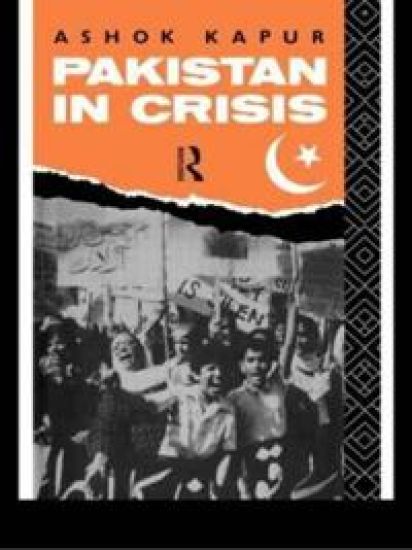
Pakistan in Crisis

Pakistan in Crisis

Ashok Kapur

Routledge
1991
sidottu
With these questions in mind Professor Kapur charts the continuous power struggles of Pakistan's ruling elites. Using a historical and comparative approach he shows how the search for democracy and national identity has been hindered by army intervention, political intrigue and the failure of Islam to unite the various ethnic factions. While pessimistic about the chances for democracy in Pakistan, he hopes that the democratic pluralism and broad-based political activity emerging in much of Eastern Europe and the Third World will inspire ordinary Pakistanis to transform their country into a nation, in spirit as well as in name.