Kirjojen hintavertailu – 12 859 828 kirjaa ja 27 kauppaa

Kirjailija

Ashok Swain

Kirjat ja teokset yhdessä paikassa: 12 kirjaa, julkaisuja vuosilta 2004–2024, suosituimpiin kuuluu Climate Security. Vertaile teosten hintoja ja tarkista saatavuus suomalaisista kirjakaupoista.

12 kirjaa

Kirjojen julkaisuvuodet: 2004–2024.

Climate Security

Climate Security

Ashok Swain

SAGE PUBLICATIONS LTD
2024
nidottu
How does the climate crisis relate to global security issues? What impact do increasing temperatures, droughts, sea level rises and extreme weather have on borders, war, migration and unrest? This nuanced, urgent book cuts into the heart of this relationship, packed with global examples, from glacier movements destabilizing borders, to misinformation driving political apathy around the climate. You will encounter new, provocative ideas such as the carbon footprint of the military, the pressing need for the Global South to adapt, not blame, and the need for strong and visionary leadership in climate negotiations. Situated on the cutting edge of the climate debate, this book will revolutionize your perspective on global security, challenge deep-rooted assumptions and ignite your critical thinking.
Climate Security

Climate Security

Ashok Swain

SAGE PUBLICATIONS LTD
2024
sidottu
How does the climate crisis relate to global security issues? What impact do increasing temperatures, droughts, sea level rises and extreme weather have on borders, war, migration and unrest? This nuanced, urgent book cuts into the heart of this relationship, packed with global examples, from glacier movements destabilizing borders, to misinformation driving political apathy around the climate. You will encounter new, provocative ideas such as the carbon footprint of the military, the pressing need for the Global South to adapt, not blame, and the need for strong and visionary leadership in climate negotiations. Situated on the cutting edge of the climate debate, this book will revolutionize your perspective on global security, challenge deep-rooted assumptions and ignite your critical thinking.
Struggle Against the State

Struggle Against the State

Ashok Swain

Routledge
2016
nidottu
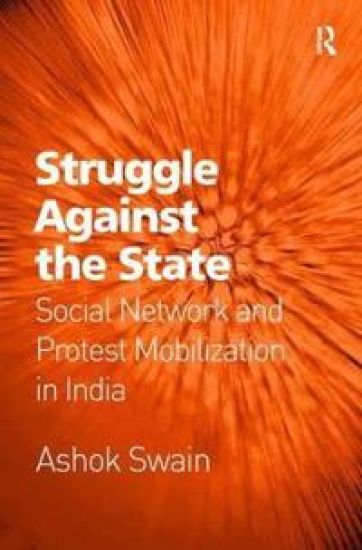
Many developing countries pursue policies of rapid industrialization in order to achieve faster economic growth. Some policies cause displacement forcing many individuals to take up a fight against the state. Interestingly some of these dissenting individuals are more successful in organizing their protests than others. In this book, Ashok Swain demonstrates how displaced people mobilize to protest with the help of their social networks. Studying protests against large industrial and development projects, Swain compares the mobilization process between a traditionally protest rich and a protest poor region in India to explain how social network structures are a key component to understand this variation. He reveals how improved mobilization capability coincides with their evolving social network structure thanks to recent exposure to external actors like religious missionaries and radical left activists. The in-depth examination of the existing literature on social mobilization and extensive fieldwork conducted in India make this book a well-organized and useful resource to analyze protest mobilization in developing regions.
Emerging Security Threats in the Middle East

Emerging Security Threats in the Middle East

Ashok Swain; Anders Jägerskog

Rowman Littlefield
2016
sidottu
Increasingly the Middle East and its growing population face a highly complex and fragile security system. The rich deposits of natural resources, such as oil and gas, suffer from a strained renewable resource base that includes water and arable land. This leads to water scarcity, desertification, and land degradation. Increasing population, industrialization, and urbanization put more and more demand on the food supply. Energy insecurity may not be generally associated with the Middle East, but the countries in the eastern Mediterranean part have been traditionally vulnerable to it as their fossil fuel endowments have been low. Another issue is the large-scale temporary labor migration and the large number of forced migrants, refugees, and internally displaced persons. The book analyzes these emerging security challenges in a comprehensive and systematic manner. It draws national and regional security issues into both the global security and human security perspectives.
Emerging Security Threats in the Middle East

Emerging Security Threats in the Middle East

Ashok Swain; Anders Jägerskog

Rowman Littlefield
2016
nidottu
Increasingly the Middle East and its growing population face a highly complex and fragile security system. The rich deposits of natural resources, such as oil and gas, suffer from a strained renewable resource base that includes water and arable land. This leads to water scarcity, desertification, and land degradation. Increasing population, industrialization, and urbanization put more and more demand on the food supply. Energy insecurity may not be generally associated with the Middle East, but the countries in the eastern Mediterranean part have been traditionally vulnerable to it as their fossil fuel endowments have been low. Another issue is the large-scale temporary labor migration and the large number of forced migrants, refugees, and internally displaced persons. The book analyzes these emerging security challenges in a comprehensive and systematic manner. It draws national and regional security issues into both the global security and human security perspectives.
Transboundary Water Management and the Climate Change Debate

Transboundary Water Management and the Climate Change Debate

Anton Earle; Ana Elisa Cascao; Stina Hansson; Anders Jägerskog; Ashok Swain; Joakim Öjendal

Routledge
2015
sidottu
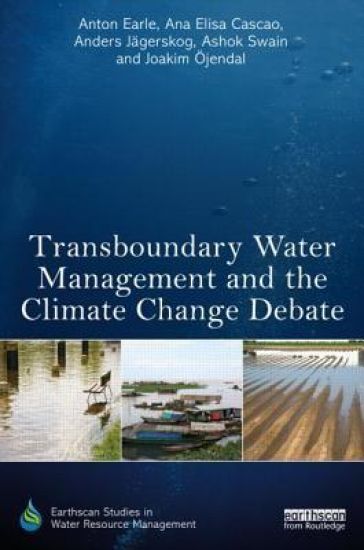
Climate change has an impact on the ability of transboundary water management institutions to deliver on their respective mandates. The starting point for this book is that actors within transboundary water management institutions develop responses to the climate change debate, as distinct from the physical phenomenon of climate change. Actors respond to this debate broadly in three distinct ways – adapt, resist (as in avoiding the issue) and subvert (as in using the debate to fulfil their own agenda). The book charts approaches which have been taken over the past two decades to promote more effective water management institutions, covering issues of conflict, cooperation, power and law. A new framework for a better understanding of the interaction between transboundary water management institutional resilience and global change is developed through analysis of the way these institutions respond to the climate change debate. This framework is applied to six river case studies from Africa, Asia and the Middle East (Ganges-Brahmaputra, Jordan, Mekong, Niger, Nile, Orange-Senqu) from which learning conclusions and policy recommendations are developed.
Transboundary Water Management and the Climate Change Debate

Transboundary Water Management and the Climate Change Debate

Anton Earle; Ana Elisa Cascao; Stina Hansson; Anders Jägerskog; Ashok Swain; Joakim Öjendal

Routledge
2015
nidottu
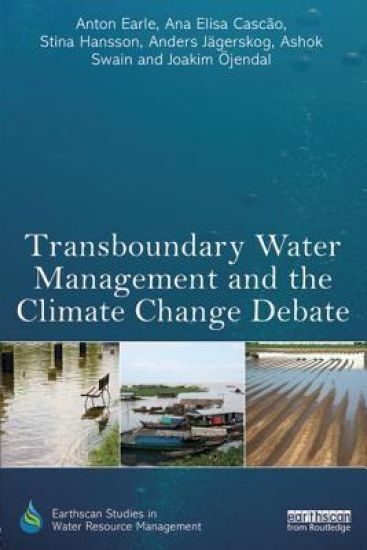
Climate change has an impact on the ability of transboundary water management institutions to deliver on their respective mandates. The starting point for this book is that actors within transboundary water management institutions develop responses to the climate change debate, as distinct from the physical phenomenon of climate change. Actors respond to this debate broadly in three distinct ways – adapt, resist (as in avoiding the issue) and subvert (as in using the debate to fulfil their own agenda). The book charts approaches which have been taken over the past two decades to promote more effective water management institutions, covering issues of conflict, cooperation, power and law. A new framework for a better understanding of the interaction between transboundary water management institutional resilience and global change is developed through analysis of the way these institutions respond to the climate change debate. This framework is applied to six river case studies from Africa, Asia and the Middle East (Ganges-Brahmaputra, Jordan, Mekong, Niger, Nile, Orange-Senqu) from which learning conclusions and policy recommendations are developed.
Managing Water Conflict

Managing Water Conflict

Ashok Swain

Routledge
2013
nidottu
Countries are meeting increasing water demand by building reservoirs and by diverting water from one area to another. When the water belongs to an international river system, these measures lead to riparian conflicts. However, water scarcity not only brings conflict to these regions, but also plays its part in building cooperation. In several international river basins in Asia, Africa and the Middle East, competing and disputing riparian countries are now moving towards a co-operative sharing arrangement. The signs of agreements on water sharing may be easy, but the real problem is how to keep these arrangements on track. Such agreements can positively contribute to peace and cooperation by addressing future needs, making sustainable decisions and being progressive in their management. Managing Water Conflict looks at these current stresses and likely future scenarios for this vitally important subject.
Understanding Emerging Security Challenges
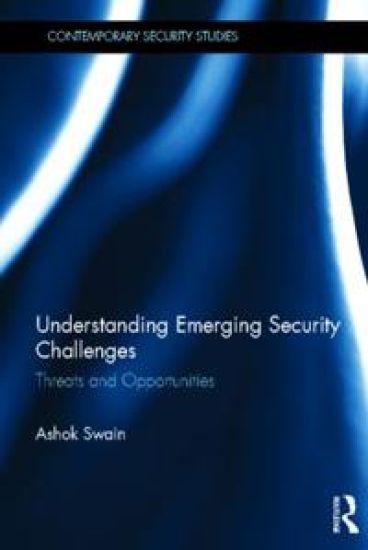
This book offers an overview of emerging security challenges in the global environment in the post-Cold War era. After the fall of the Berlin Wall and the subsequent shifting of international political environment, a new broader concept of security began to gain acceptance. This concept encompassed socio-economic-environmental challenges, such as resource scarcity and climate change, water-sharing issues, deforestation and forest protection measures, food and health security, and large population migration. The book examines the causes and consequences of these emerging security threats, and retains a critical focus on evolving approaches to address these issues. The author attempts to develop a framework for sustainable security in a rapidly changing global political landscape, which seeks to bring states and societies together in a way that addresses weaknesses of the evolving international system. Moreover, through a detailed analysis of the emerging security issues and their pathways, the book further argues that the evolving processes not only pose critical challenges but also provide remarkable opportunity for cooperation and collaboration among and within various stakeholders. This book will be of much interest to students of global security, war and conflict studies, peace studies and IR in general.
Struggle Against the State

Struggle Against the State

Ashok Swain

Ashgate Publishing Limited
2010
sidottu
Many developing countries pursue policies of rapid industrialization in order to achieve faster economic growth. Some policies cause displacement forcing many individuals to take up a fight against the state. Interestingly some of these dissenting individuals are more successful in organizing their protests than others. In this book, Ashok Swain demonstrates how displaced people mobilize to protest with the help of their social networks. Studying protests against large industrial and development projects, Swain compares the mobilization process between a traditionally protest rich and a protest poor region in India to explain how social network structures are a key component to understand this variation. He reveals how improved mobilization capability coincides with their evolving social network structure thanks to recent exposure to external actors like religious missionaries and radical left activists. The in-depth examination of the existing literature on social mobilization and extensive fieldwork conducted in India make this book a well-organized and useful resource to analyze protest mobilization in developing regions.
Managing Water Conflict

Managing Water Conflict

Ashok Swain

Routledge
2004
sidottu
Countries are meeting increasing water demand by building reservoirs and by diverting water from one area to another. When the water belongs to an international river system, these measures lead to riparian conflicts. However, water scarcity not only brings conflict to these regions, but also plays its part in building cooperation. In several international river basins in Asia, Africa and the Middle East, competing and disputing riparian countries are now moving towards a co-operative sharing arrangement. The signs of agreements on water sharing may be easy, but the real problem is how to keep these arrangements on track. Such agreements can positively contribute to peace and cooperation by addressing future needs, making sustainable decisions and being progressive in their management. Managing Water Conflict looks at these current stresses and likely future scenarios for this vitally important subject.